Christine’s travel blog
Three days to go before my 6 month journey. Nothing ahead of me just now feels at all familiar apart from my PJ’s and toothbrush. It’s you all that I will miss most. Thanks for your support, especially you Ged.
LATEST STORIES

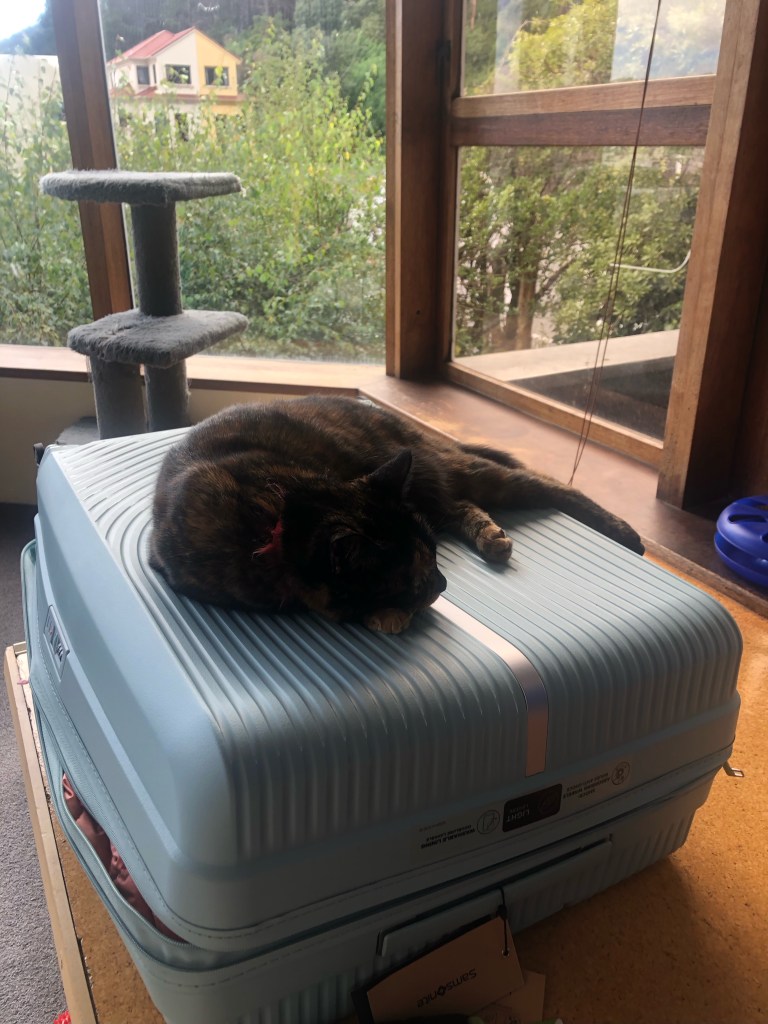
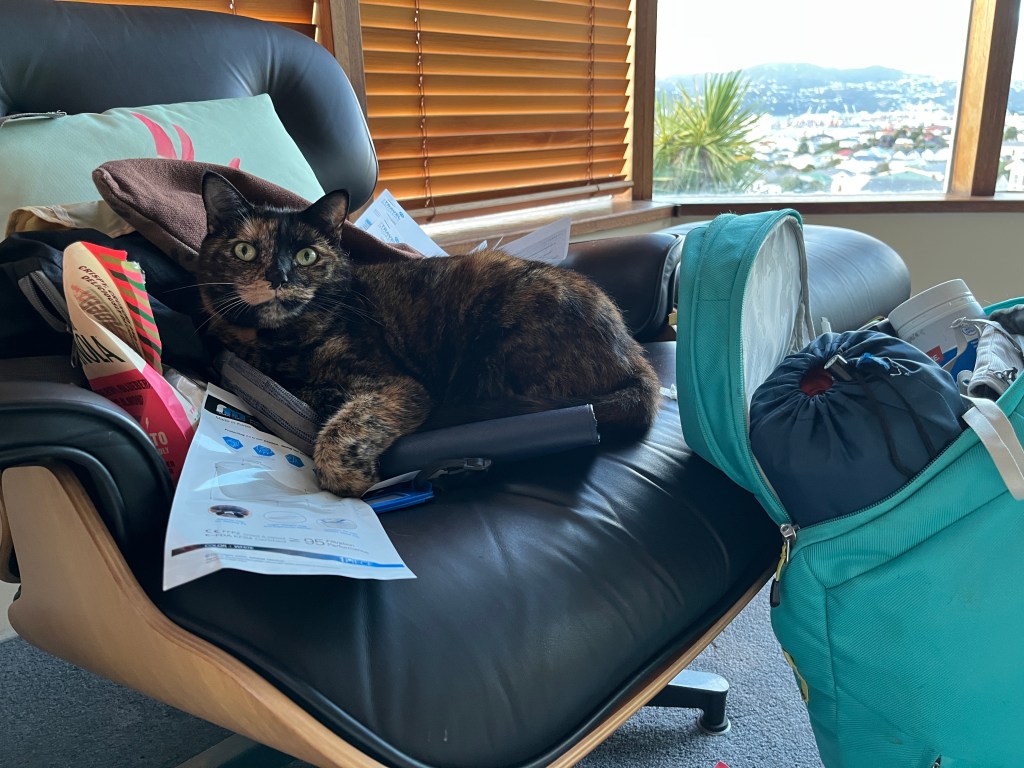
Day before my flight Toffee (nuestra gato especial) was giving a message. I’m not sure what. She sat on my suitcase all day, and then in the midst of my belongings whilst I tried to pack them (note the Covid test).
8th March – Flight date – Sorry Ged (mi sufrido i fantastico esposo) , even when I thought I had things sorted, there was more. We thought it was an hour prior I had to be at Welly airport for the national flight, but turns out we should have got there earlier … slight panic when my phone read ‘check-in closed’. Rather large relief when the baggage attendant showed no panic. WHEW.
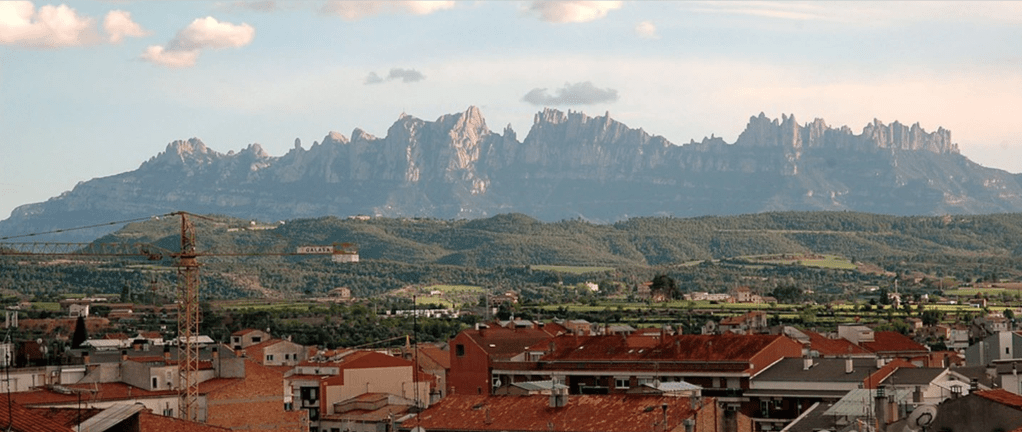
9th March On Spanish soil – the fun really begins. The research I did on how to get to Cardona where I was to be collected by the farm-owner didn’t align with the info I got from an airport staff member. I followed the latter: 1 metro ride, (transiting through the large station, navigating the ticket machine’s and ‘written schedules’ with virtually nil Spanish), one train ride to Manressa, changeover to bus with 90 minute wait. The land so very dry and brown, with brick villas (some lived-in, some not) , shanty towns alongside the rail-lines, and then the silhouette of Montserrat.
I’m rather puzzled and increasingly concerned why I’m not getting replies from Lorenzo, the farm owner (jet-lag sets in and adds to the scrambled thoughts). I reach the spectacular town of Cardona at 6.30pm, directly opposite the castle. No Lorenzo! No reply. I now am worried. An expensive hotel is my only option for a bed, but more so, confusion sets in. Lorenzo and I spoke just 2 nights ago and pick-up details are all in writing. Hmmm.
The waitress at Bar Aviendo says they don’t serve dinner until 8pm. Getting dark now. With ‘slapped together’ Spanish, I communicate that I need to get to the hotel. She ends up fixing me some tapas deliciosas. The language difference is no barrier for her intuiting my distress. She walks me the route to the hotel. Thank you Encantadora Señora amable!!! There couldn’t be a more impressive hilltop town to be abandoned in.
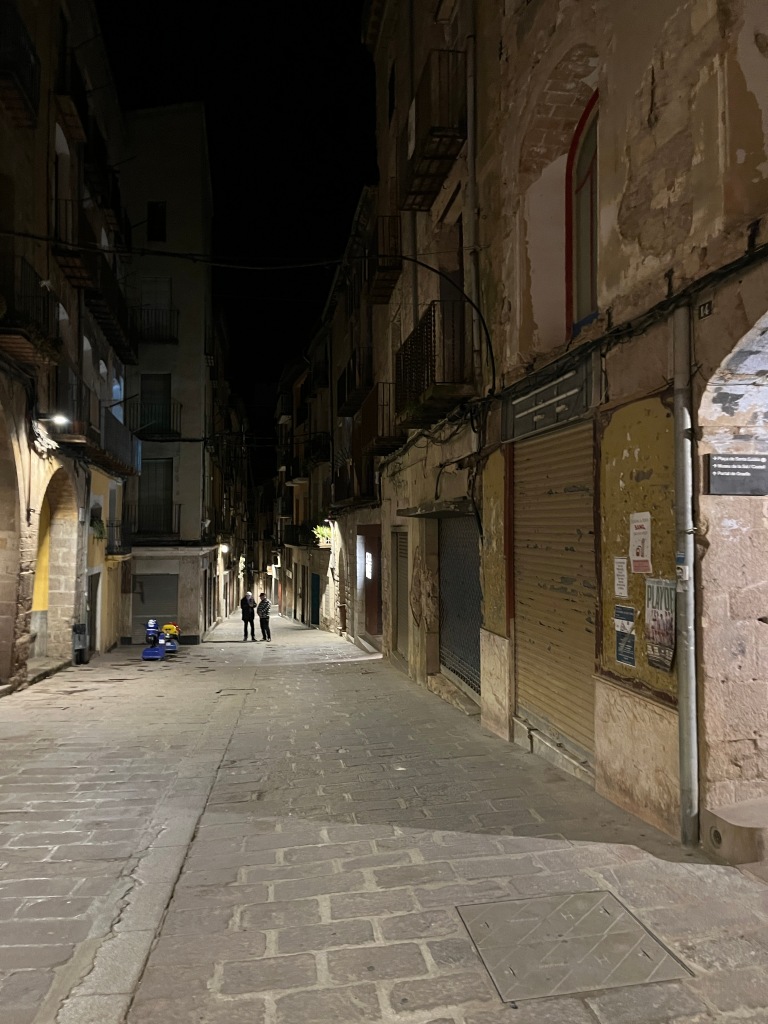
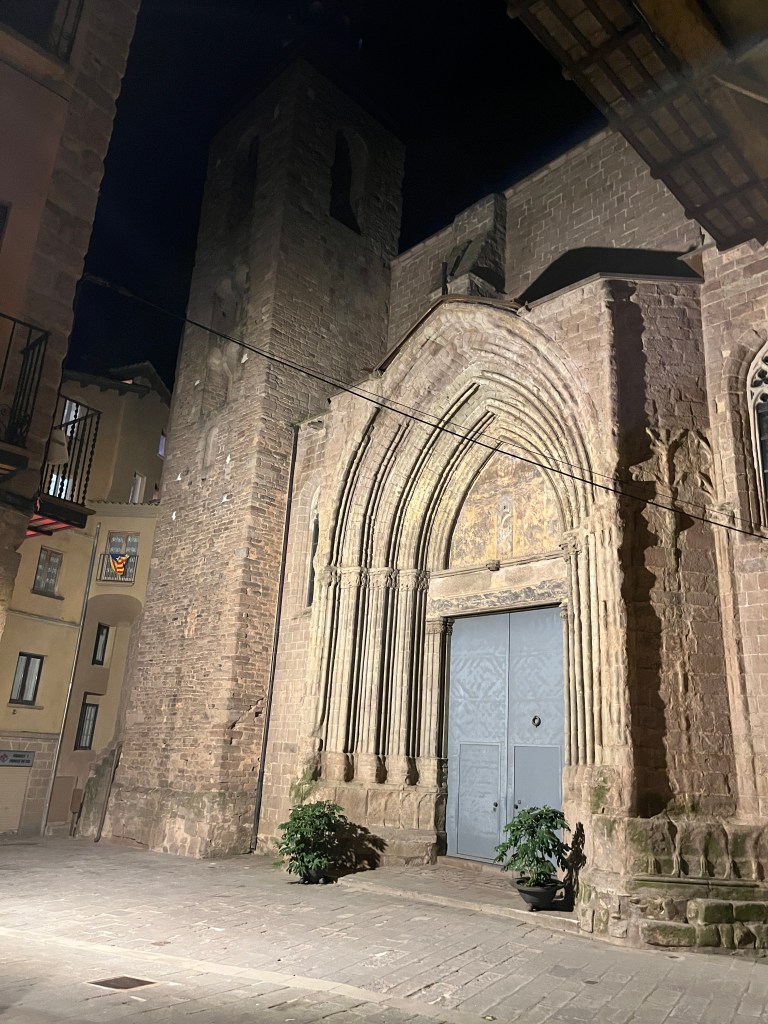
Tomorrow
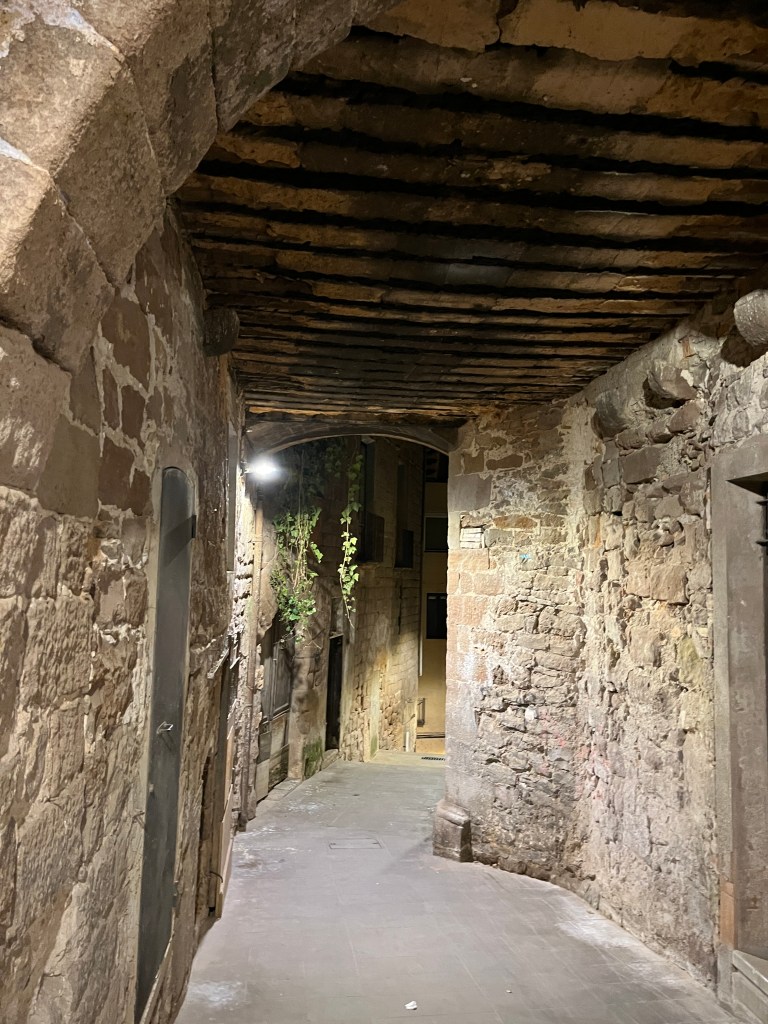
10pm – Call from Lorenzo. Forgot. Apologetic. Will collect me tomorrow. Still somewhat confused, but comforted by having a plan, and more especially a hot bath.
10th March. Explored the Cardona castle whilst awaiting my pick-up. My brain pleasantly overwhelmed by the new auditory and visual landscape.
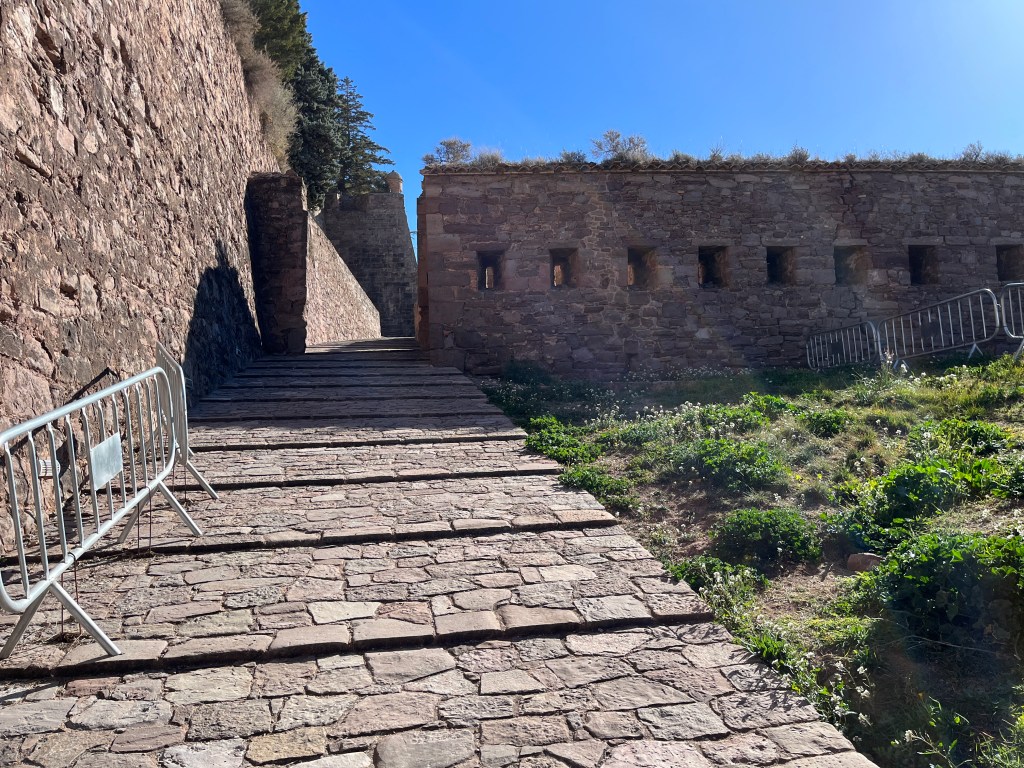
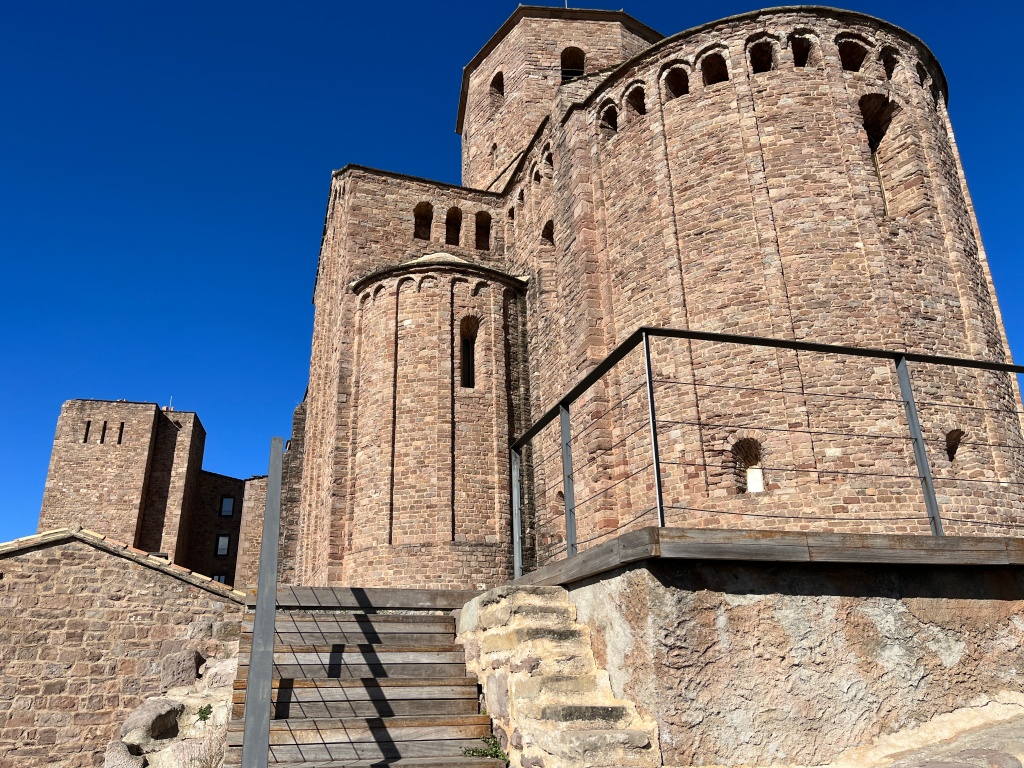
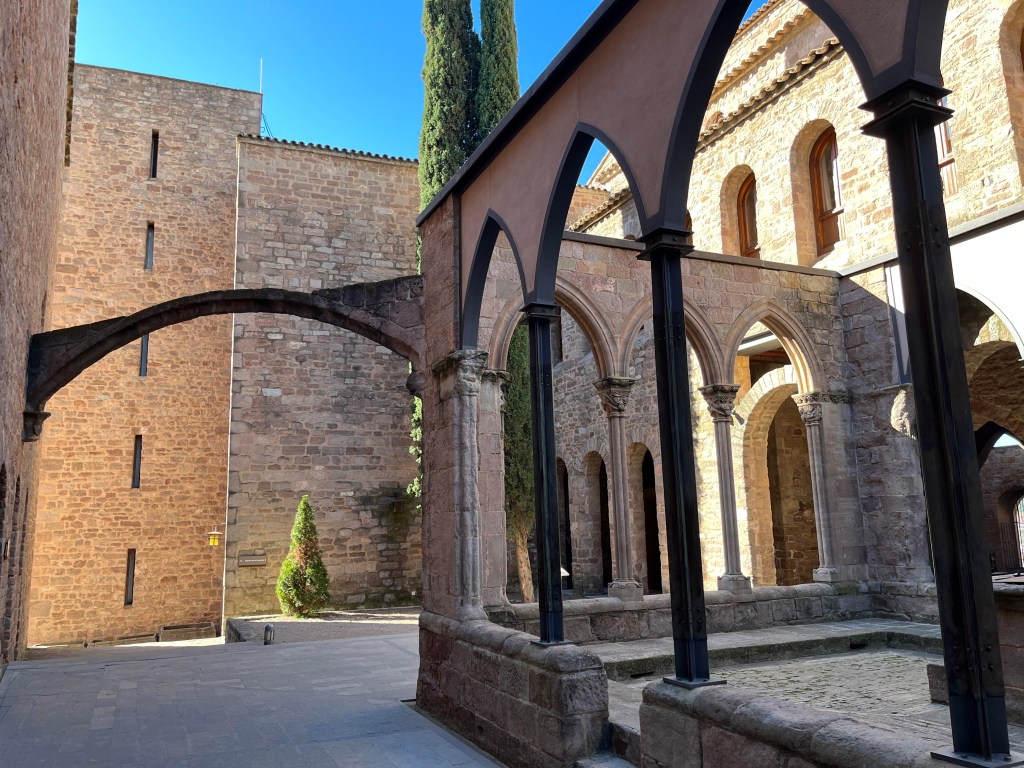
The Castle of Cardona (Catalan: Castell de Cardona, IPA: [kəsˈteʎ də kəɾˈðonə]) is arguably the most important medieval fortress in Catalonia and one of the most important in Spain. It is situated on a hill overlooking the river valley of the Cardener and the town of Cardona.
The fortress was initially constructed by Wilfred the Hairy in 886. It is in both the Romanesque and Gothicstyles, and includes the so-called Sala Dorada and Sala dels Entresols. During the 14th century, the dukes of Cardona came from the most important family of the Crown of Aragon, which was second only to the royal house. Because of this, they were called “kings without crowns,” as they had extensive territories in Catalonia, Aragon, and Valencia, and dynastic ties with Castile, Portugal, Sicily, and Naples. This presumably increased the importance of the castle.
In 1714, even after a Bourbon siege destroyed a good part of the castle’s walls, the garrison was one of the last to surrender to the Bourbon troops which supported Philip V.
Today, the castle’s main jewel is the torre de la minyona (from the 11th century) a tower which measures 15 metres in height and 10 metres in diameter. Additionally, there is the romanesque Church of Sant Vicenç de Cardona adjacent to the fort. The fort is currently still owned by living members of the Aragón family[disambiguation needed].
10th March midday – Met up with Lorenzo and three other volunteers (M from Georgia, A from Morocco and N from Ukraine and Bulgaria). The two guys are part of a 1 year European Solidarity corp program, and are keen to work in Europe. For all three work opportunities are greater here, but citizenship is hard to come by.
If you’ve ever travelled one of through pitted roads beyond the national park boundaries, this is similar 🙂 but dustier. At the farm we meet the herd, and hear about each one: June the jefa (leader/ boss), Niche, Barbie, Socrates and Dado. They live free, so are rarely tethered, so knowing something of their ‘ways’ and rivalries is key. The greatest chance one may be hurt is by getting in the midst of a ‘horsey one-upmanship’.


11th March – Back to the farm. Met the participants: again many nationalities. We start by feeding out the hay, then grooming the ‘caballas’ (horses) and talking together as the participants face challenges such as ‘fear’ and trust-building. We have to gather water from a nearby farm as water doesn’t’ reach this far into the hills.
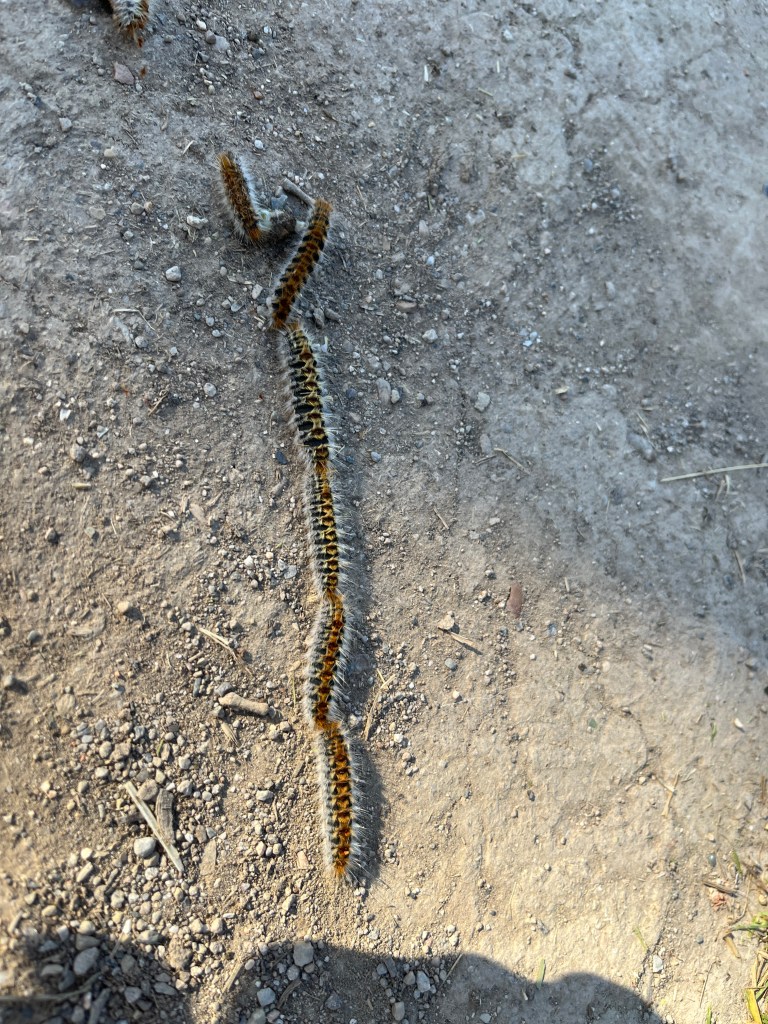
Wow factor: Processionaria. These little critters poisonous to horse and human follow along, taking turns as leader. The larvae from pine trees, pupate and eventually turn into nocturnal butterflies. Only 3cm long, this half dozen, were split from a 4 metre chain.
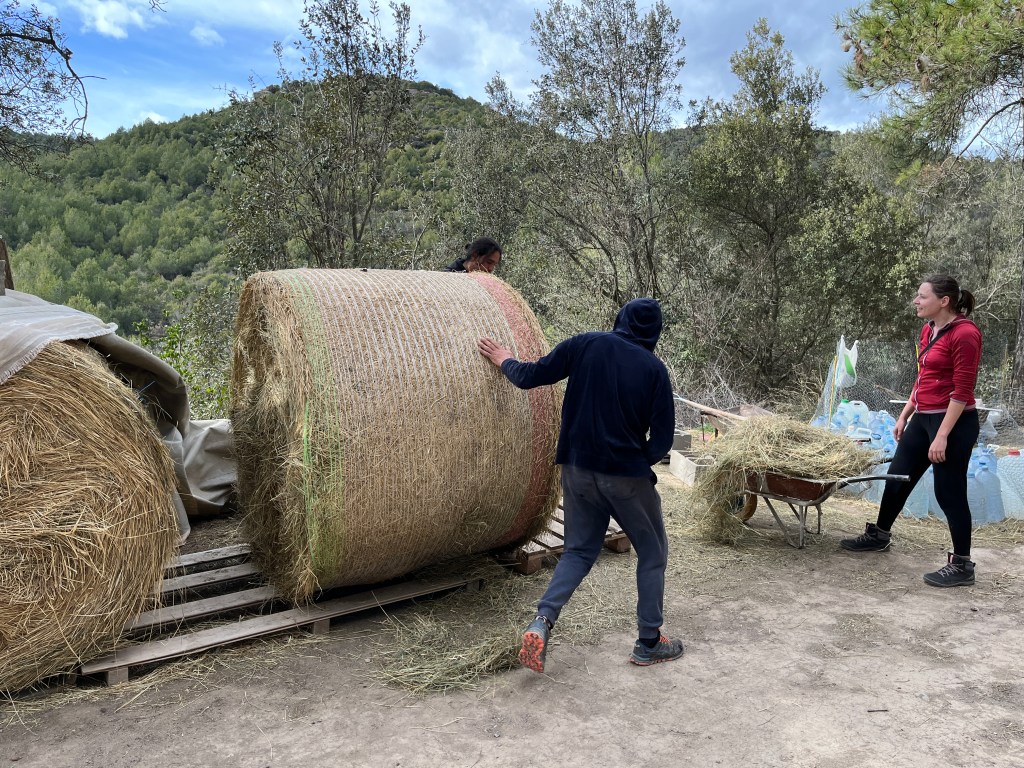
12th March .The fruit trees here are about 2 years old but are just hanging in there with the increasingly dry years. 18 year old Romanian, S. and I made a good team spreading the manure around and mulching with straw. I think they’ll benefit from adjusting the watering and fertilising practices for these conditions. As we visit the chicken-house, S shares with me about her love for chickens, and the memories they hold with her grandmother’s chicken-run back in Romania.
13th March. Research day – principles for applying to the farm garden.
We were joined by Lorenzo for a shopping trip, and collected a new volunteer/ flatmate fresh from Isparta, Turkey. Just as well we had the water heater replaced today. 5 days without a warm shower isles acceptable when you have to share. The animated conversations over the water heater , and the discovery of the ineffectiveness of bashing it with a crescent provided some amusement. The run-down kitchen (like many of Spain’s streets sits in stark contrast to the amazing vistas around.

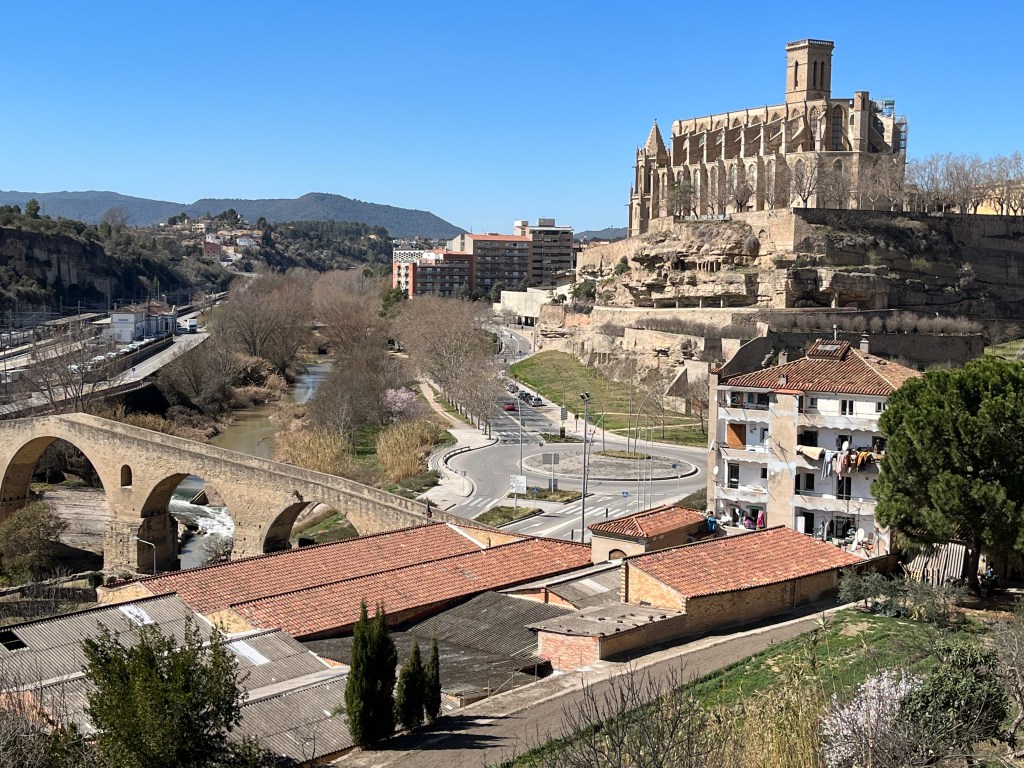
14th March. Rest Day – well if you can call a Visit to Manresa a rest. My jet-lagged body desperate to be in water, braved the 90 minute bus trip to this town, with a history from 11th century. The swim was fantastic, chased down by a hot pool and Americano. It took a good 10 minutes of garbled Spanish and gestures to explain what trim milk was 🙂 but we got there.
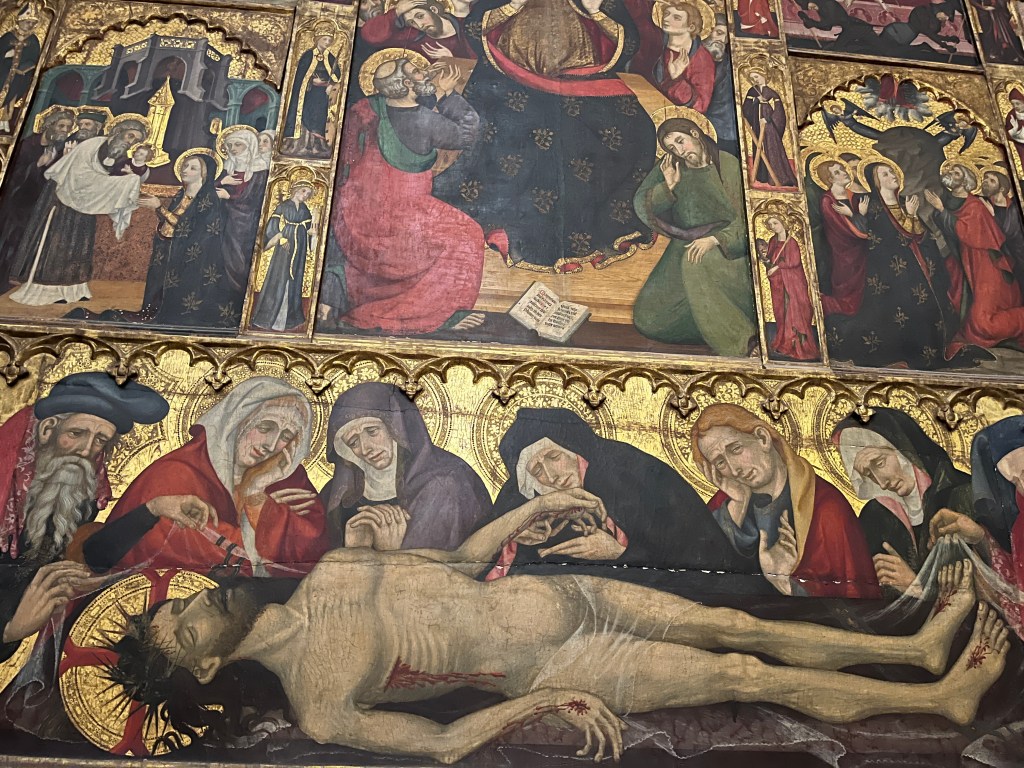
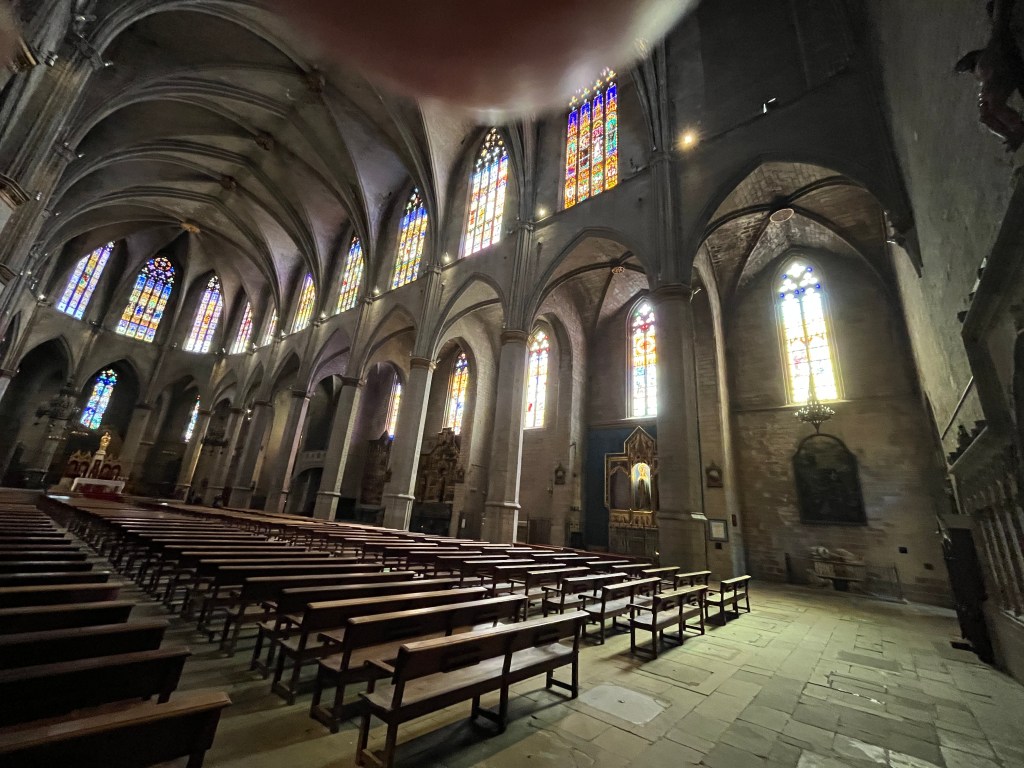
La Seu de Manresa (below) . Construction spanned from 1322 with the temple completed 1486, the belfry in 1592, the crypt in 1578, and the chapel in 1657. Stunning paintings present faces that hold deep emotion. Thirty lancet windows and on the outside, 18 flying buttresses, are typical of Catalan architecture.

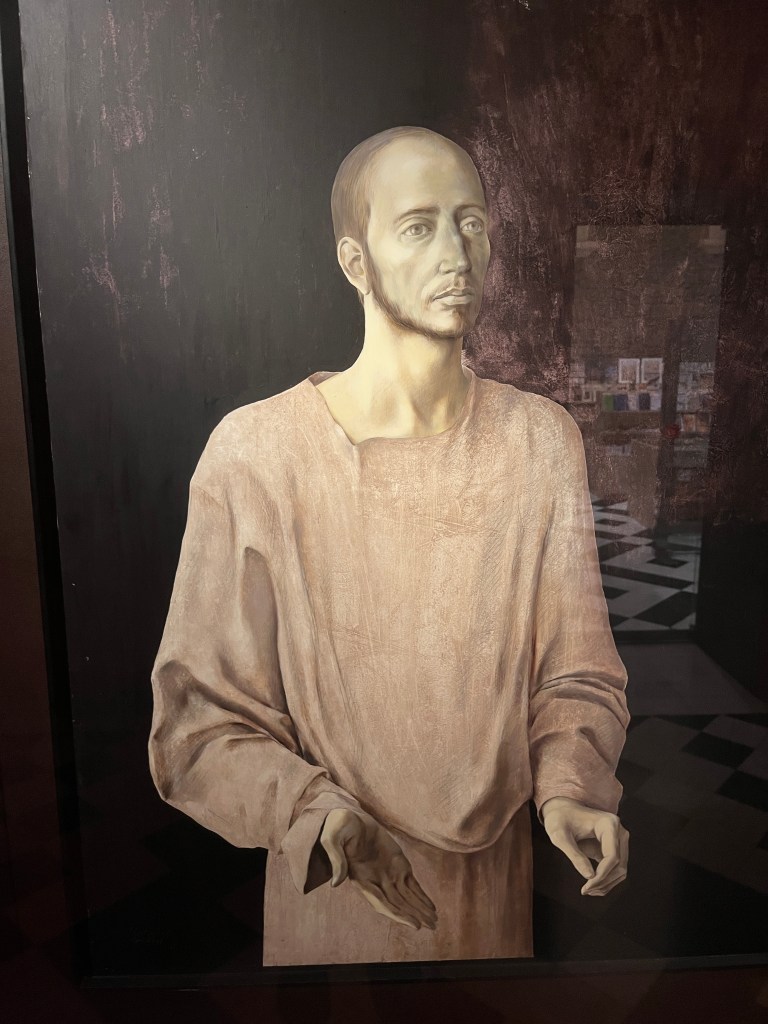
This astounding place, the cave of Saint Ignatia is built into the rock, and depicts Baroque art and Jesuit architecture. . The caves themselves were once inhabited by hermits during the 16th century. Amongst all the gilt and ornate tiled painting is this beautiful portrait of Ignatius, who was known for exercises of meditation and contemplation .
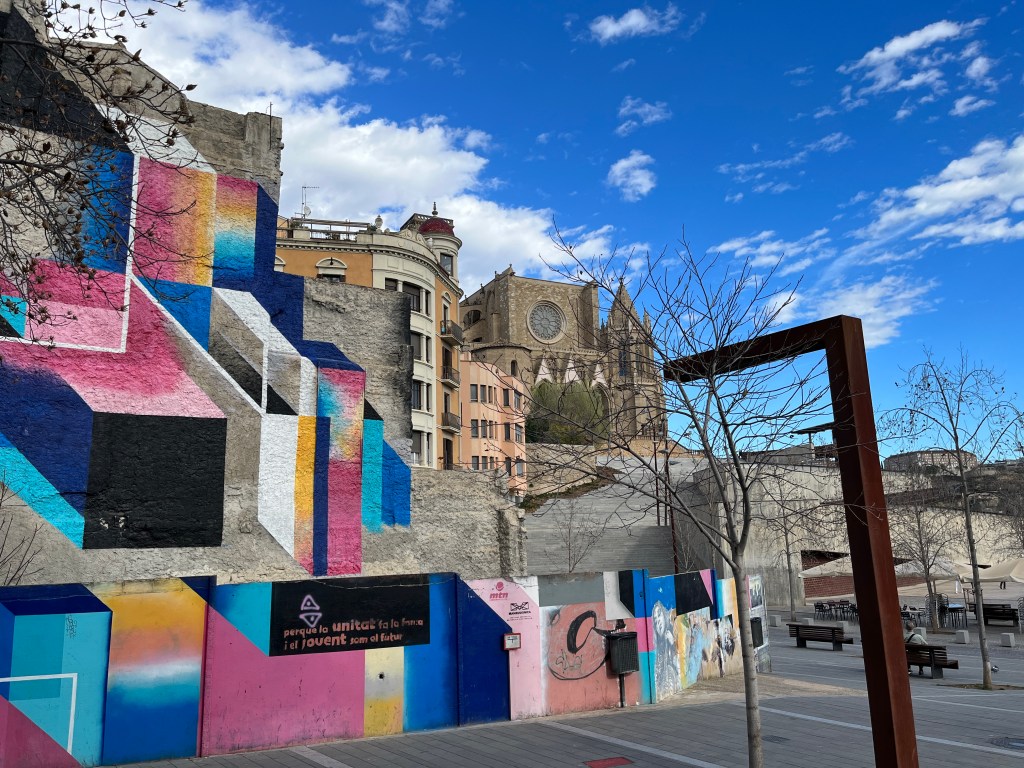
The new, the less new, the ancient.
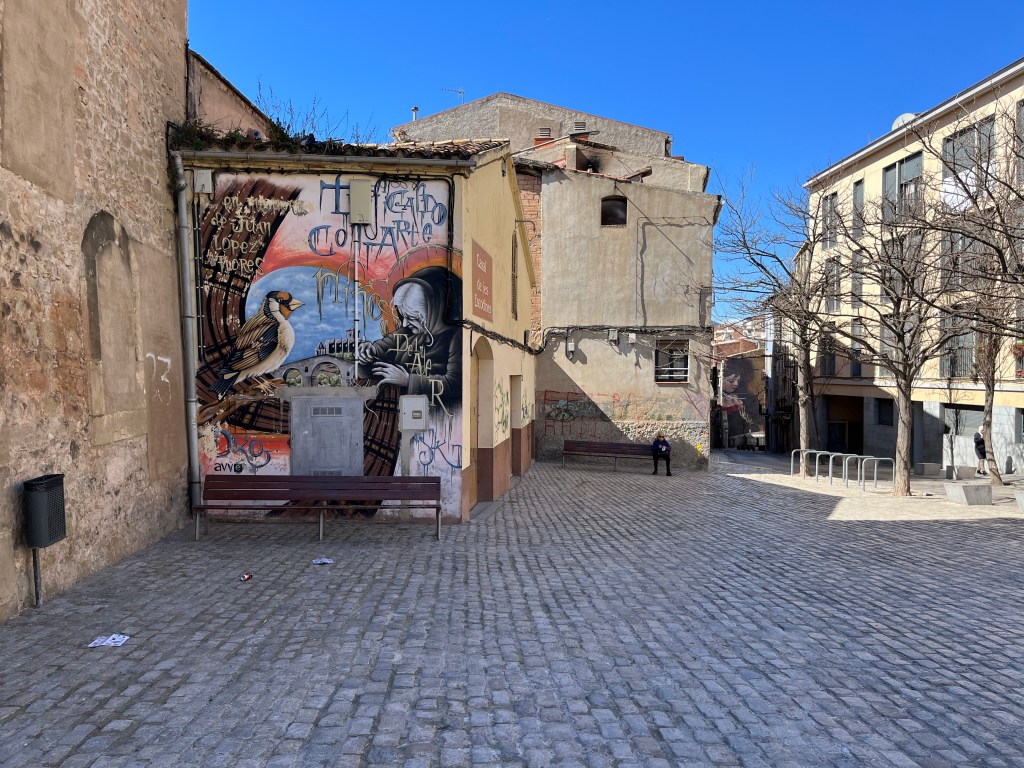
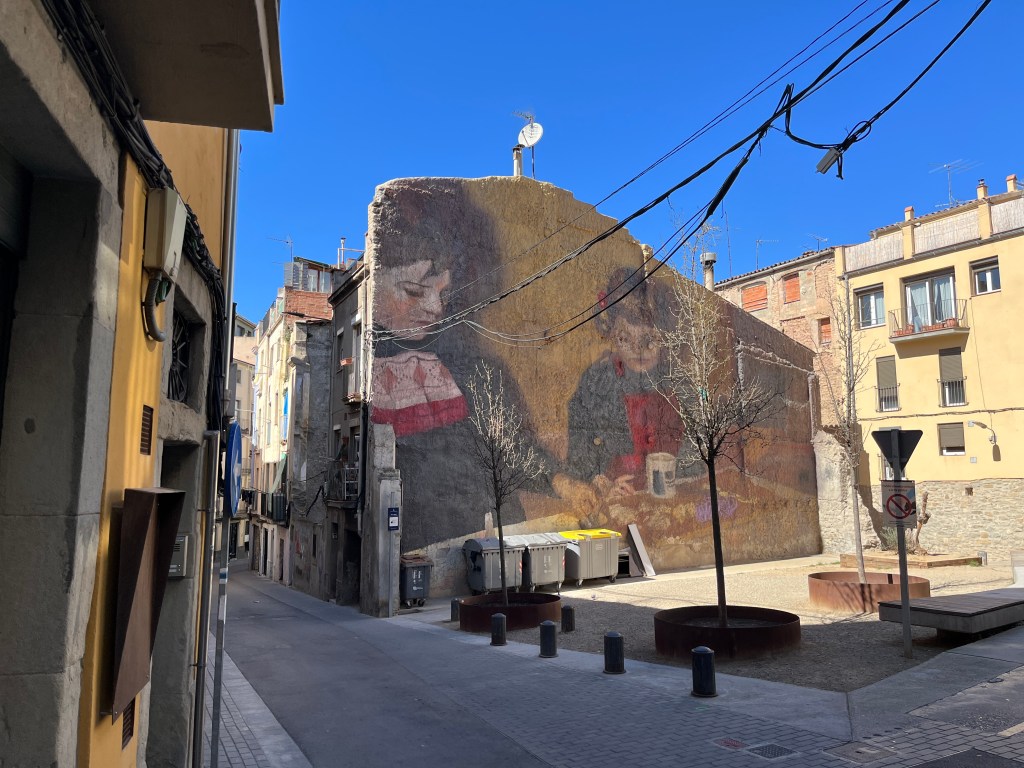
Wow factor: Below – Street art is one of Manresa’s other joys. A lot of poverty, people unable to repair and restore, sits amongst the numerous lovingly restored historical sites .
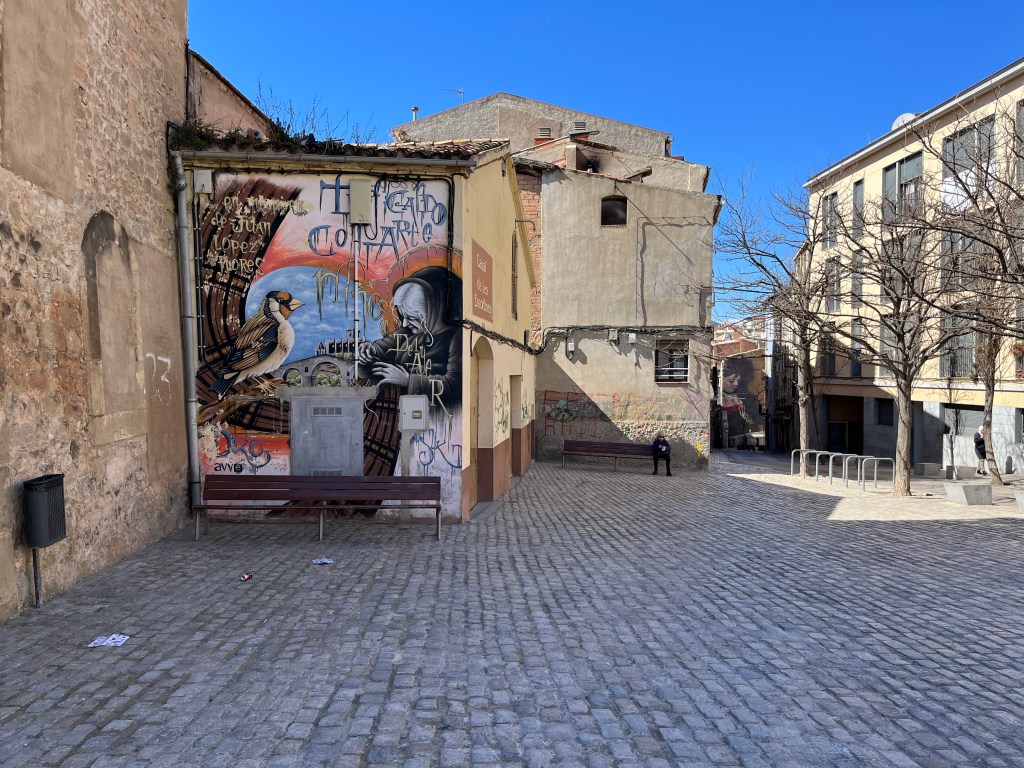
For Paulo … a butterfly 🙂
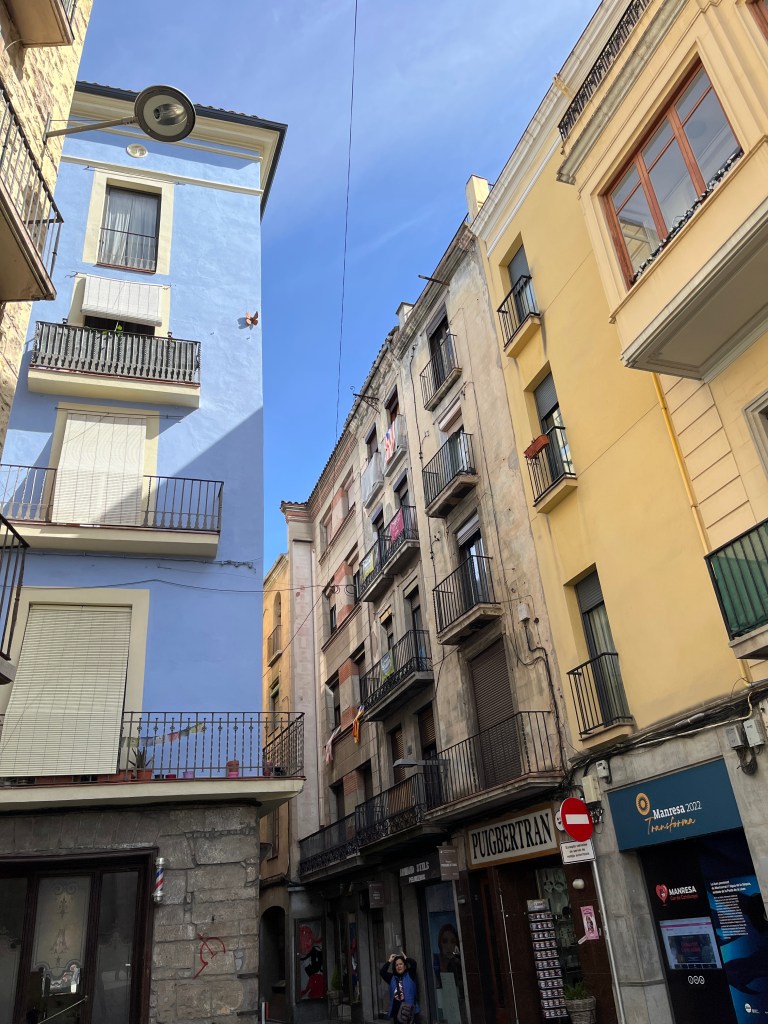
15th March: Wonderful to start the day, chatting with Ged and Dominique.After just one week from home, the heart strings are surely tugged. Let’s not think about the 6 month span. Thanks you two.Horse work cancelled dure the the Jefer (boss/ leader) not feeling well. A good chance to do some espaniol immersion , and practice with my flatmates, spurred along by pomegranate and rose Turkish delight, thanks to D ,
16th March. A special day with cabellos and voluntarios. One horse, Niche, (bottom left) is looking poorly, has lost weight and isn’t joining the others to feed. He responded to me bringing him an armful of hay however, and ate it from my arms.
The reason for his malaise is unknown but interesting the other horses will not leave him on his own. He did join the ‘caravan’ today. The horses follow our voice to walk the 1 km to their grazing …. no halters needed (and the grazing is nothing like lush grass). The front house is Lorenzo’s farmhouse and the ‘casa’ in the distance is where the horses graze.

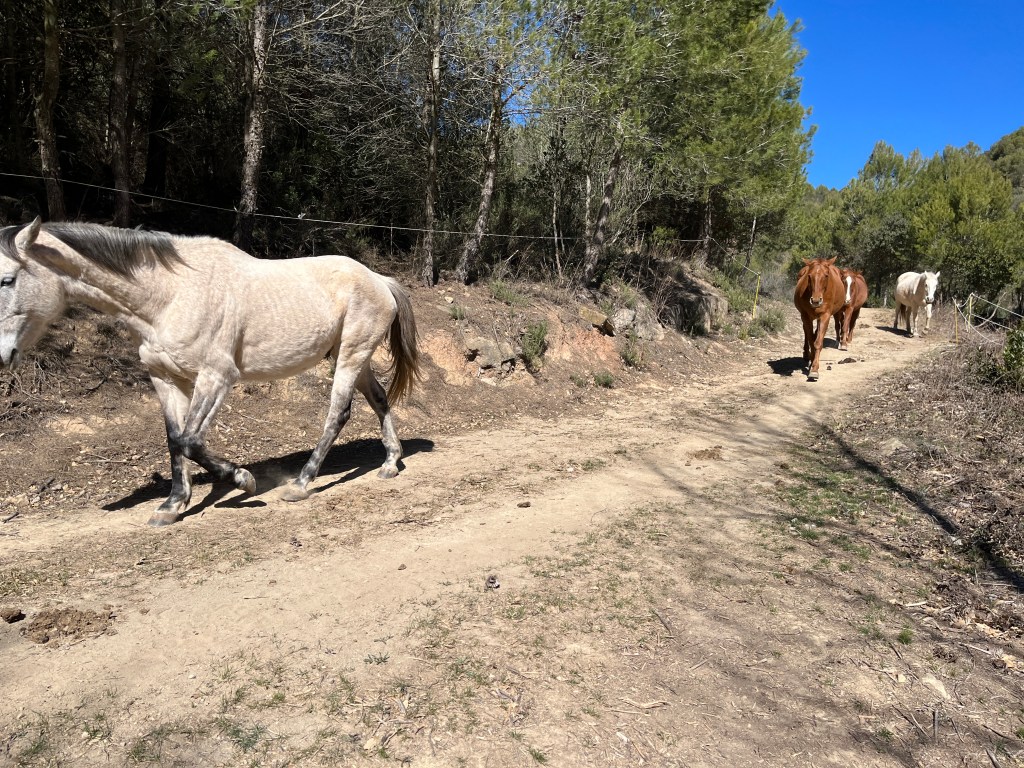
Wow factor: a previous volunteer used a flute, and the horses cantering home 1km from the distant casa
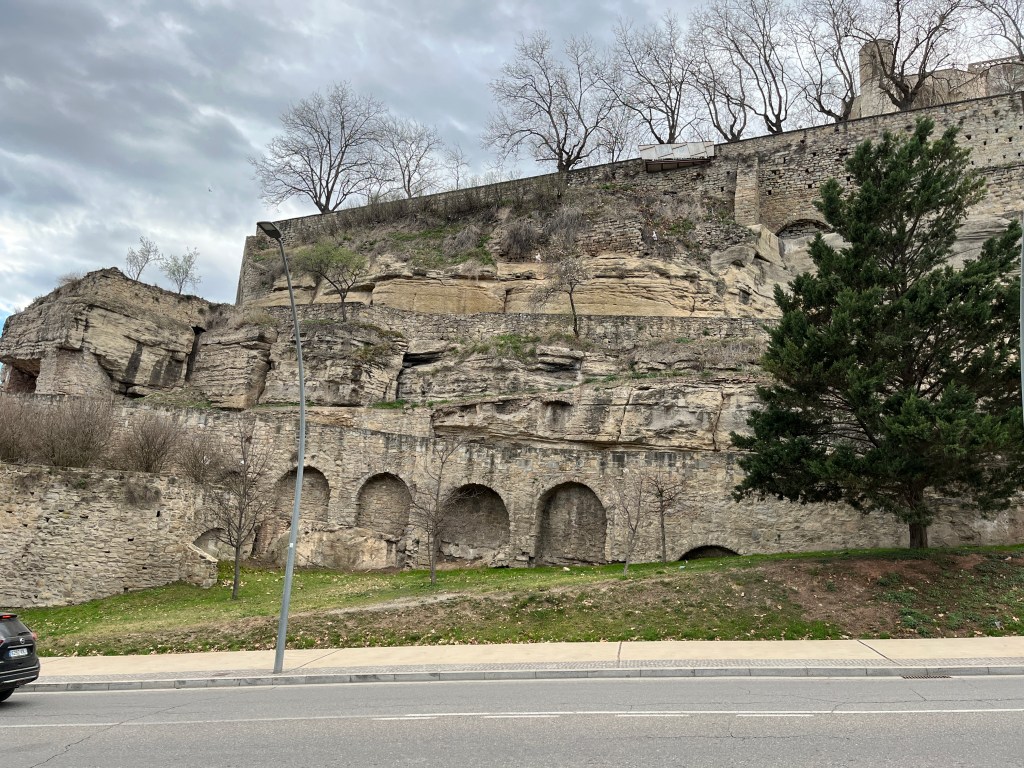
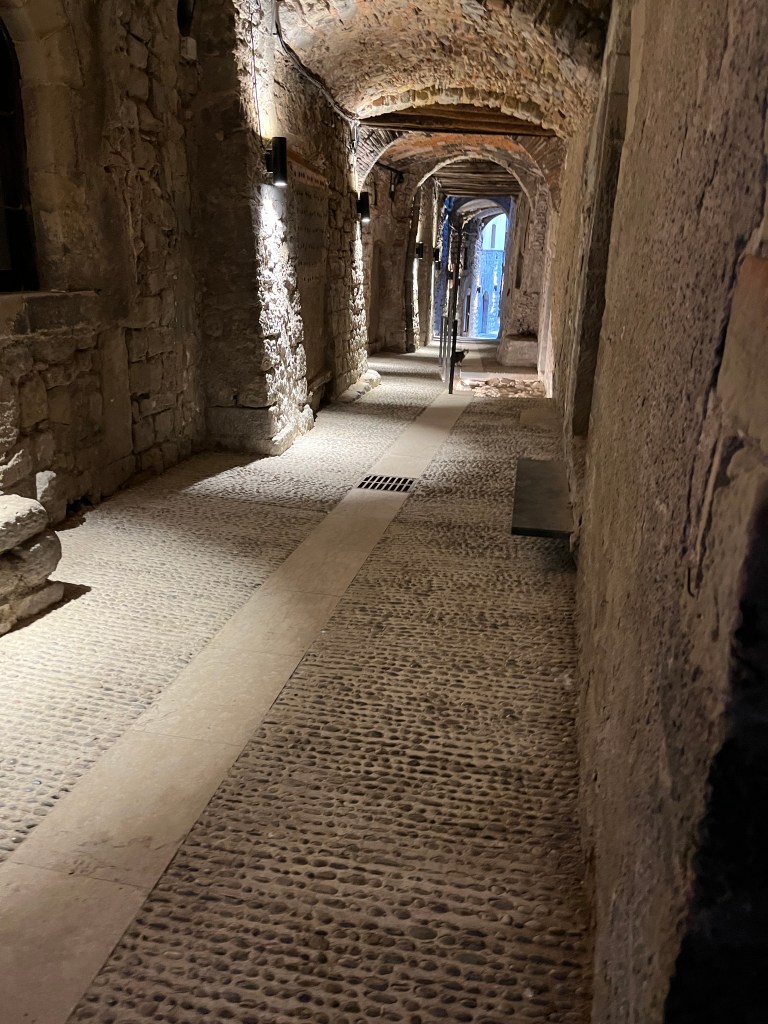
A few more pictures from Manresa … the narrow streets (bald) preserved from the medieval city (now underground). There are also sections of the wall (Le Mar) from the 14th century, and the old bridge built in the 12th and 13th centuries.
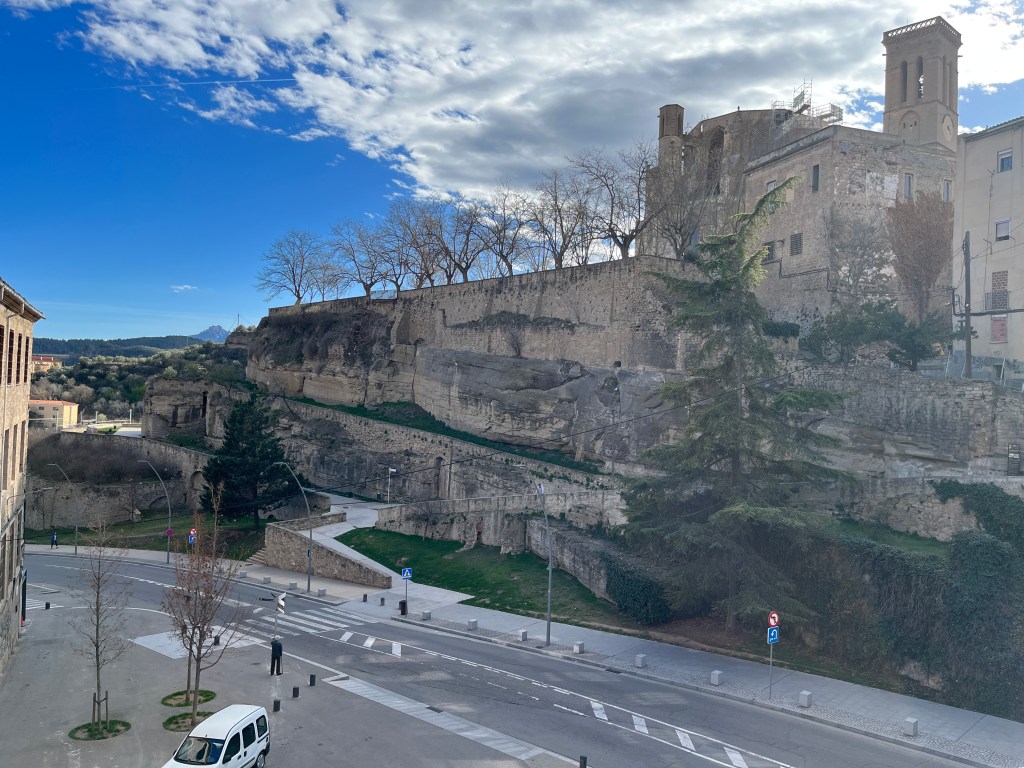

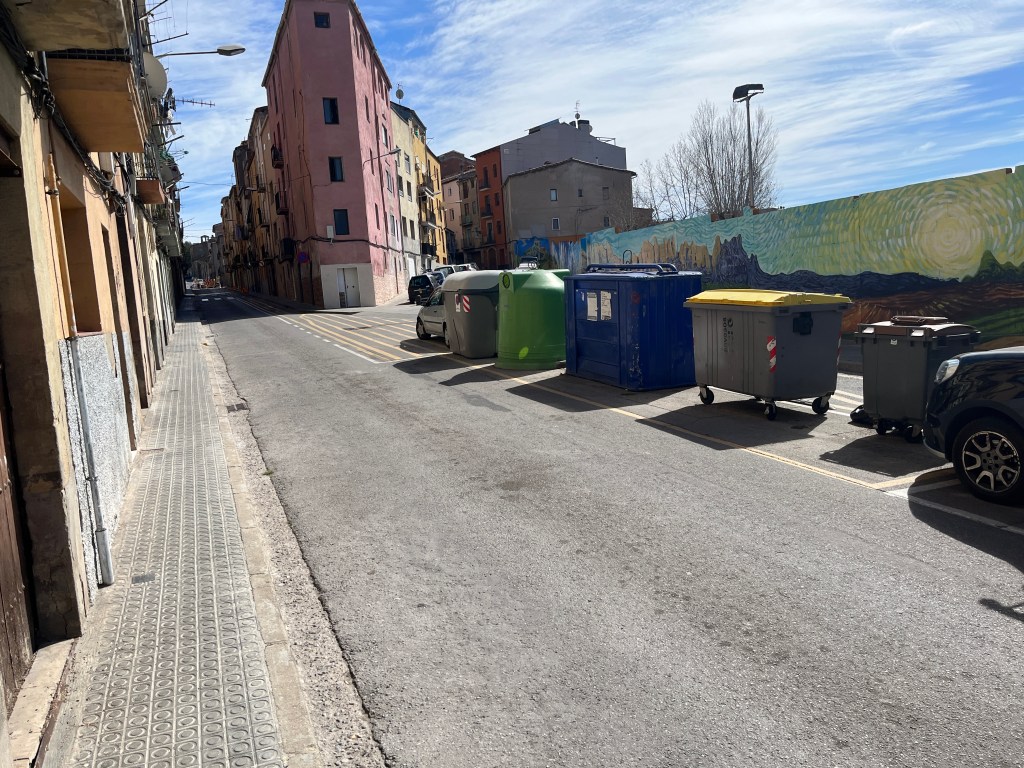
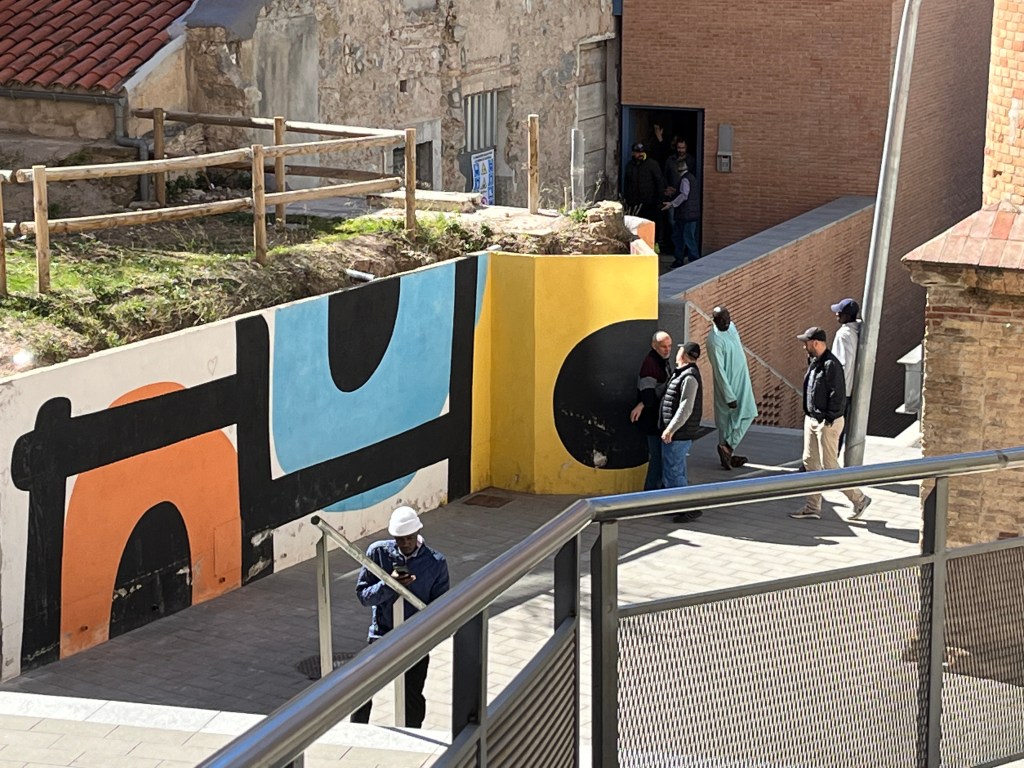
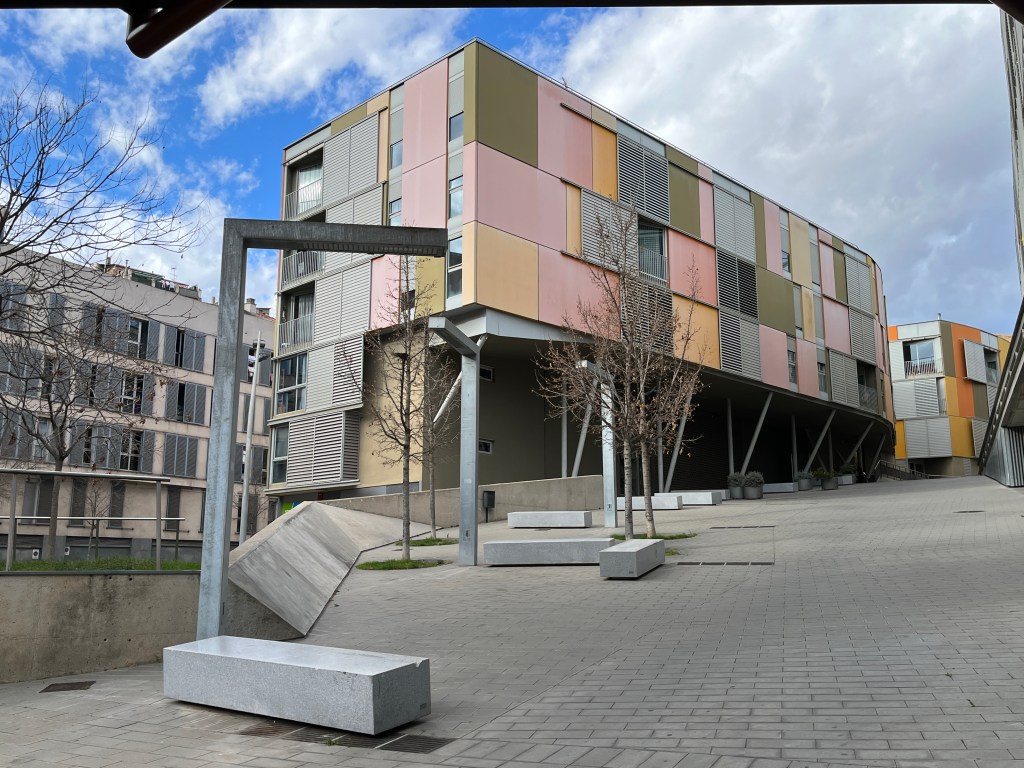
the modern area is a tasteful contrast. plus the street art is mesmerising.
Moving on from Cadrona community. Sadly my ‘back’ didn’t cope with the daily 60 minute roundtrip on a truly bumpy road. It is with some disappointment that II will move onto another small farm. It has been a unique , fun and special time with the crew and the herd. Lorenzo has helped create a real community with the volunteers from the European Solidarity Corp who stay for 6 months. He gets by with minimal resources, and having to bring water by bottles from a nearby farm.
I got to learn something of the life from the stance of the volunteers from Ukraine, Morocco, Georgia, Turkey , Romania and Bulgaria, so a rich time. They each have a story to tell with various challenges and traumas. The routine of caring for the horses, accompanying them without the act of submission, has healing powers and lessons.
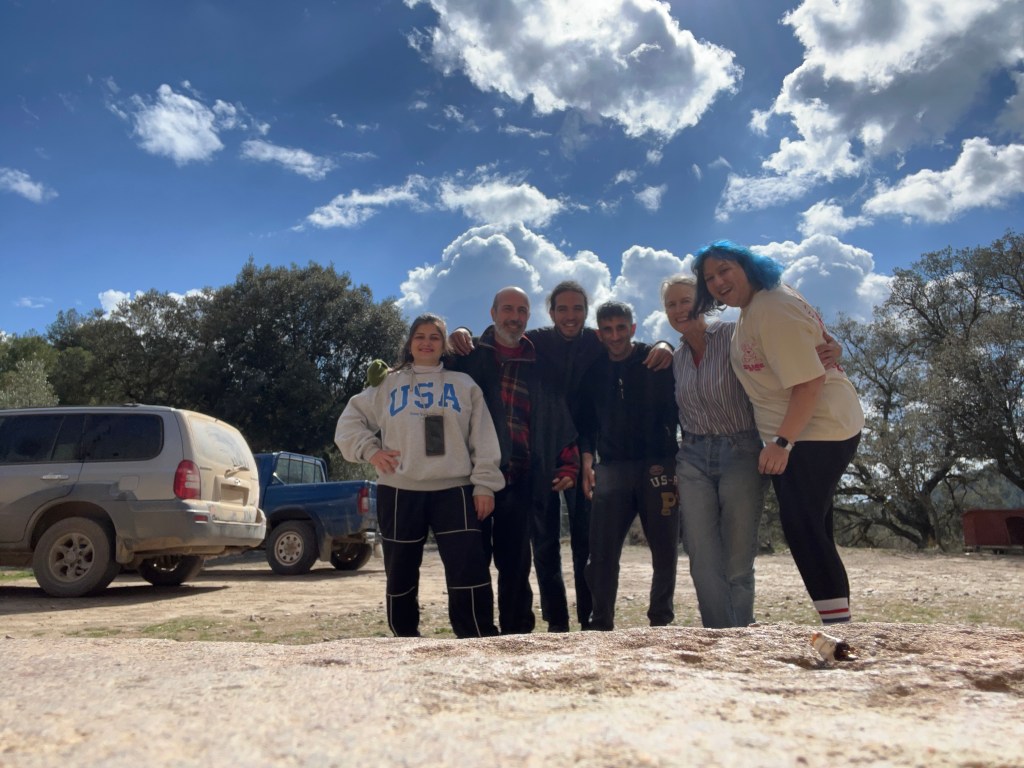
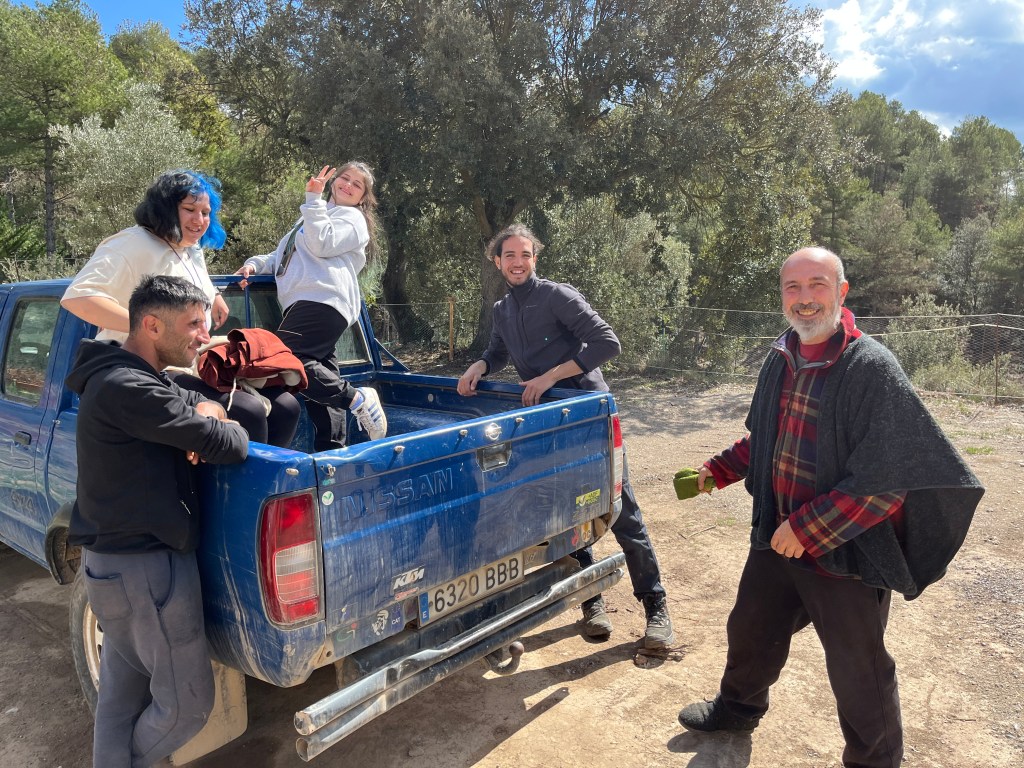
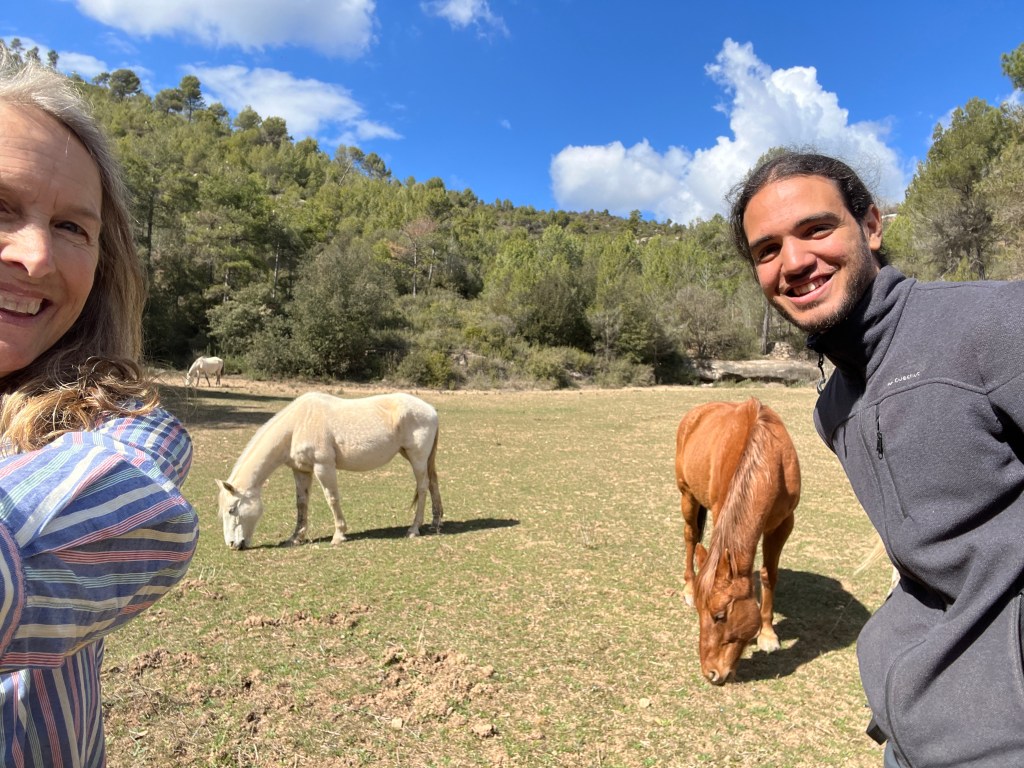
Moving on from Cadrona community. Sadly my back didn’t handle the 60 mins on a truly bumpy road each day so I will move onto another small farm. It has been a unique , fun and special time with the crew and the herd. Lorenzo has helped create a real community with the volunteers from the European Solidarity Corp who stay for 6 months. He gets by with minimal resources, and having to bring water by bottle from a nearby farm. I got to learn something of the life from the stance of the volunteers from Morocco, Georgia, Turkey , Romania and Bulgaria, so a rich time. They each have a story to tell with various challenges and traumas. The routine of caring for the horses, accompanying them without the act of submission, gas healing powers and lessons.
On 6am bus back to Barcelona, and a night at Sunotel, a rabbit warren of a hotel, redeemed only by it’s small cold rooftop pool and spa.
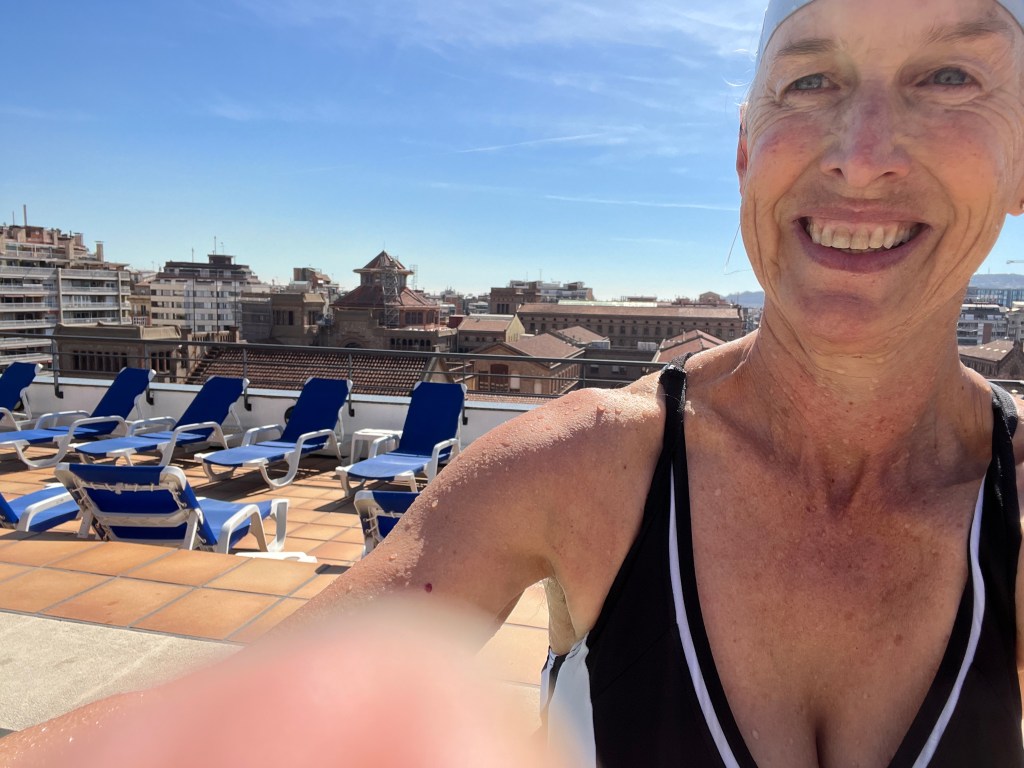
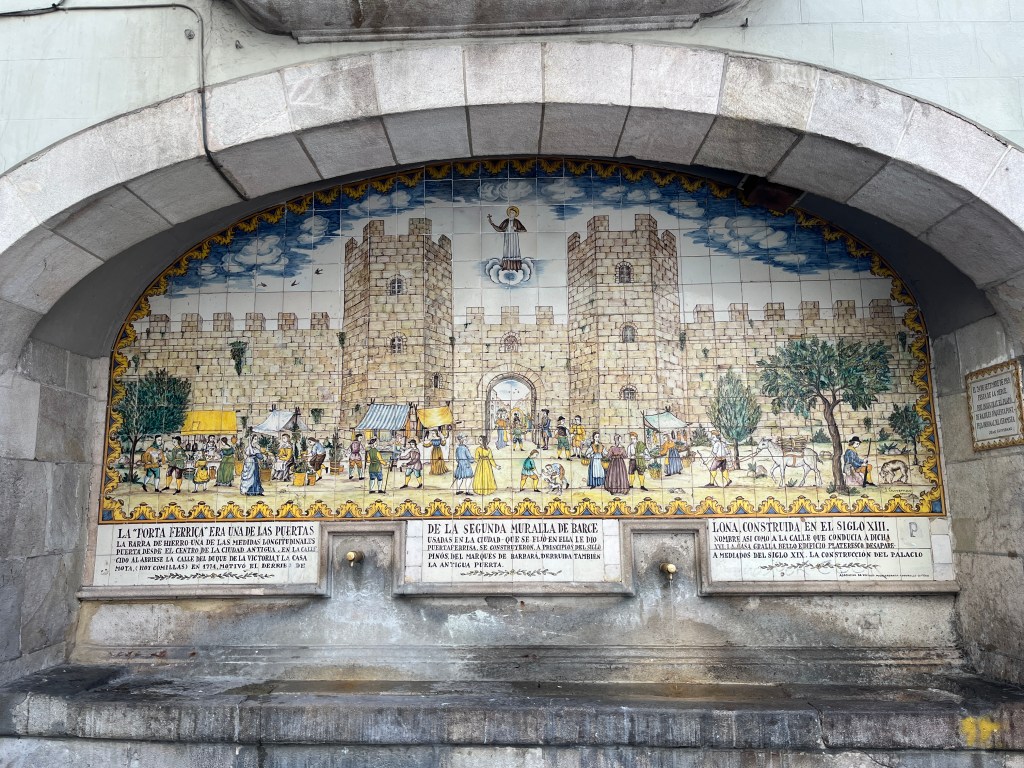
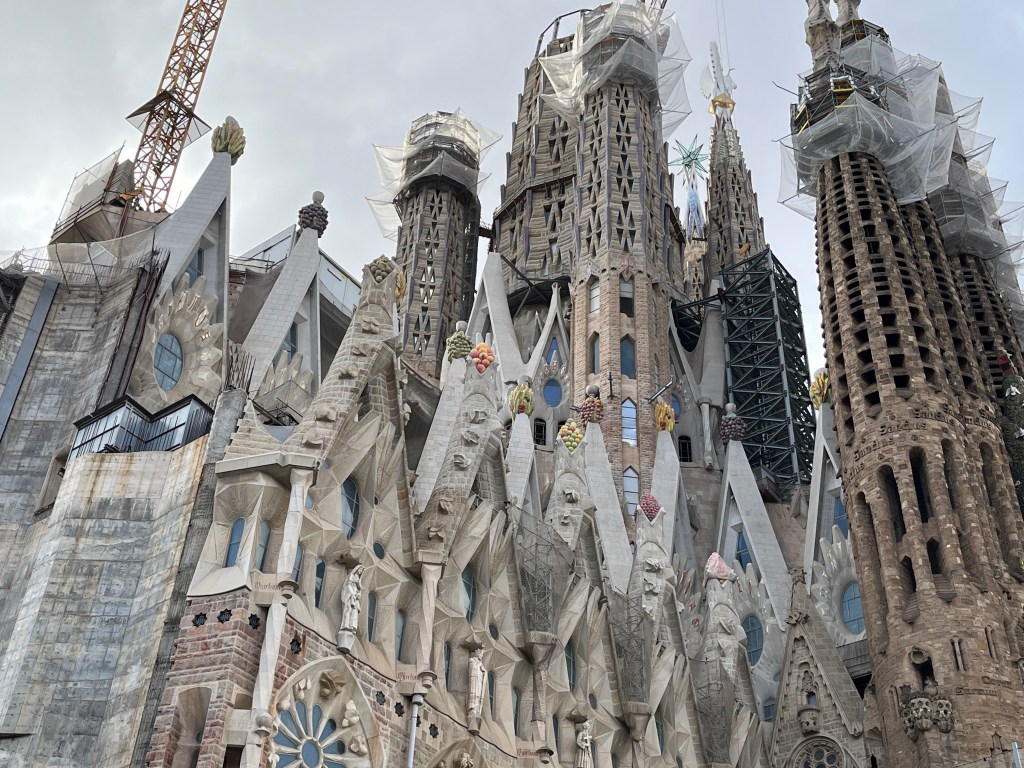
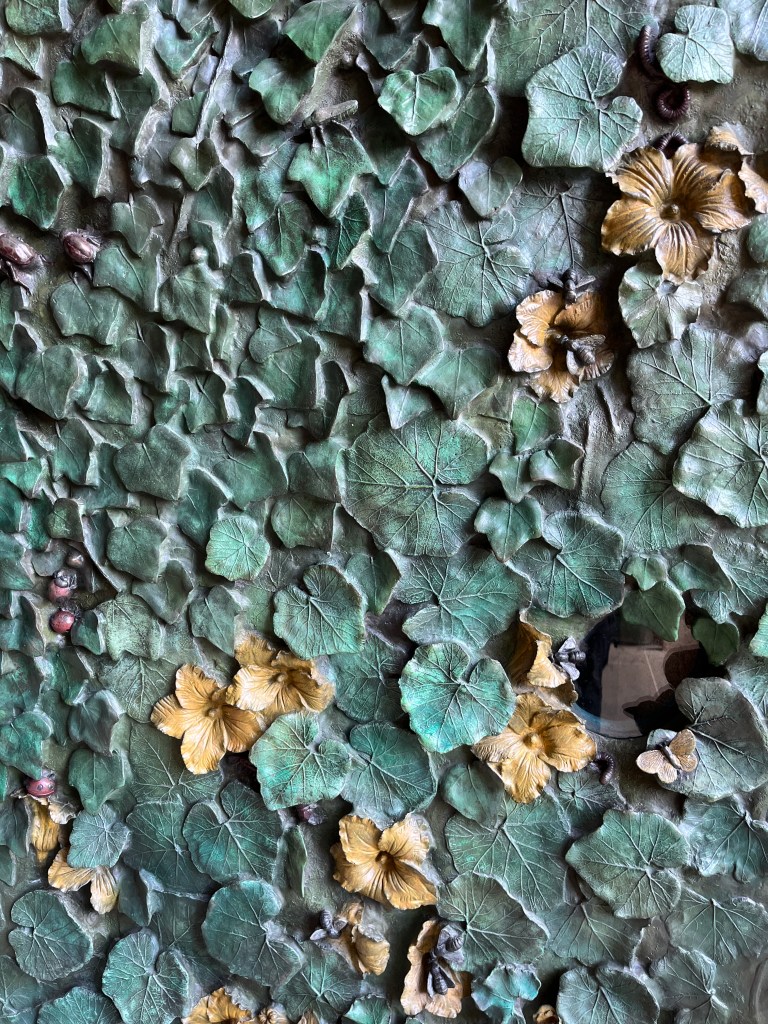
Wow factor : Gaudi, how did you so perceive these moments from nature in every detail. This close-up relief from the 3 or 4metre high doors.(above) and how could you envision exactly how the light would fall to create this abundance of space, light and color.
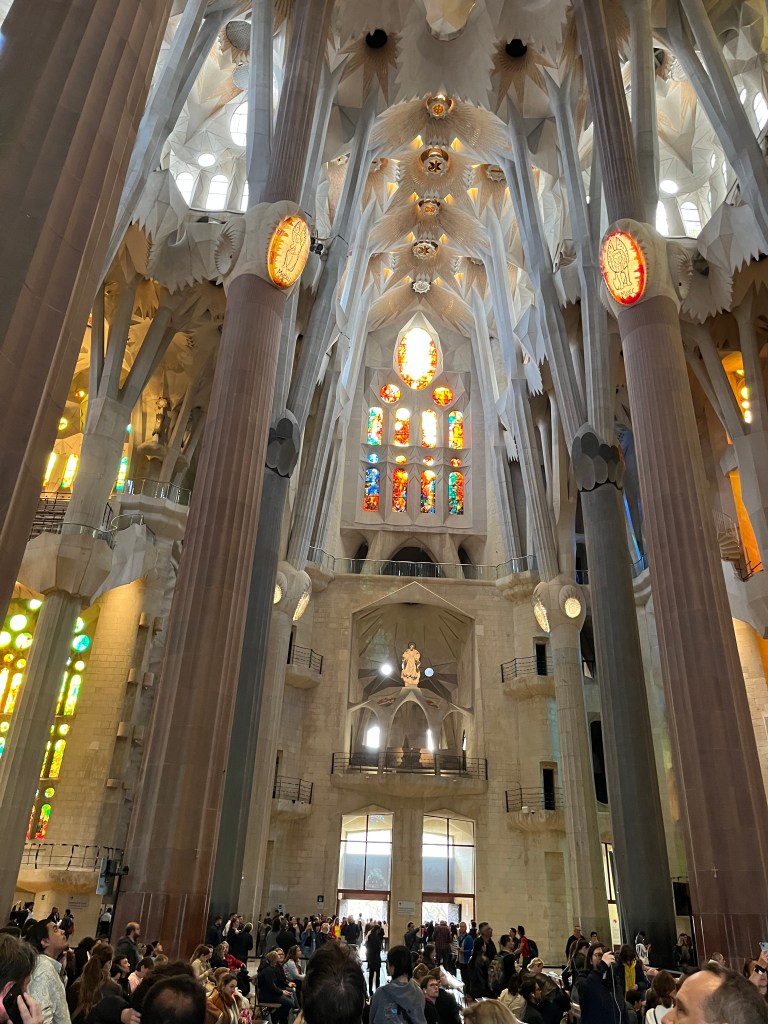

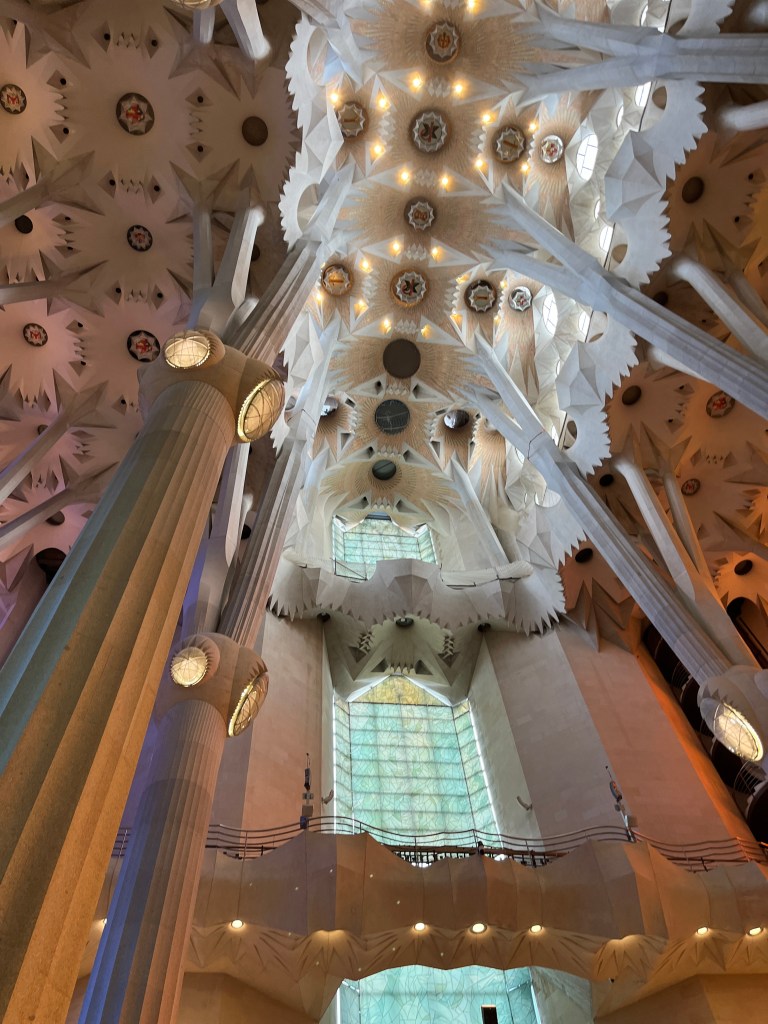
I wish my neck wasn’t so sore, as this ceiling is magnificent.
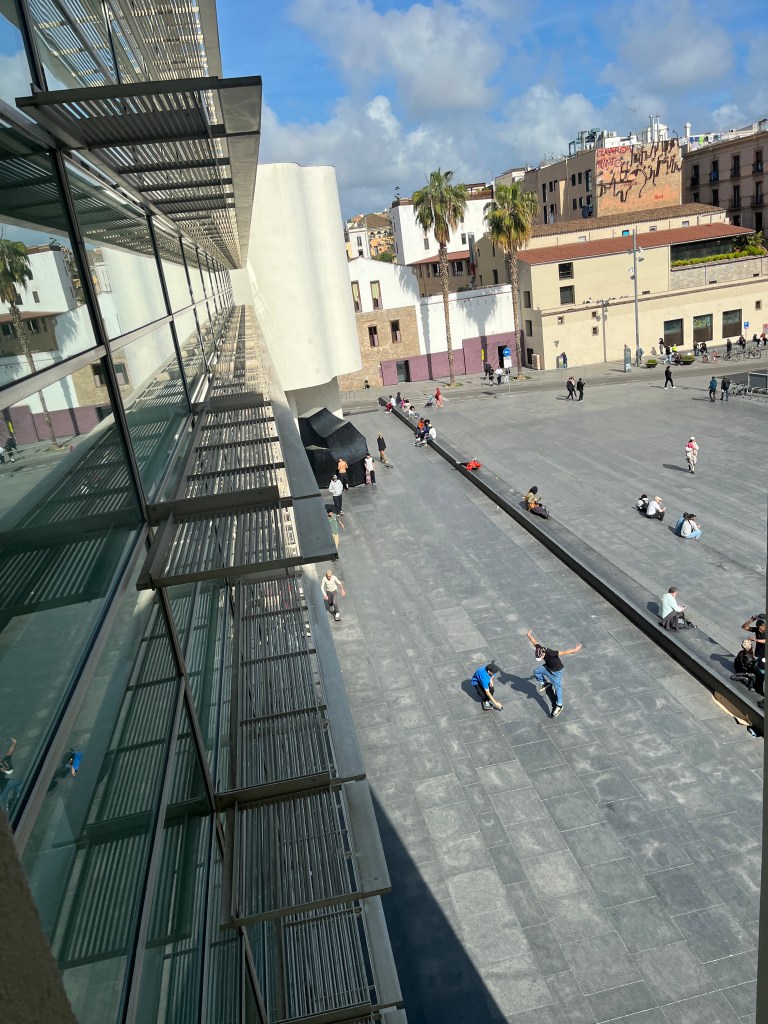
On now to the Museum of contemporary Art. Pausing outside with the skaters and the smell of weed wasn’t to be missed.
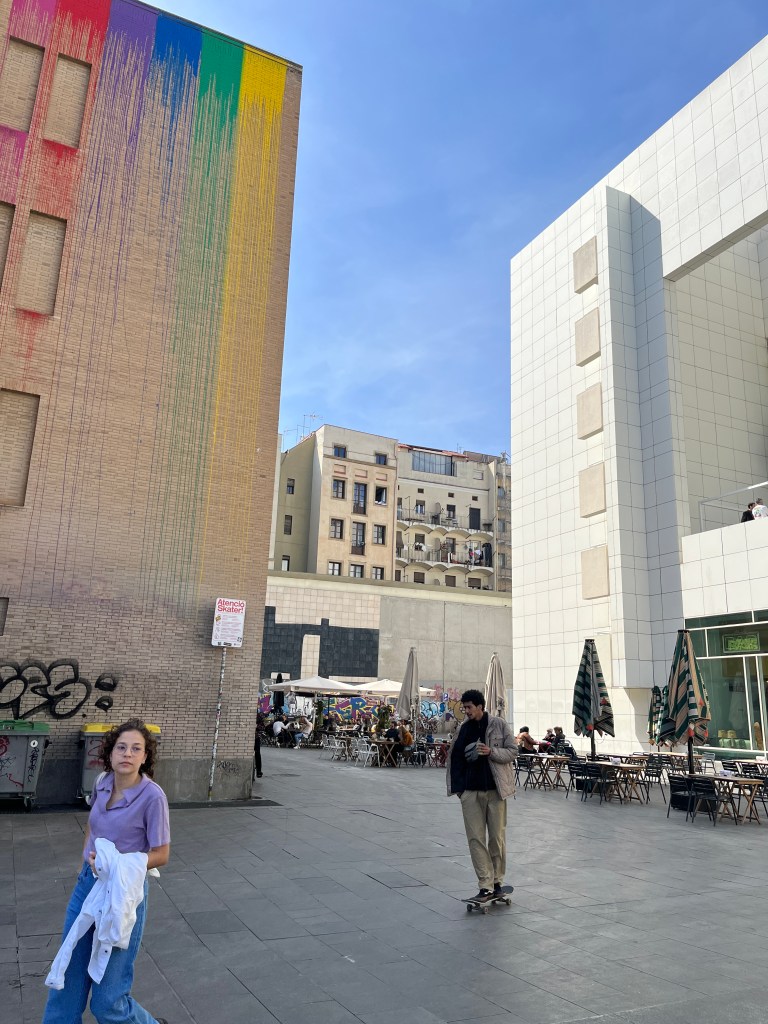
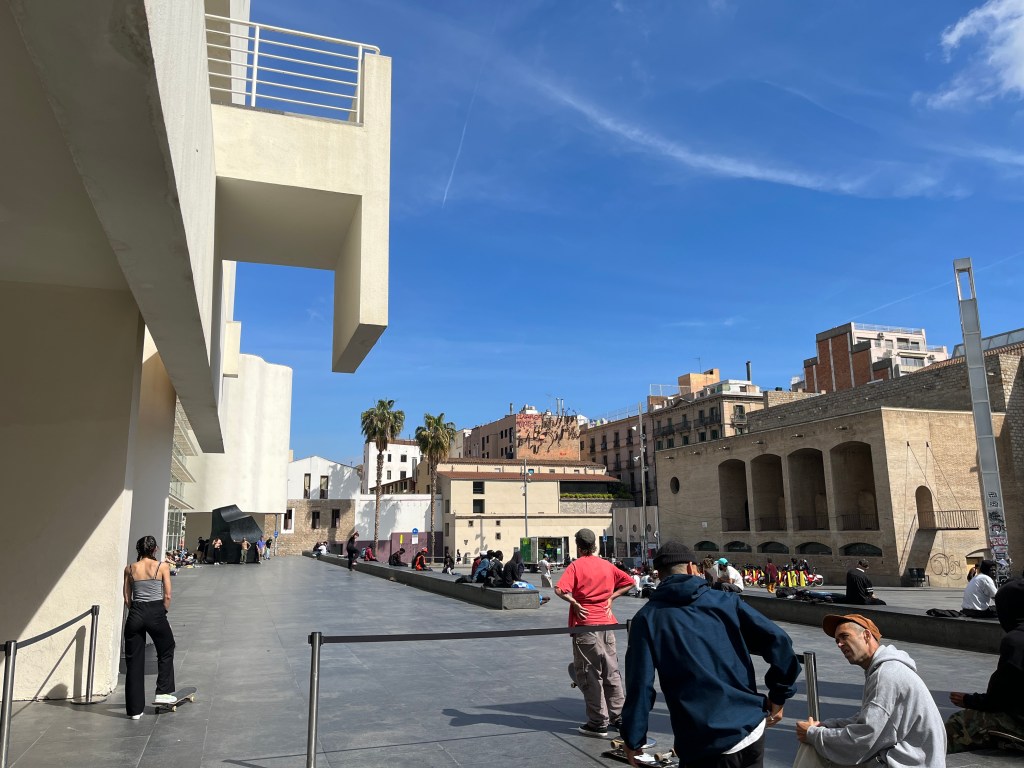
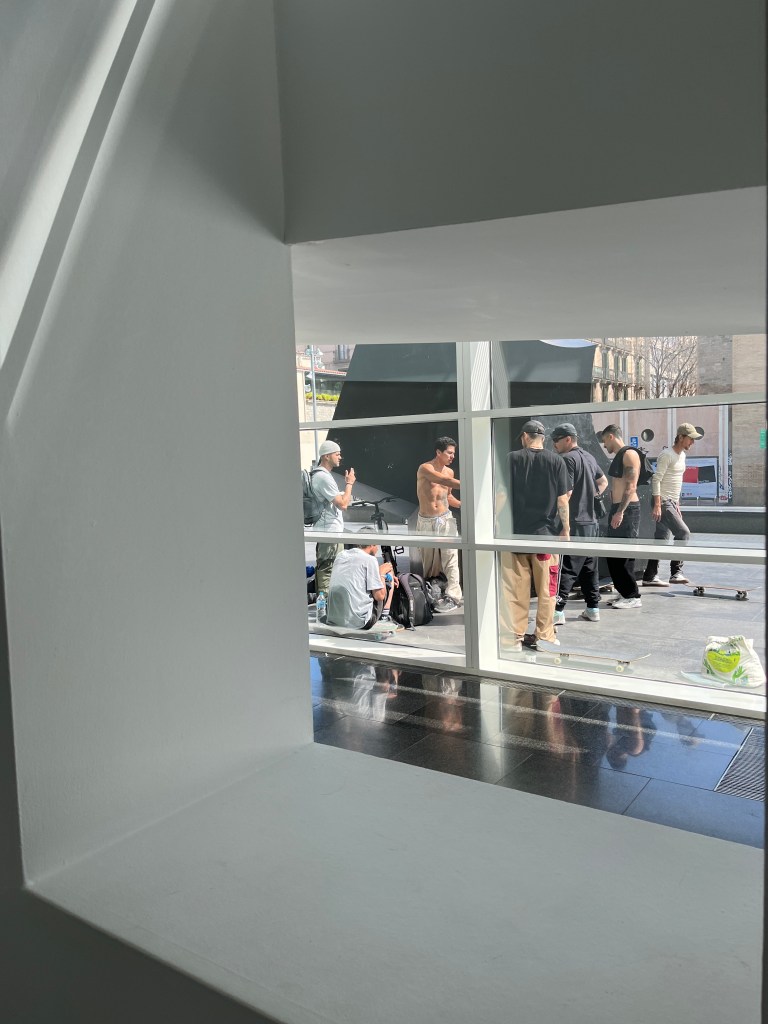
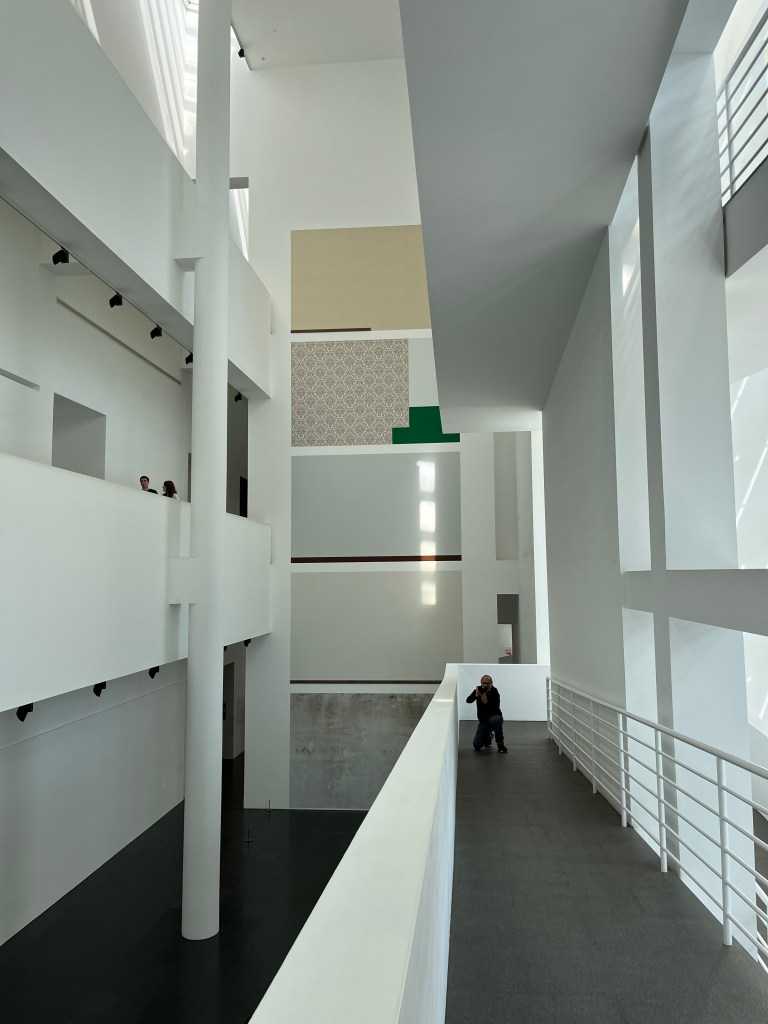
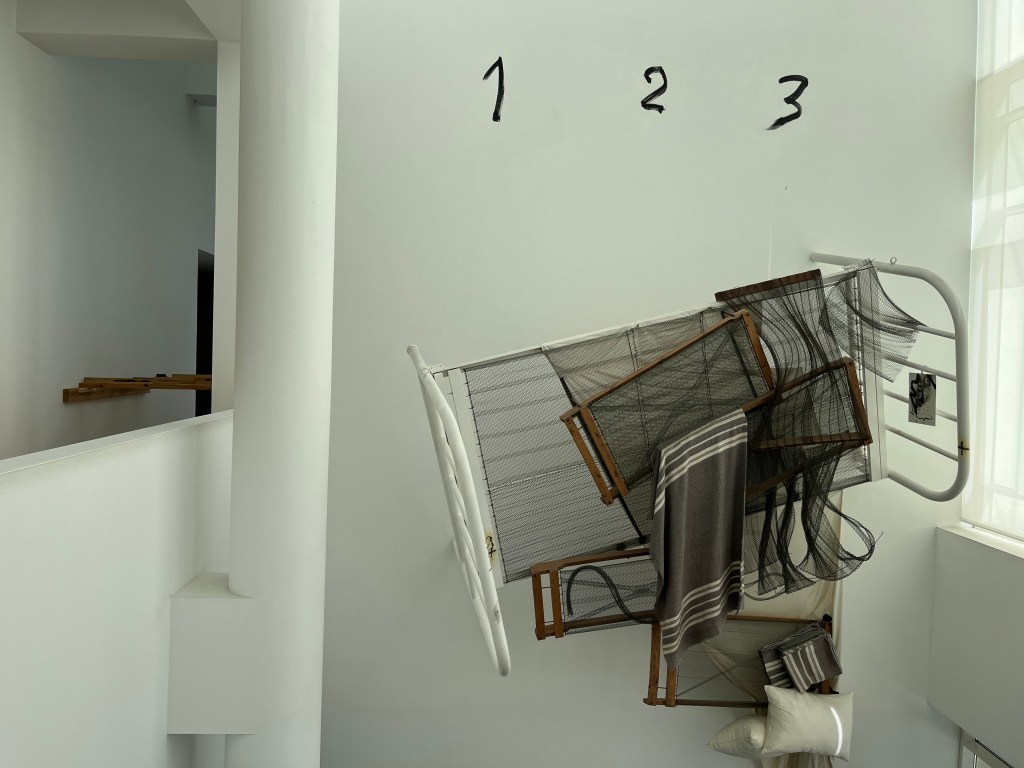
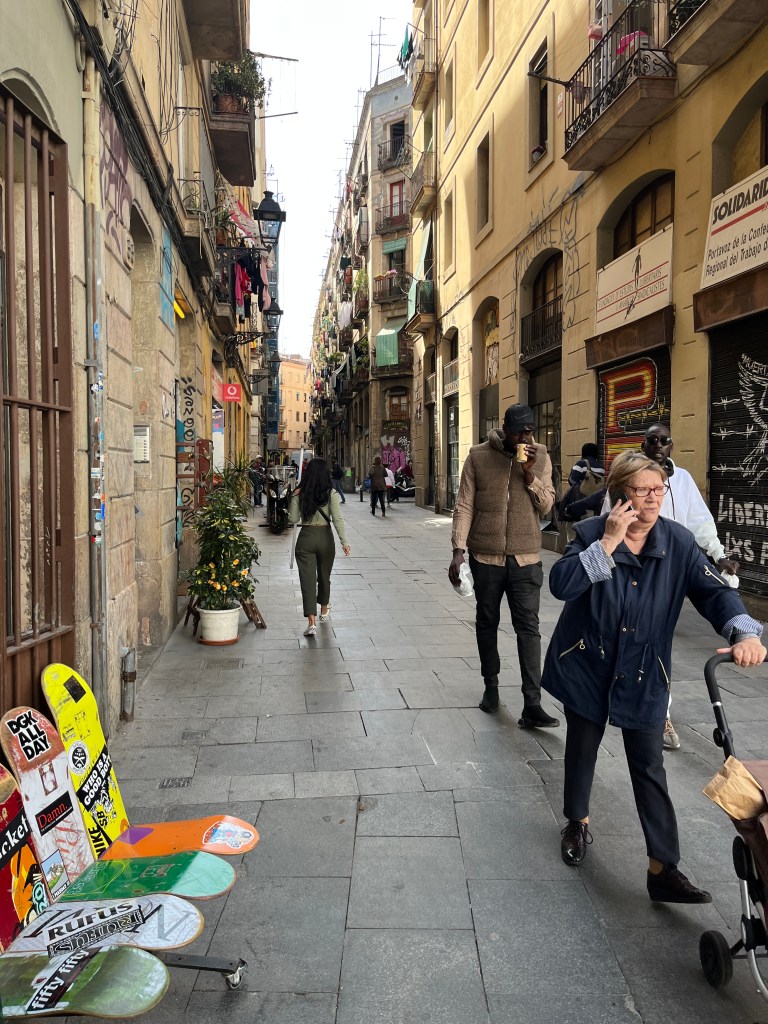
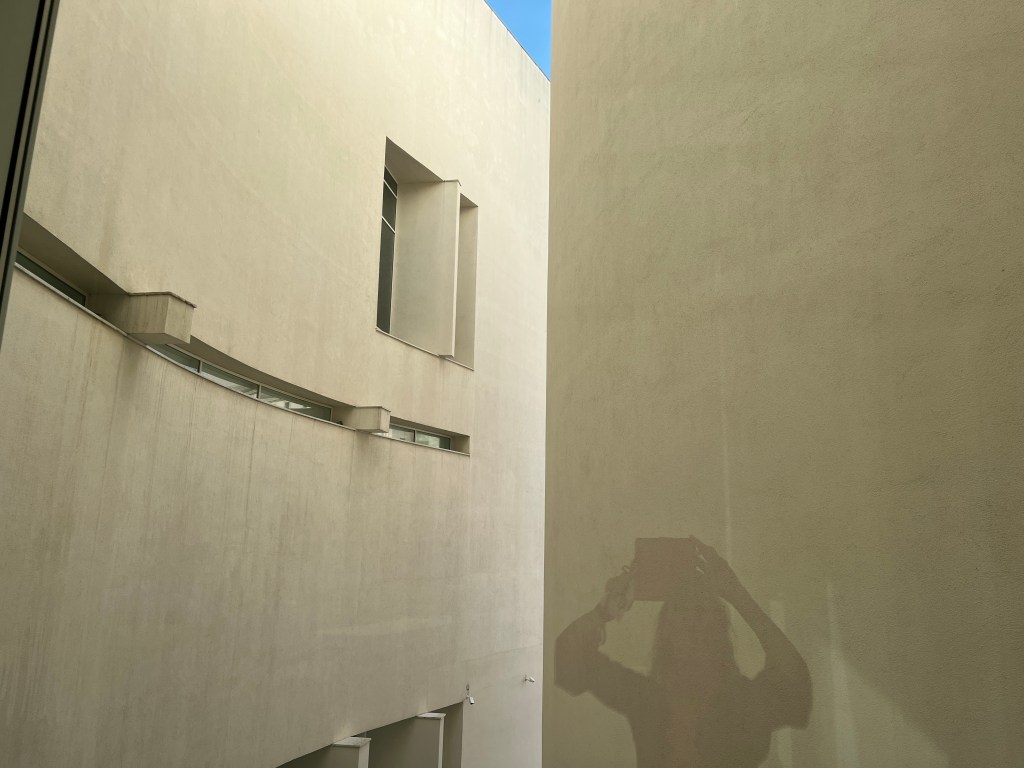
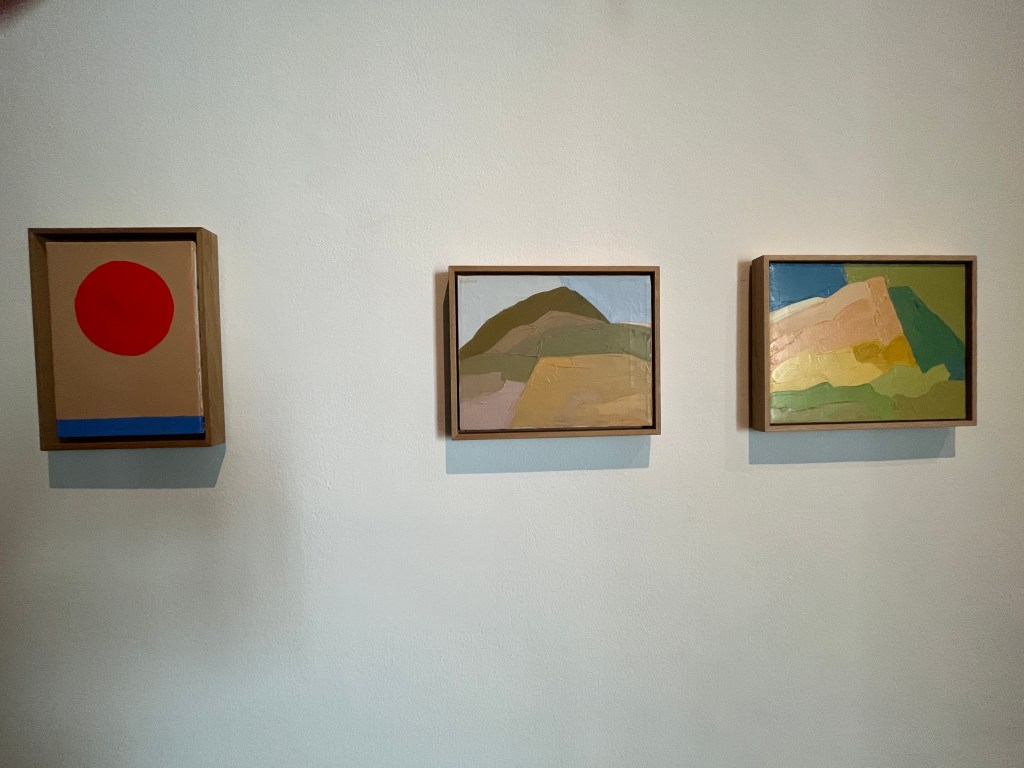
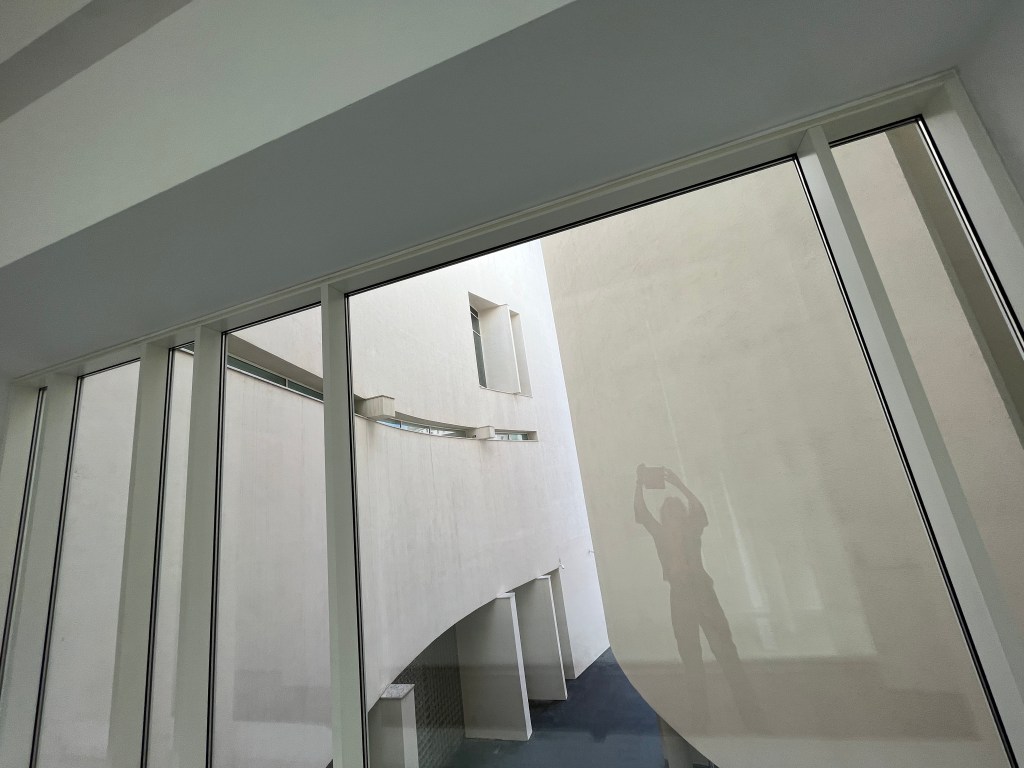
21 March . On by train to Castellon, and bus to Atzeneta. Far out, it took me an hour to try and find a taxi in Castellon. It was a roadside worker who finally helped me access one. Collected at Atzeneta by my host Eva
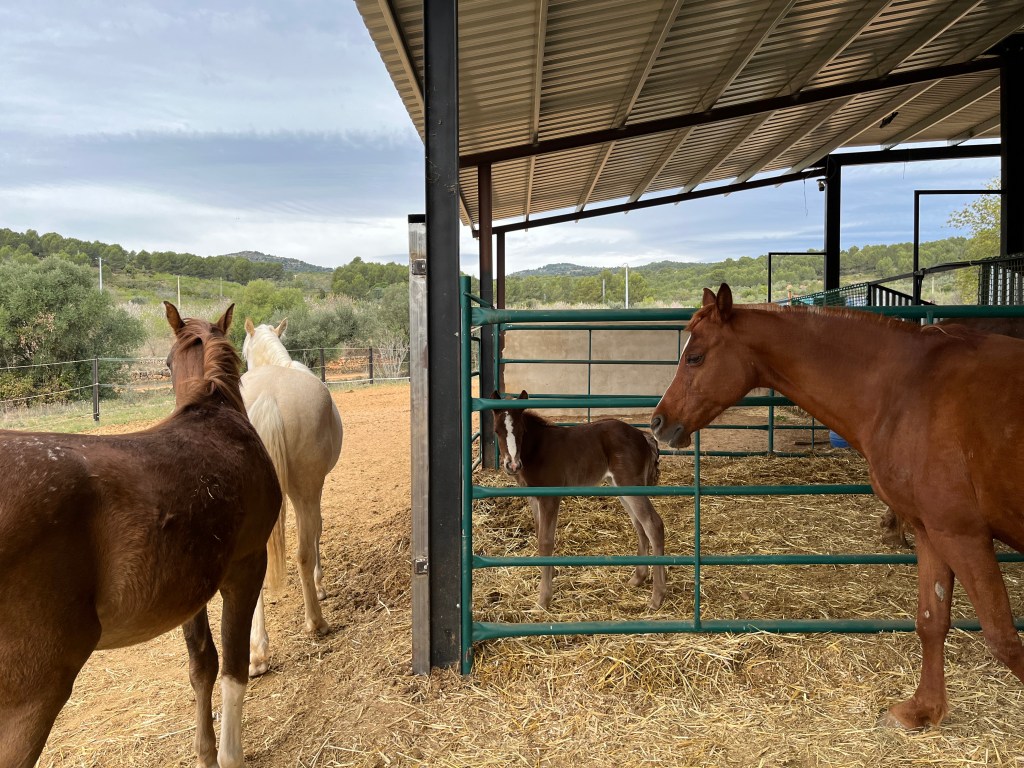
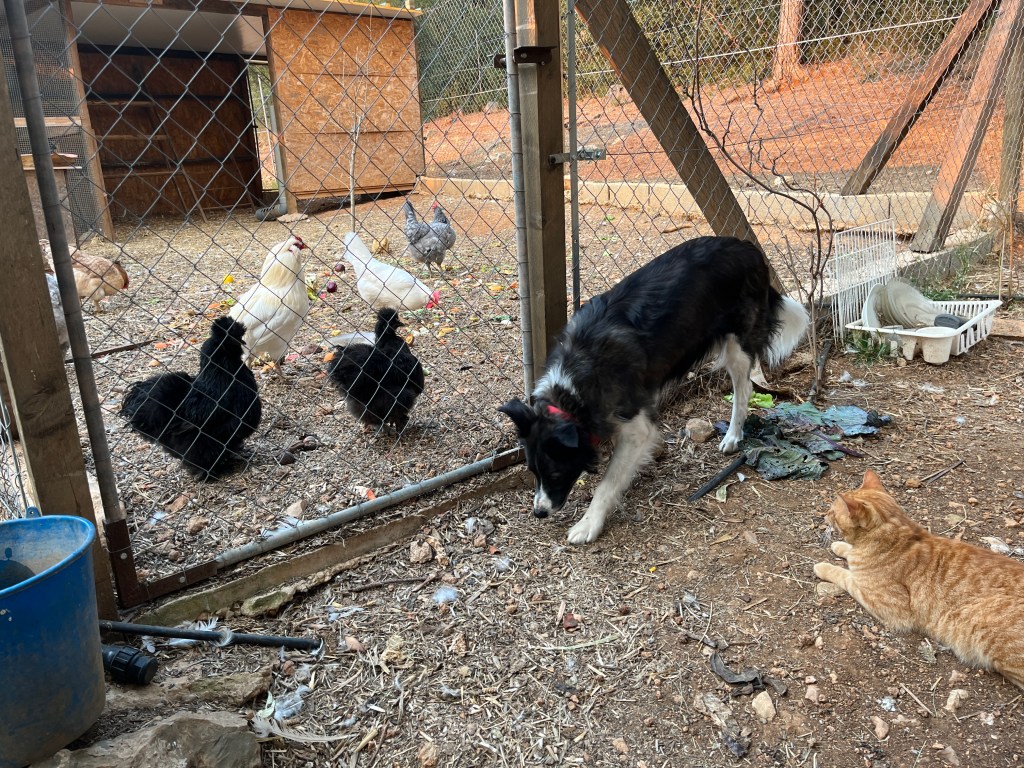
My home for the next 2 weeks is on a finca between Altzeneta and Benafigos. Eva and Miguel are building their container home amongst other projects. This morning their 22 month old son joined me through an entire yoga session. I then fed and groomed the four horses. The other horse, Benos, a mother of a one-week old foal can’t be approached easily at the moment. Yoga is due to give birth in about 12 days, so i may yet meet number 7 in the herd. They are relaxed and so welcoming. Gracias. Let’s demystify the glamour a bit, with my other job… manure removal and de-gutting fish. I am looking forward to the calamari and fish soup though
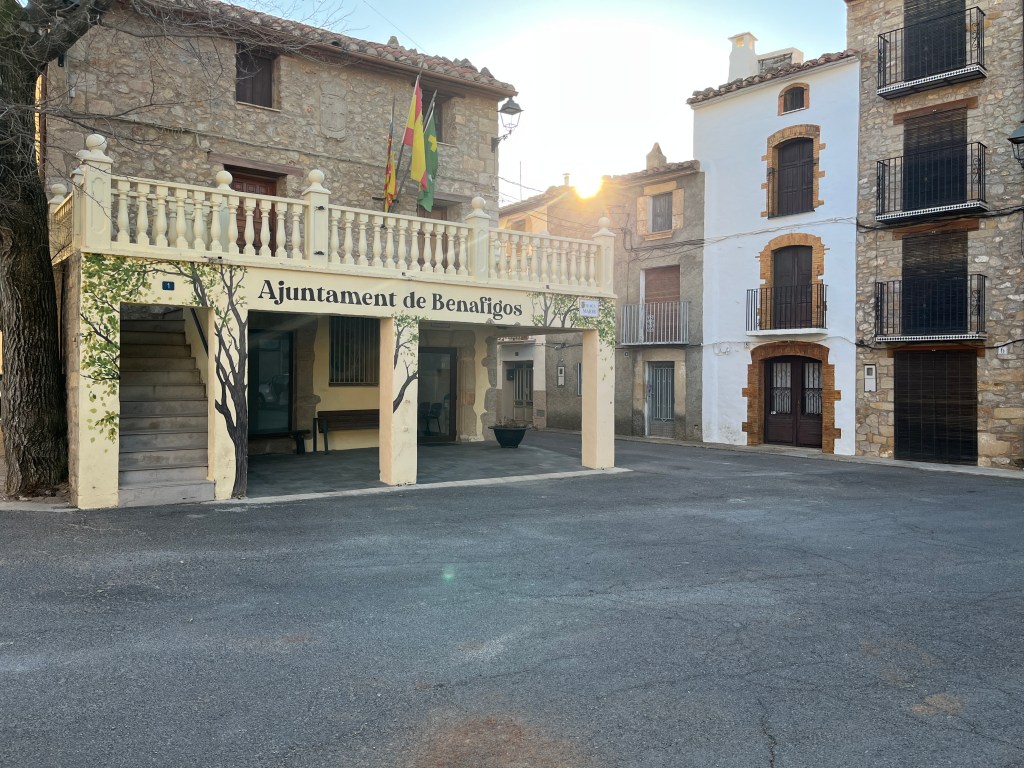

Almond trees are a top crop in this area, and they are just finishing their spring blossom. Look closely and you’ll see Sidra runing back to me with her stick.

Wow factor – Benos and Luna
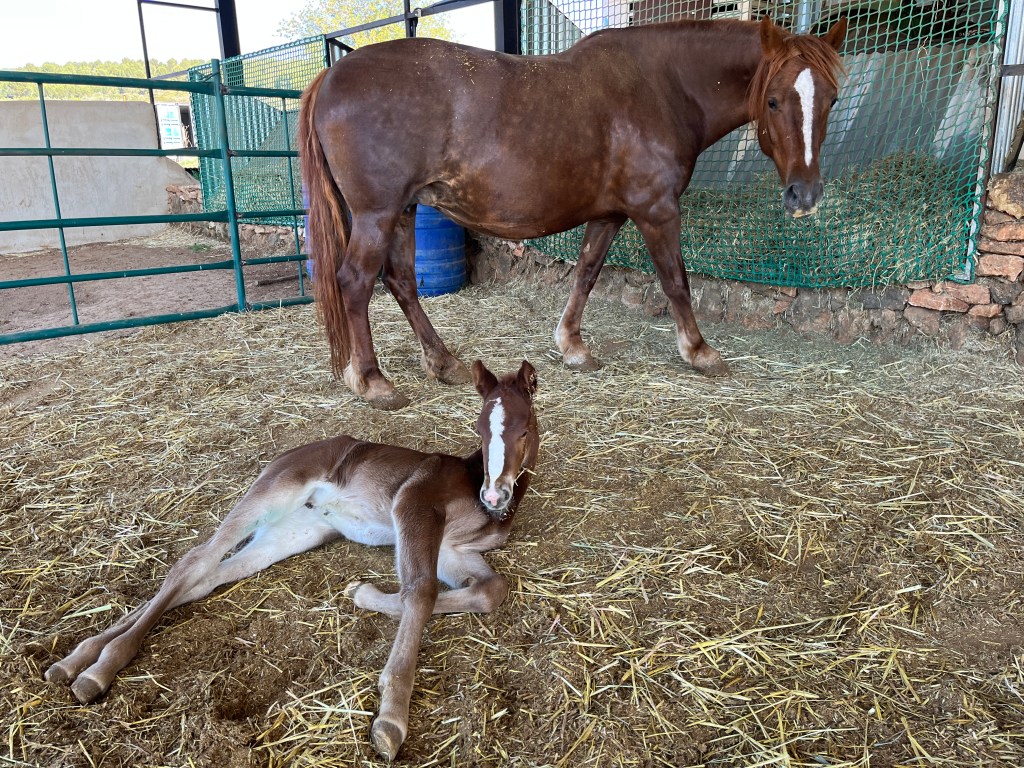
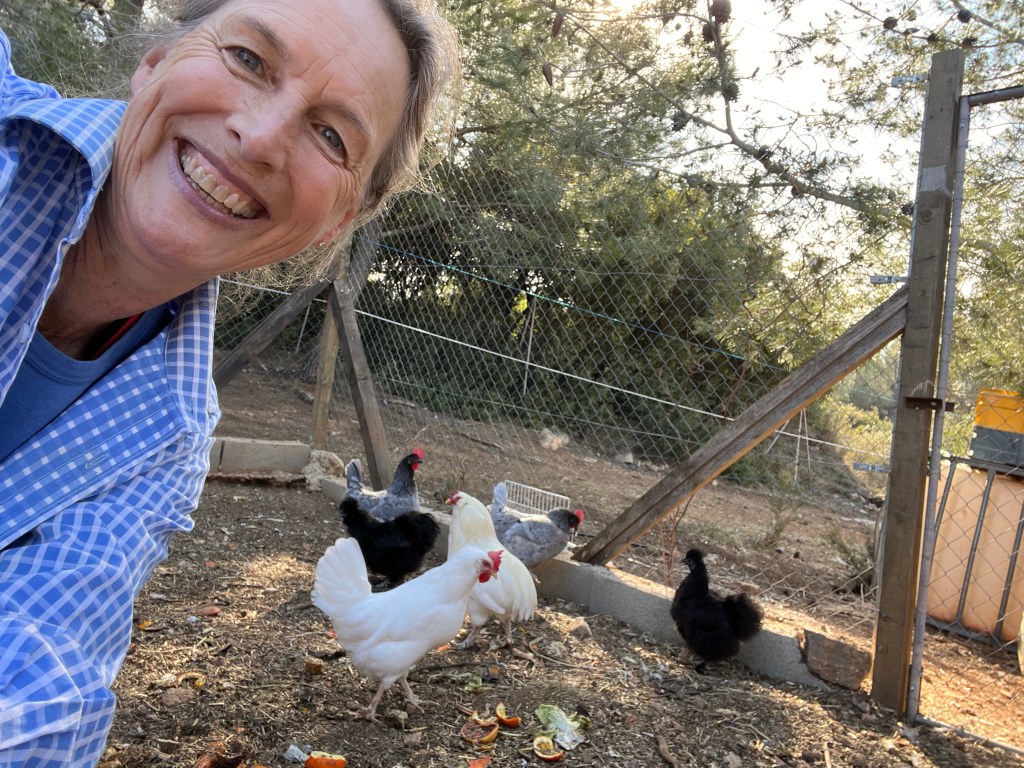
25 March. Luna the wee foal surely grows a few cm in height each day, and expands too in confidence and curiosity. Hard to believe looking after 6 horse , 8 chickens , 3 cats and a dog can take half a day but it does. The saying ‘eats like a horse’ is apt. And the mother horse (Benos) creates a trailer of Meirda in a week too (you can guess what that is). Ulysses and
The dramas : Orion, the 2 one year olds fight constantly for my attention. It only works if I have if I have my arm around both of them. When Orion took a nip at me today, Ulysses backed him away from me and employed a backward kick. Orion has taken to ‘biting’ Luna if Im giving her attention but Ulysses (the white one) is doing better at befriending wee Luna.
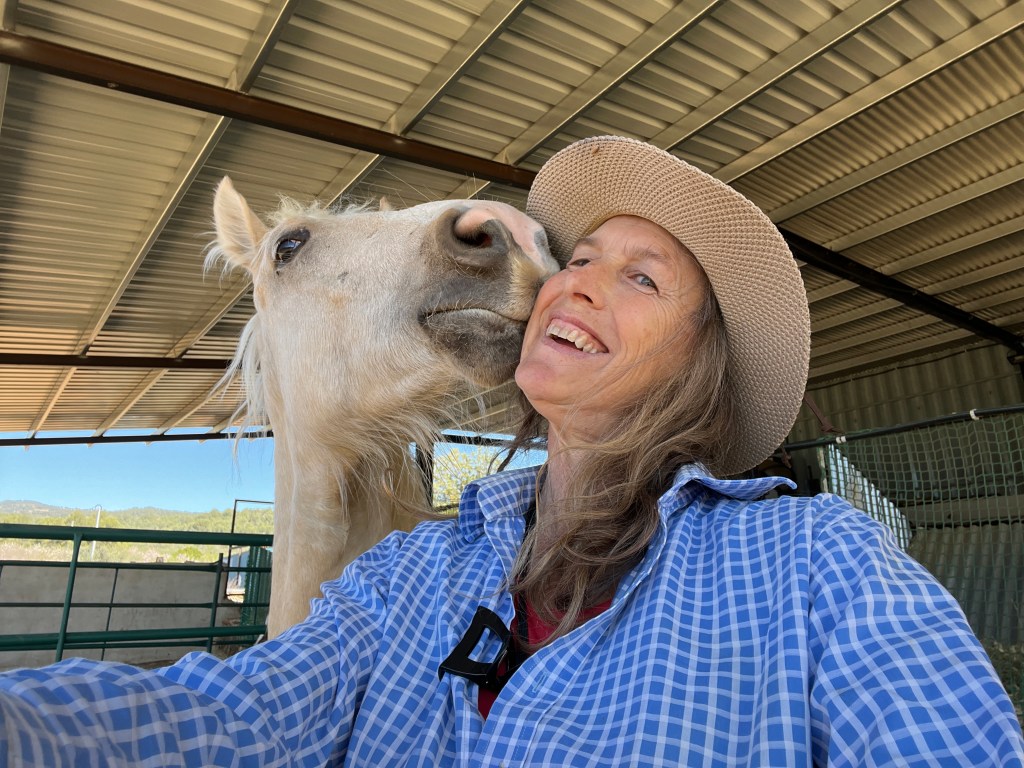
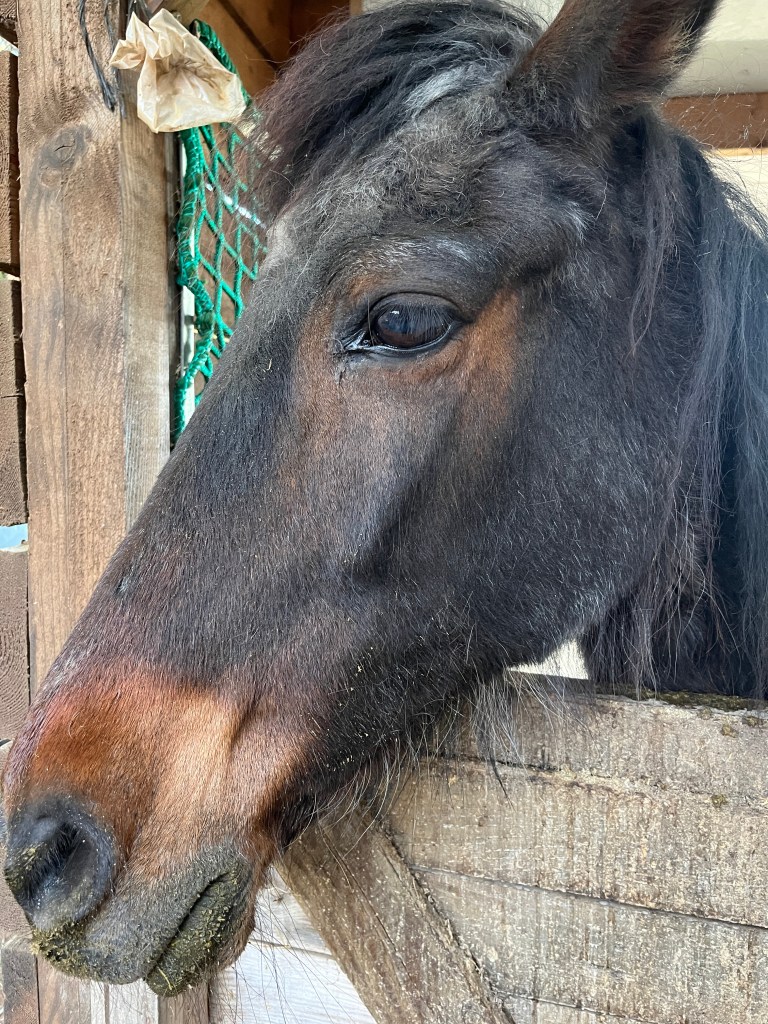
3 April – This last 10 days has sped by and tomorrow i’m due to leave. This has really been an animal-filled rather than human-filled time. Loads of picking up manure from the stalls of Venus (the mother horse) and Alanis so they don’ end up with hoof problems. Alanis (pictured above) is the thirty years old with beautiful eyes and has a special place in my heart. Whether she’s an old soul, or just at that time of her life where relationships rather than heirarchy are important, I don’t know. She has been the herd leader, but now is in an area a bit removed so she doesn’t get caught in the daily spats over food.
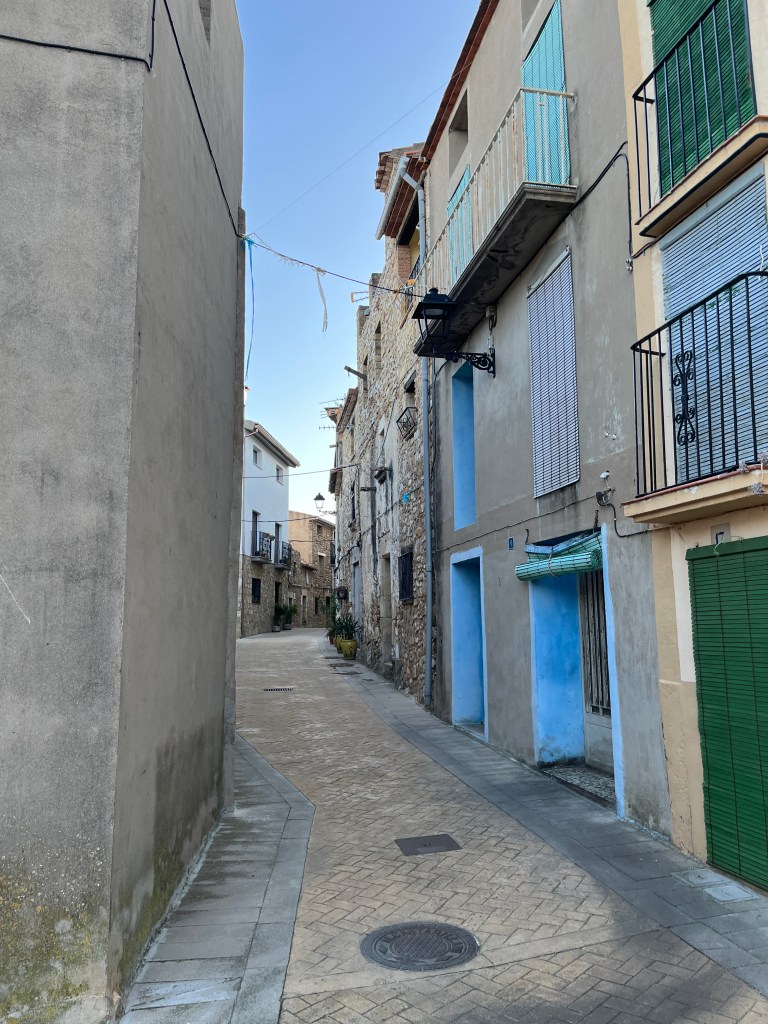
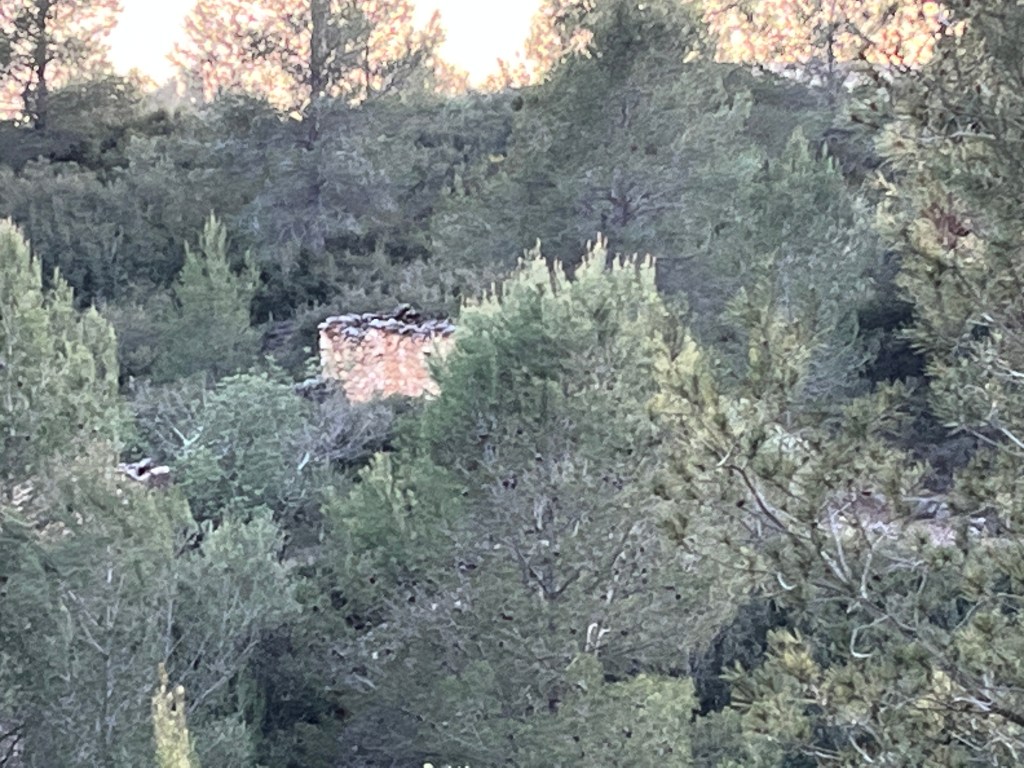
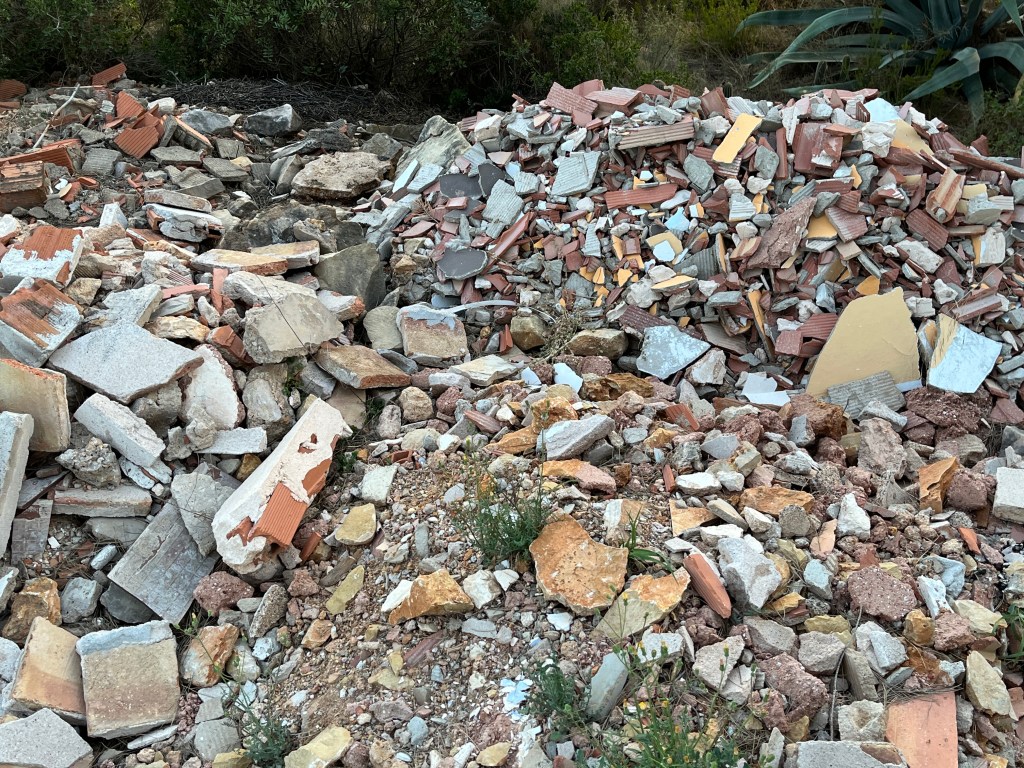
Speaking of food, we’ve had some good family time, mostly very late night eating. Toddler’s here don’t have an off switch either until about midnight. Eva’s traditional Castellon Paella was a highlight. Walking in rural Spain, I’m constantly seeing buildings in different stages of repair/disrepair, and beyond repair 🙂
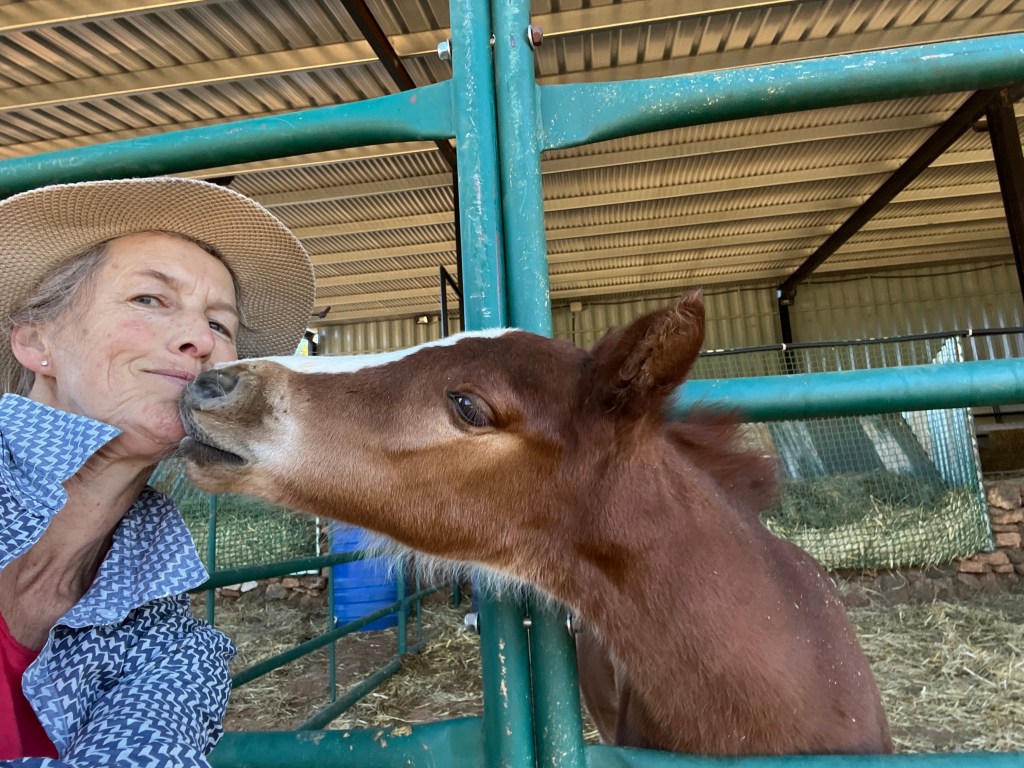
Of course the other horses are all memorable in their own ways. Little Luna (now about 2 and half weeks) only sleeps for a max of 15 mins at a time during day , which was problematic when my job was to paint the inside of the stall gate. She is so curious that she would immediately come over and want to stick her head through the gate. So I was trying all sorts of distraction techniques, that worked, until they didn’t work, and she ended up with a blue ear 🙂 Trying to wash a young horse’s ear isn’t that easy either when they’ve not encountered water before.
I just missed out by 2 days seeing another horse, Yoga’s foal born. But maybe timing wasn’t too bad as the dog and cat were found with tics, and even Eva found with one. On a positive note, the house-based cat (Mew) caught the resident mouse just 2 hours before she was going to be sent to the farm (and swapped for a mouse-catching cat). This success won her a reprieve. ‘ WOW factor. I wouldn’t believe it if I hadn’t seen it with my own eyes. Mew took the mouse and put it in her food-bowl before eating 🙂 So this above was my kiss goodbye from Luna. And below is my last view of the herd. They did get into my heart.
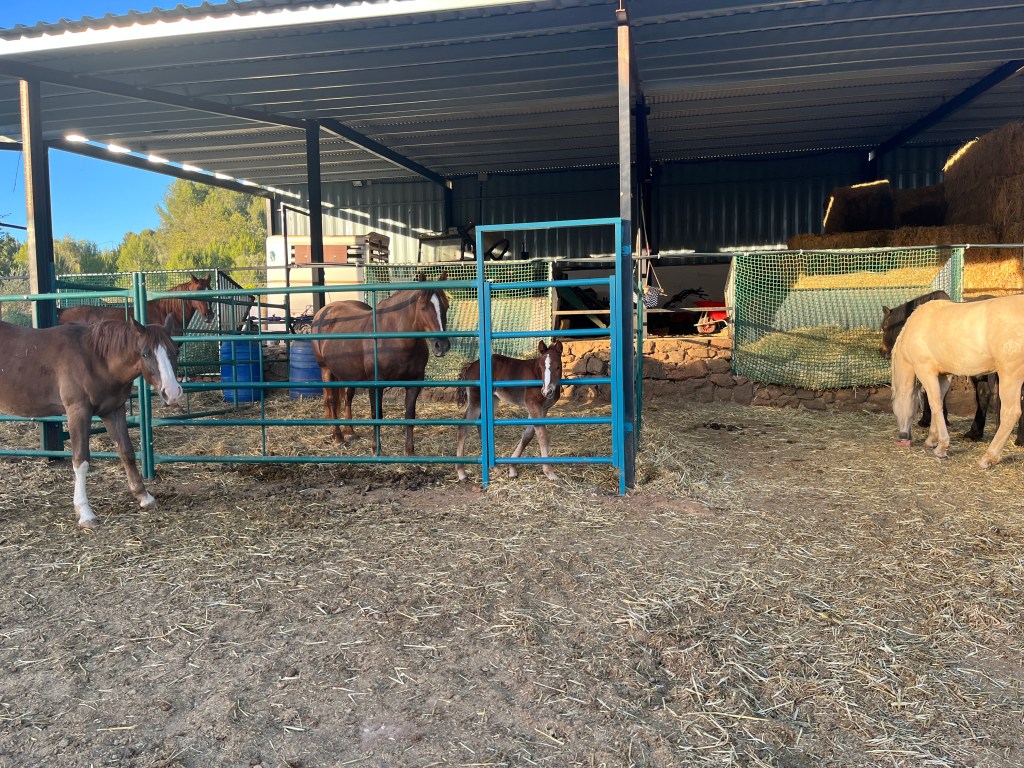
In terms of location, I’ve been West of Castillon (Valencia), about 70km away from an area that was experiencing an unseasonal wildfire which forced over 1500 people from their homes. It is being put down to changes such as a hot, dry winter (experienced by much of Europe). Whilst there I experienced a very light drizzle, once, but otherwise no rain for 4 weeks (no rain so far in Portugal either).
“We’re looking at the first major fire, unfortunately, this year,” said Spanish Prime Minister Pedro Sánchez. “And it is also taking place out of season.” Late March and temperatures are exceeding 30ºC in Valencia. Spain suffered nearly 500 wildfires and record-high temperatures in 2022, claiming over 2000 lives. March 2023 is shaping up to be Valencia’s second warmest on record since 2001. Wildfires are more frequently and more intense. The drying effect of the land perpetuates evaporation. I hadn’t read until now (from Spain news) that the CO2 atmospheric concentration soared by 48 per cent between 1750 to 2020
WOW factor – Spain (Barcelona university) has made a bold move, requiring students of all studies, to complete a course on climate change and needed actions. Signs of commitment are evident. There is mostly cheap and available public transport and an increasing presence of wind farms and Solar. The EV charge network however is inadequate, thus offering no incentive for families like Eva’s to move to electric.
5th April – Back in Barcelona I visited the Miro foundation. Miro drew much inspiration from the land.
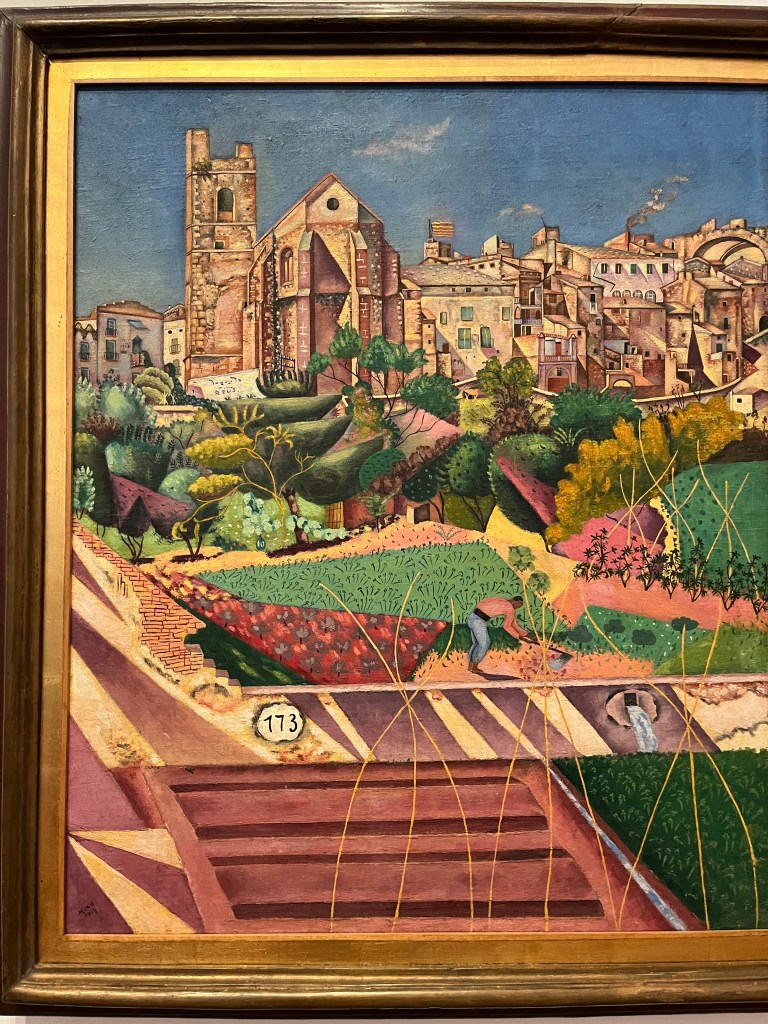
He aspired for a collaborative, anonymous form of art. This museum itself is a collaboration of sorts, imagined as a way to bring art to the world, and ‘realised’ by rationalist style architect, Josep Lluis Sert (1975). Here it is.
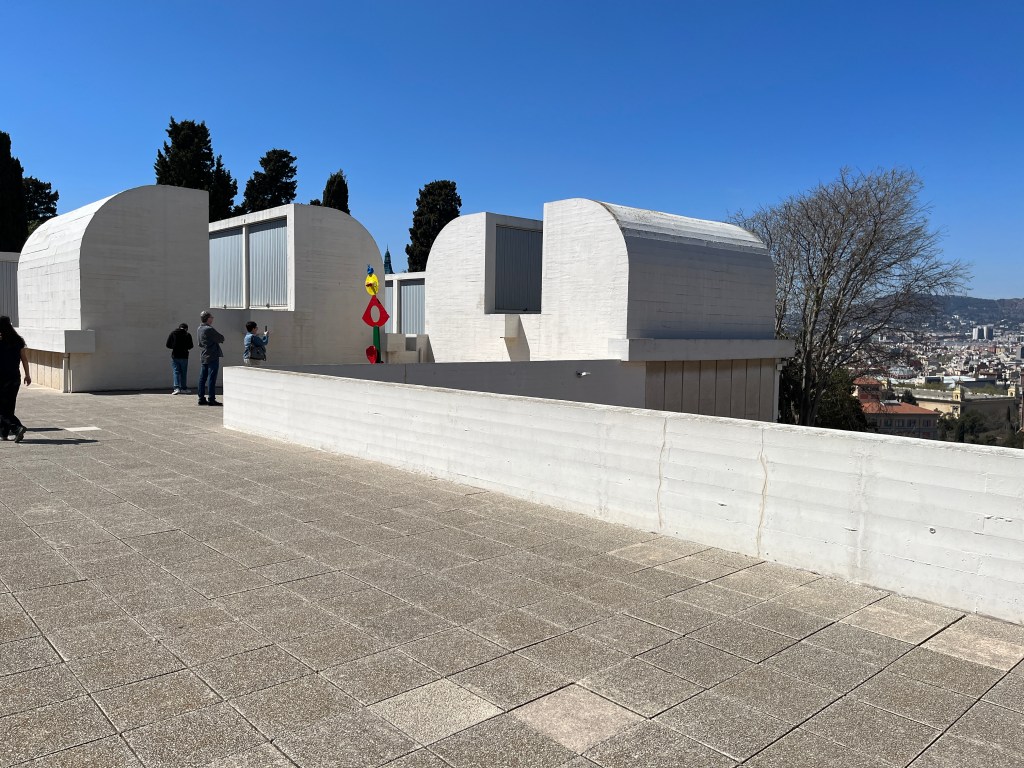
Miro suggests we “look for the noise hidden in silence, the life in inanimate things, the infinite in the finate, forms in a void, and myself in anonymity”
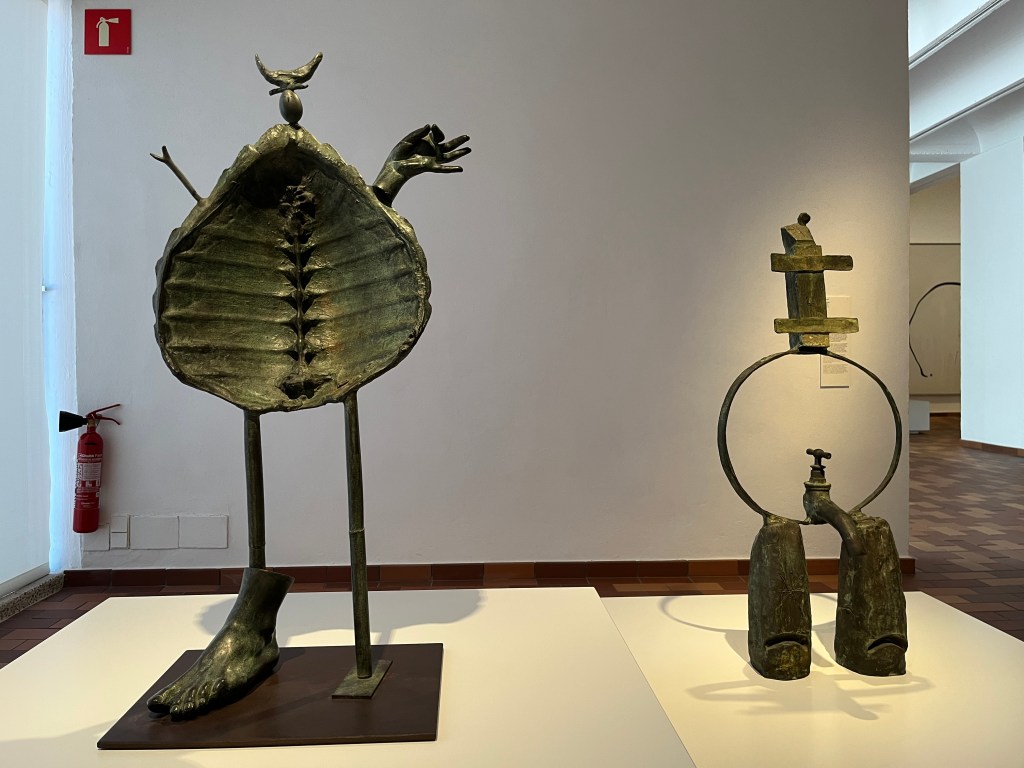
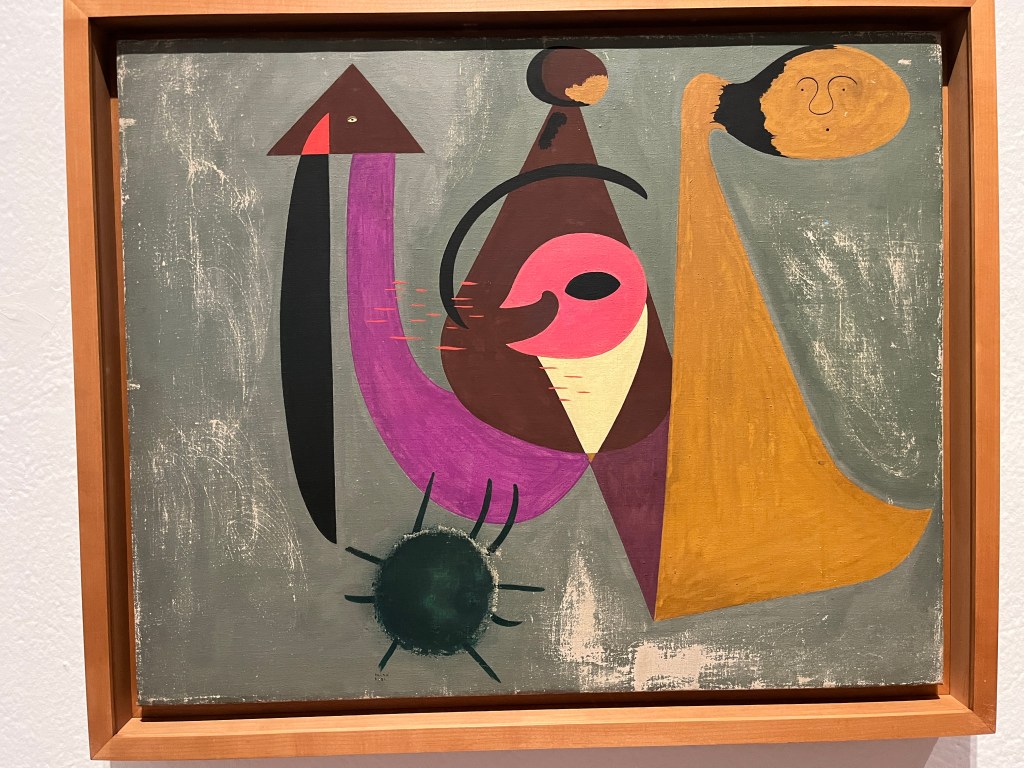
6th April – A last day in Barcelona. Started with a swim in local pool which was a great relief to the tired back. Love the swimsuit air-drying apparatus 🙂 fantastic. Next a travel jab in my arm (hopefully the last), and a massage by a lovely woman who not only had great hands and warm towels, but cared deeply about the environment and the social climate, so we had great conversation. That massage has to be the WOW factor. Then it’s on to the Museu Picasso. Picasso’s amazing life drawing shows sensitivity and intuition to his model.

He lived in Horta (a part of Barcelona) at invite from friend Pailares whilst recuperating from. He states “Everything I know I learnt in Pailares village’. The work shows a new tonality and freedom of brushstroke and light.
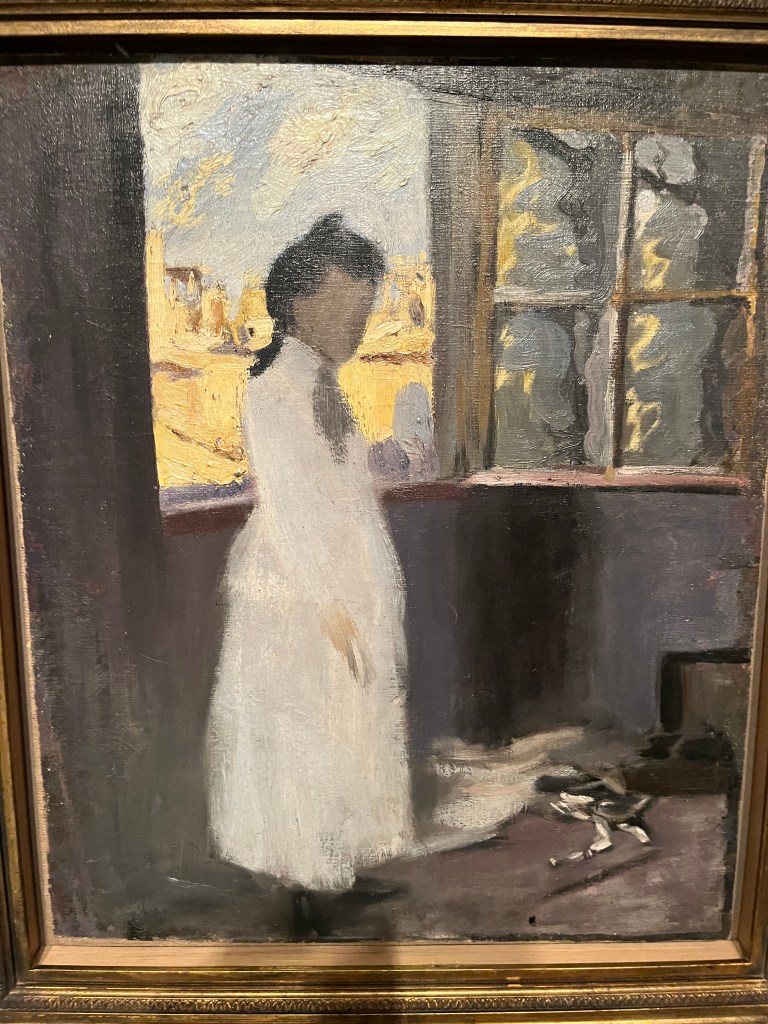
1901-1904 Deep introspection and ‘Blue period’ following suicide of friend, living between Barcelona and Paris. The subject was either of his friends, or of marginalised persons (cold, hungry, desperate or ill)
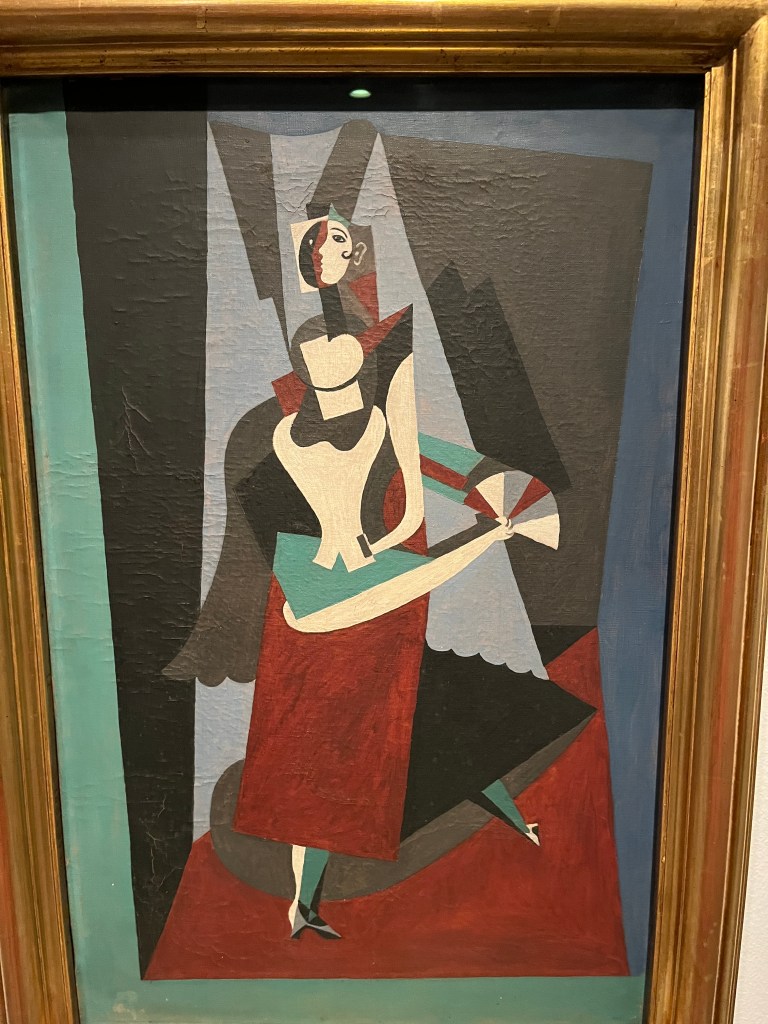
In 1906 he returned to Catalonia, to an isolated hamlet in the Pyeranees. A new clacissim of solid forms appears.In 1917 his collaboration with the Ballet company began, including set design.
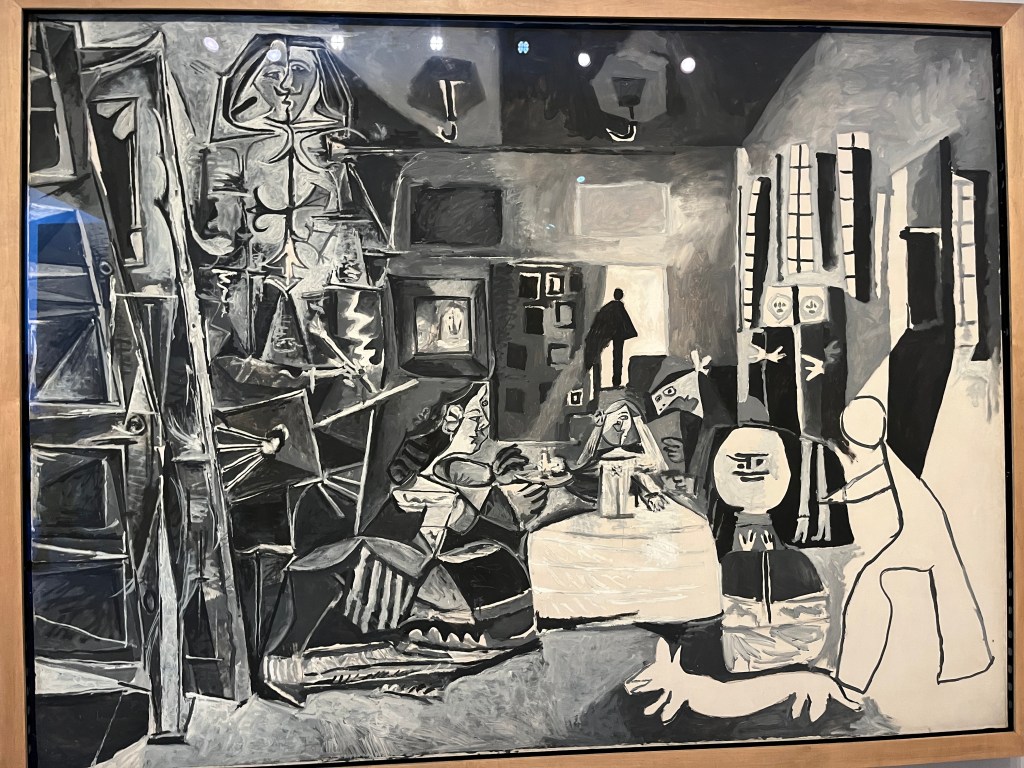
He then spent many years forming interpretations of the master, Velazquez’s, ‘ Las Meninas’ , such as this below.
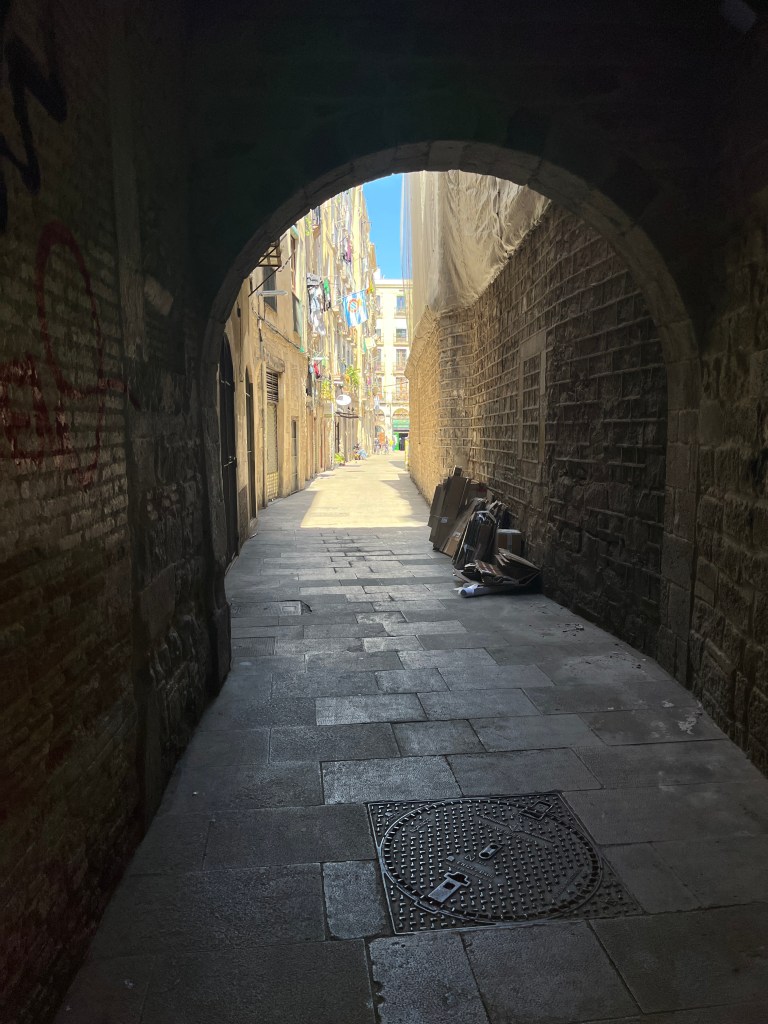
The street leaving the museum was a treat in itself, and then this, Passeig del Born.
…. and then there’s commemorations that one just stumbles across.
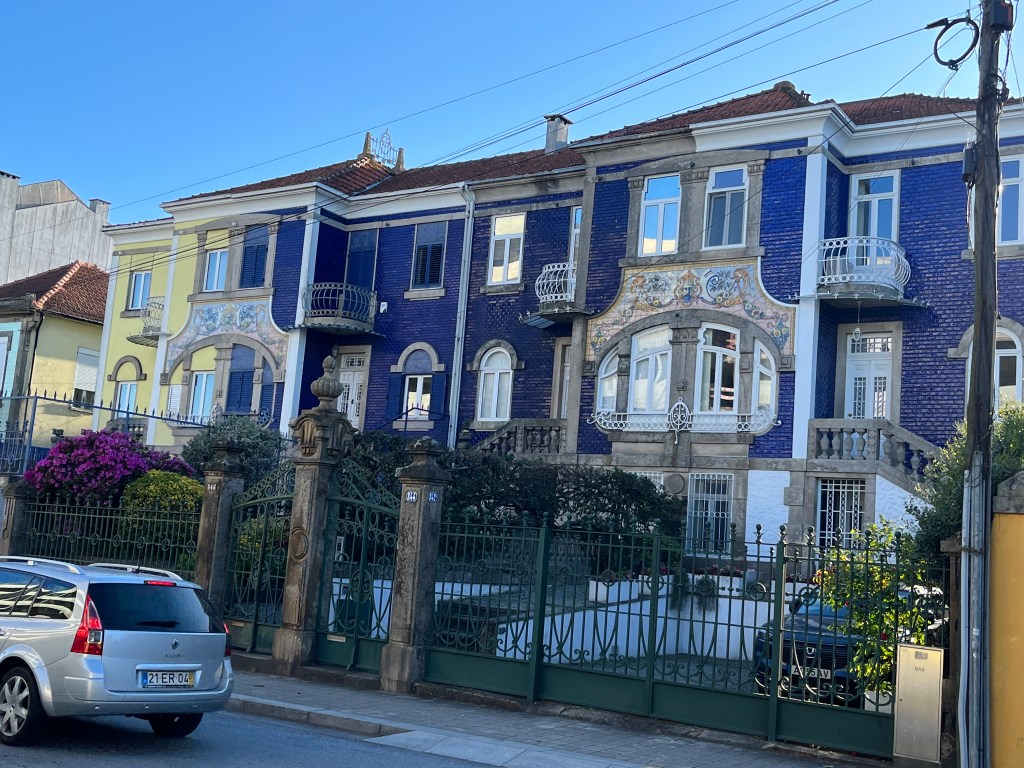
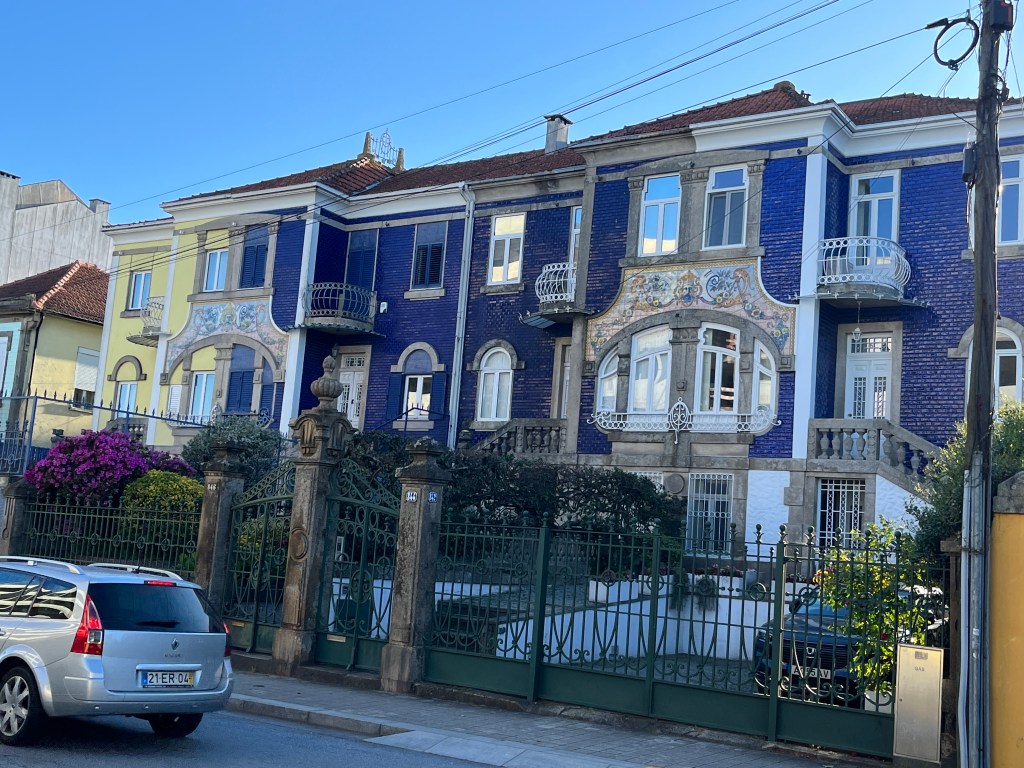
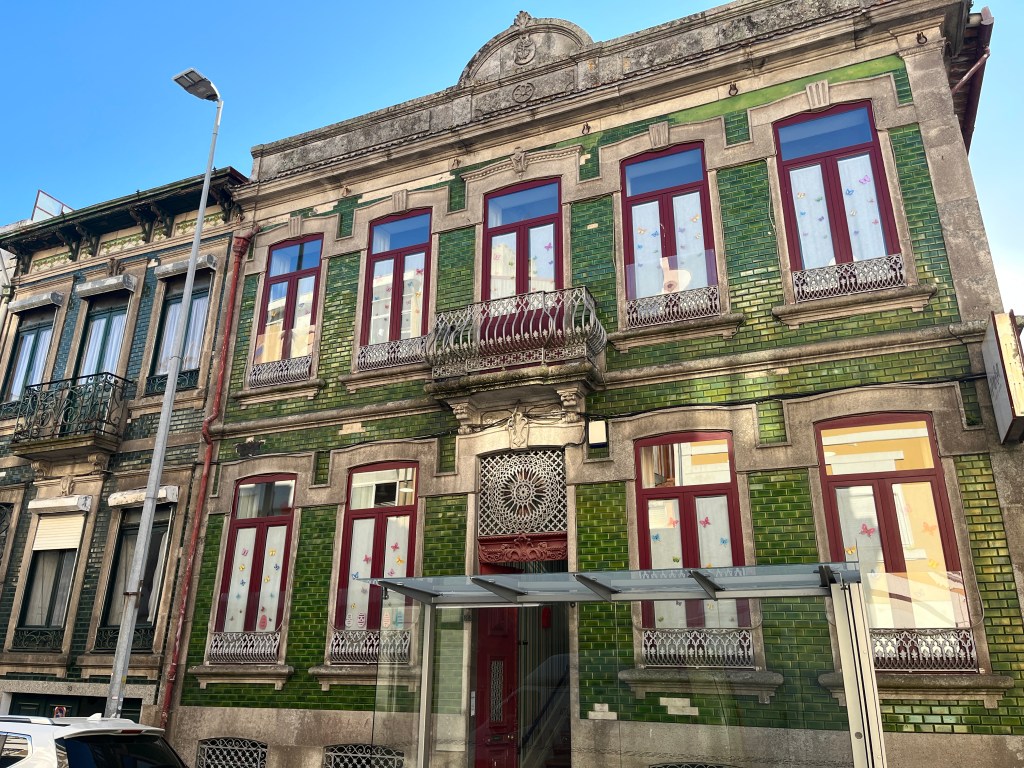
And then I’m in Porto, 9.40pm. Next day I’m dazzled by the array of tiled facades. How do you choose which one to photograph? Tiles were an Arab influence. I soon find out how cosmopolitan is the history and make-up of Portugal. Just wondering by foot into town, finding my way without maps, as my phone data’s not working, with no Portugese language up my sleeve apart from ‘Obrigado – thank you’. Reliance on these devices can be Aaagh
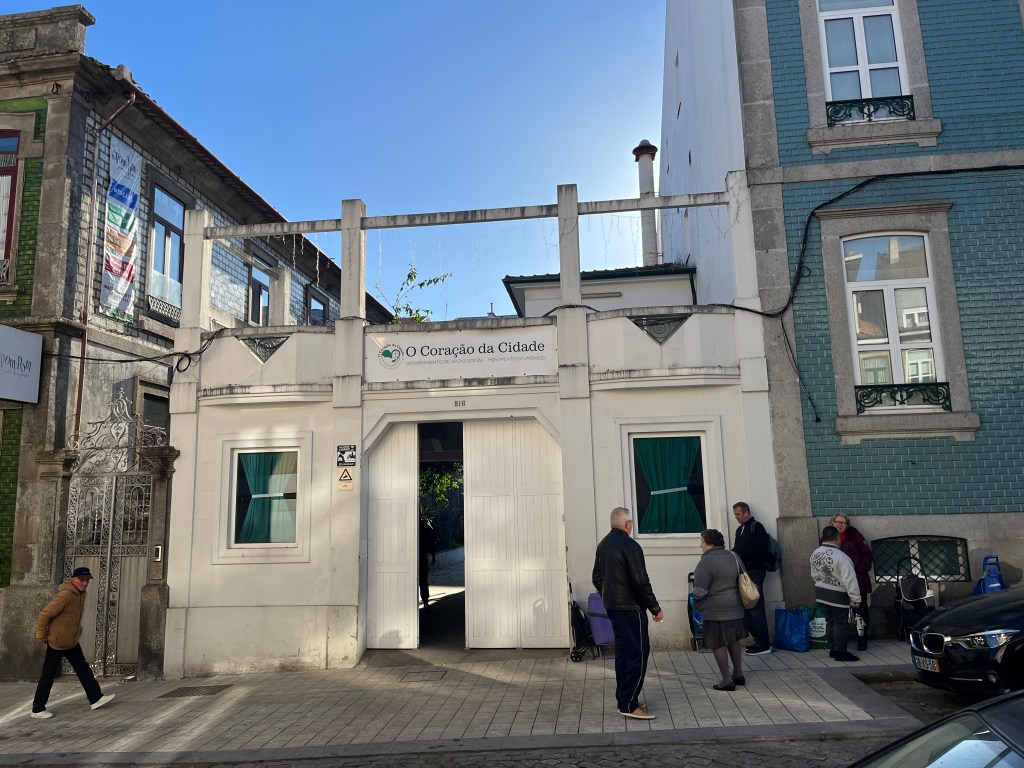
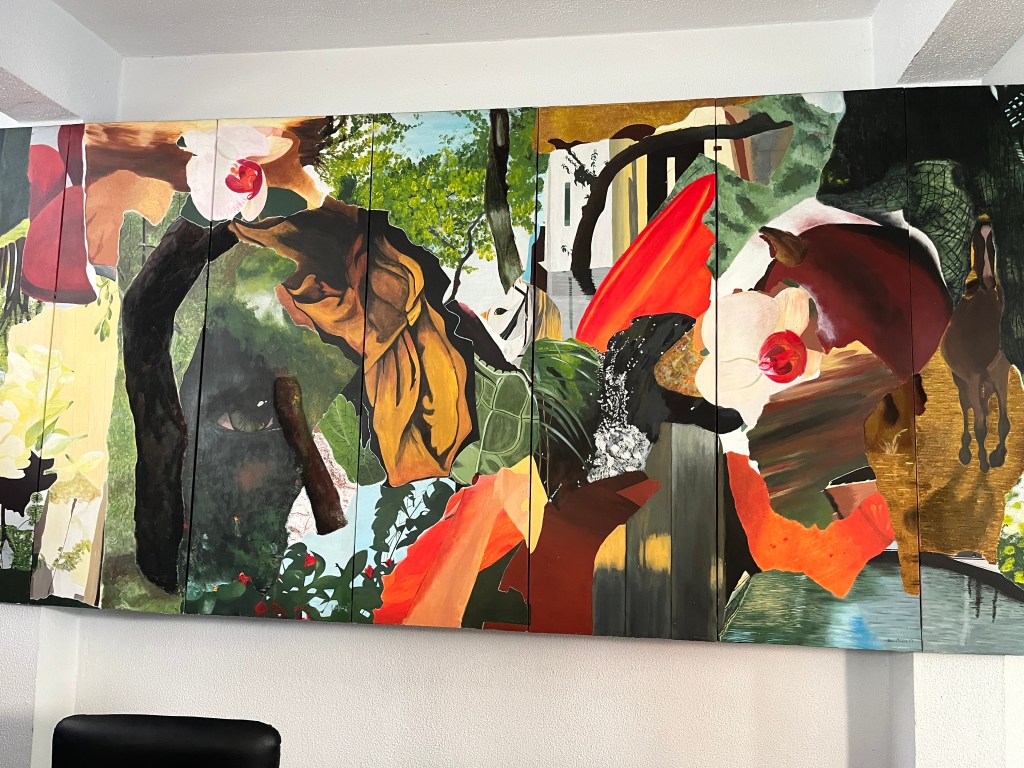
I ask a guy (who has some English). He’s delivering fruit to a ‘social services shelter’ (translated Heart of the City). Neat to see this similar venture to Kaibosh operating in Porto. I went in to make a donation, and discovered this painting behind their desk. WOW factor It’s over 2 metres wide, it’s meaning giving me something to ponder on.
Onward now to try and find the ‘free city tour’ (when i have no map). I get sent in 3 different directions by three different people to get to the town hall. How can they all think it’s in different places … or are they enjoying stringing a tourist along? Now I really do need a shower !!Aghh I’m 10 mins past the ‘start-time’ for the tour. Fortunately I stumble across a group of people being spoken to in English, and the guide lets me join in.
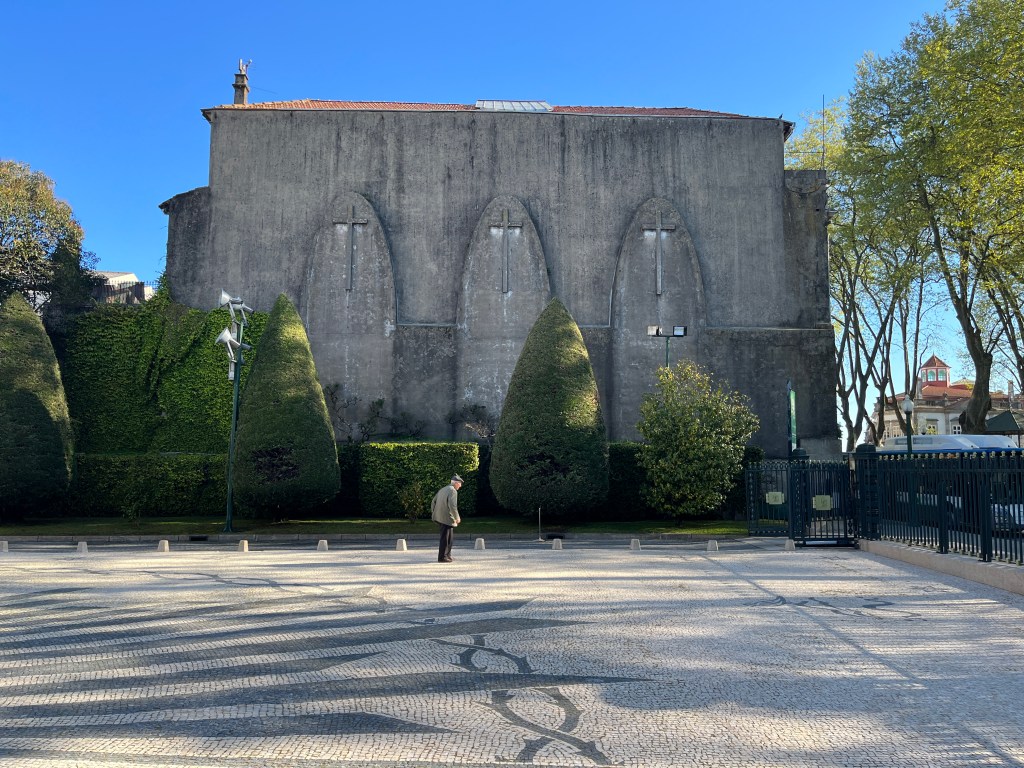
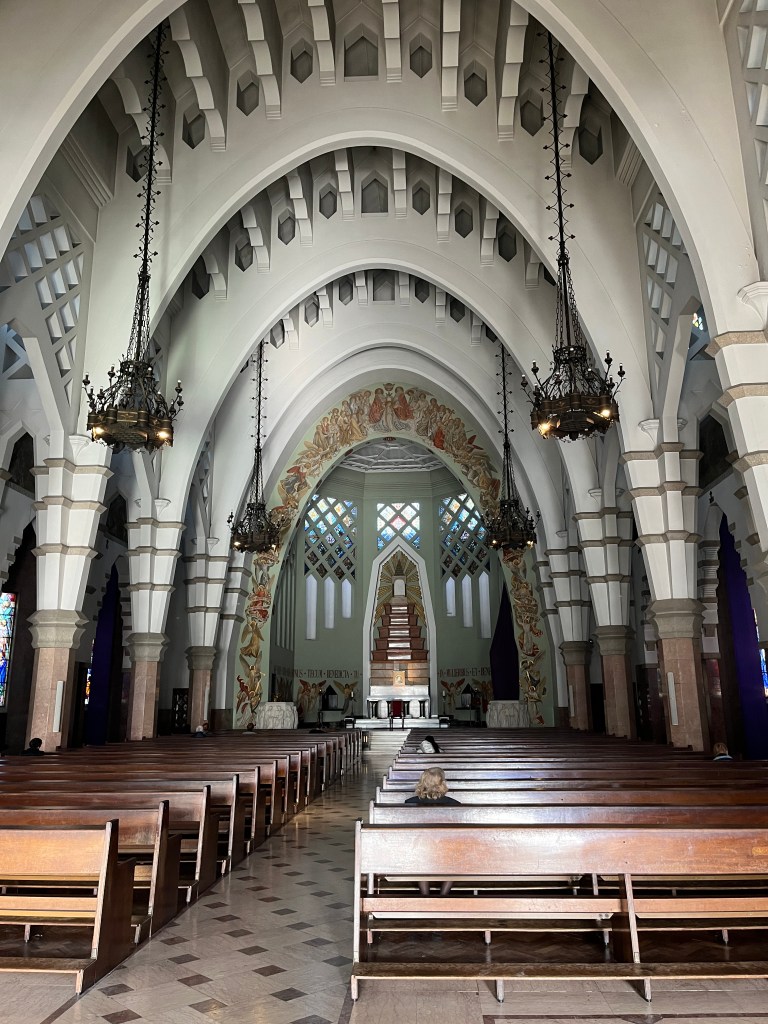
We got some history that may not easily be found in the history books by our guide who studied law. He explained that university classes were closed down for during the authoritarian reign of . The students hid in a little building about 1 metre wide between the Catholic and protestant churches. They had been protesting and were at risk of persecution. Portugal initially very poor, had no produce or riches to trade. Boats and navigation were the one strength they held. Sailors ventured to Africa, got a bit waylaid and found themselves in Brazil, but a later journey got them to Africa. Following a period of successful trade, a first European trade agreement was forged with England. This alliance would come in handy later when the Spanish came looking to conquer. The alliance was once again strengthened when King Charles II hooked up with Catherine of Braganza (daughter of Portugal’s King John IV). His choice of bride was to Portugal’s Catherine of Bragança was a desirable one for both parties. She gained a powerful ally for her country and Charles gained an extremely wealthy wife with a dowry weighing the largest ever recorded (included money, spices, treasures and the lucrative ports of Tangiers and Bombay). A view of Porto from above … and one from down in it.
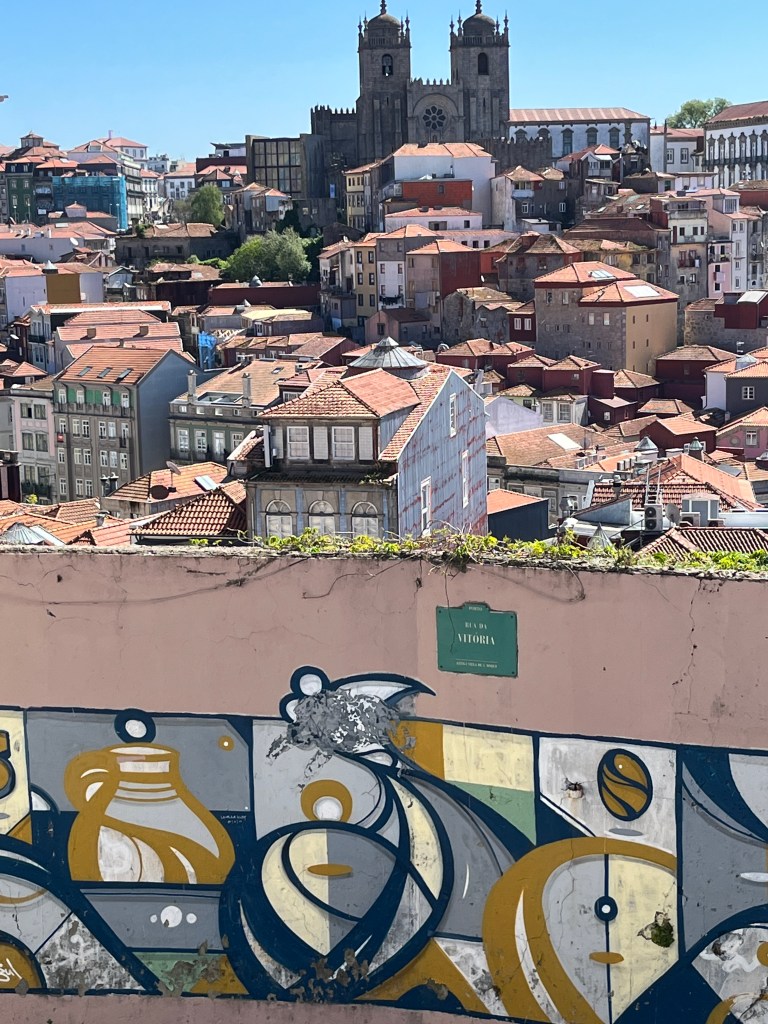
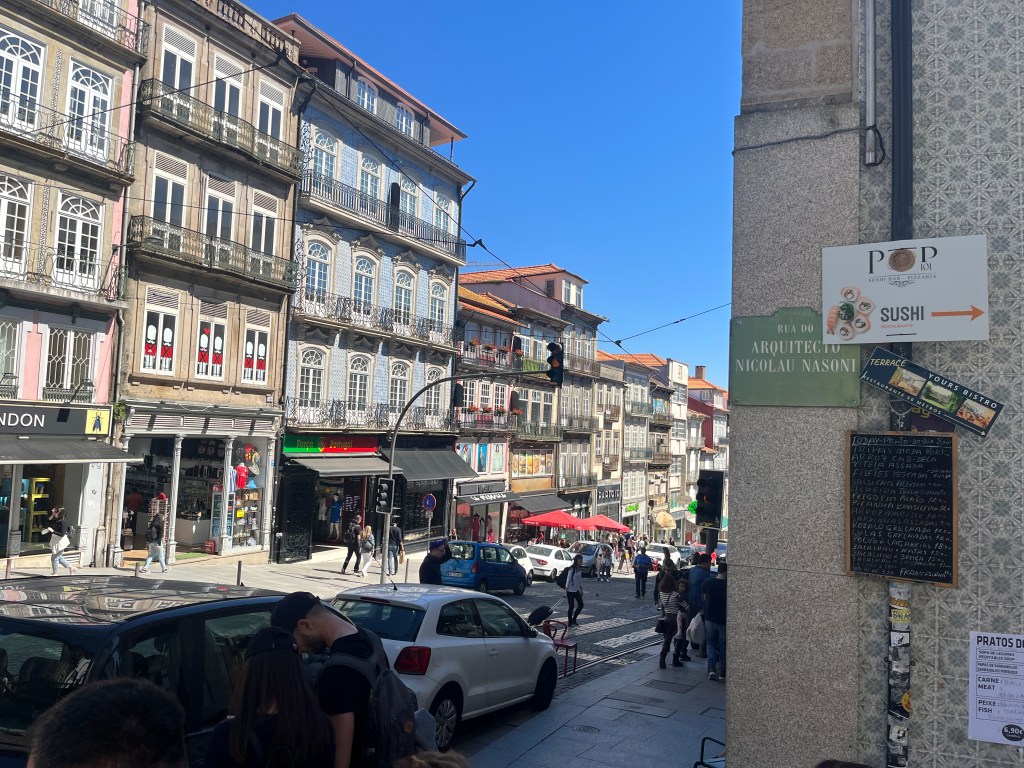
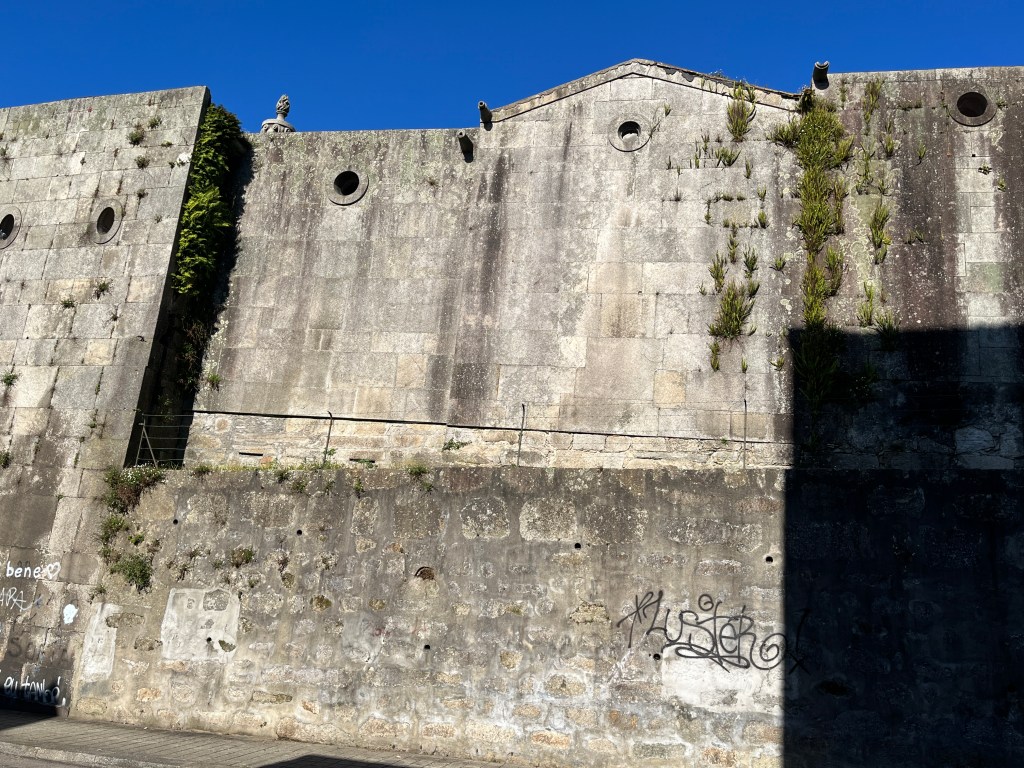
Spotting such contrasts …the old above (a castle for pigeons) and the new
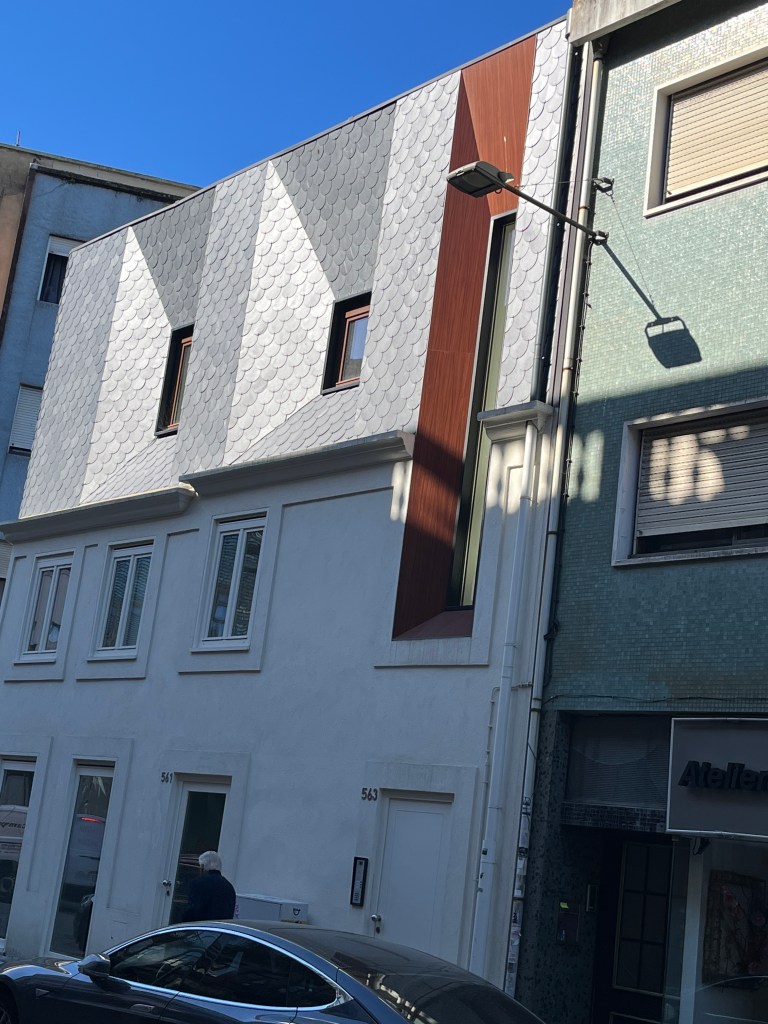
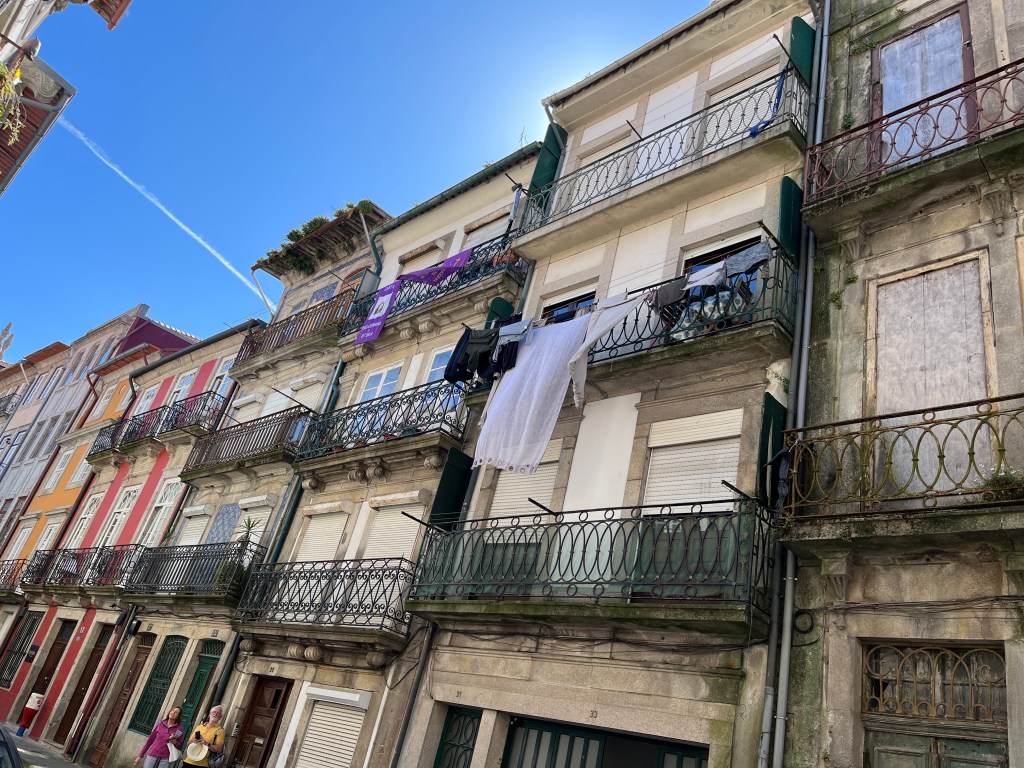
The city-dwellers get by with the lack of car parking by using metro and bus. Finding space for the washing demands a different solution.
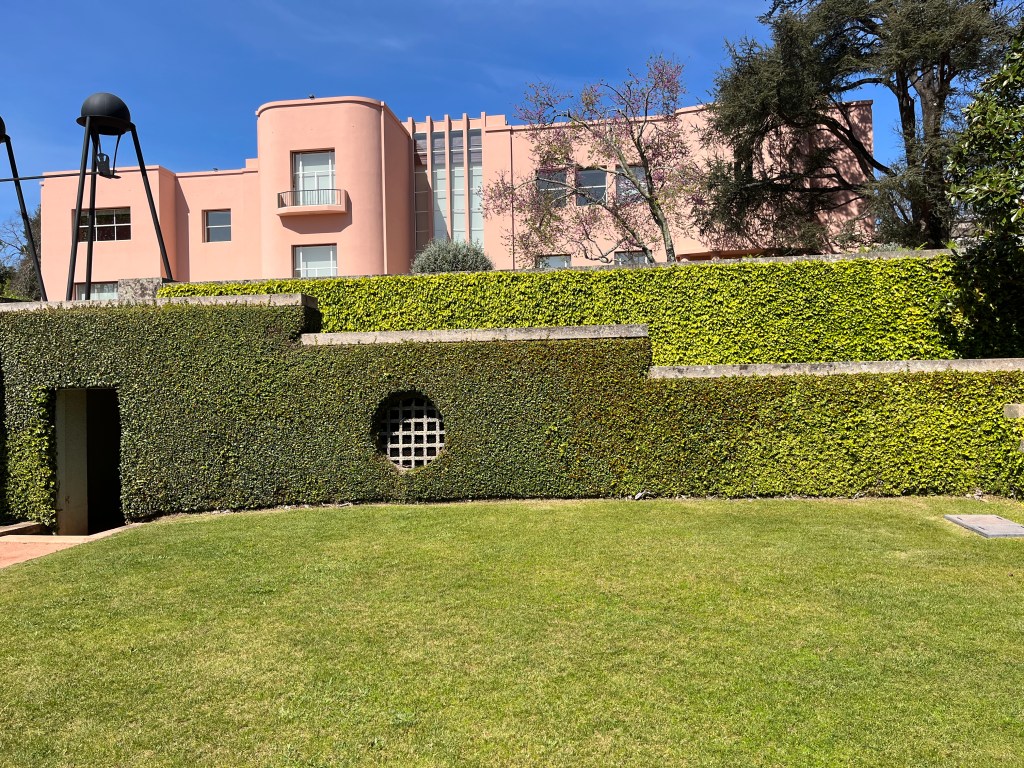
And Portugal has more greenery, especially in this lovely Serallves park.
8th April – Well that was a whirlwind 1 day visit of Porto, and I’m on a 5pm bus to Fatima (arrive 7pm). The taxi driver a woman in her 60’s in a colorful pantsuit gets me to my guesthouse. A cheapie but it has a pool 🙂 all tiling done by the host. His wife Francois is so welcoming, and insists on frying me up some chicken and chips. All this communicated with her french and hand gestures as she has no English. She seemd to really enjoy the company. In the course of the converstaion (mostly guesswork) she tells me she has depression. Behind her wonderful smile, I thought I sensed a sadness. Between my schoolgirl French, recently acquired basic Spanish and google translate we cant a bit more on life and faith, and finish with a prayer. It’s the following night that she gets the WOW factor . I return from a day driving across some central Portugal towns with Vera. We go to the guesthouse I’m booked in. It’s completely dark and I discover it is ‘No More’. No room at any other inn, as Fatima is the destination of numerous Catholic pilgrims who hike here, especially at Easter weekend. In desperation I phone Francois. Her rooms are full, but she offers me one in her own house. Thanks Francois.
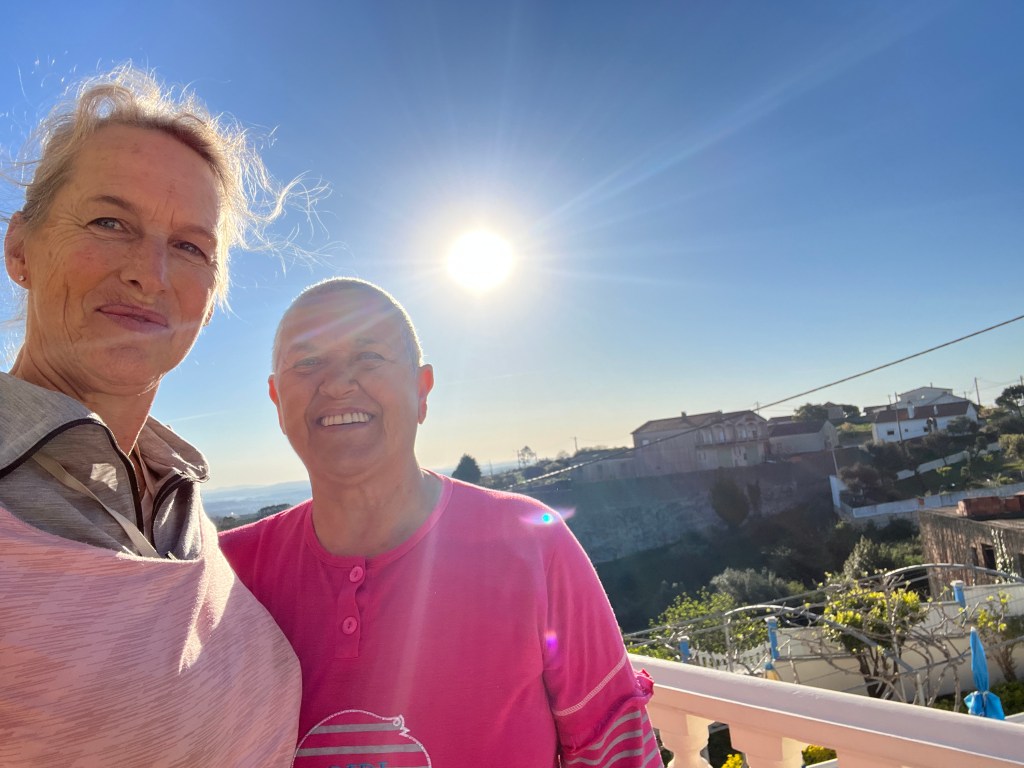
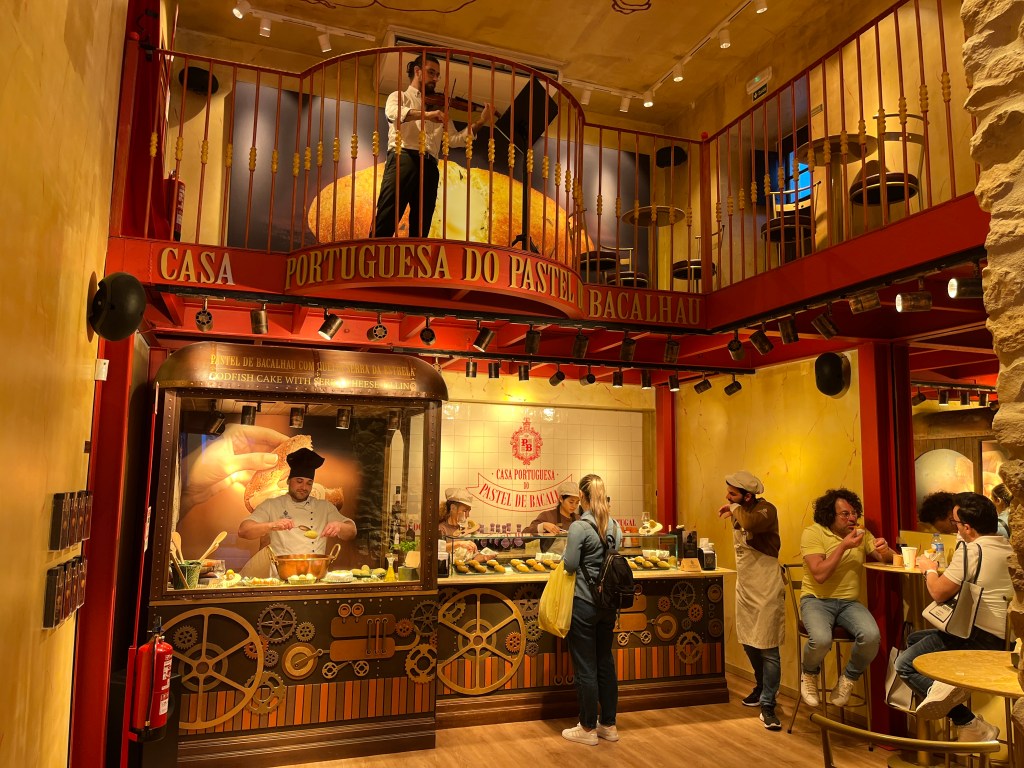
Well if you want to get around 4 towns in Central Portugal in one day, Vera’s the person to contact. She has a degree in history, and is just a great person. So here’s the spots we visited.
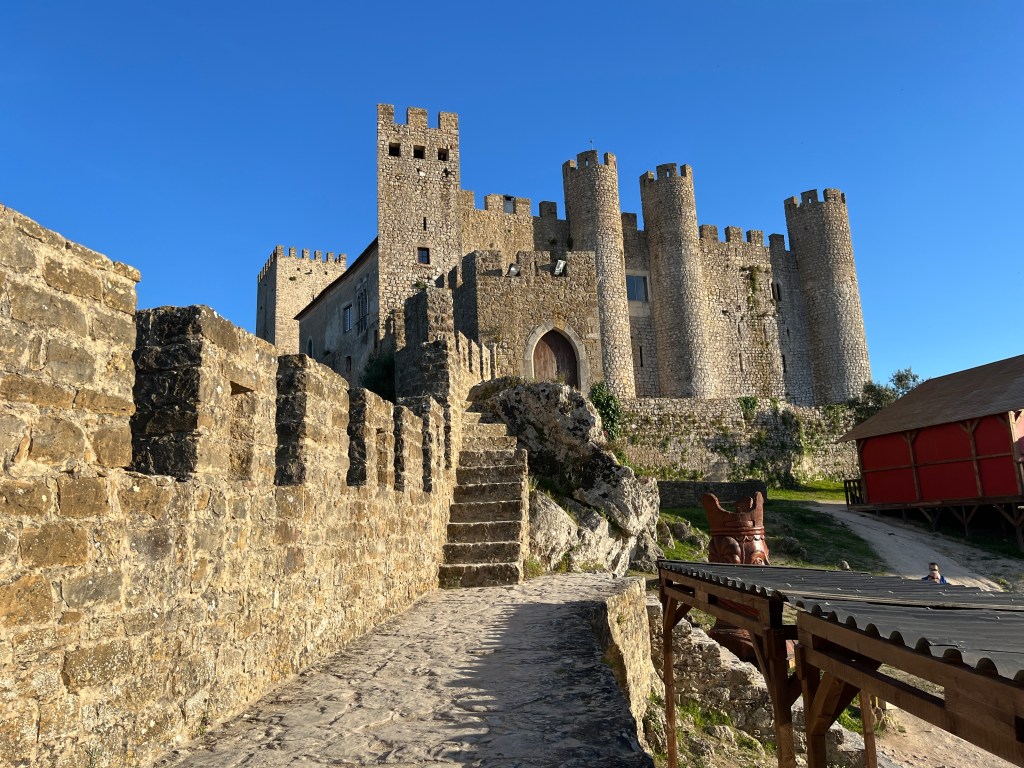
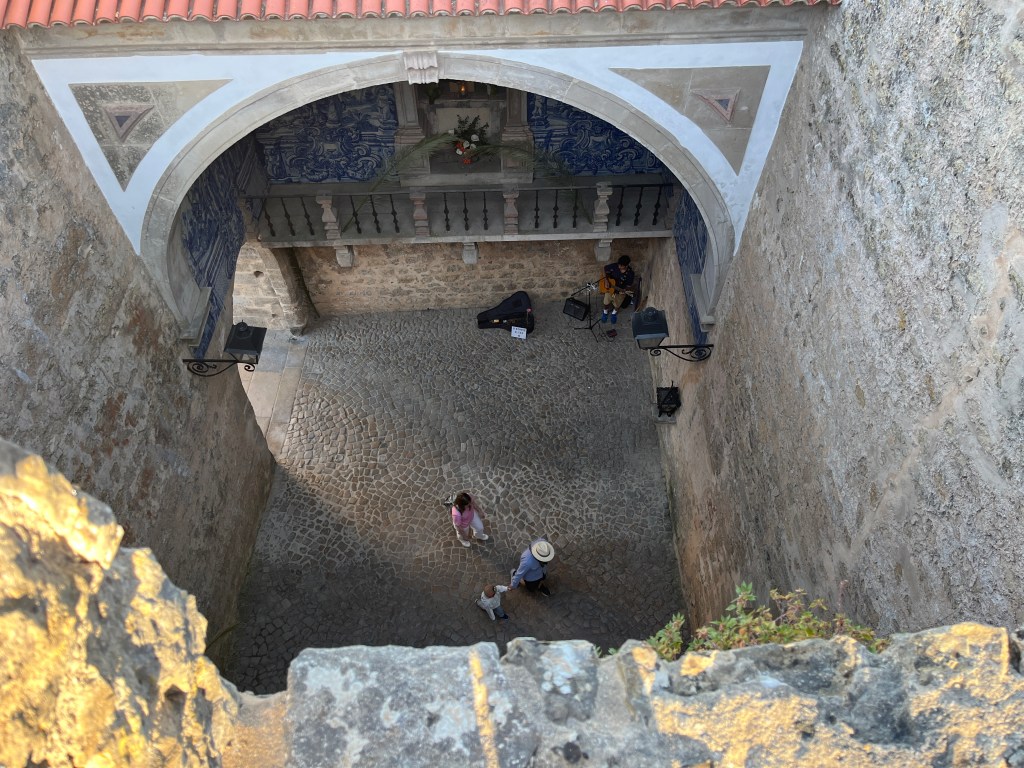
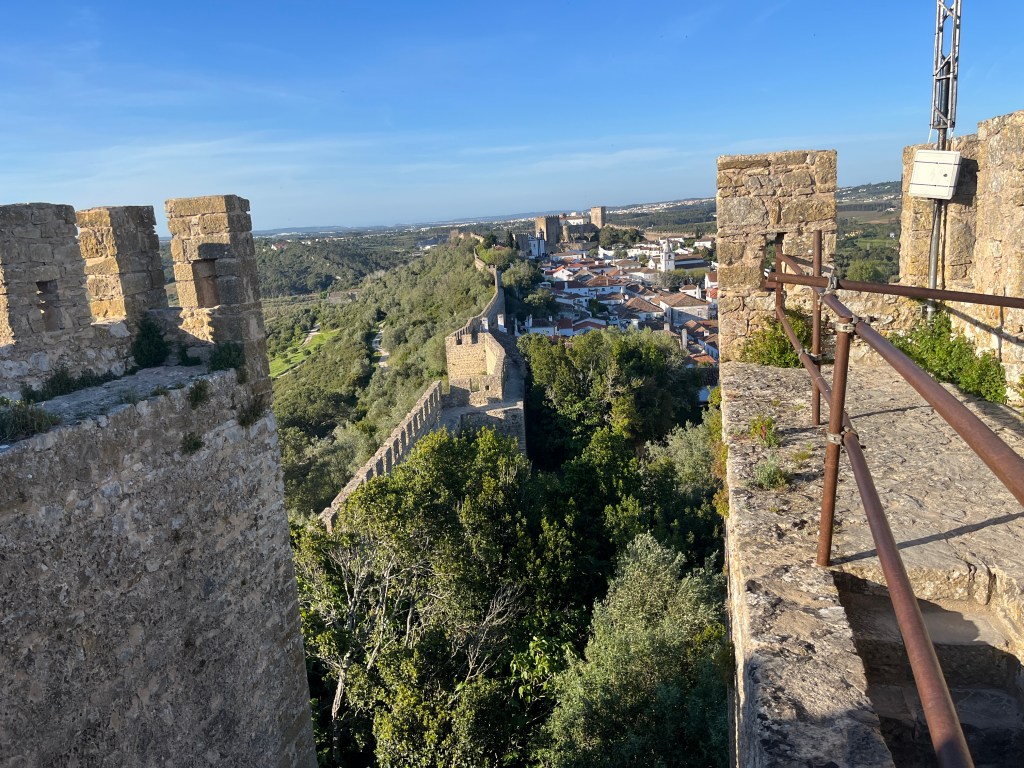
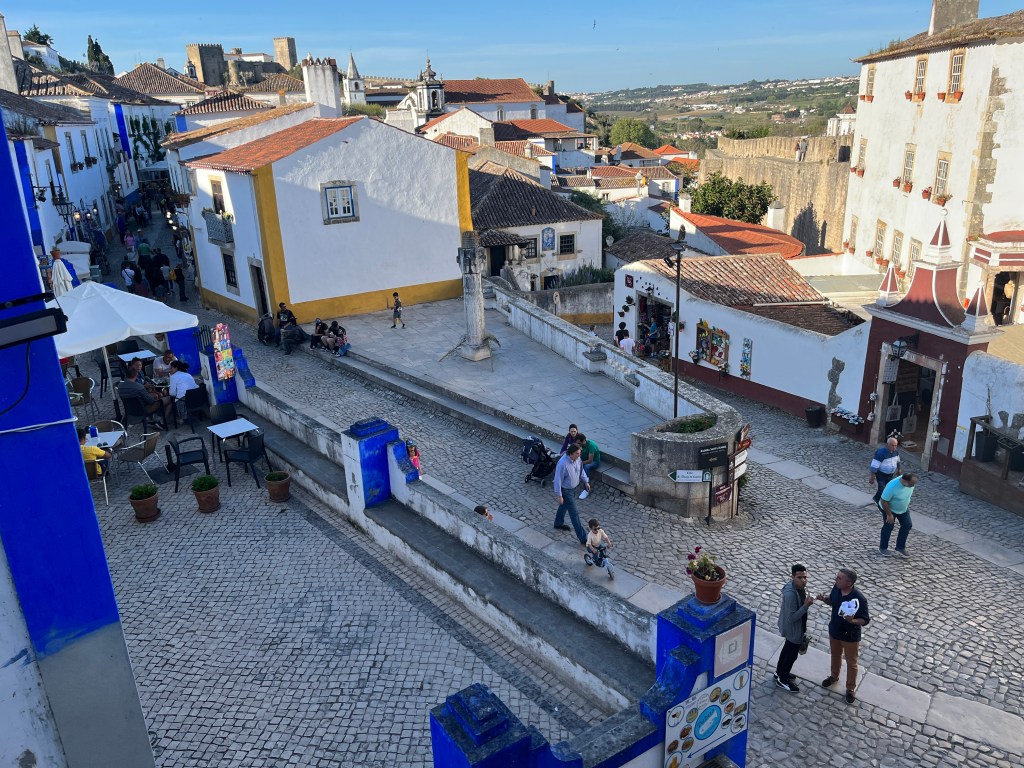
Obidos. Humans have settled in the area of Obidos since the Lower Palaeolithic period and it was once Celtic settlement and an important trading post for the Phoenicians before becoming , later becoming an important Roman military settlement. After the fall of Rome, the Visigoths captured the region but sometime after 713 the Moors built a fortification on the hillside of Obidos and laid out the streets. It was taken from the Moors by the first king of Portugal, Afonso Henriques, who commissioned the castle that remains the town’s most famous landmark.
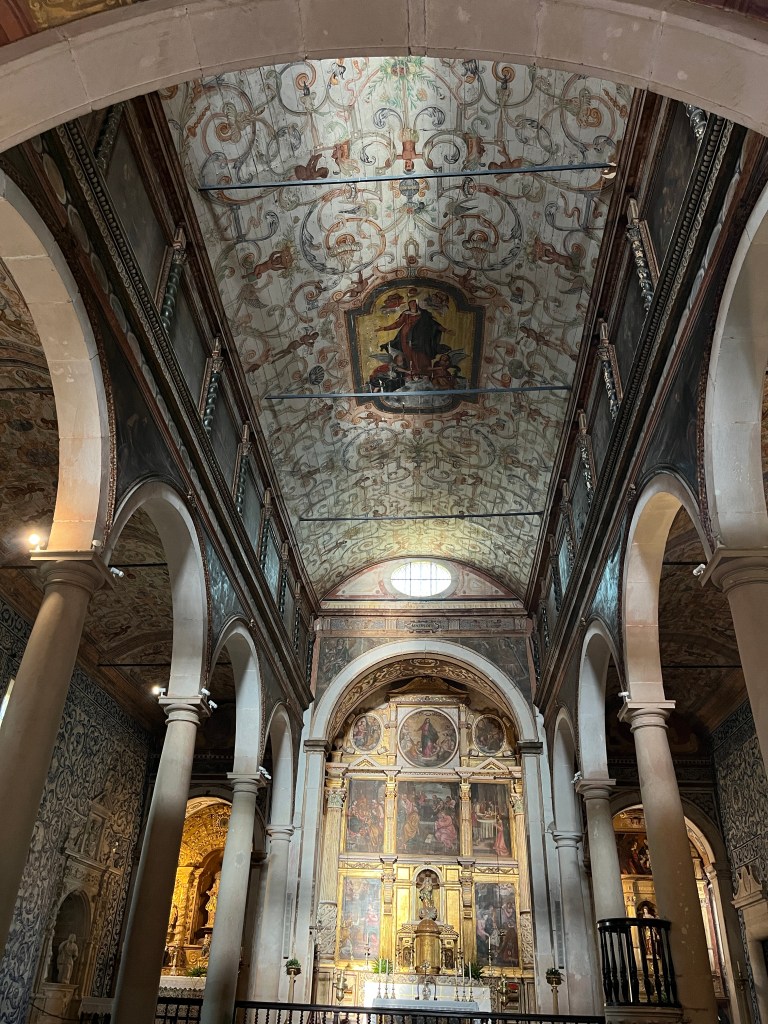
In 1228, King Dinis I took his wife, Elizabeth of Aragon, to Obidos and made the town a wedding gift to his queen, starting a tradition that would remain in place until the dissolution of the royal family in the 19th century. The church there displays paintings by one of the only known 17th century women artists, Josefa de Ayala. She was known for her naturalistic style and painted transparent lace. Beginning with detailed engravings whilst just a teen. She joined the convent for a time, like many other women, it saved them from being married off to as man of someone else’s choosing, and thus allowed them to focus on academia, writing, art or other passions. At 29, Josefa received her parental ‘permission’ to remain unmarried (so kind thanks mum and Dad), upon which she conducted business independently. In her early years, Portugal was financially unstable and under Spanish rule, so her work was mostly commissions from the Wealthy
Alcobaça – Big dramas in the mid 1300’s. Hard to know whether failed marriages back then were due to the arranged nature of these, or just ‘human nature’. The consequences however were perhaps more dire then than now, as evidenced by the following account. Women seem to come off pretty badly???
Soon after the arranged marriage to Maria, Alfonso X1 (King from Castilian, Spain) began a long affair with the beautiful and newly widowed Leonor de Guzman. Maria and Alfonso’s son, born in 1334, became Peter of Castille. After a year Alfonso returned to Portugal and had his marriage annulled so he could marry Maria.
Alfonso 1V (the king prior), was enraged by the infidelity and mistreatment of his daughter Maria. To keep the Castilian in the picture he arranged for Peter to marry Constanza (from Castilian). When Constanza arrived in Portugal in 1340, Ines, she was accompanied by her as lady-in-waiting, the beautiful daughter of a prominent Galician family.
Peter fell in love with Inês, transpiring in a long love affair. Constanza died in 1349, following childbirth complications,. Enraged with the infidelity (who is he to talk) Alfonso banished Inês from court. The two lovers began living together in secret. According to one chronicle, Peter began giving Inês’s brothers (exiles from the Castilian court), important and advisory positions in Portugal. This alarmed Alfonso. He worried that civil war could tear the country apart, or the Portuguese throne would fall into Castilian hands, so sent men to find Inês in Coimbra and decapitate her (which they did). Enraged, Peter revolted against his father but was defeated. Within a year, Alfonso died and Peter was crowned (1357).
King Peter delivered revenge upon the men who murdered Ines, ripping their hearts out with his own hands, (because of what they had done to his own heart). Peter retrieved Inês’ body, reburying her in the royal monastery, at Alcobaca. Peter had tombs constructed for him and her, facing one another, so they would see each other when rising on judgement day. Inscribed are with words “Até o fim do mundo…” (“Until the end of the world…”). Under her tomb are gargoyles who represent those carrying the guilt of her death.
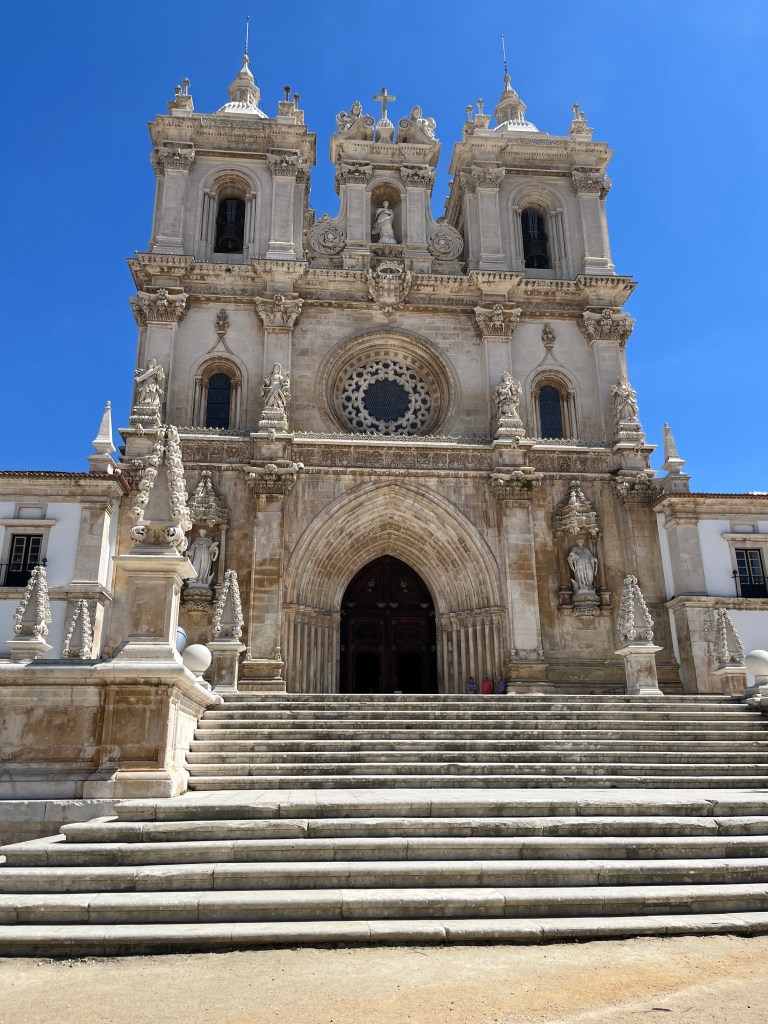
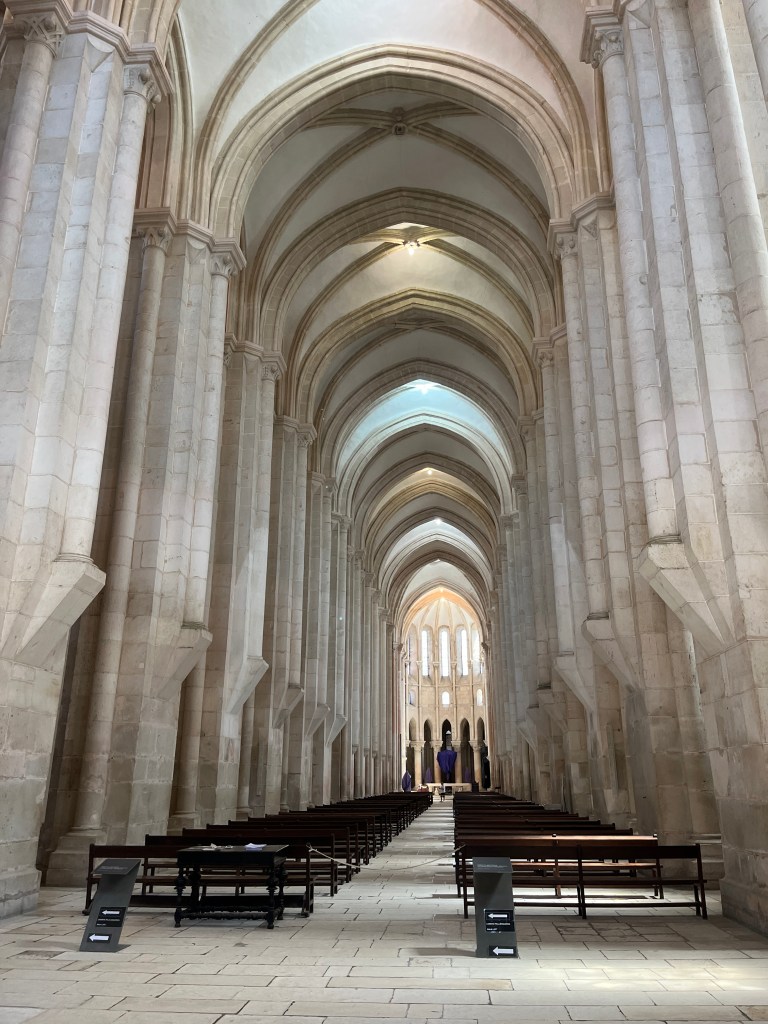
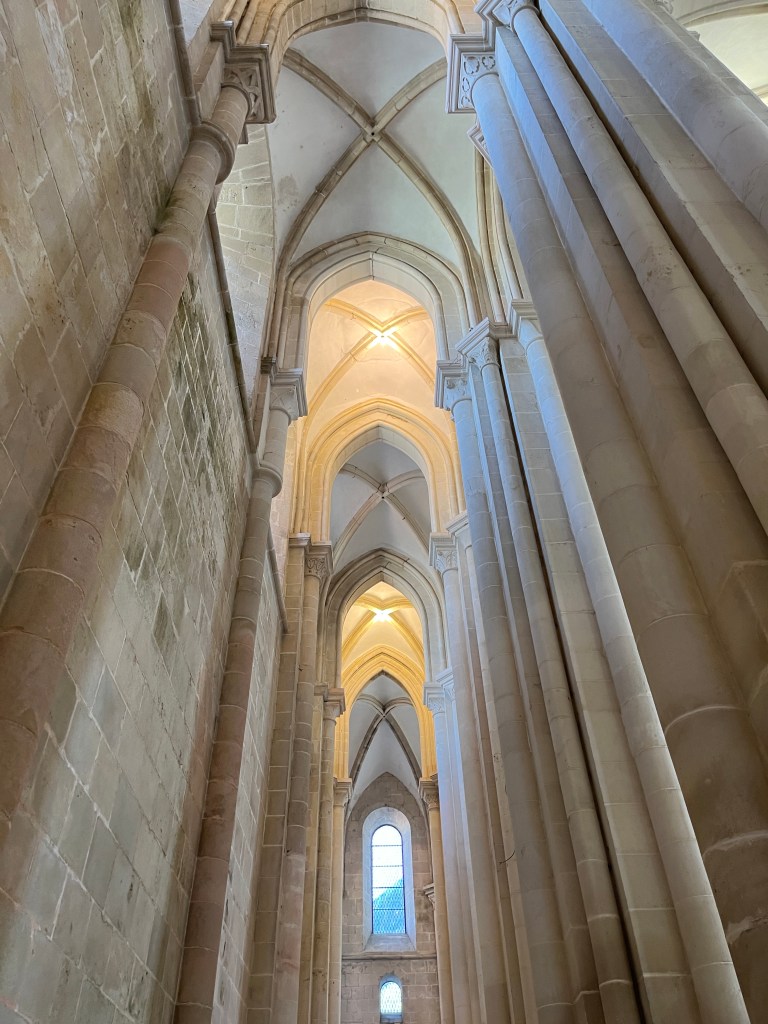
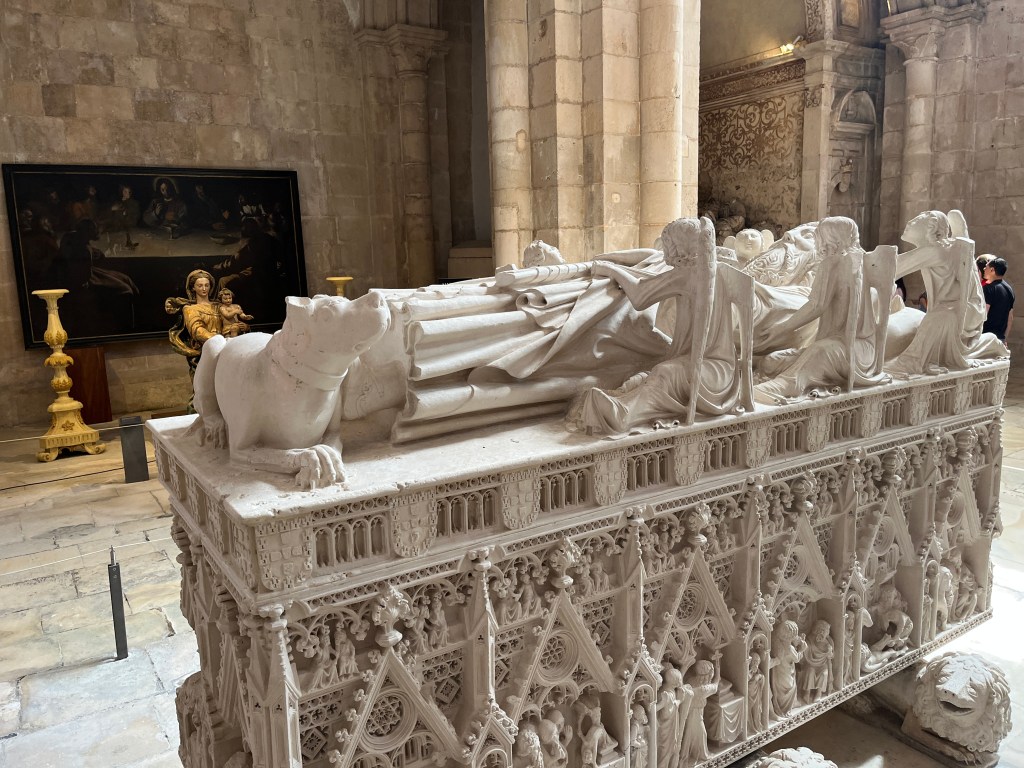
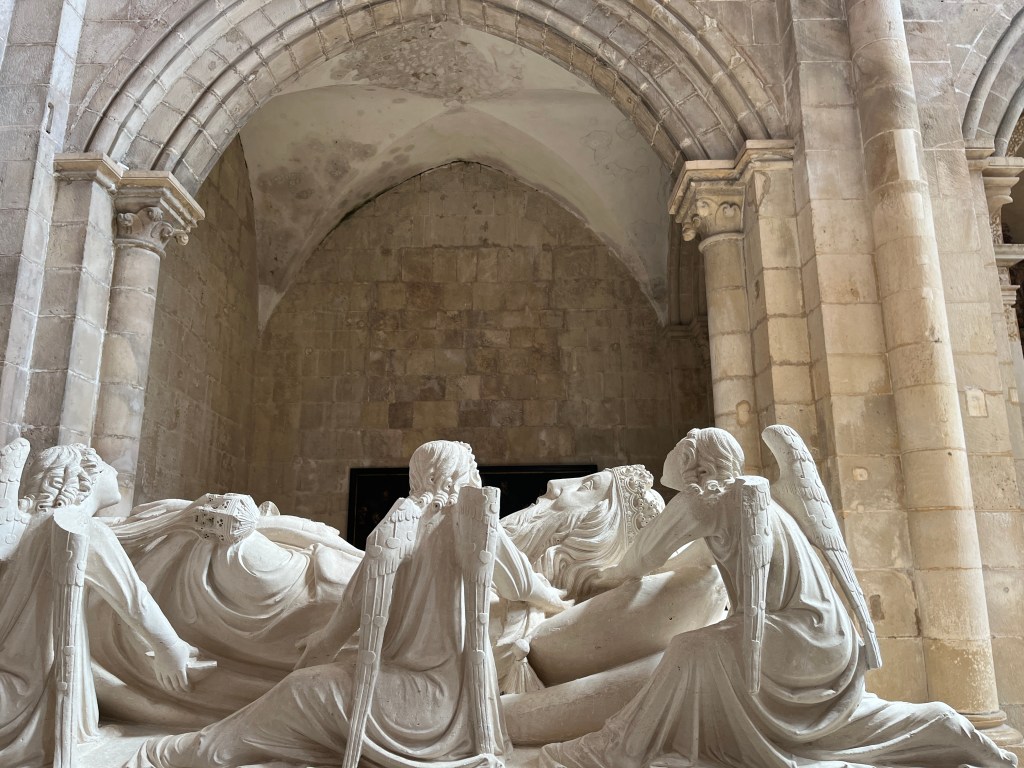
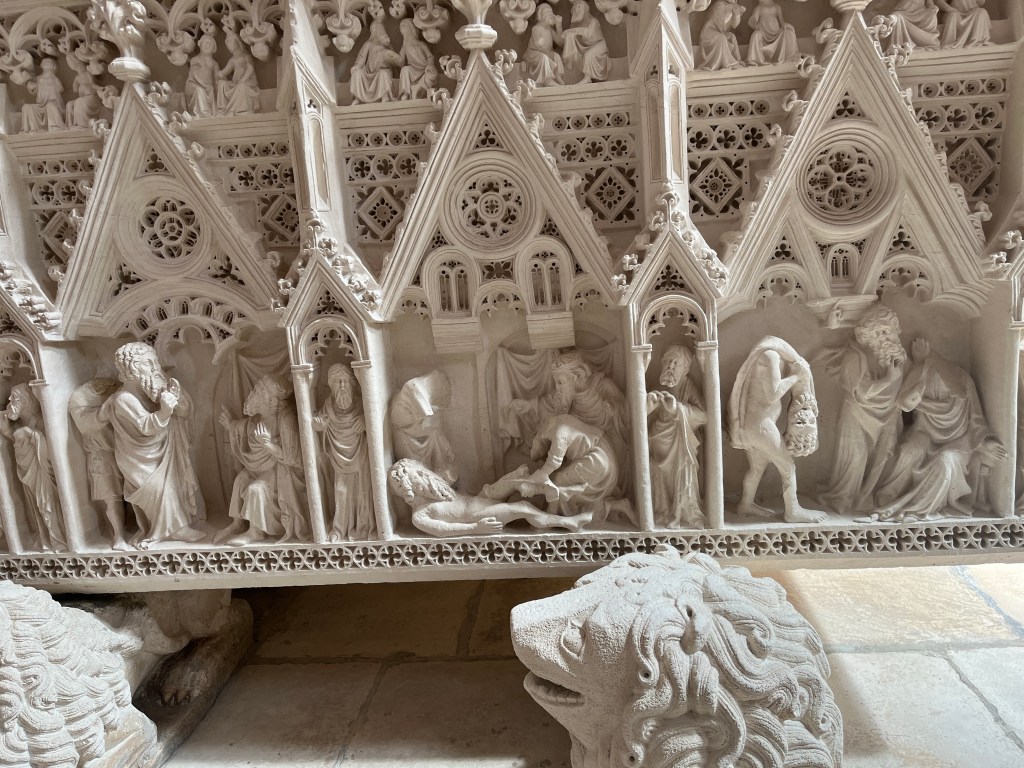
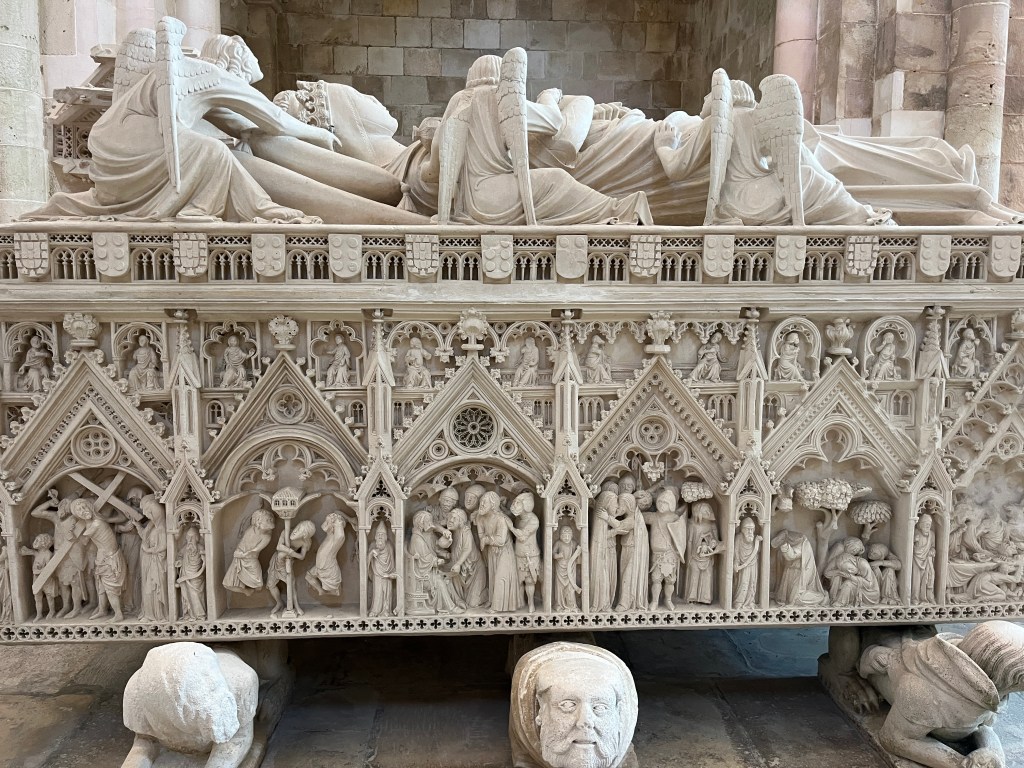
Alcabaca is known for its ceramics. Tiles were introduced from the Arab world. Displayed in a side street by a small river, are recent ceramic art.
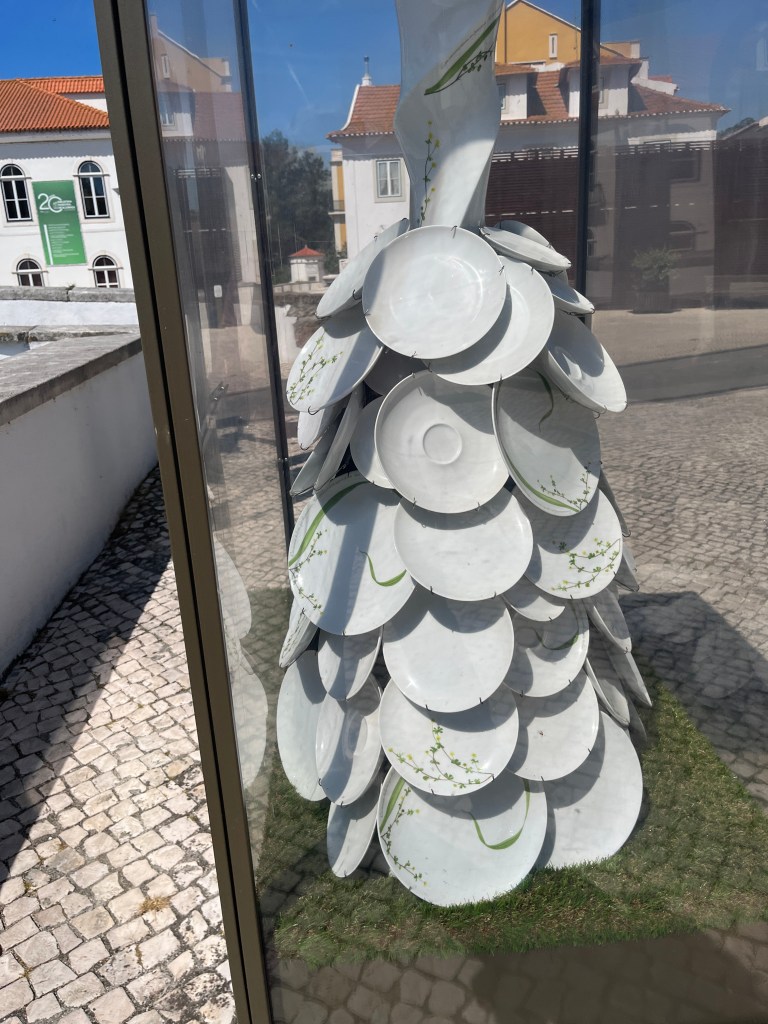
Some are tributes to Ines (below she’s represented by the wind up doll … a pawn in a plot. This other artwork below refers to the slave trade.
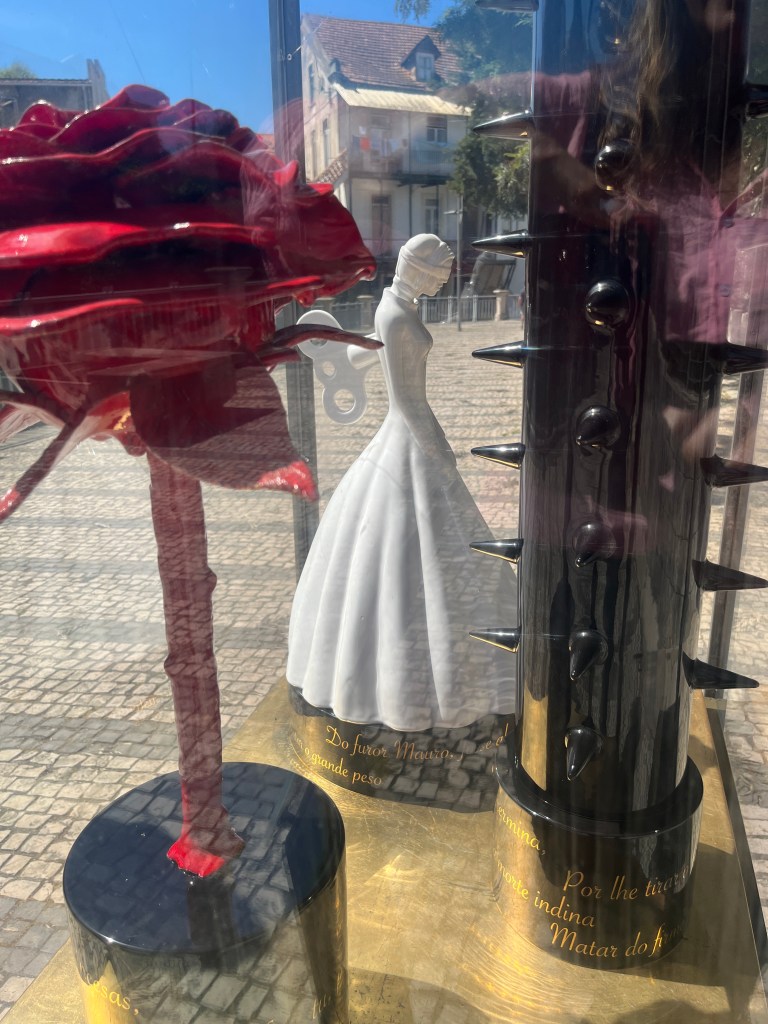
Also ceramic art recognises the slave trade. The trans-Atlantic slave trade was largely introduced by the Portuguese in the 15th century (age of the “discoveries”), and has led to the structural inequalities that exist today. millions of Africans were forced to work on European-run plantations in Europe, the Americas, and the Caribbean.
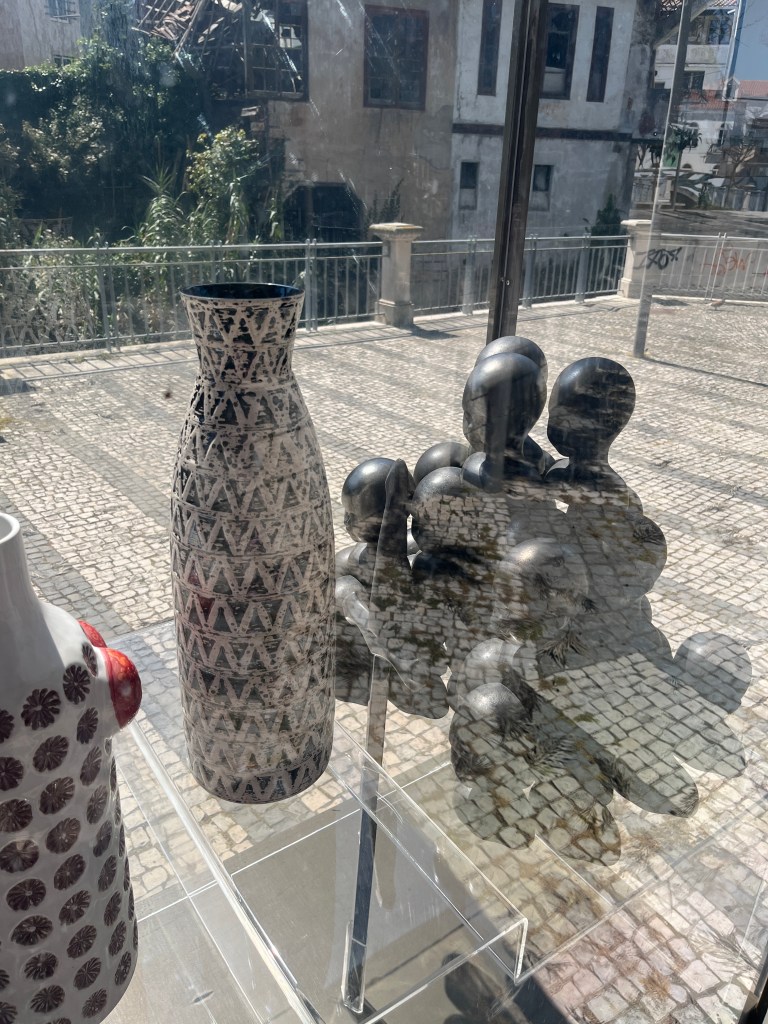
History books may note that Portugal was the first country in Europe to abolish slavery 260 years ago (1761) on the mainland, but slavery continued for many years in Portugese colonies including Brazil into the 1820’s. These sculptures sit on a cobbled walkway beside a wee river.
Batalha – Monastery of Batalha (1385) is a Unesco site, in part because of it’s social and religious significance, and in part because its authenticity is preserved and it’s original plans and materials are maintained. Its late Gothic architecture is intermingled with the Manueline style. The ornate convent has been put up in limestone, with a profusion of gables, spires, pinnacles and buttresses.
The convent was built to thank the Virgin Mary for the Portuguese victory over the Castilians in the battle of Aljubarrota in 1385 which put an end to the 1383–85 Crisis. The Portuguese interpret the era as their earliest national resistance movement to counter Castillian intervention.
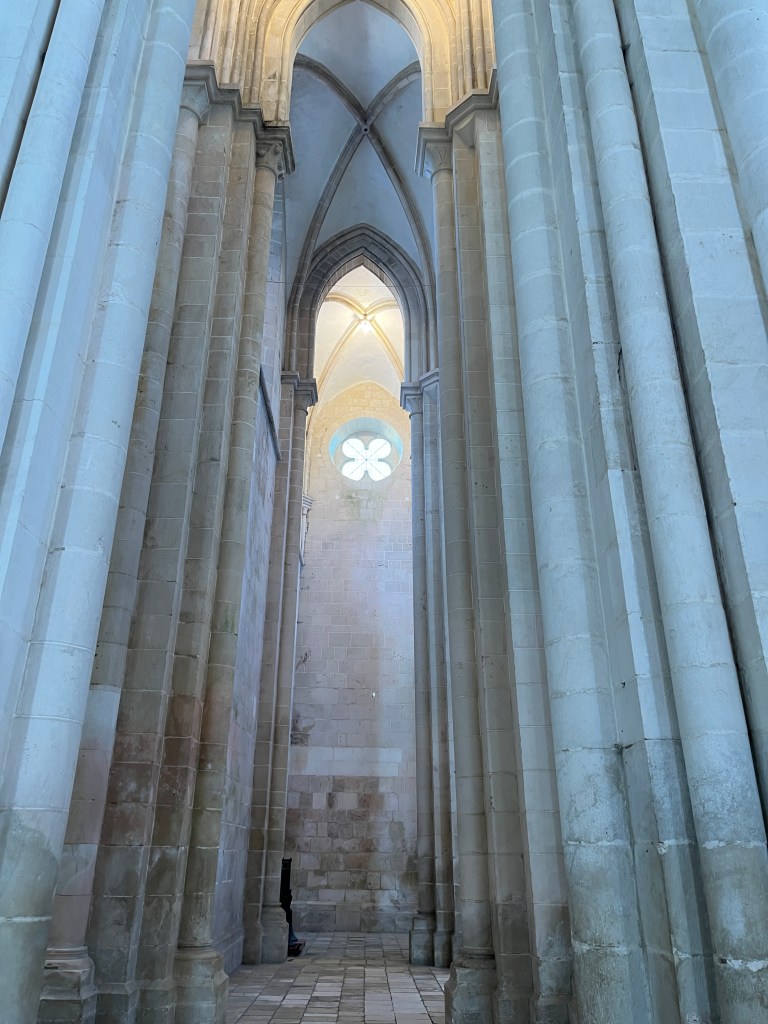
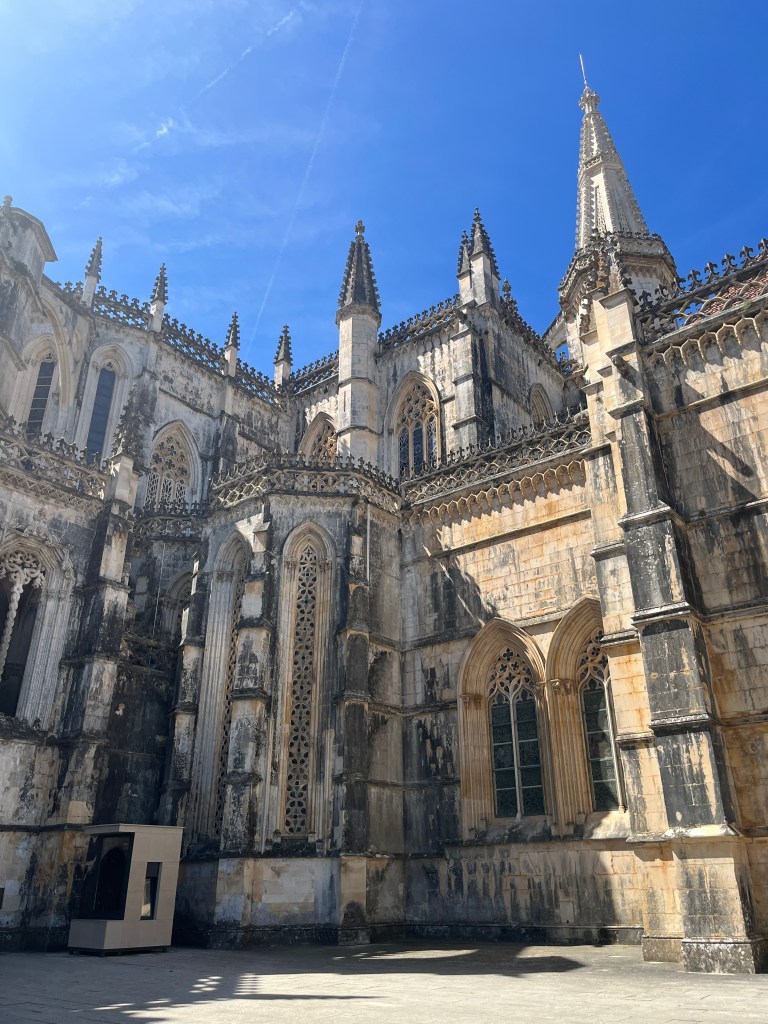
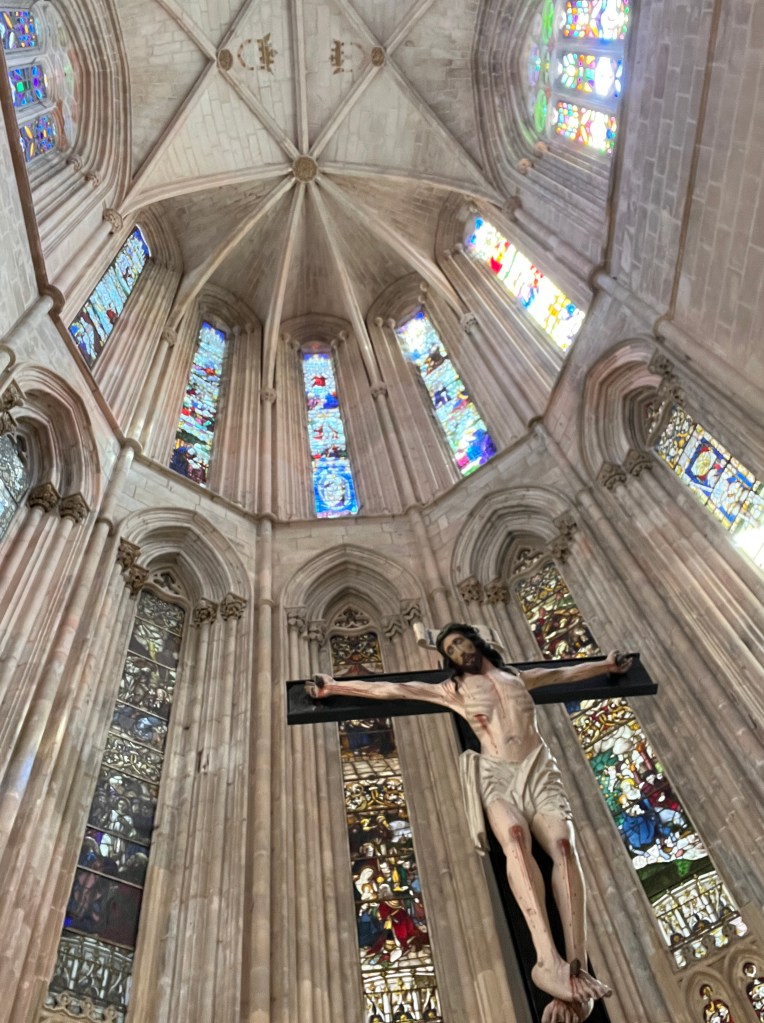
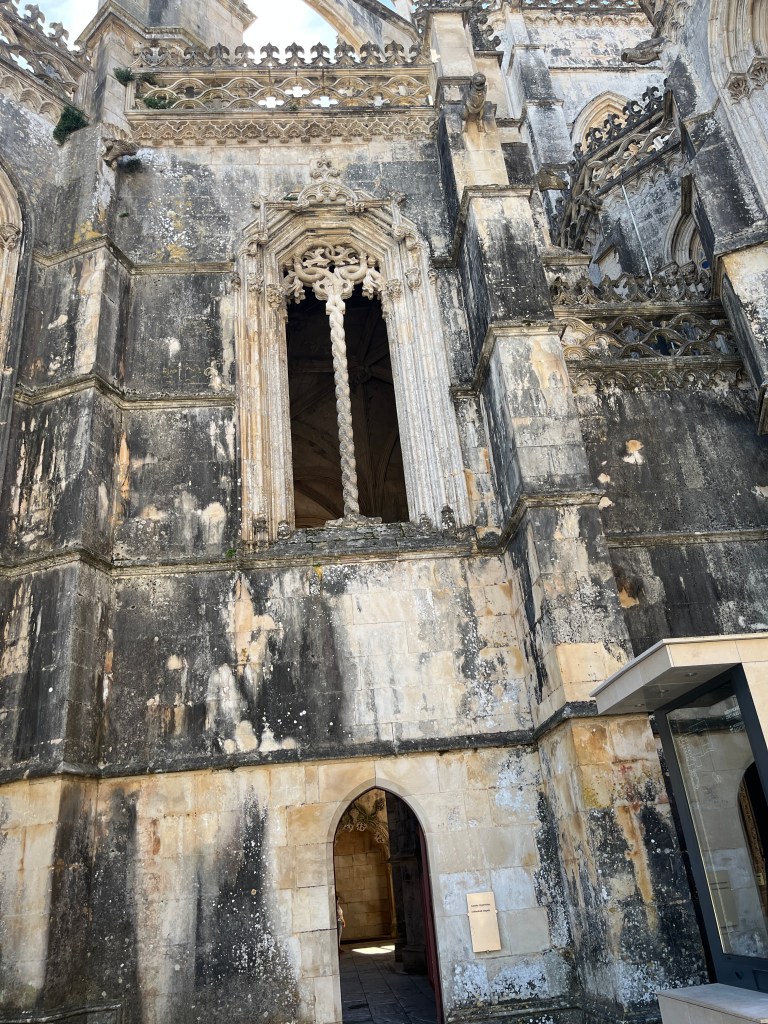
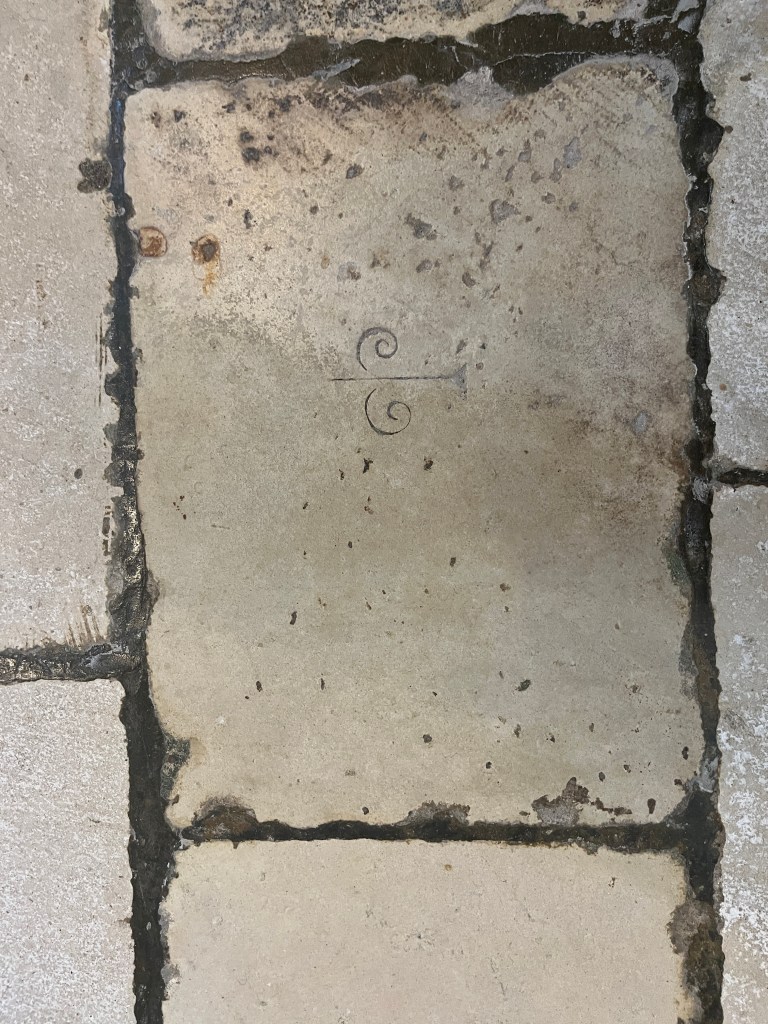
Outside the Monastery is a statue of nunu (22 years old). It was his military strategy that helped 6,000 Portuguese win against 35,000 Spanish! They surrounded them on 4 sides. Accessing help from the English, this small infantry with the use of long bows, surrounded them on 4 sides, and defeated the Spanish on horseback. Below is the signature mark made by each stonemason ( to account for the number of stones laid, and therefore the pay they receive).
Thinking a lot of my Dad, who broke his hip 2 and half weeks back. Sadly his dementia has also spiked so he may need to be placed in a more ‘ secure’ unit. Hoping and praying he may settle a bit once out of hospital. I’ve been here in the Algarve now for 9 days. It’s great to be in one place and out of the suitcase.
The two weeks at A Rocha, in Southern Portugal were a nice reprieve from daily packing and unpacking. It was great to get to spend time with local folk, help prepare local food and be involved in the different activities. Each week there would be a ‘butterfly walk/ count’ as part of recording butterfly population and patterns. There were also conservation cadets and one Masters student there during my stay (researching little owl habitat).
My role was a bit unclear , maybe influenced by the fact they were in-between hosts. Apart from taking on tee ‘chicken care’ job, I initiated my own ‘work’, which was trying to breathe life back into the largely neglected fruit trees here. I brewed up home-made fertiliser, utilising cacao pods, egg shells manure etc.
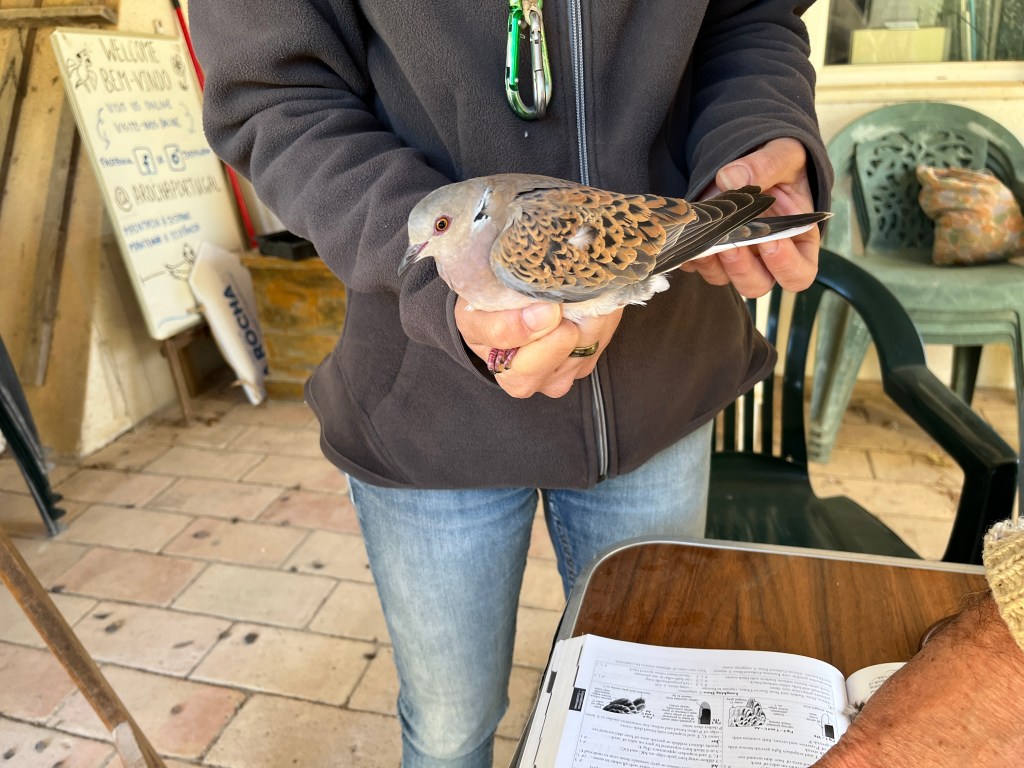
The daily rituals of being rural and caring for my ‘chicken’ friends were a pleasure…. but yes manure removal was still a central feature of life. There’s a swimming pool just 15 mins bike ride away also. Very grounding, and a good way to cool off. Bird-ringing happens every Thursday here, and it’s lovely seeing the beauty of feathers close up, such as this perfect looking turtle-neck dove…..and the Arocha, Portugal director Marciel with a bird-ringing.
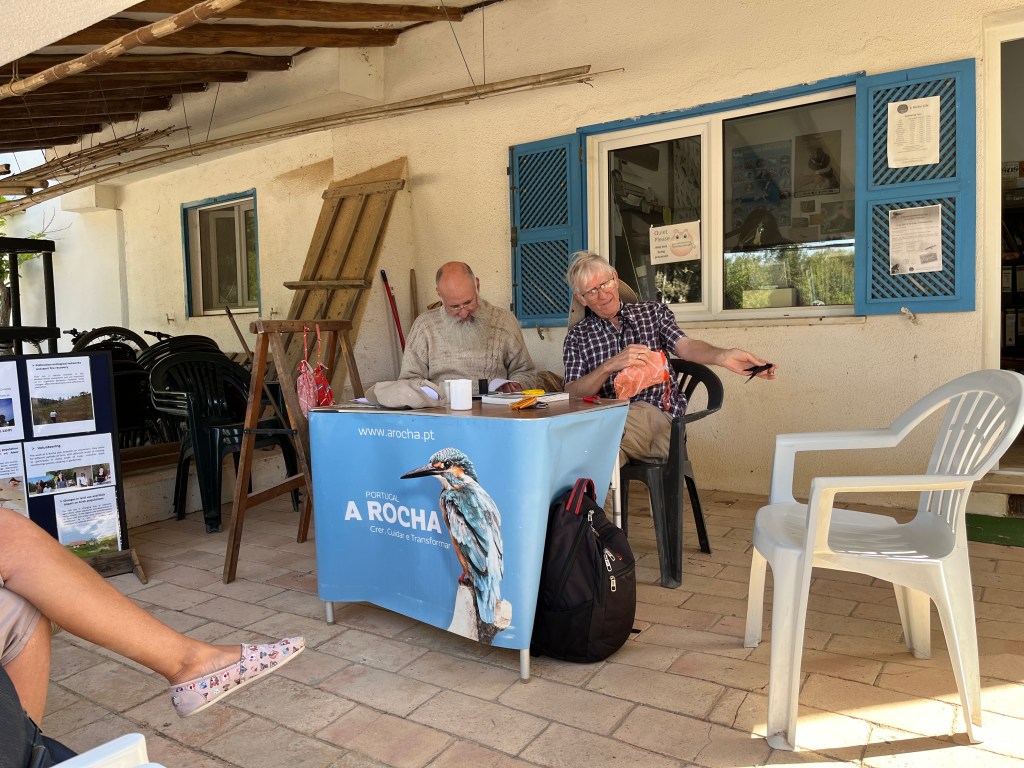
Out on a butterfly count.

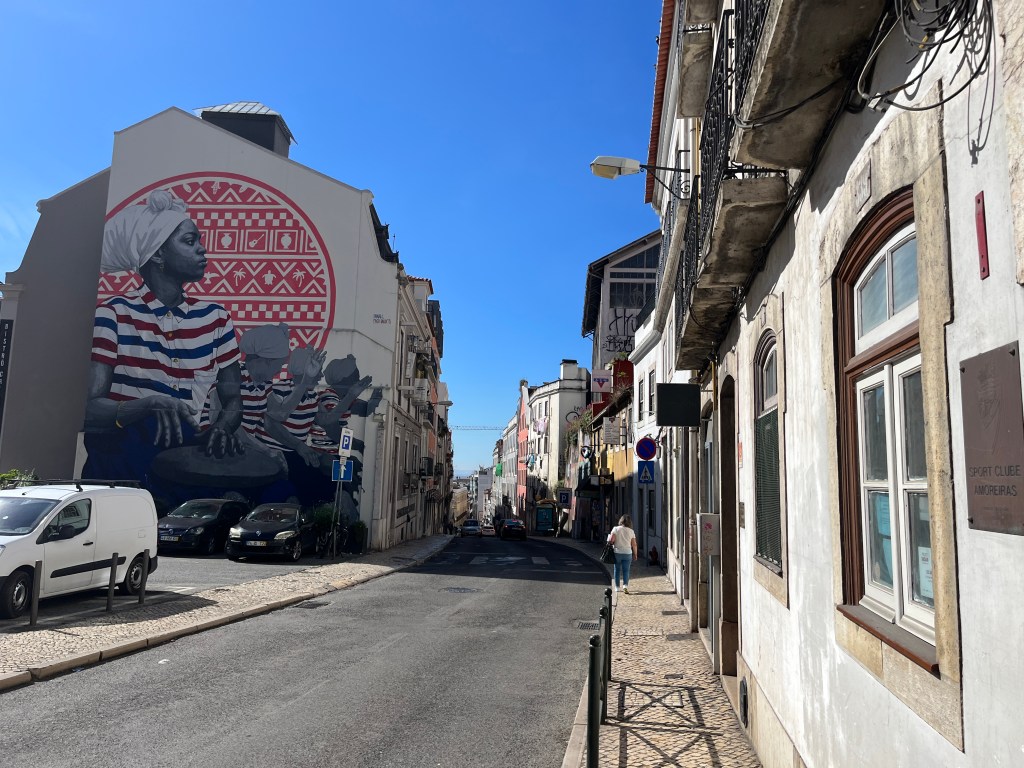
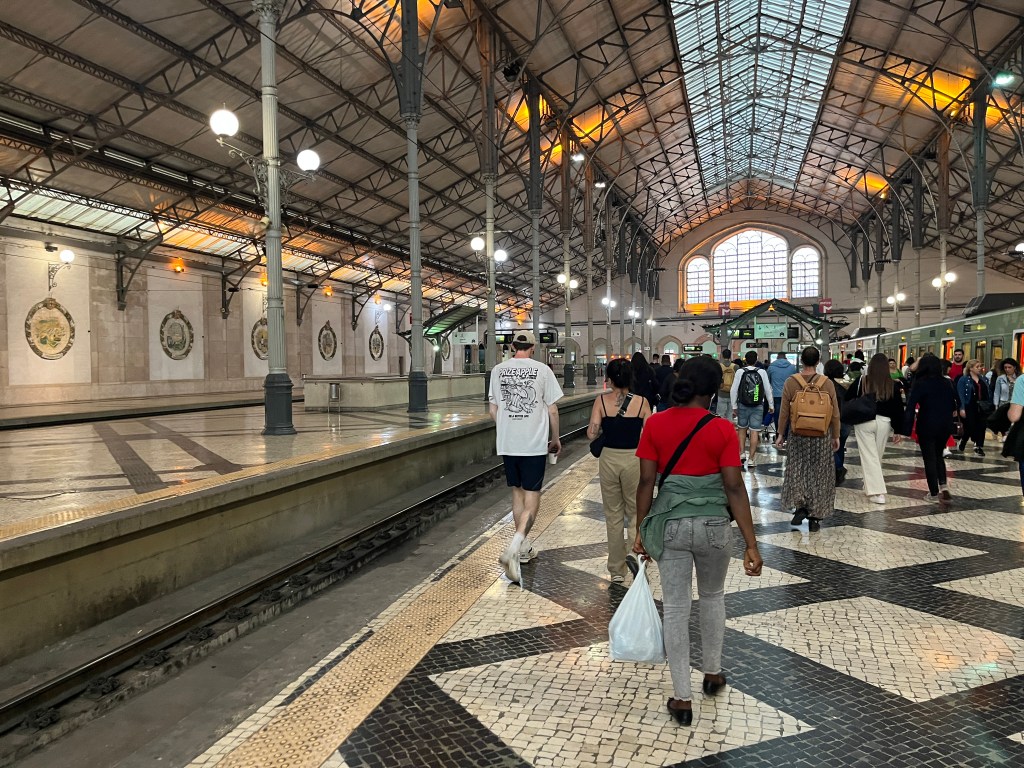
On to Lisbon, enjoying the relaxed streets with tiled houses, and the tiled train stations, especially Lisbon central.
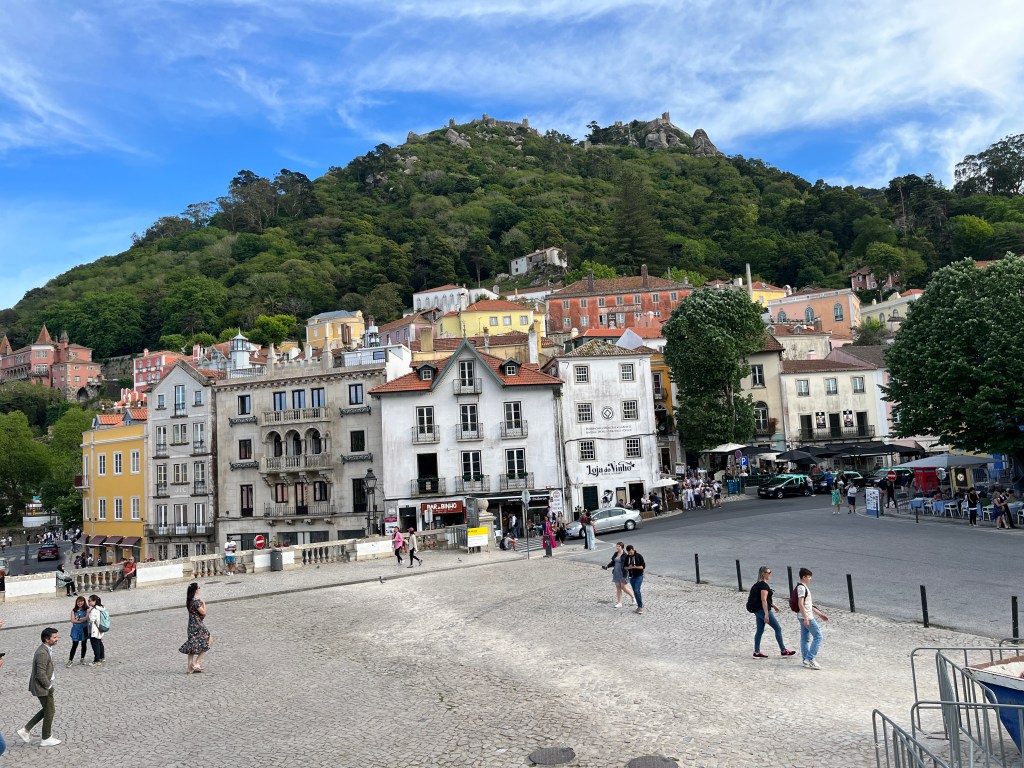
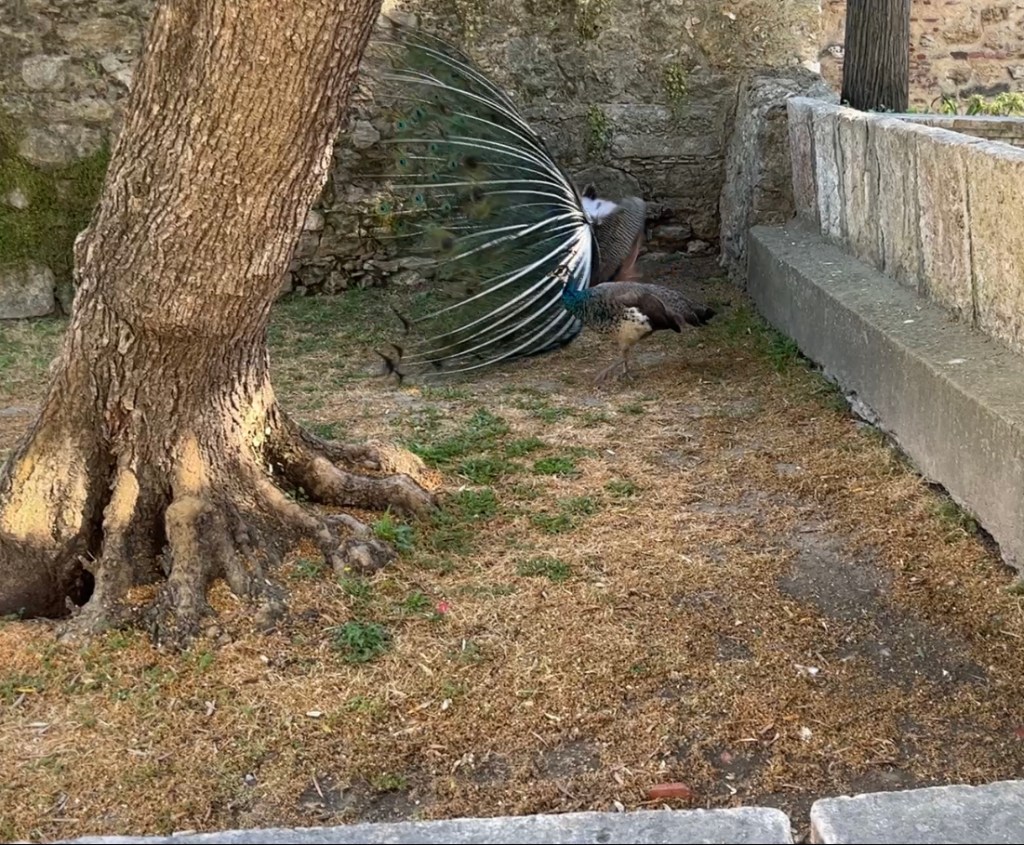
The afternoon allowed me just enough time to visit ancient Sintra town was a beautiful wee town, beautifully green and housing a great art gallery. The main appeal of the castle was a group of very amorous peacocks. I hadn’t realised they look just as gorgeous from the rear. I sat and watched for a good half an hour.
The frustrations more than the joys of public transport were with me in Lisbon. I went in search ofd a public pool, many times phoning before heading off. For various reasons 3 pools were a ‘fail’, in one instance, yes only me to blame, because I missed a metro stop. So I thought why not check out a beach? I waited at a bus-stop for what seemed an hour, but had a great chat with two 20 something year olds, making a strong connection around ‘earth’ matters. When recommended this beach, I hadn’t realised it was an hour away, so in-fact, once there, had to turn straight around and head back. Yes it was a beautiful beach 🙂
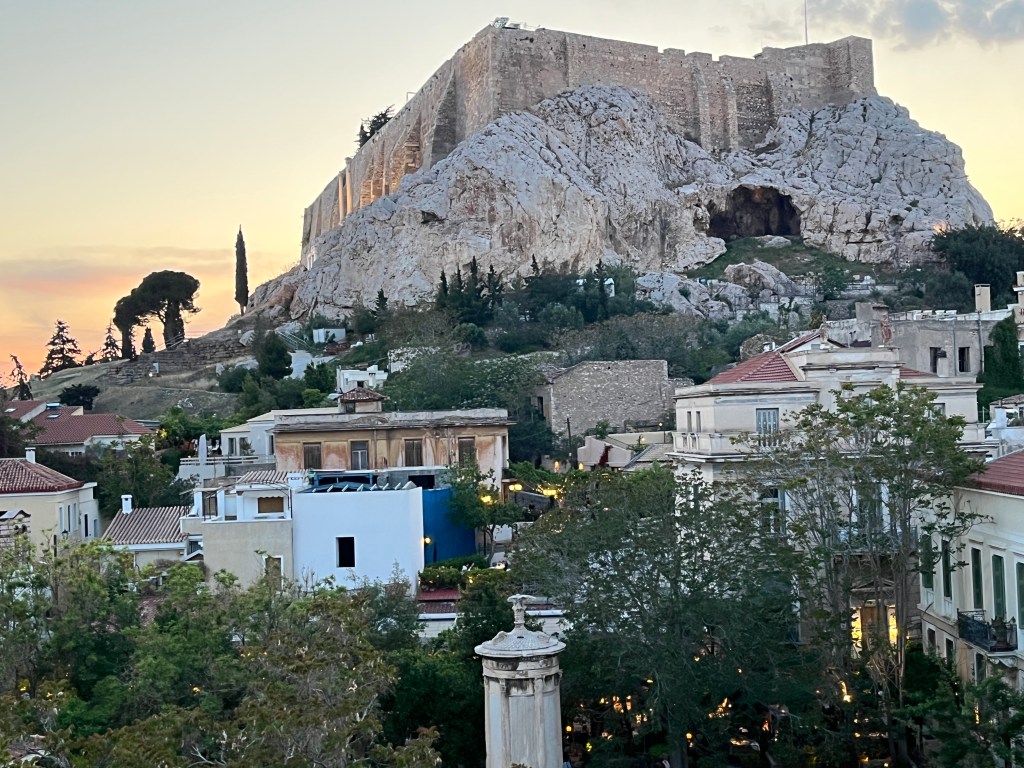
27th April – Any frustration was overcome by the promise of the late night flight to Athens where I would meet Ged. 27th April – That was such a delight after having no-one easily hangable for 7 weeks, nor with English enough to have a deeper conversation with. Met Ged in the old area of Athens. Well this was a surprise. It’s compact and pretty quiet. We were both expecting a noisy bustling metropolis. Lot’s of people walking, and most buildings restricted to 3 levels, so the view of the Acropylis isn’t blocked. Hugging one’s lover/spouse after 6 weeks is simply delicious (or in Greek, nostimo). A meal out on a wee balcony overlooking the old town of Athens kick-started a wonderful two days there. Warm cloudless night, so the evening was perfect.
He’s booked dinner on a wee rooftop.
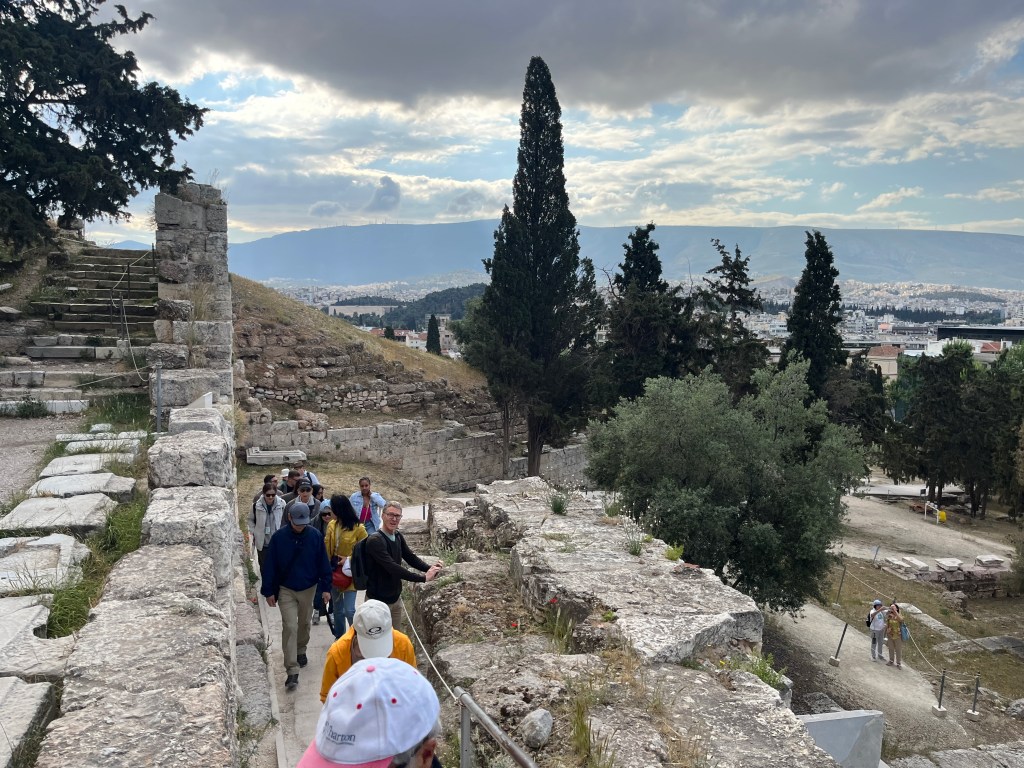

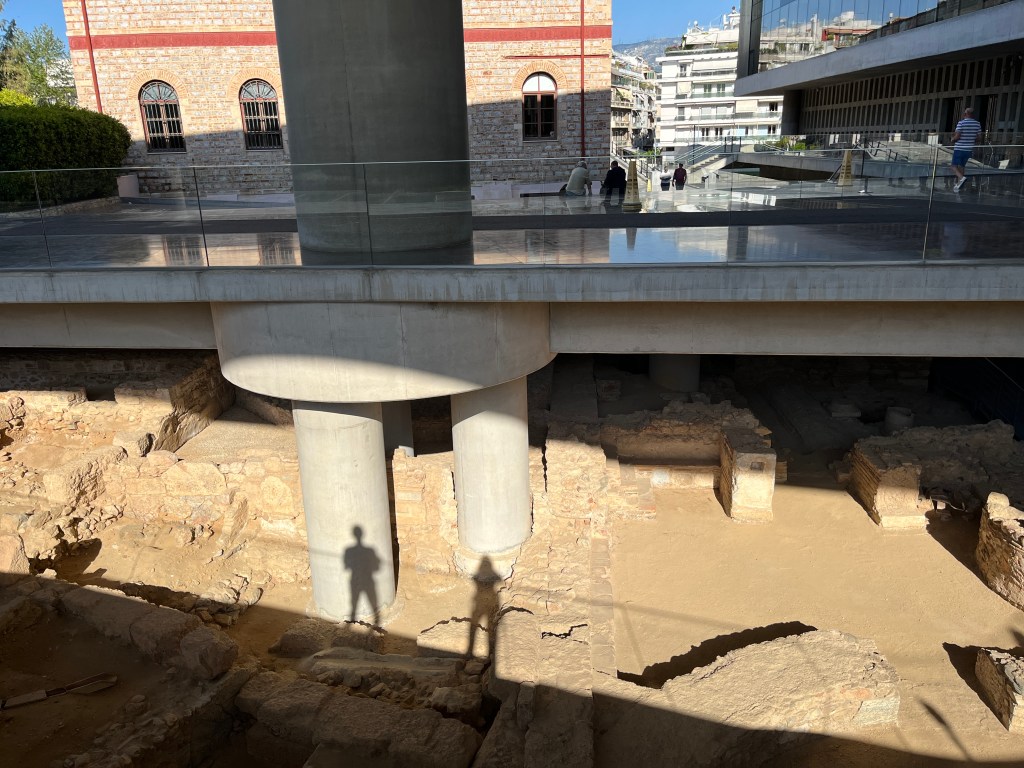
Acropolis museum was a contemporary building that sat beautifully amid the old. A bonus was the shadows that were cast from the over bridge 🙂
28th April – Acropylis. Stoa of Attalos
Temple of Hephaestus.
Vist to the holy church of Demetrios Loumbardiaris, which was planned to be canon-balled by Ottomans during a Sunday service.
A hot walk up to a hilltop. Museum.
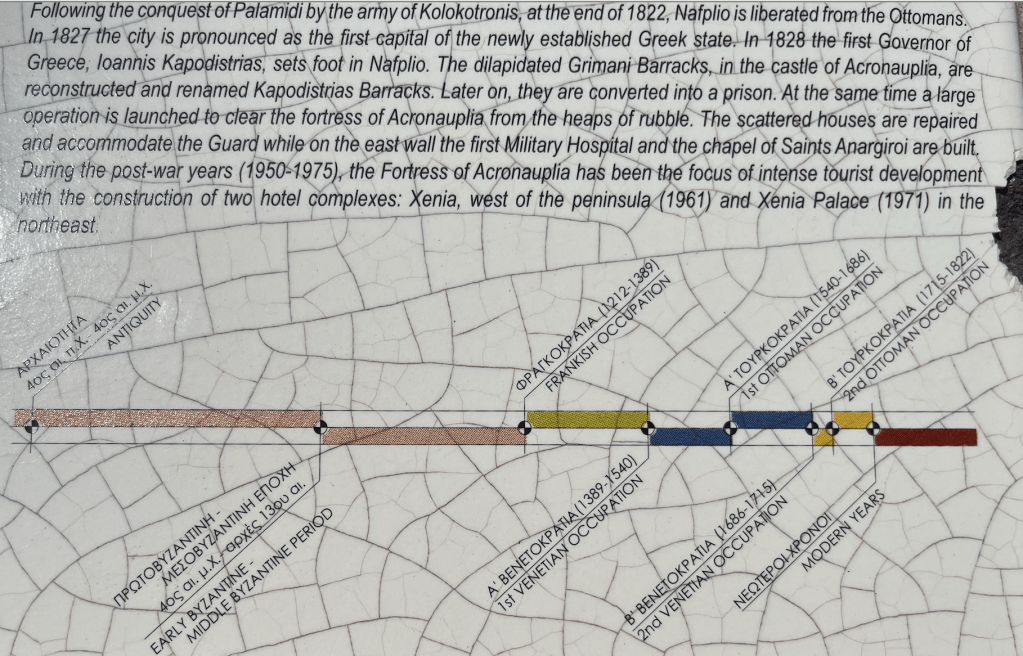
29th April – Bus to Nafplio, an ancient seaside town (the first capital of Greece) with guess what? another fortress, Palamidi ! A stunning walk 999 steps to the top. Thighs are ready for it this time. Stone walls well preserved and beautifully constructed. The space covered km. What struck me were the delicate lines created where one wallk meets another. The work entailed in building this blew our minds. I couldn’t help but think of the labourers and their sore backs. What an access… and we have steps
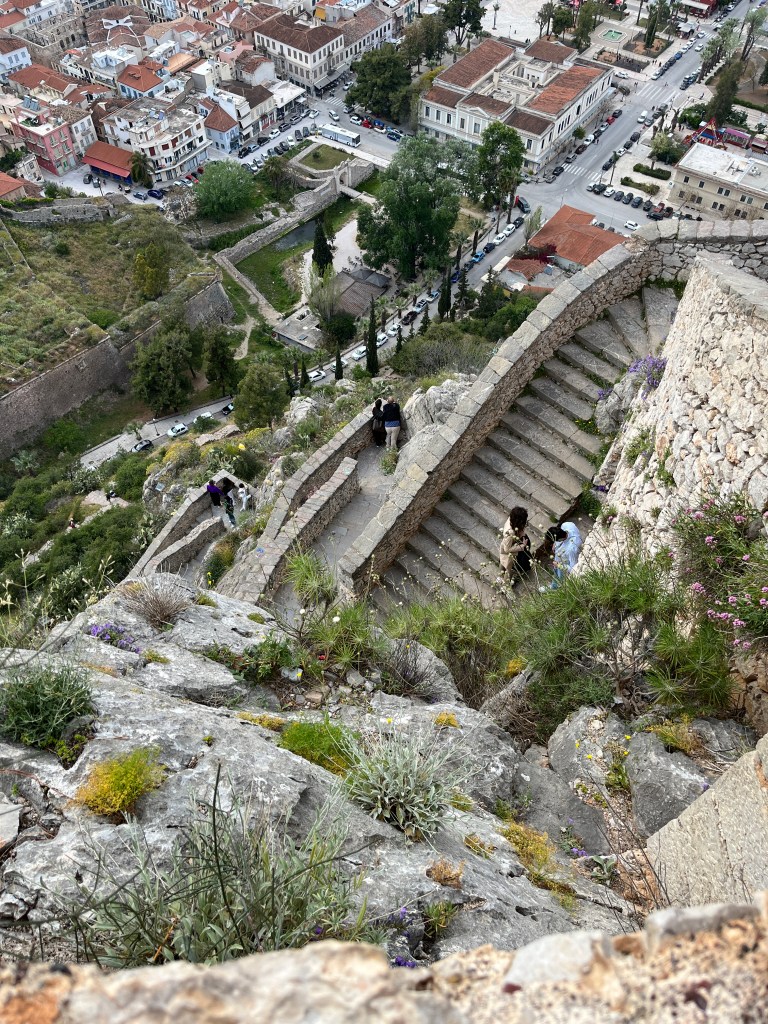
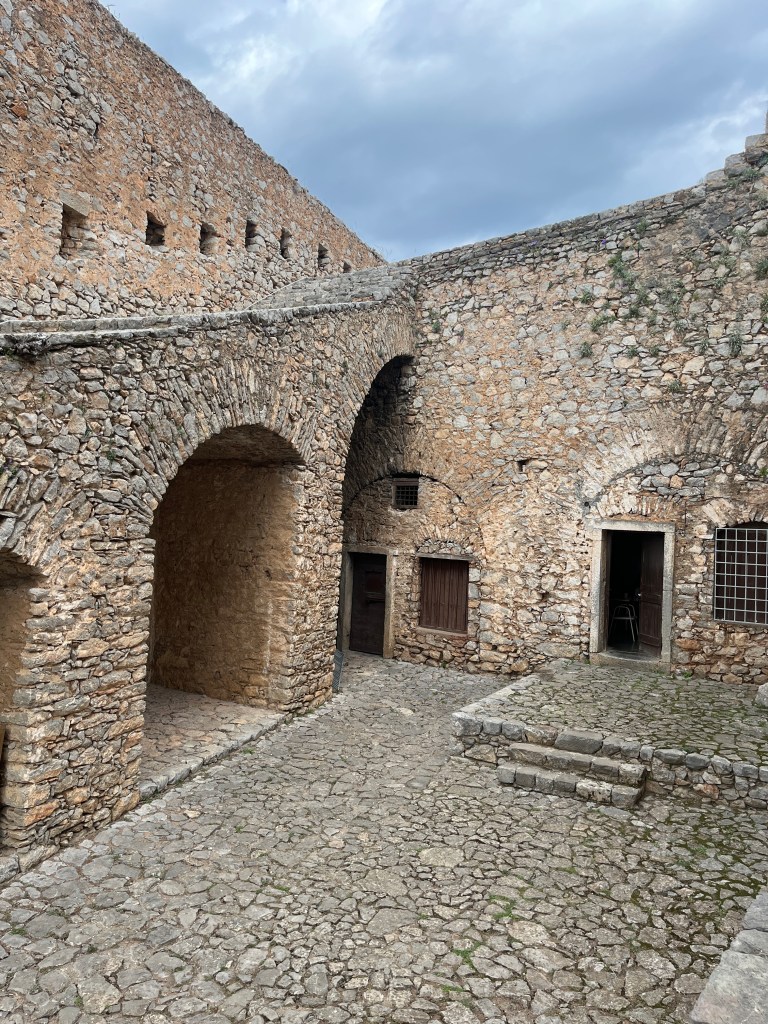
One can see why it was a ‘critical’ point of defence when you see the promontory from above. Now the site of a fair number of abandoned hotels from the financial crashes experienced by Greece.

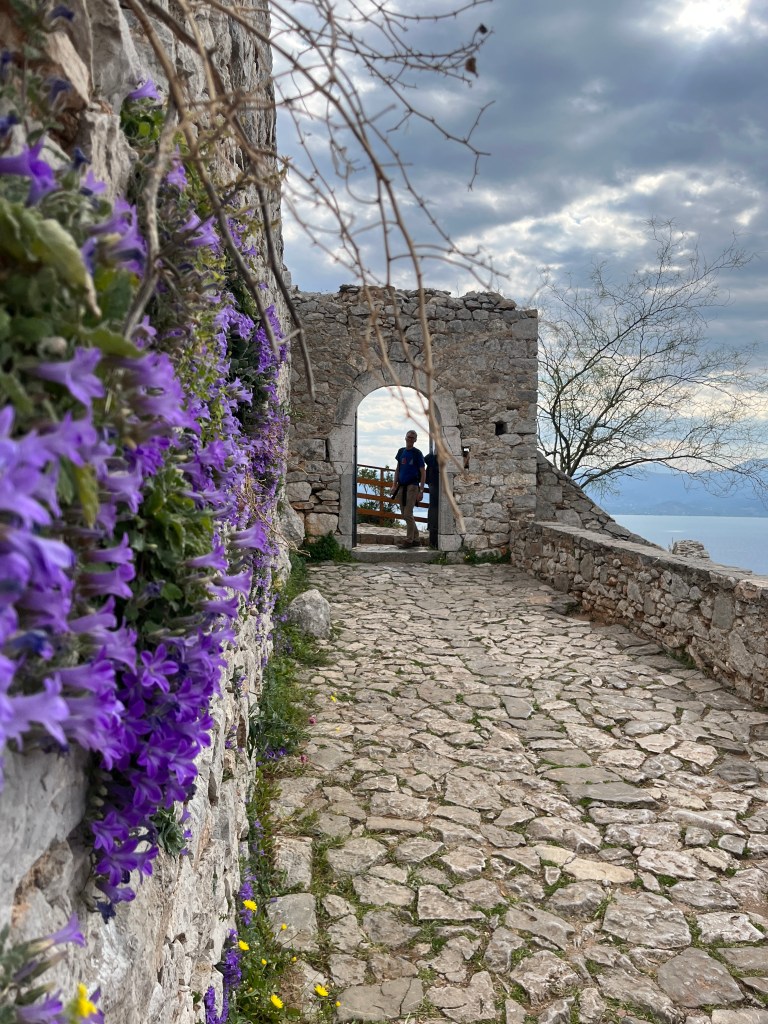
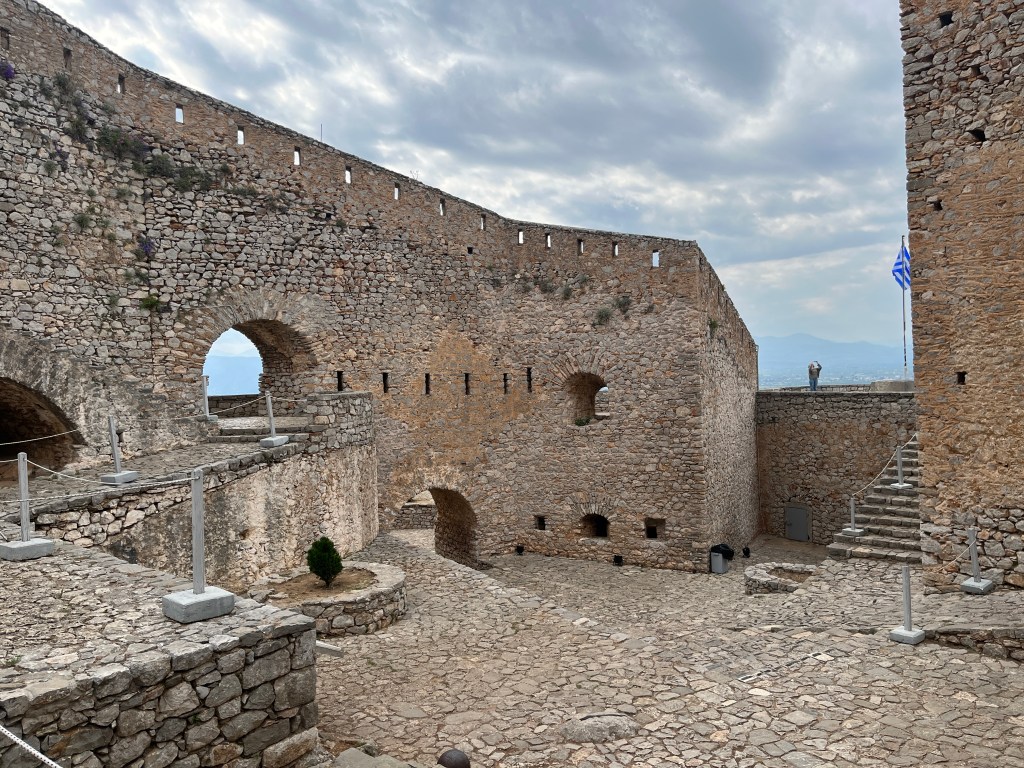
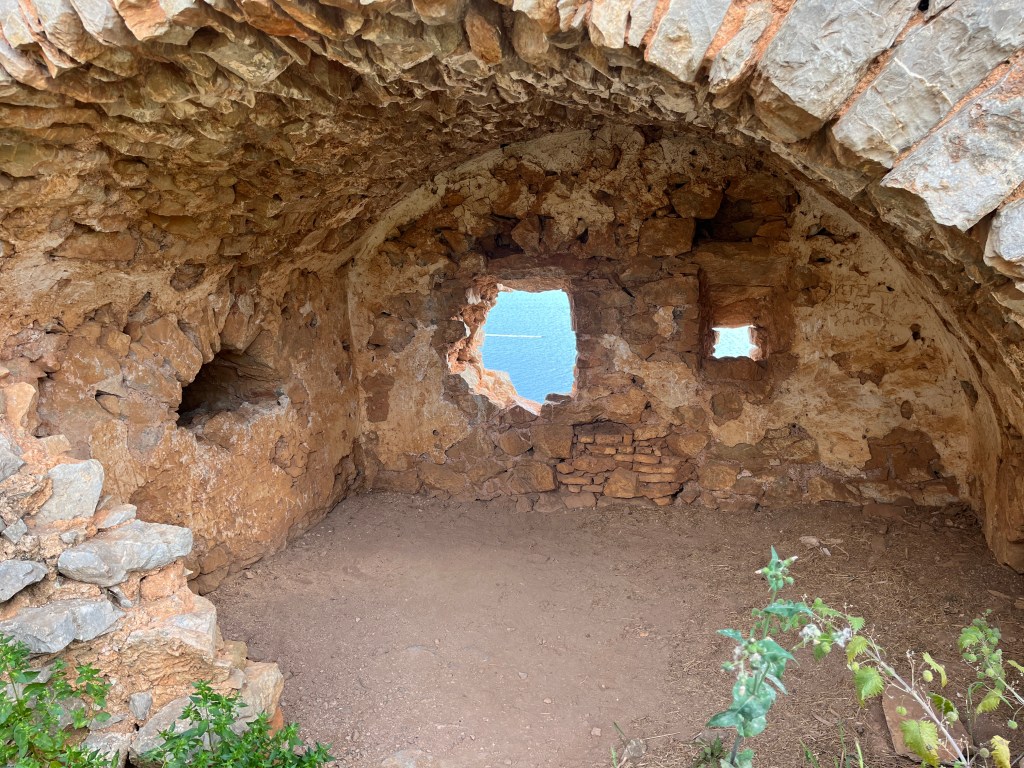
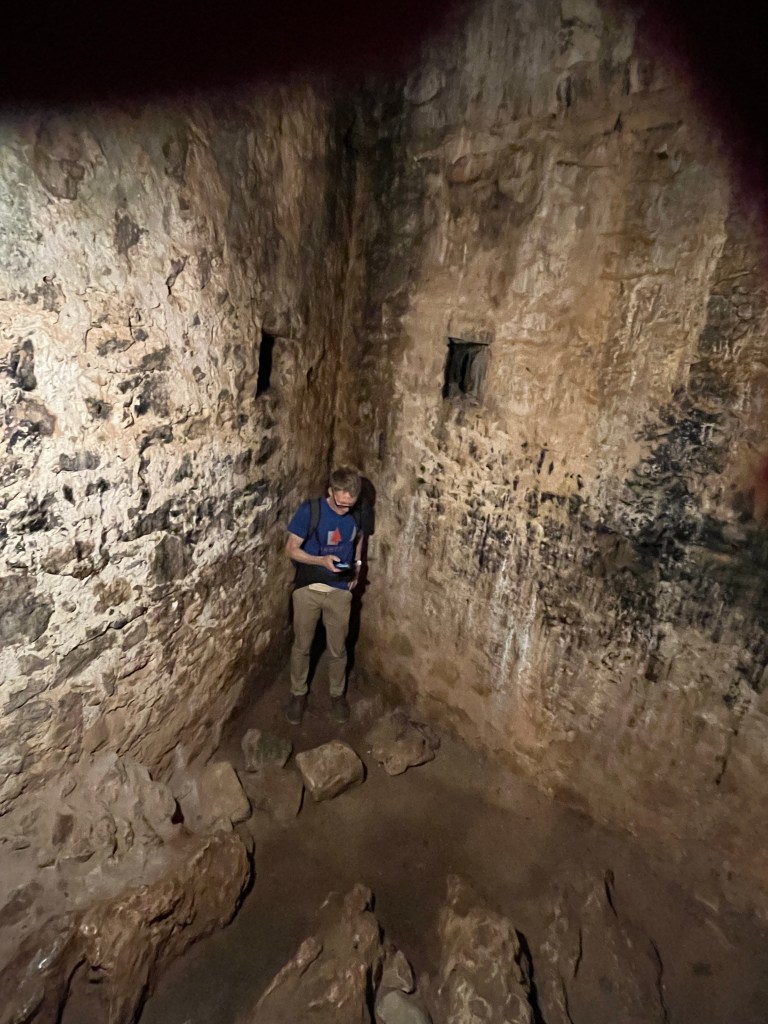
…. and everywhere , the Greek flag . Here’s Ged in the wee grotto prisoners were kept in. Talk about ‘passive house’ The walls a good metre thick.
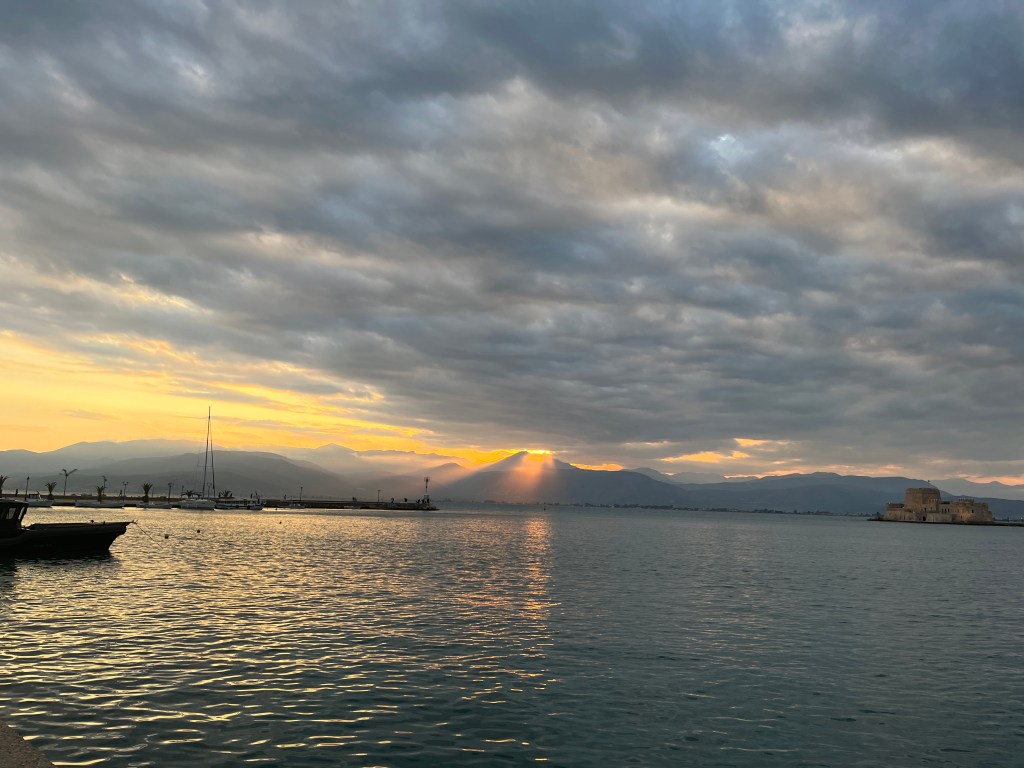
One evening, I took a stroll on my own around the coastline stone path, below the fortress. Stunning and serene. Once back in Nafplio town, the music had started on the Wharf courtyard with families jovial and animated.
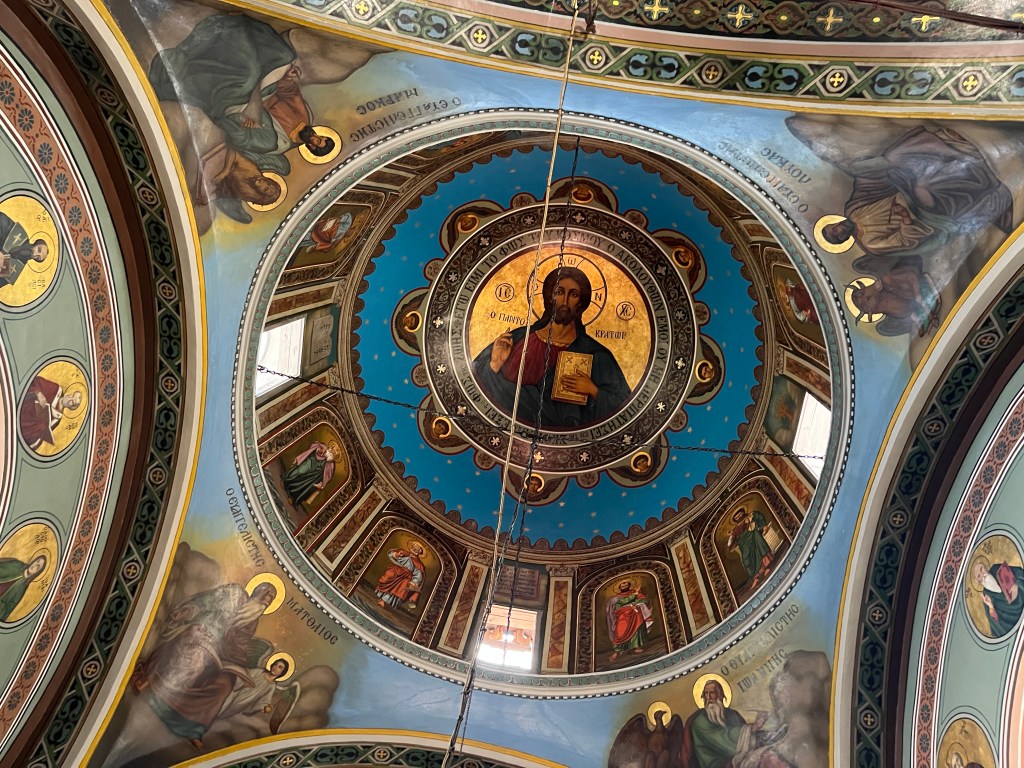
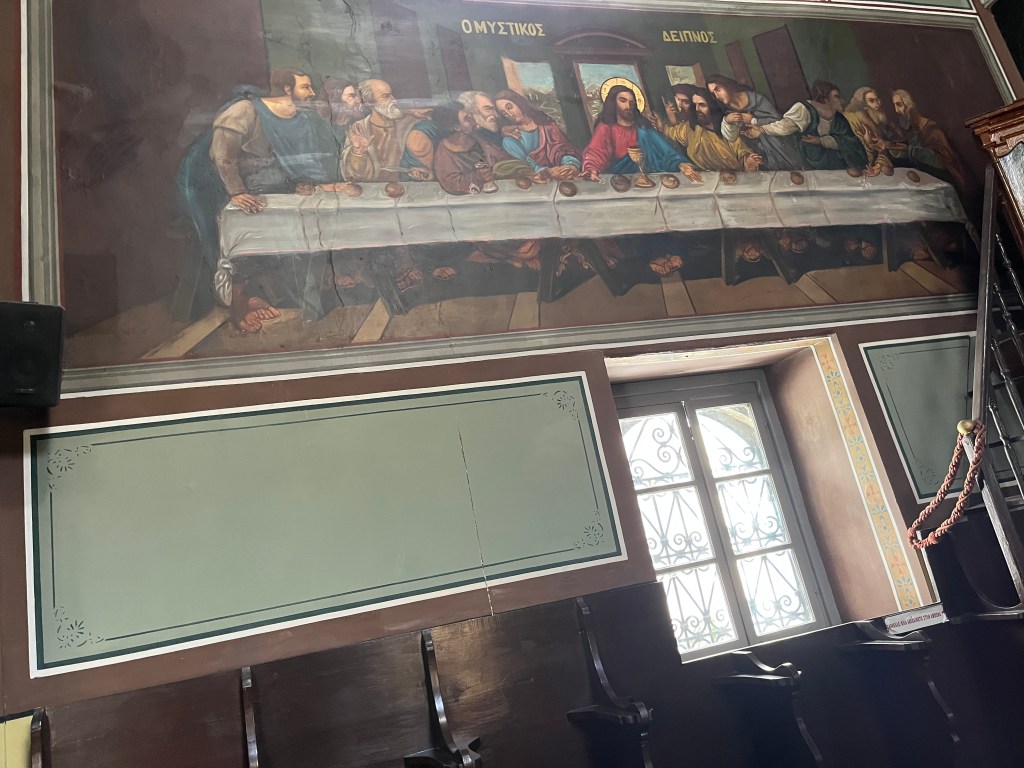
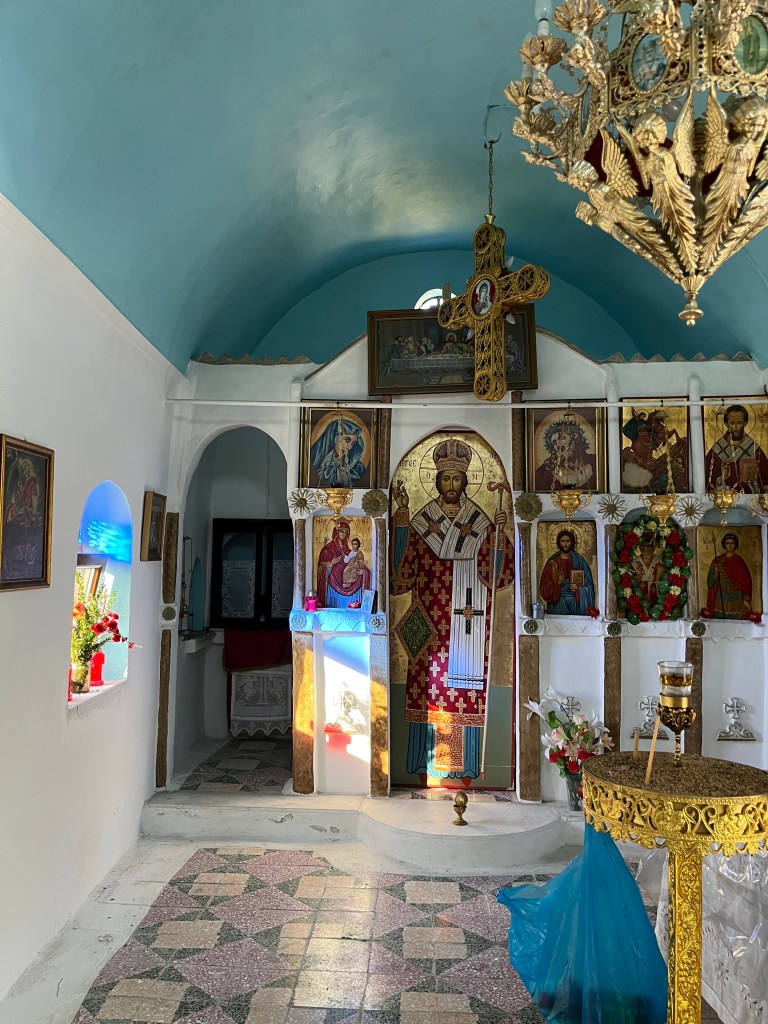
Down in lower town, this church, humble on the inside, had a lovely blue ambience inside, perfect for lighting a candle and saying a prayer. Also standing before ‘The last supper of Jesus’ captivates me. It gets depicted in so many varied ways from country to country, but always powerful.
30th April – Collected a wee Fiat 500 and visited the Asklepieion theatre at Epidaurus and health spa. wellbeing . About 60 rows of stone seating. We had to test the acoustics, which reputely mean an actor stannding in a central spot can be heard lighting a match.
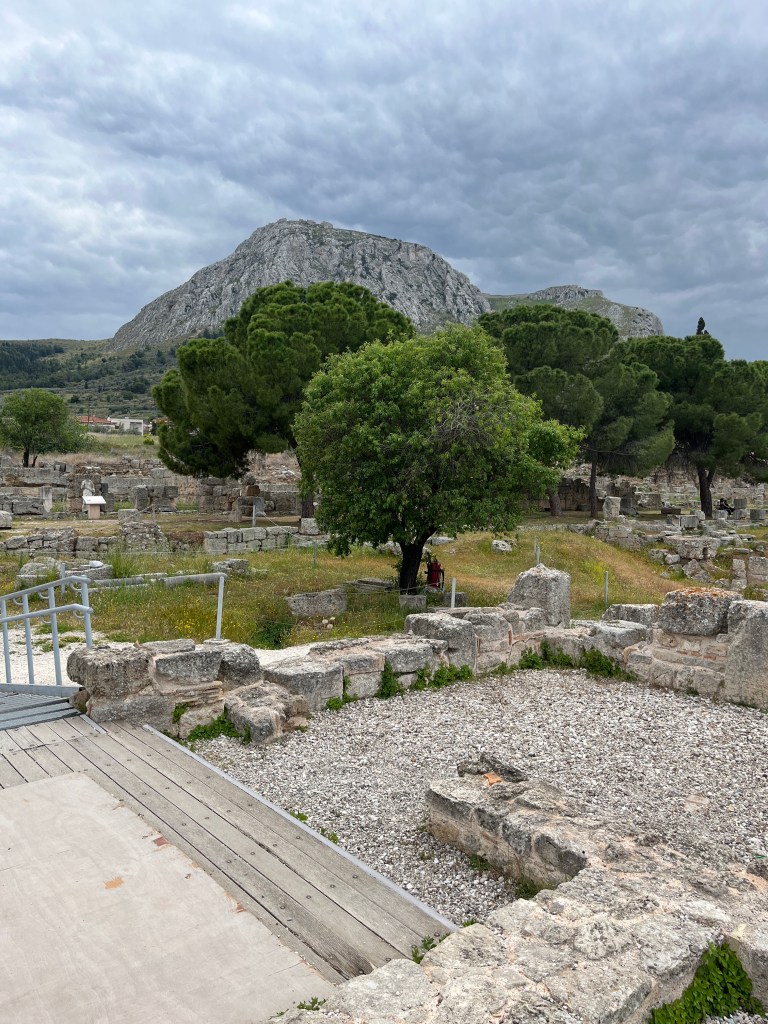
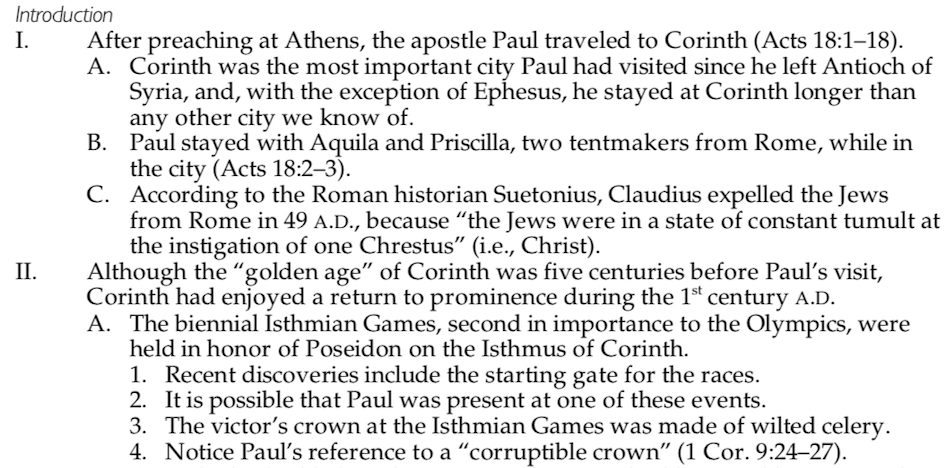
Ancient Corinth. Paul, a disciple of Jesus, spent three years here as a tent-maker. The local Jewish leaders bought Paul to trial, which was held in a court on a small grassy mound atop stone walls. It was an emotional experience to be standing in the very same place where this happened 2000 years ago, wondering at his bravery and faith, and at the strength of the forces against him. Fortunately the local Roman leader dismissed the case allowing Paul the right to speak.

1st May – Up early to head to Stemnitsa to begin three nature-filled days on the Menalon trail.
Firstly, locating the Cafe Micro. The owner Pangiotis was our driver to drop us to trail start. Not far down the Lousios gorge with it’s sheer rock walls, we spotted Prodroumous monastry. It is home now to 7 monks, 2 of whom were great hosts, welcoming us in for coffee and sweets. One had been here for 25 years. Asking what it is that brought him there, he said “it gives me rest for my soul”.
All thee rooms overlook the deep gorge, on this day shrouded in mist.
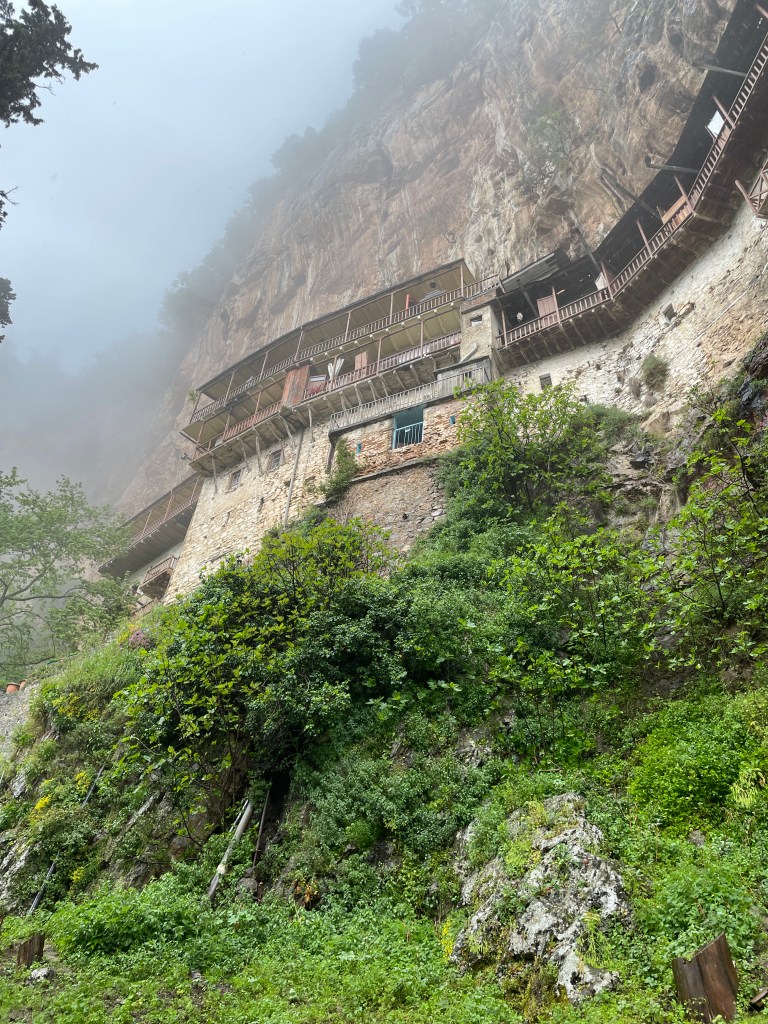
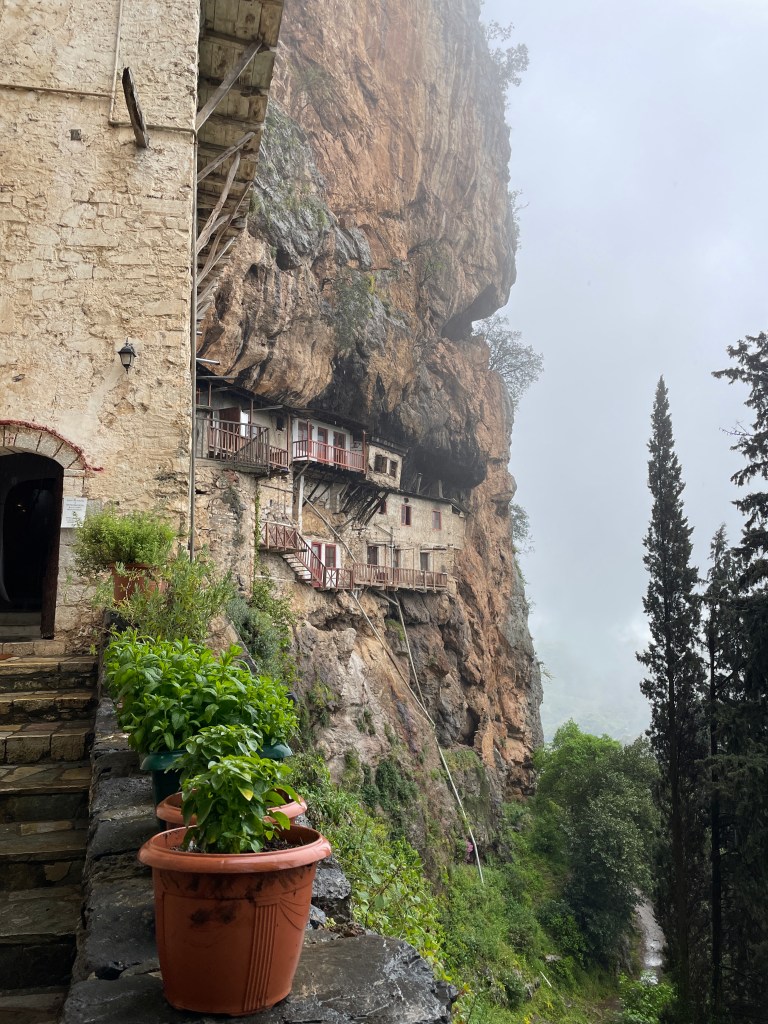
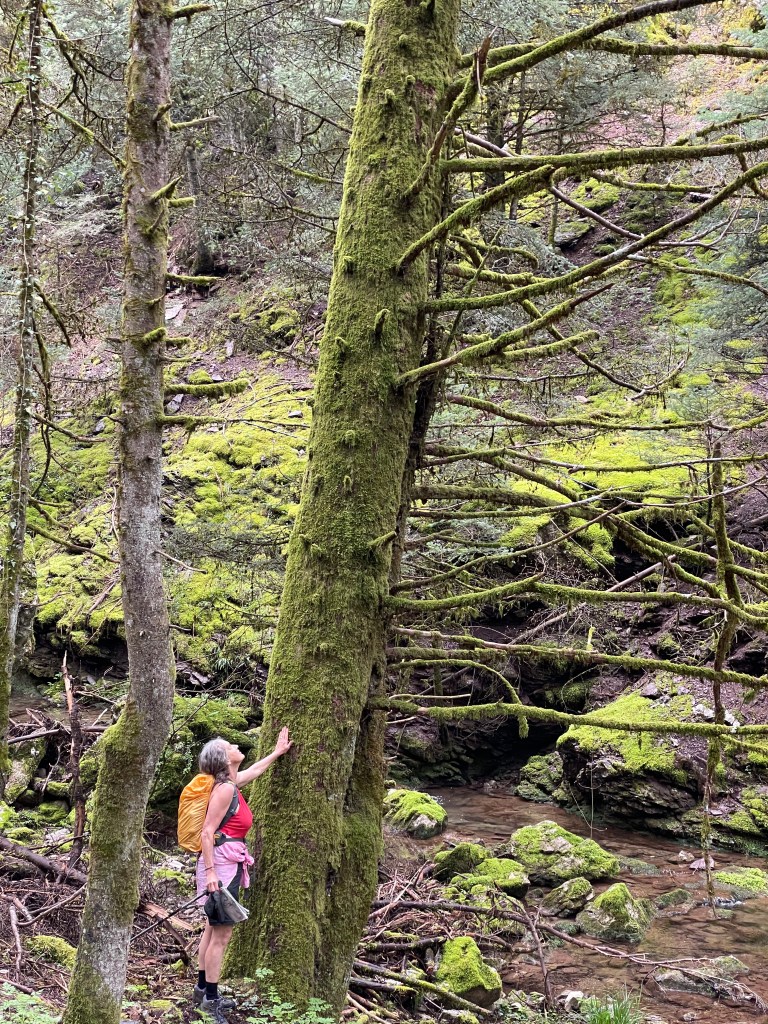
We asked how they manage maintainance of the exterior, and they shared the story of a monk who fell whilst doing so, only to be saved by his robes catching on a tree from what would be a terrible fate.
Philosophou Monastery was another stop that offered a different flavour.
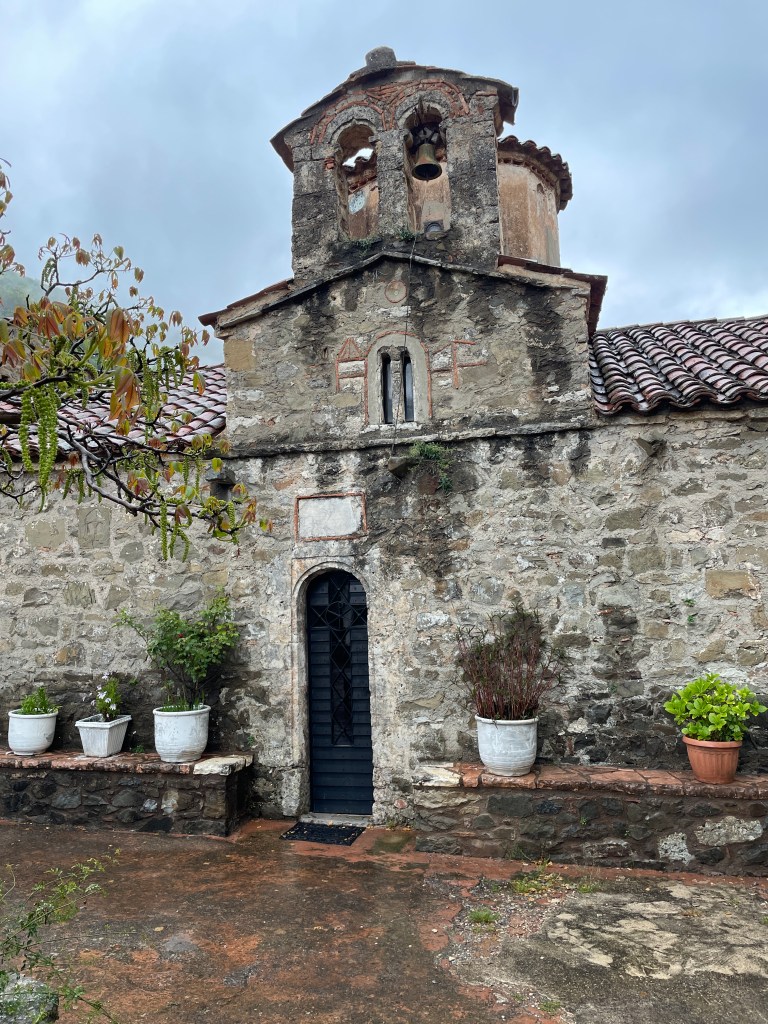
Kousteni and … were our hosts that night just out of Dimitsana. Dried out and exhausted, so straight to bed after dinner.
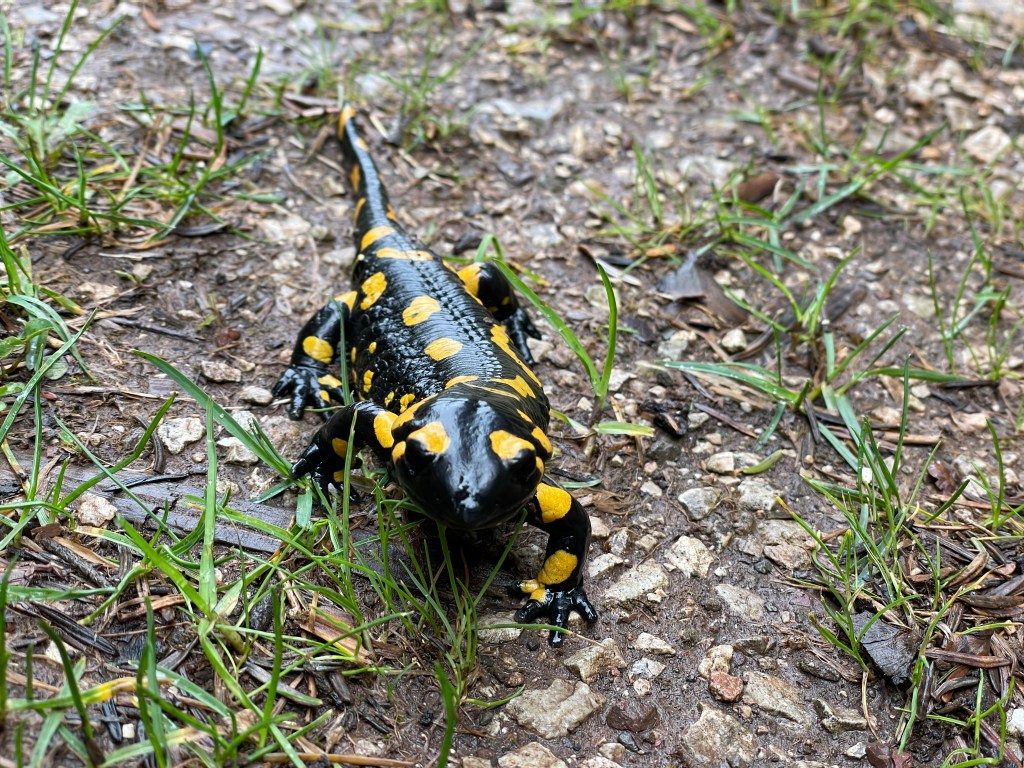
2nd May – Pangiotis wife, got us from here to the trail start at Elati. The trail markers were pretty good, but too many things to see and talk about menat we missed a turn, and found opurselves way off course. This mistake cost us some time, but the bonus was finding a yellow and black patched fire Salamander on our path. WOW. We each had the separate thought a child had dropped their plasitc toy. Ged tells me they’re a very poisonous creature, and proceedds to place his hand down in front of it.
Walking on to Vytina, the thunder and rain began. Each of us were wondering if our failing wet weather gear would perform. Forune had it, we got chatting with a guide who said this wasn’t a spectacular section of the track, take a taxi. So we did. No shame in that as the rain pelted down.
Agropoli was a group of stone houses, complete with a lovely yard and chickens. The hosts (Stavroula and George) were very warm and we loved Stavroula’s home-cooked meal. That evening, upon dusk, we walked to the nunnery. At first the locked gate deterred us, so we were about to walk back when a second Pangiotis came by in his car, and said “no you can get in, I’;; take you”. With that we were shown in, and heard the story of the beginnings of the convent, namely the discovery of an image of Mary and Jesus in a rock cleft. This was read as ‘a sign’ that this place was sacred. Here is the rock space.
More significant for us was meeting Pangiotis and his story. A man in his early thirties, he was visiting a nun at the monestry a few times a week who was a spiritual mentor in his quest to make a decision about a girl he’d fallen for. He spoke of other periods in his life where he experienced the hand of God. He was a local secondary teacher, a very bright and interesting man. Time flew with interesting conversation. At this stage we were near the automatic monastry gates, and just for a bit of drama, they began to close, with us on the inside. Pangiotis, with his ‘hotline’ to the nuns helped us exit this, and he delivered us back tyop our lodgings.
3rd May – A spectacular start to the day walking along the hills through wildflowers and ancient trees, with echos of Julie Andrews in our ears. Lunch at Magouliana (over 1200m and the highest village in the Palopennese). We came out at the village of Valtesinika and met up for dinner, sitting with Serge and Annalise for desert and long chats. Rain began pelting down, but was easing off by the time we left, Ged and IU determineds to do a full day walk, rather than opting out this time.
4th May – Drive South , via Sparti to Monemvasia, roads flanked with orange groves, fig and olive trees.
The Monemvasia fort town lies on a small mountain sits about 400metres from shore, accessed via a causeway. It is a no-cars ‘take your breath-away’ town with softly winding streets and steps, surrounded by a wall of several kilometres. Being there pre tourist season was a bonus.

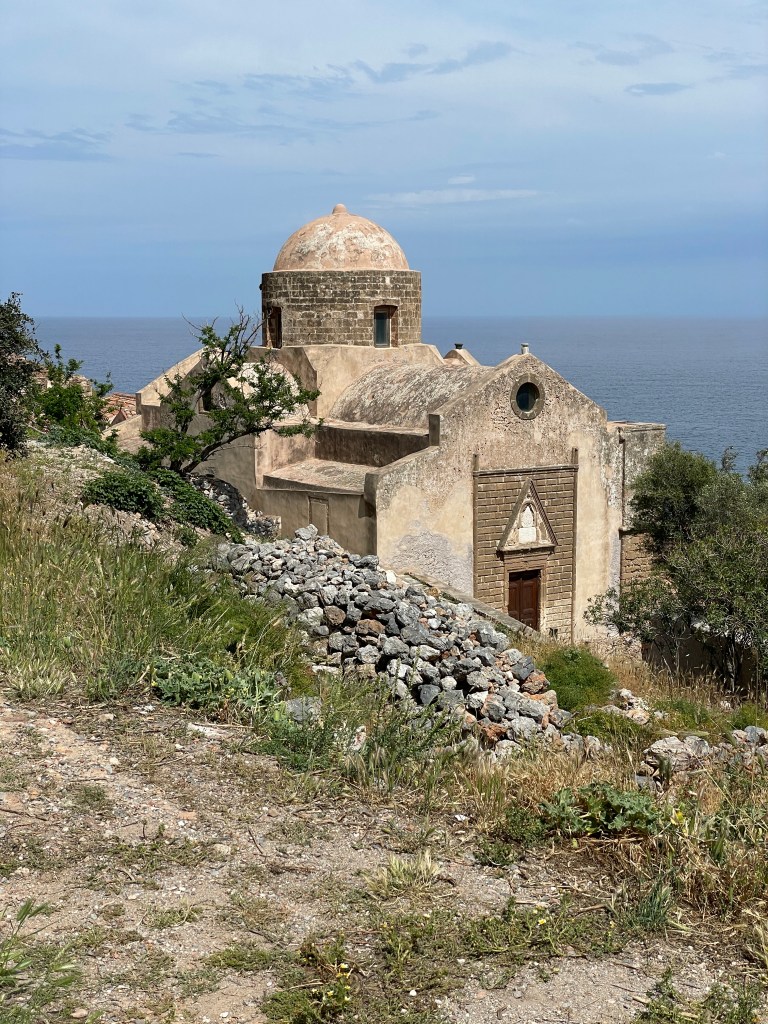
5th May – Walking the hills . A good work-out for the thighs to the crest of the Monemvasia cliff top. Dry grass, wild flowers , red clay and rock …. Perfect territory for Ged, the insect lover, who stopped regularly to detect lizards, butterflies and grasshoppers. Numerous ruins and half ruins, dating to the 5th century.
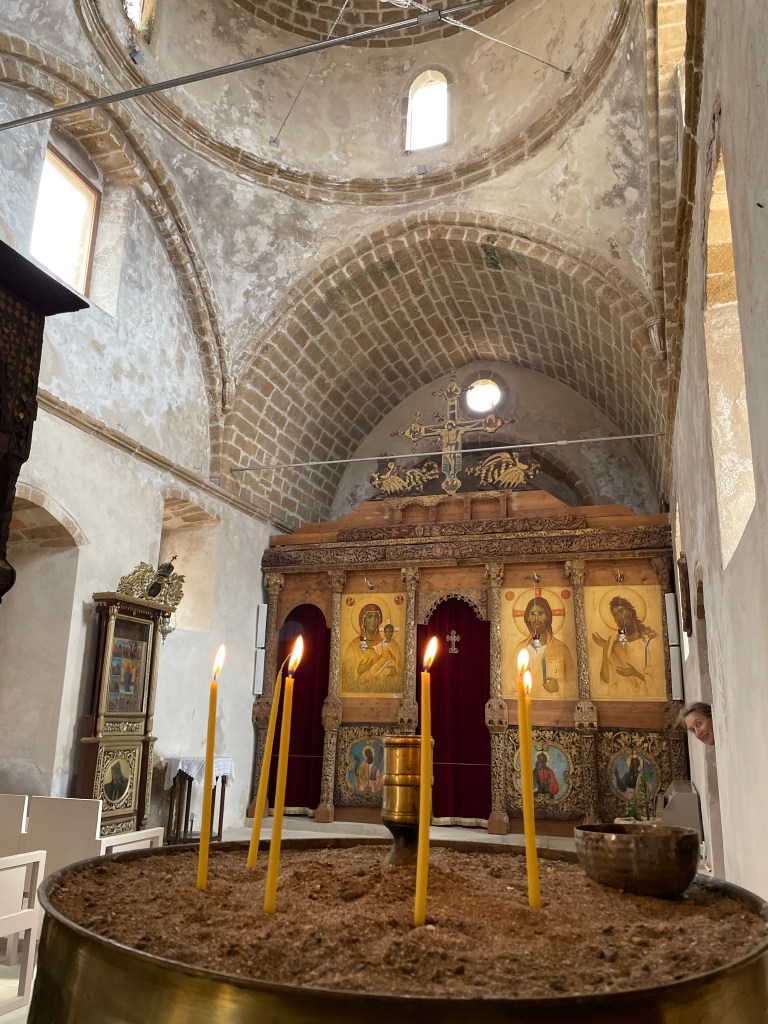
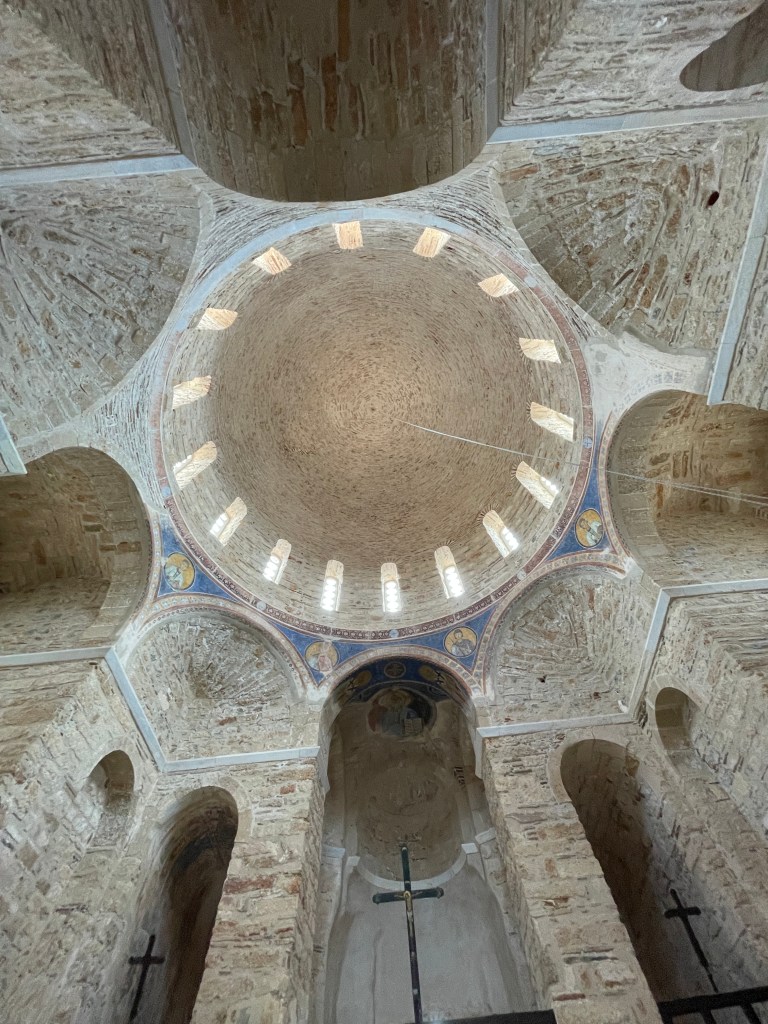
Hagai Sofia church has been beautifully cared for and restored, with it’s raw stone surfaces and soft blue and pink frescos.
Unimpeded views for 360 degrees affirm why this was a perfect defensive location.
Afternoon was a time to give our thighs a rest, and nibble on olives and oranges (a staple lunch). We walked down to the causeway for a dinner, and what do you know, back up the rock. Well wortnh it to see the fortress walls from a different angle, the turqoise sea against the straw grass.
A drink looking over the town was was just the thing to ‘complete’ our stay. It wouldn’t be right though without 3 or 4 cats at out feet, which would be sweet, but for a nioticably small bird and lizard population.
We could only access two of the dozen or so churches in the town, but this was special one, raw, simple and elegantly shaped, the original frescos exposed in the stone walls. It felt like an embrace.

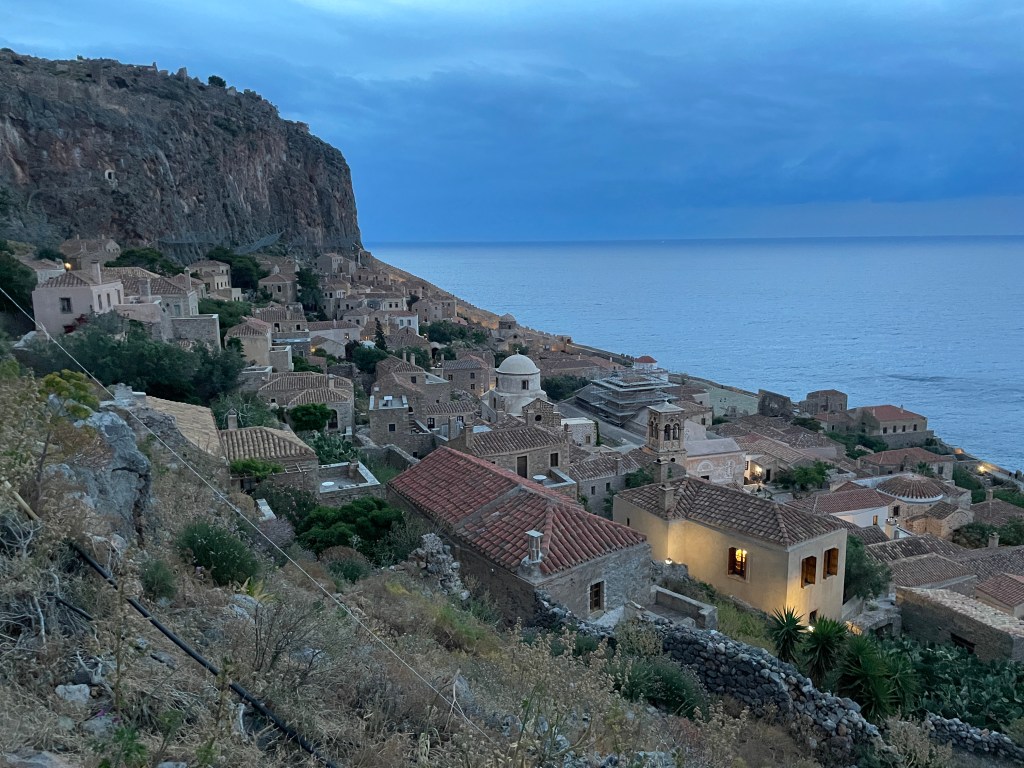
Two Blue sky Evenings and plenty of space for us to bask in, as tourist season hadn’t yet begun. A bit like our second honeymoon.
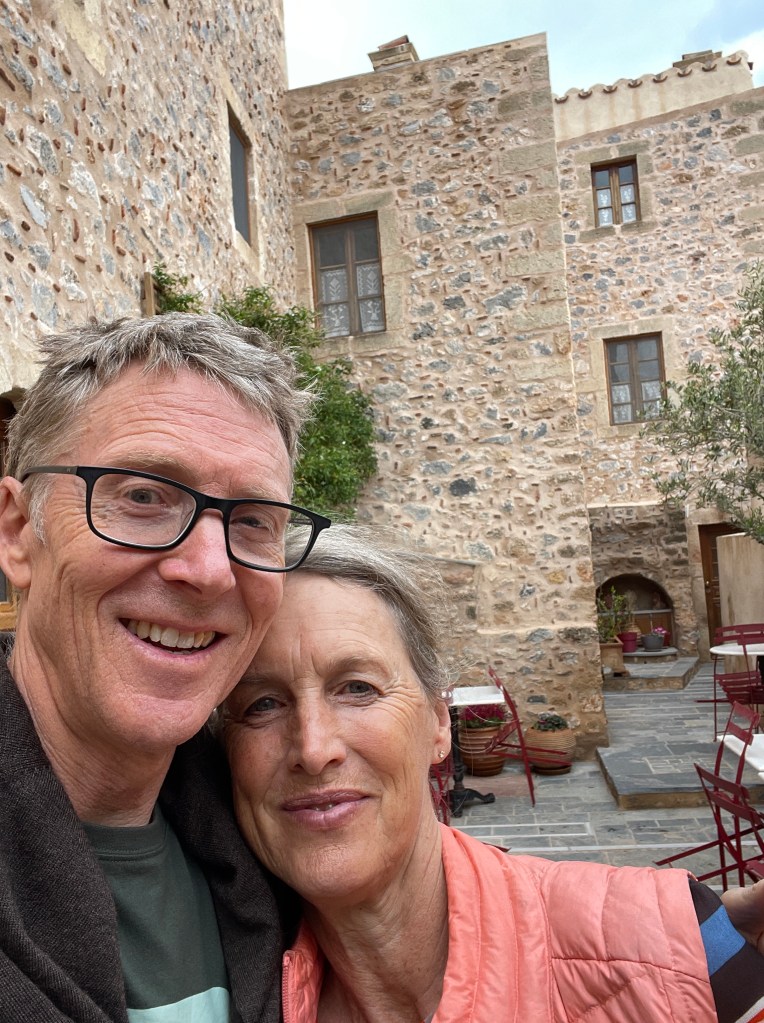
6th May – A full day getting our rental car back to Athens, not without it’s stress-points. Such a relief though to share the challenging moments with my buddy.
7th May – Tinos. A four hour ferry ride to this low-key island, where it seems we are the only non-Greeks for now. Michael and Georgia were our lovely guesthouse hosts, happy to share their experiences as a Tinos family. And just around the corner when visiting the market, one can meet Charlie who hangs about in the morning.
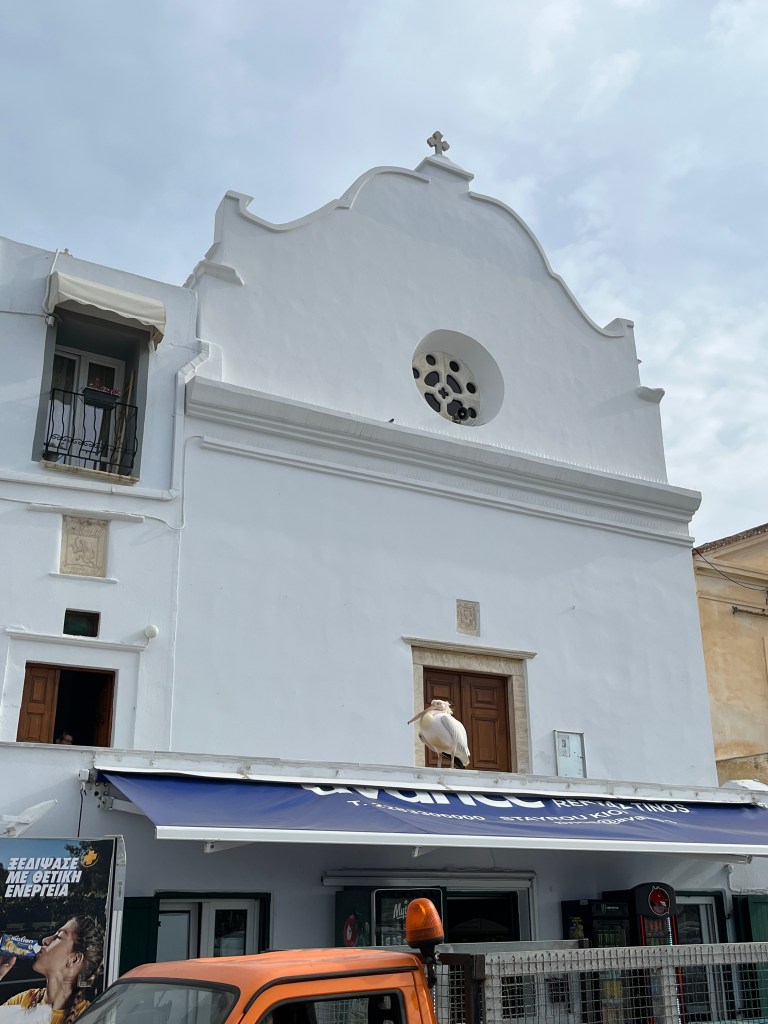
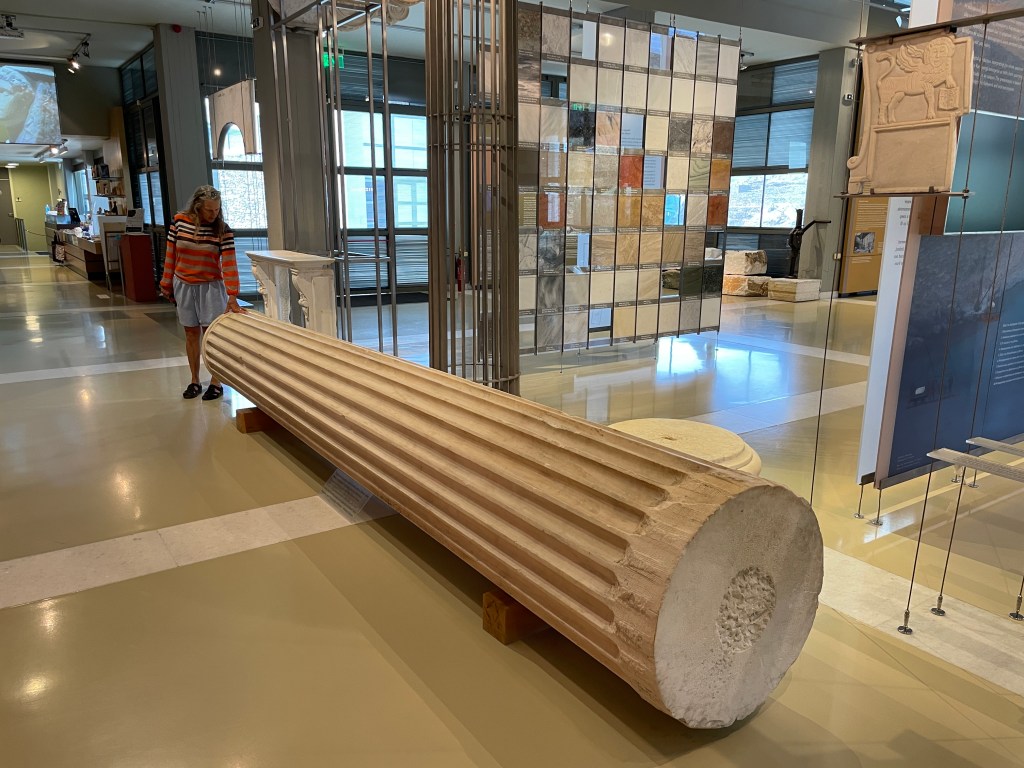
8th May – Archeology museum. It is daunting to stand beside one of these, marvelling at the precision sculpting, and at how they are ever lifted into place. Drove to Pyrgos, and walked the pretty streets. A central square was inhabited by children playing, parents and grandparents chatting and having coffees. With the houses joined and many paths too narrow for cars, it seems a social kind of living can thrive. Visited the marble museum. A video of Greek men cutting marble from the hillside, and strapping t to sled-type frames to transport it gave us a striking appreciation of the years of hard work involved in the castles, buildings and streets of Greece.
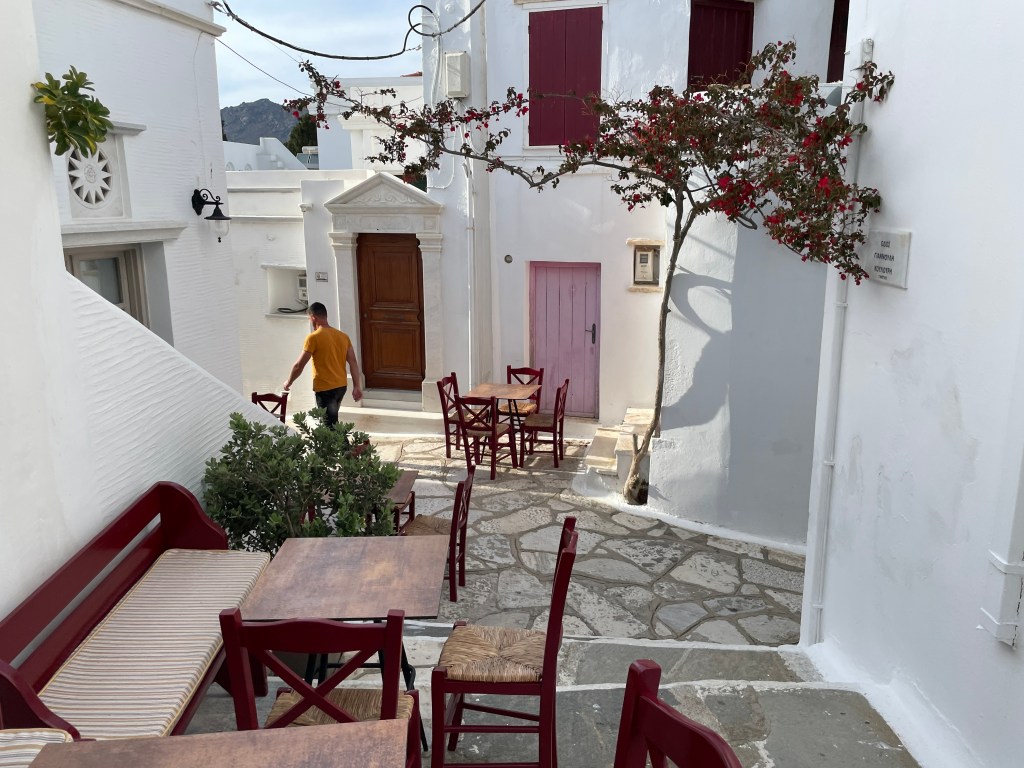
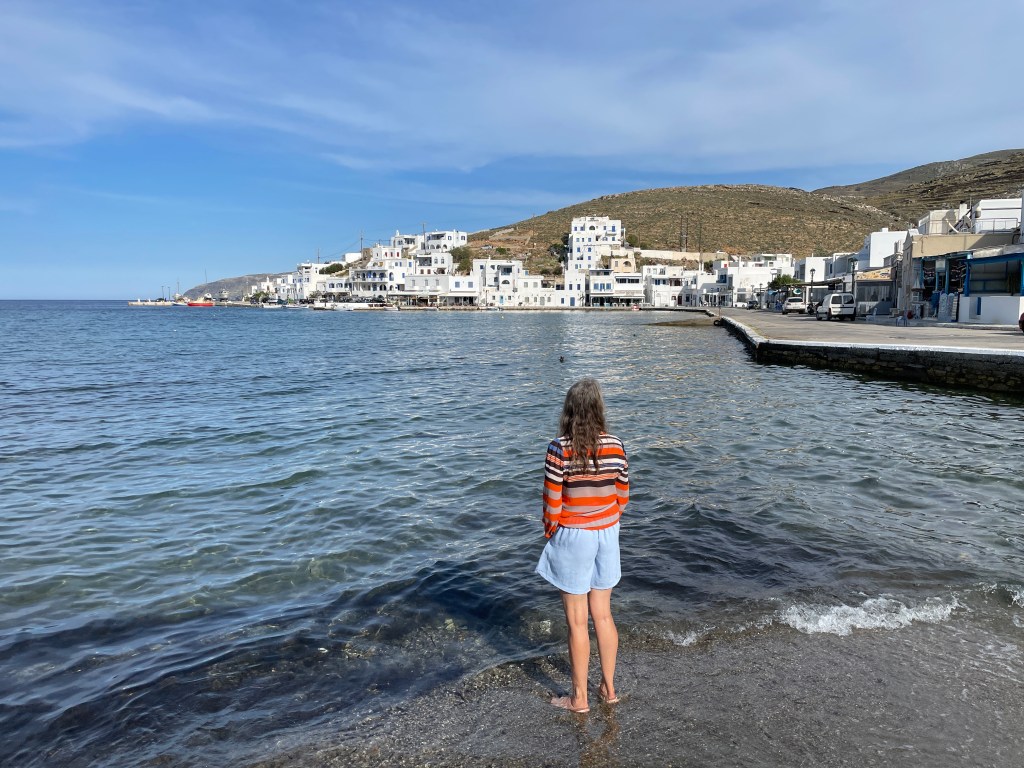
Panormous was a quiet wee beach we went to in search of a wave to body-surf, but it was a flat sea we found. Beautiful spot with just 2 others on the beach.
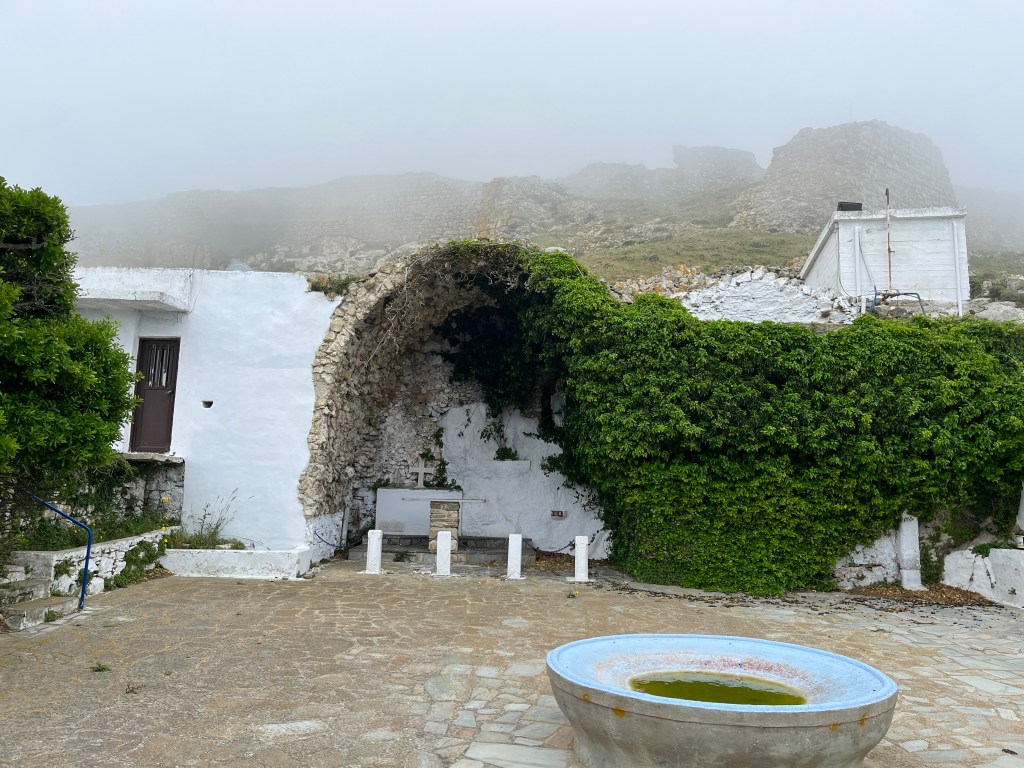
Visited Exombourgo, now deserted, but originally the capital from 1200 when the island was occupied by Venetians, following the fall of Constantinople (during the fourth crusade). It had 2000 people then, but we saw not even one. Centuries later, It withstood 4 attempts at capture by the Ottamans from 1570, with the Venetians remaining in charge until 1715. It was returned to Greek hands finally .
9th May – A special hilltops walking route took us past Villages : Kardiani, Kalamous, Volax, Agape , Krakos and Skaladus, many of them with only streets for walkers or bikers. In all we probably saw no more than a dozen people throughout. There are a number of elderly, but asidfe from this, many of the houses are holiday homes, or rented out over summer. Most are beutifully maintained, and none is without a stunning lemon tree
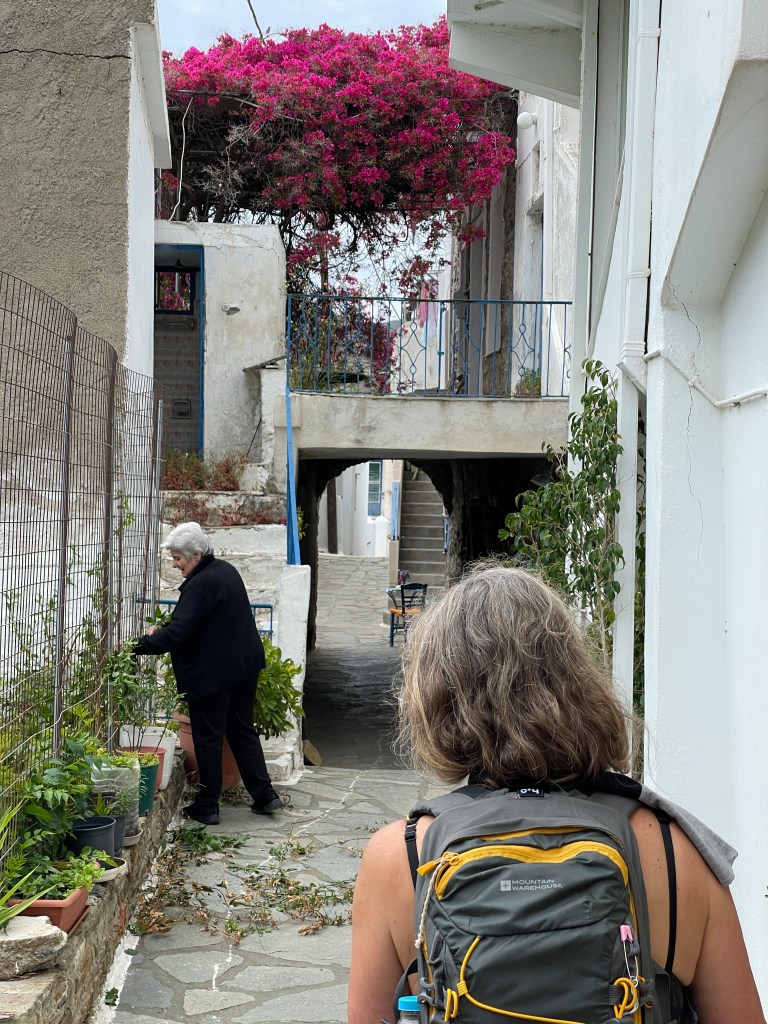
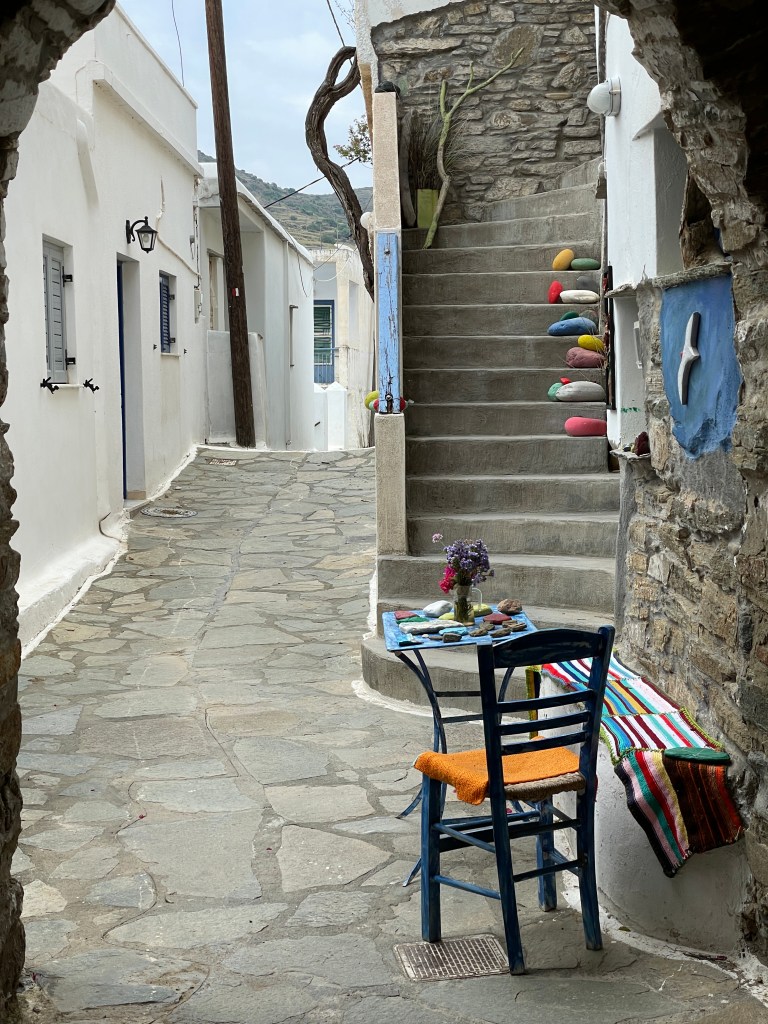
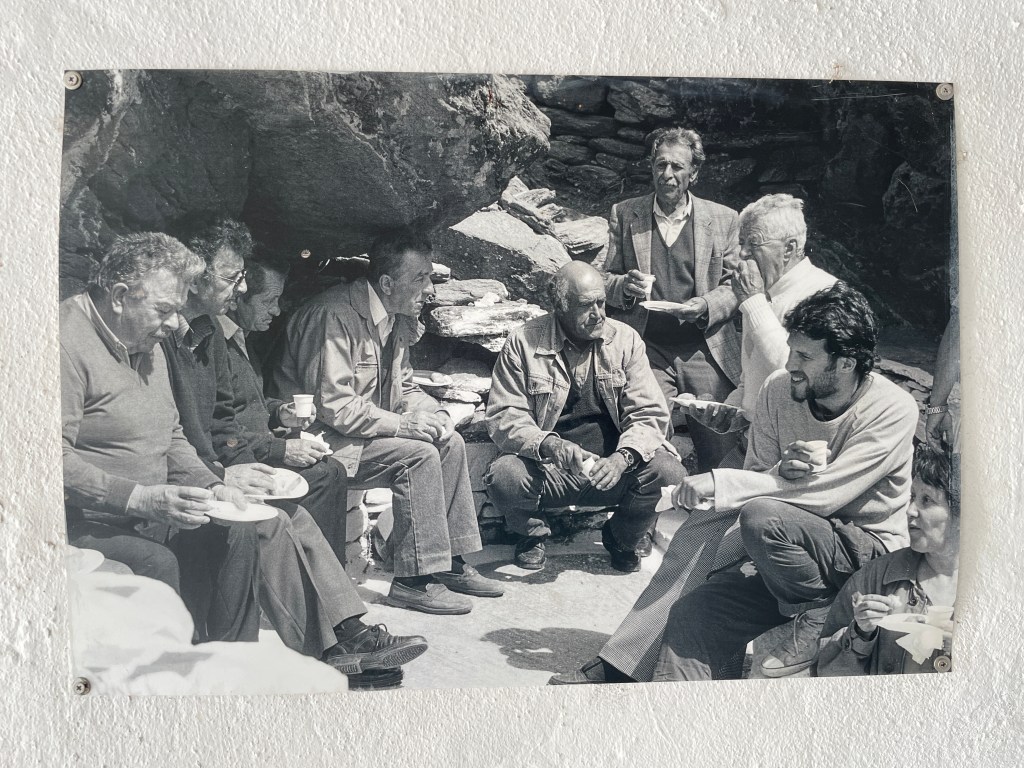
Kardiani was a village only traversed on foot. A tunnel under the houses at one point, was adorned with beautiful photos of past residents.
Dozens of chapels dotted the hills. This is an example of a family owned chapel that they may meet in several times a year.
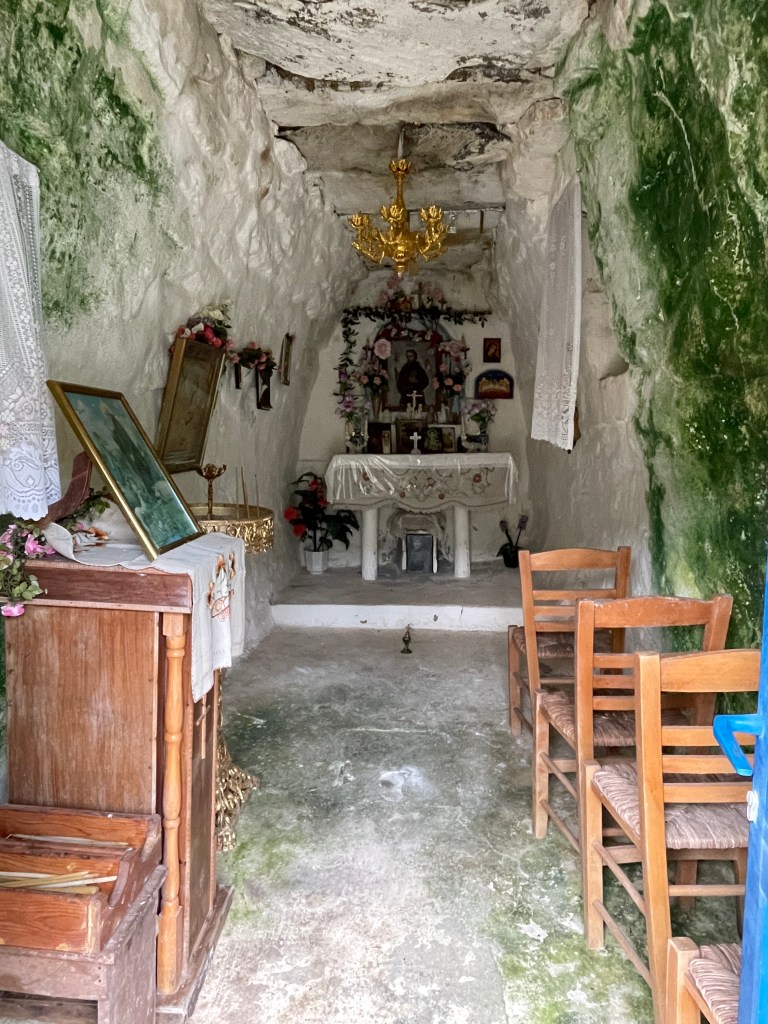
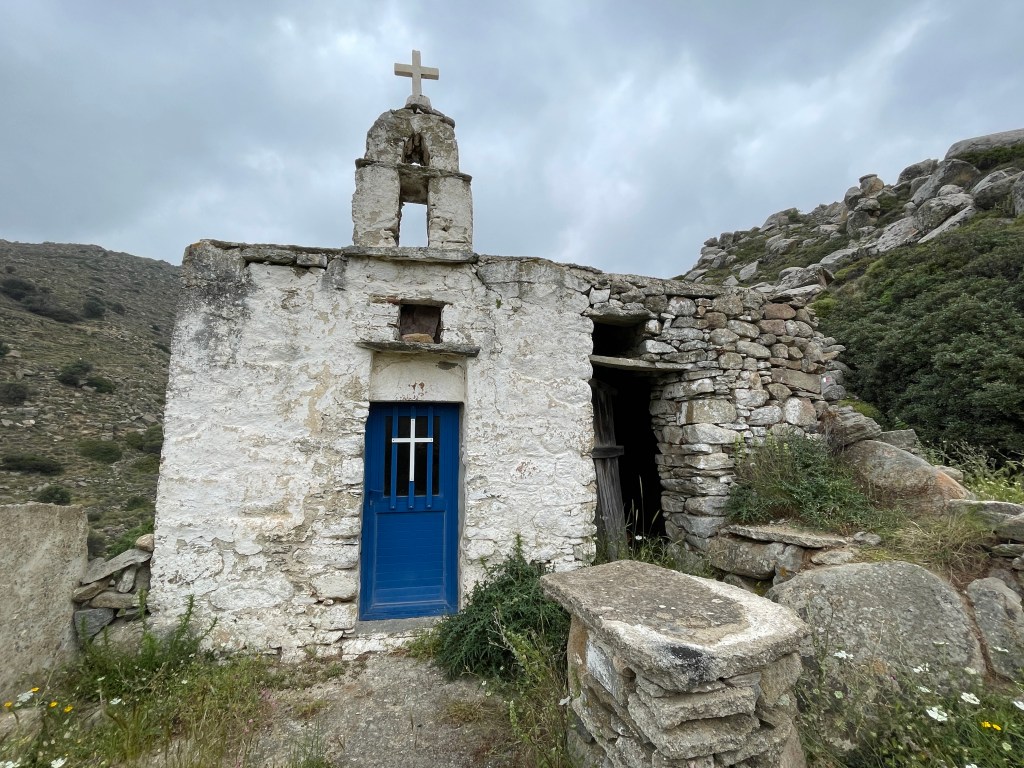
The lucky families found a sheltering rock roof to get off to a good start, and those with more resources could go to the next level.
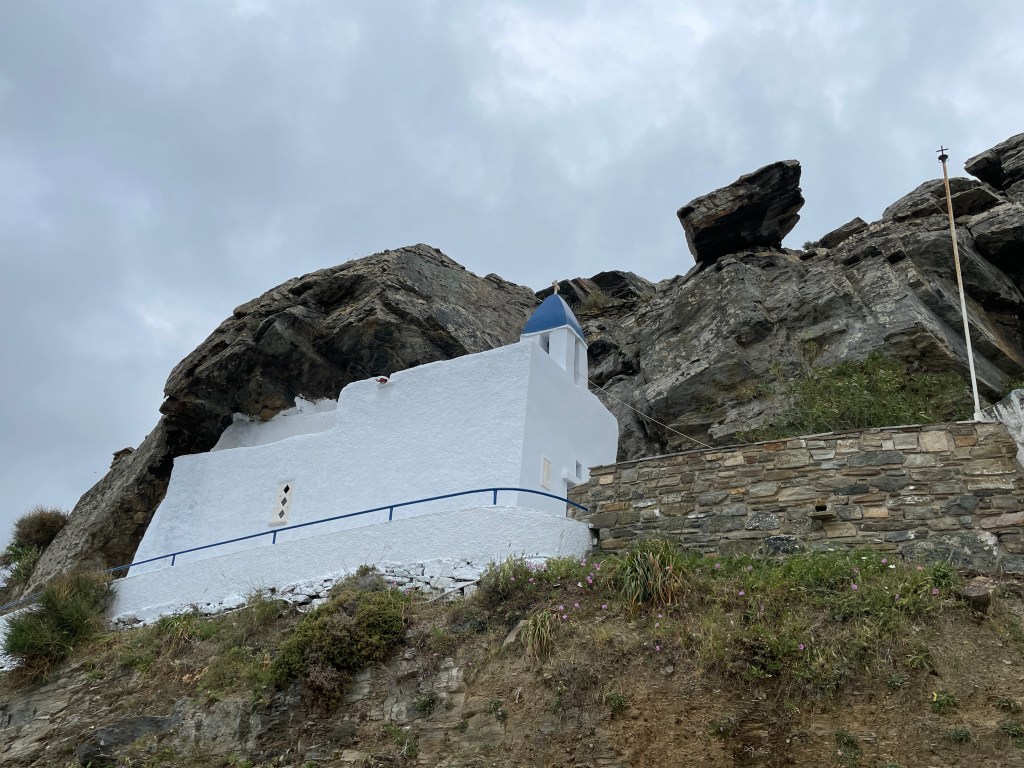

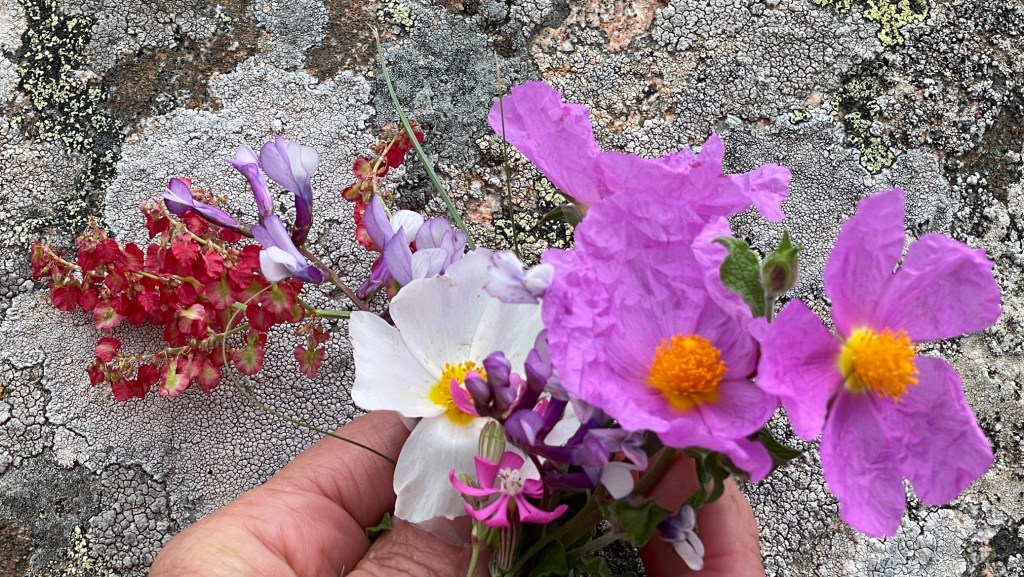
The rugged rocky landscape of central Tinos was lovely to experience in the mist, showing off the of ‘unique to us’ varieties of wildflowers.

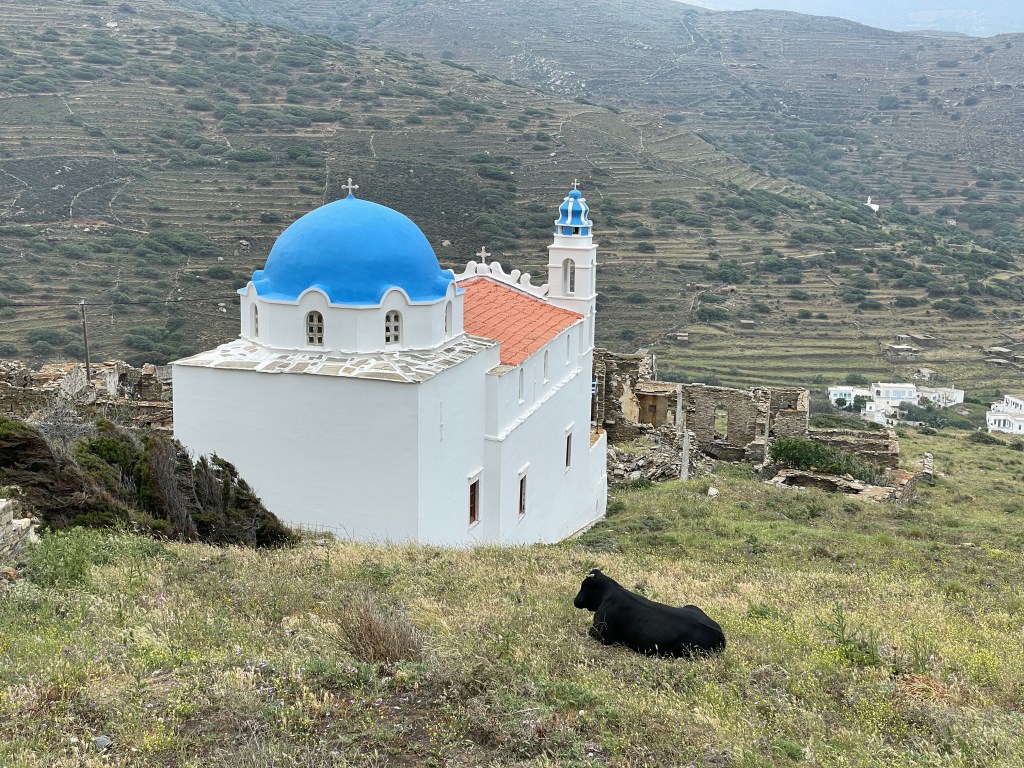
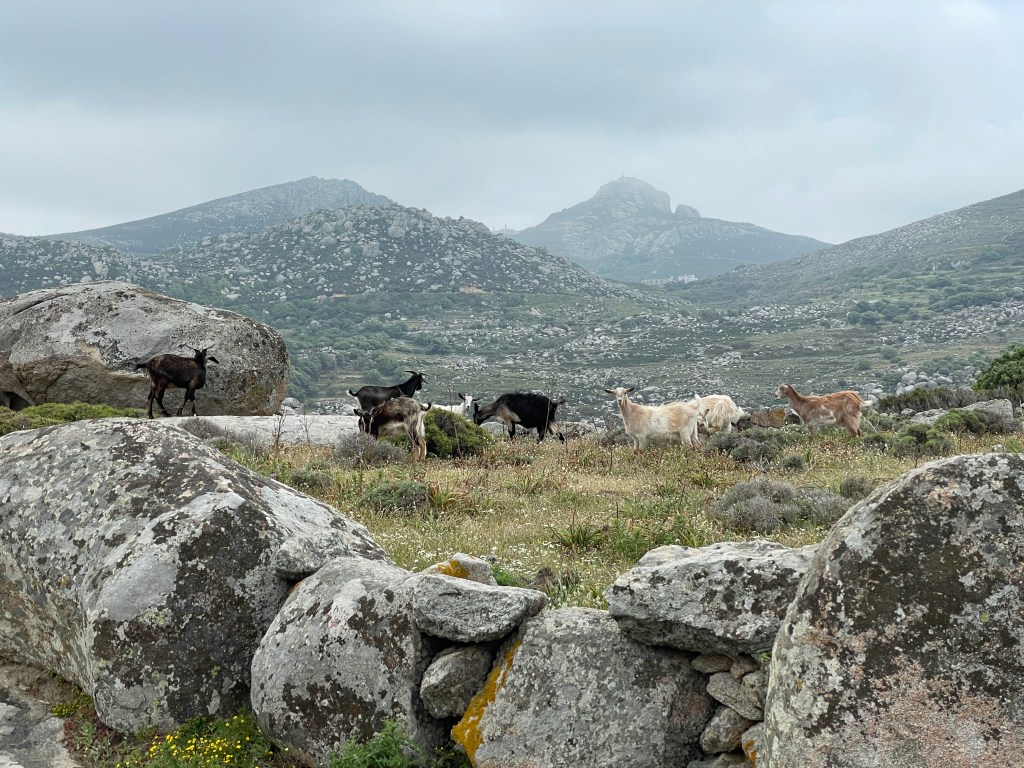
The many goats that wander about seemingly oblivious to the stone walls between fields.
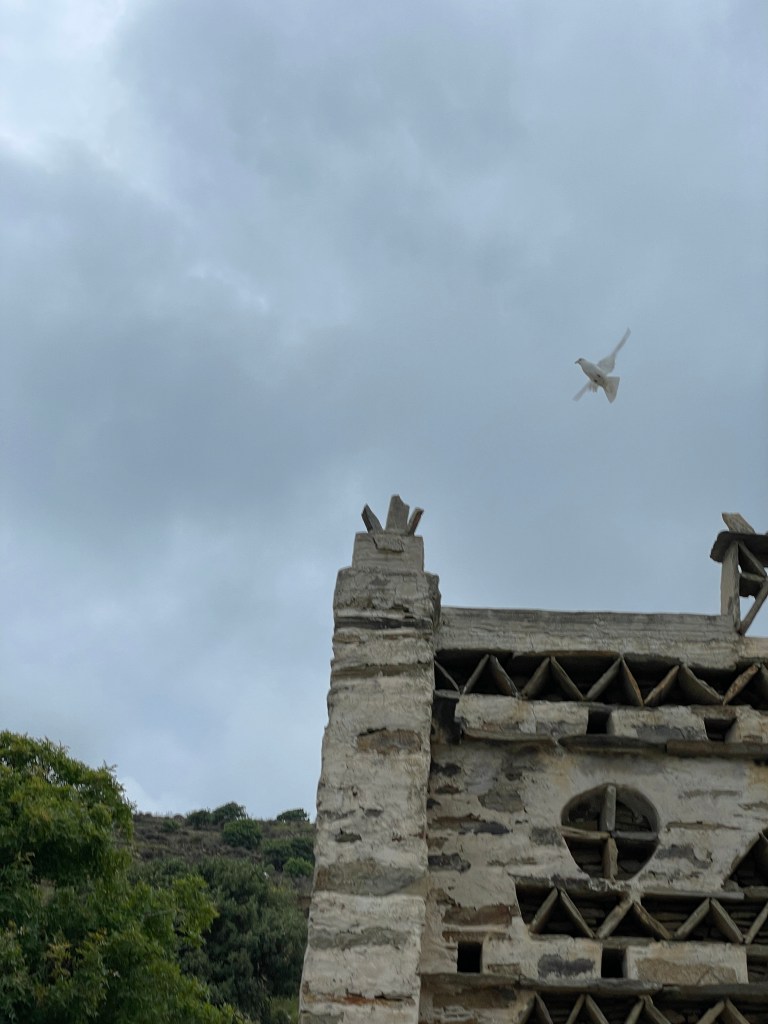
And dozens of these family owned Dovecotes dotting the hills
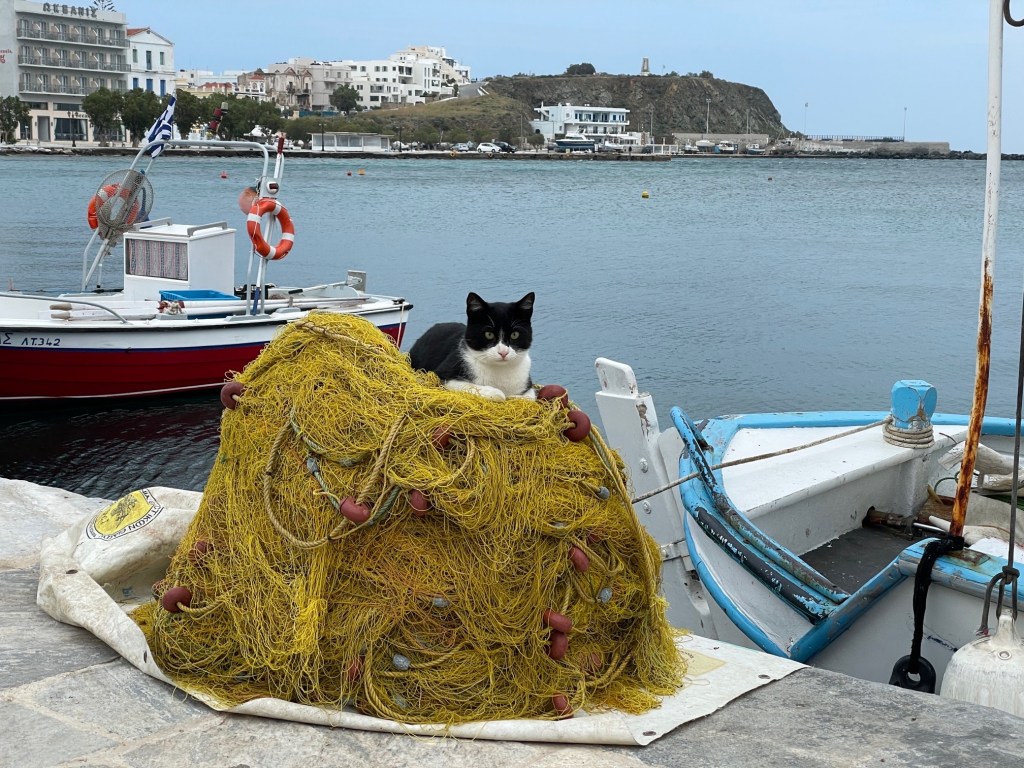
A trip with Ged wouldn’t be complete without visiting the boats on the wharf.
10th May – Mykonos – Coming from Tinos where everyone was local, we got hit by a bit of a tourism shock here. It’s not hard to understand the popularity however, given the gorgeous white streets with tiled paths and lack of cars. The mix of colors always seem to be just right, with “surprise pallettes” around each corner.
Whilst searching for an art gallery, I spotted the Mykonos Institute for the environment, education and development. Curious about how much is done in this regard, I wandered up the stairs and had a chat with one of the three women staff. They are big on running events as they also own the art gallery (below). They do some recycling education in the schools, but she stared blankly at men when I asked if they help educate people about what actions they might do regarding Climate change. She has seen the changes to climate in Greece, but didn’t know what a carbon footprint was. This was not altogether a surprise. Rubbish mostly gets dumped over the nearest cliff, bottles and cans are found under bushes, and any cakes/ slices bought in a bakery come in fold or plastic boxes.
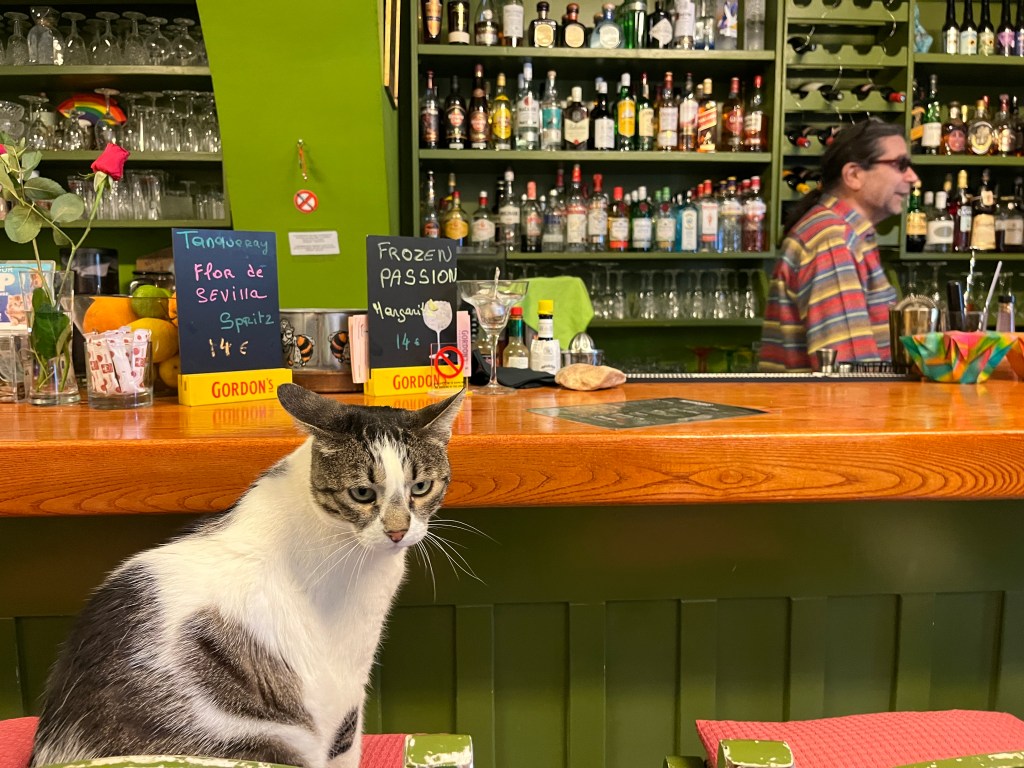
We lucked in to this laid-back cafe though which had as lovely owner and chef. It was complete with raw paintings done by a friend of the restaurant, and of course 6 or so cats … the well cared for variety.
Goodbye to Mykonos about 8pm, and hello to Rhodos, arriving at midnight. 1 1th May – Rhodes old town mesmerised us with it’s size, a huge 4km wall, and was a feast for the eyes. Skip below if history bores you 🙂
The city has had a huge number of invasions and occupations. Since first formed in 408 BC, it prospered for 3 centuries (the Classical period). In 164 BC, it came under Roman control. In the 7th century AD it was captured by the Arabs, retaining its beauty and developing into a leading arts, and science centre. After the fall of the Byzantine Empire to the Fourth Crusade in 1204, the native noble Leo Gabalas took control of the island for a short time, then briefly occupied by the Genoese , before being returned to the Emperor of Nicaea (northwestern Anatolia). The Knights Hospitallers captured and established it as their headquarters after the persecution of the Knights Templar in 1307.
In 1444 a Muslim siege was averted.In 1480 again saw an Ottoman siege, the Knights Grand Master strengthened the walls, making them Christian bastion. Again they averted a second Ottoman siege in 1522, but as low in numbers In December 1522, the Knights and Suleiman came to terms and the Knights were allowed to leave the city with all the wealth they could carry, and in return there would be no retribution upon the inhabitants of the city and they would be allowed to continue to freely practice Christianity. They left in 1523. Mosques, public baths and mansions for the new patrons. The Greeks were forced to abandon the fortified city and move to new suburbs outside its walls.
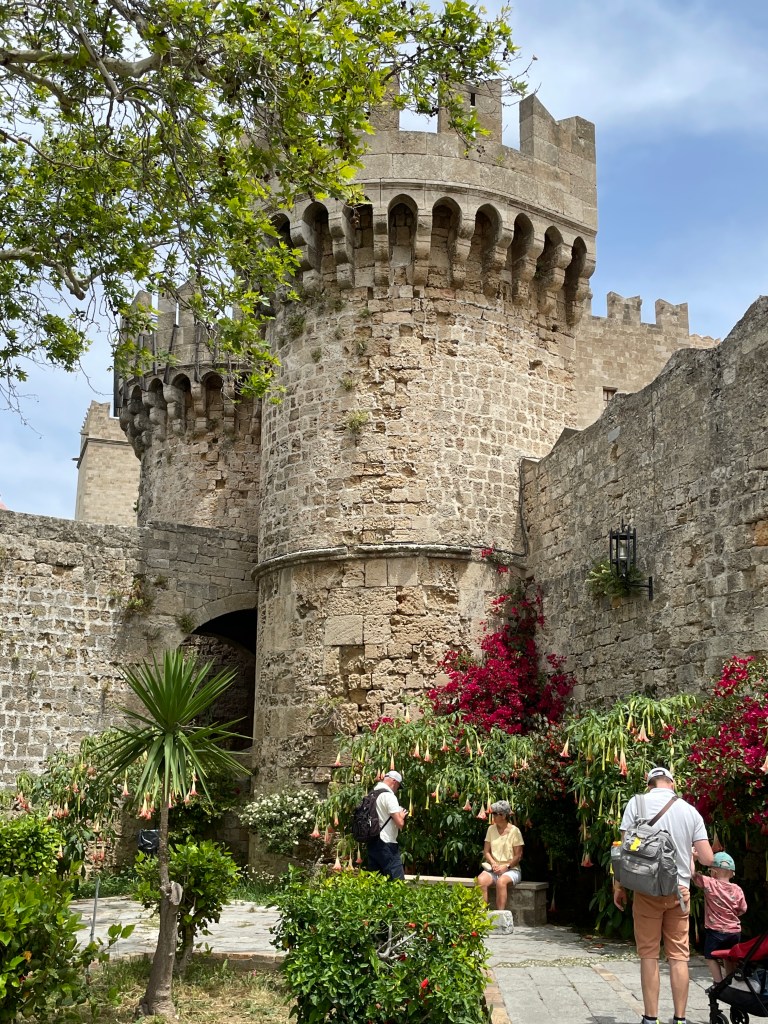

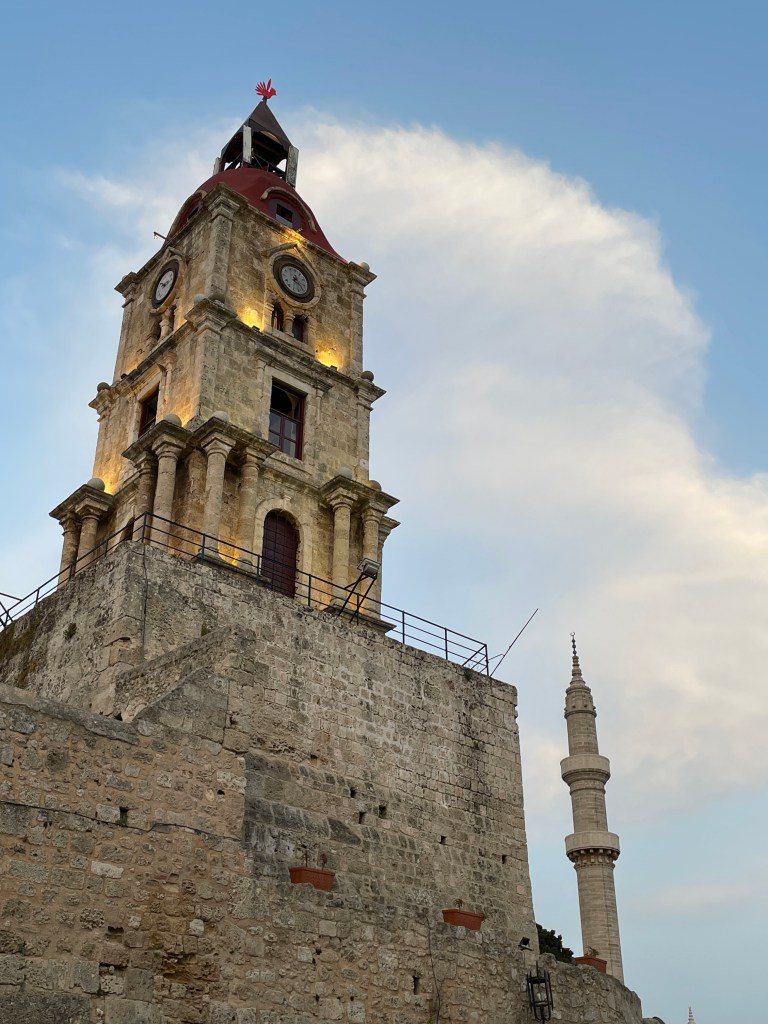
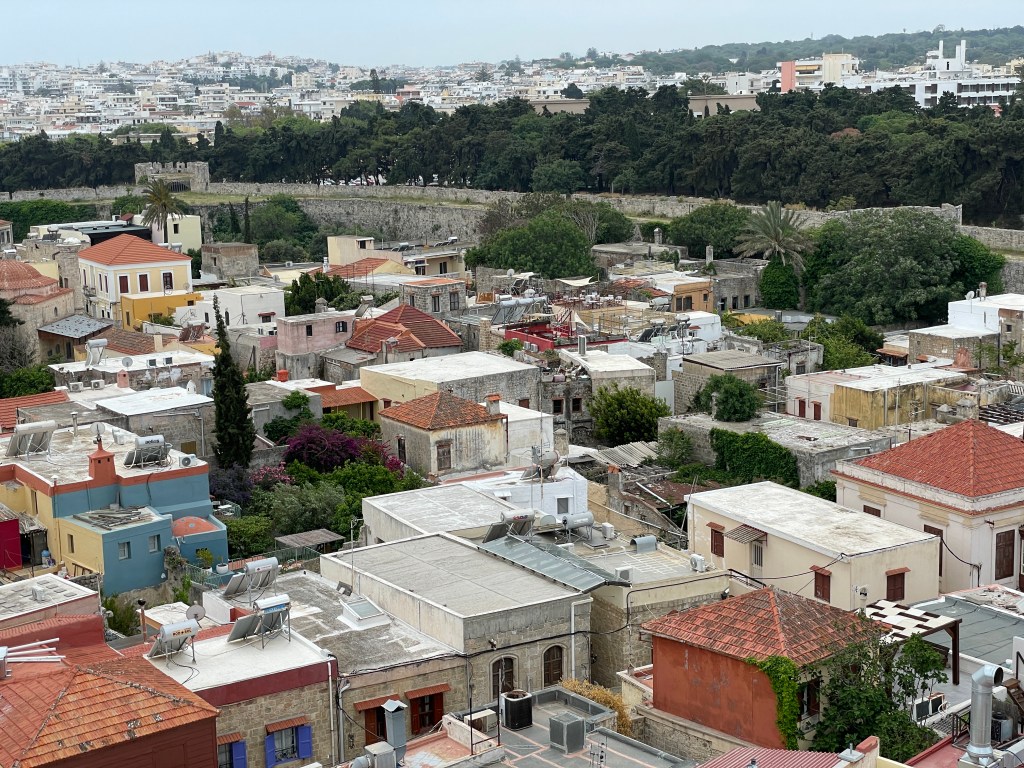
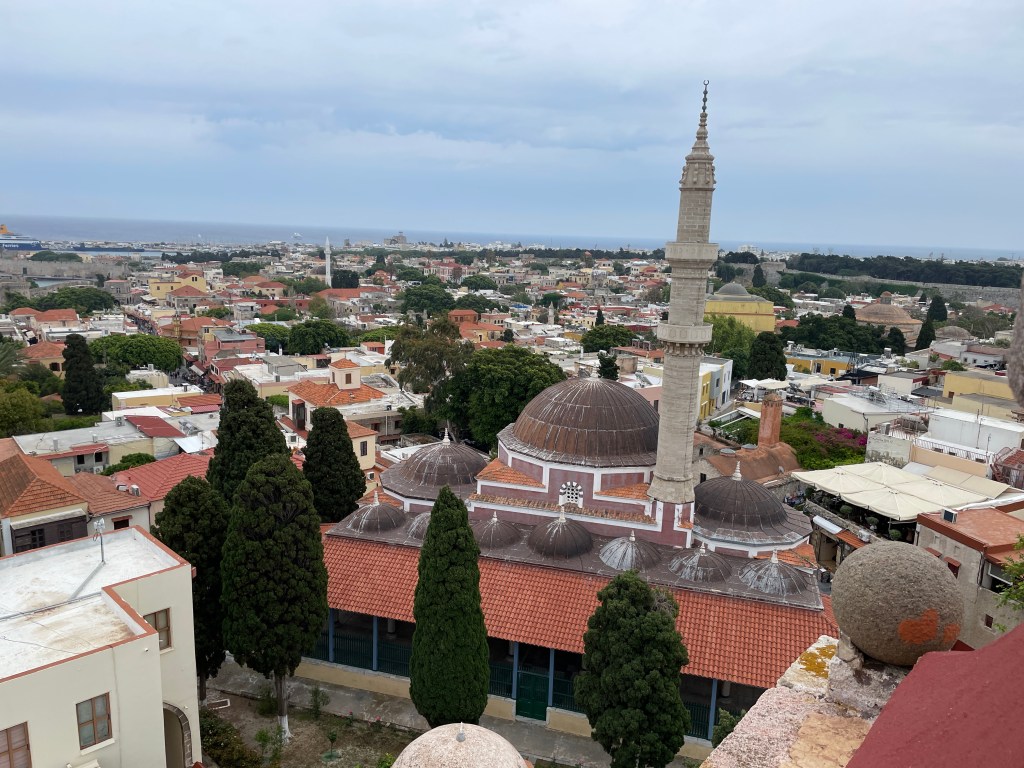
One of the gates into the fortress, and below that, the street of the Knight’s templar. Late lunch on the edge of a beautiful square set around a giant Plain tree, where restauranters hustled for business, and I got to commune with a cockatoo. Climbed the clock tower, walking up the ever narrowing staircase to reach a spectacular view over the ancient town. Two of the views from the top of the church tower



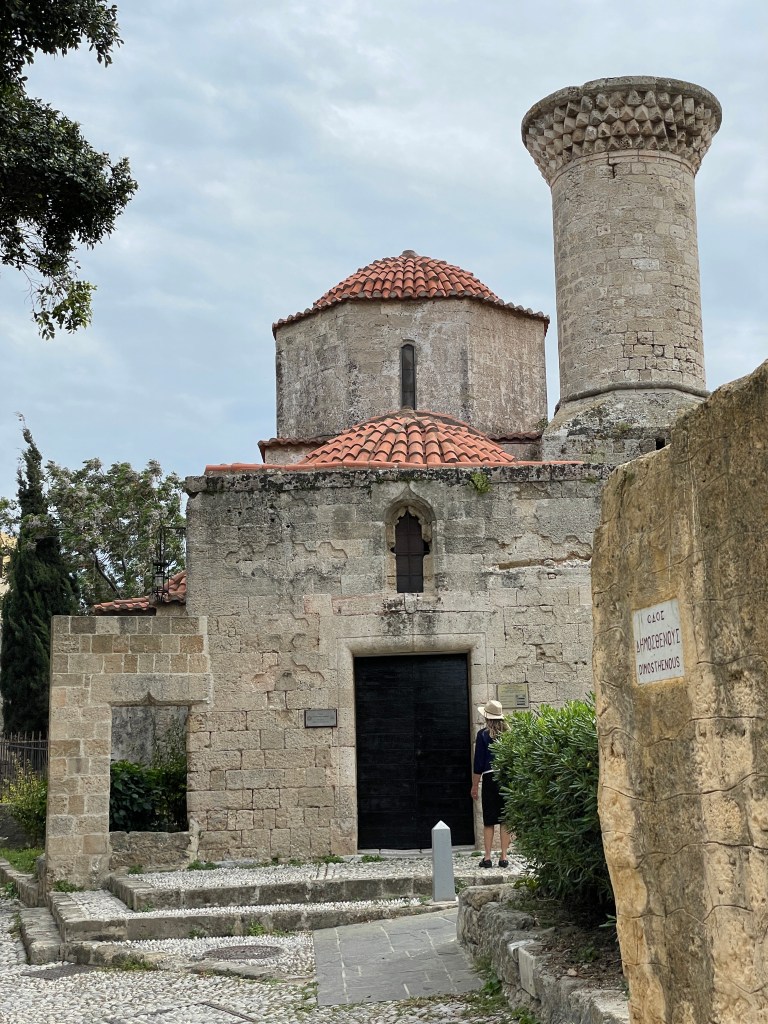
Lying amidst the decadence lies this humble church.
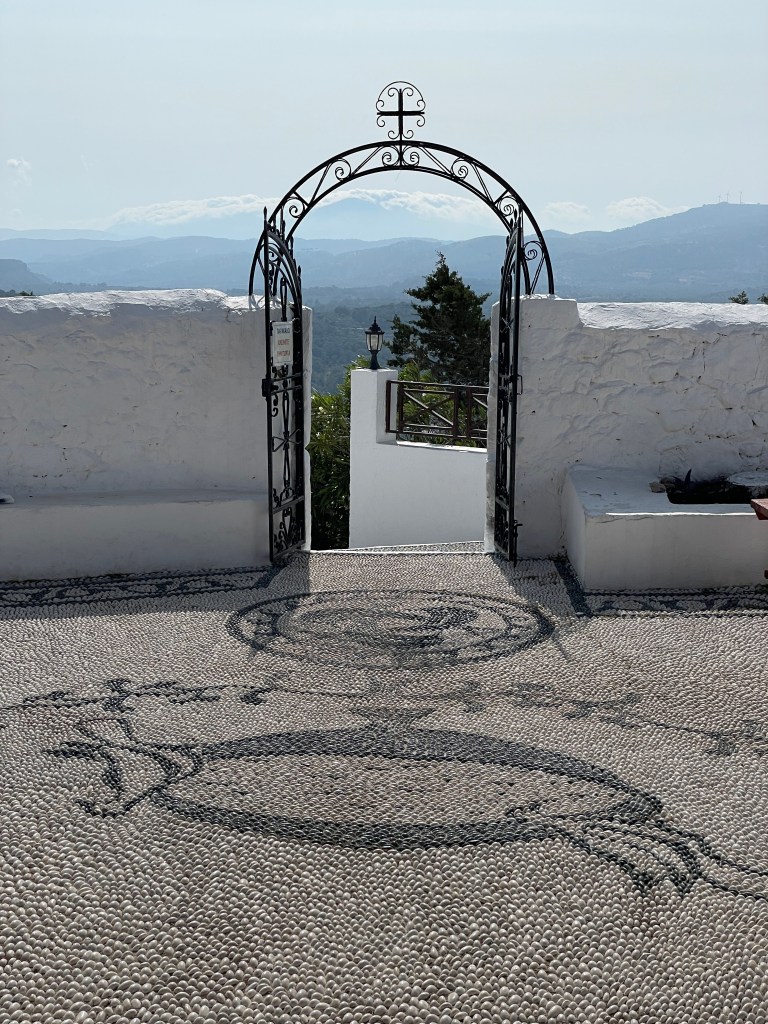
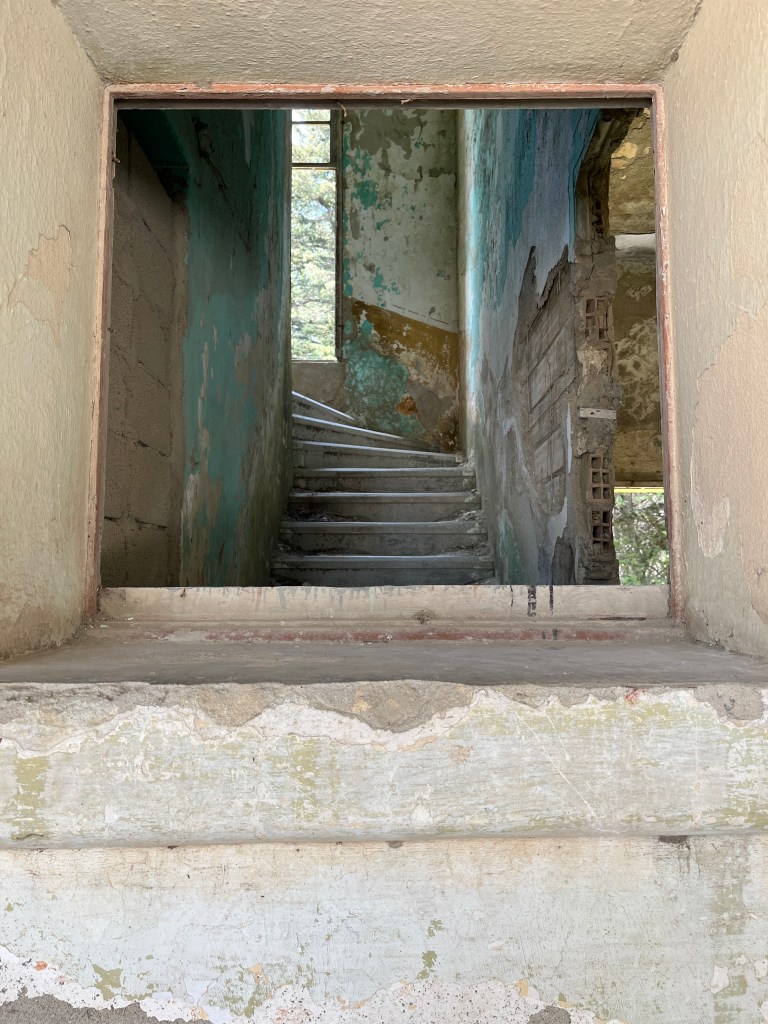
12th May – Took hire car to butterfly valley (but no butterflies to be seen). The Seven springs was more true to name, with lovely cool springs bubbling up through the forest. to explore. A fascinating abandoned building along the road (one of many in Greece) . Visited this wee church with lovely frescoes, in Kamiro

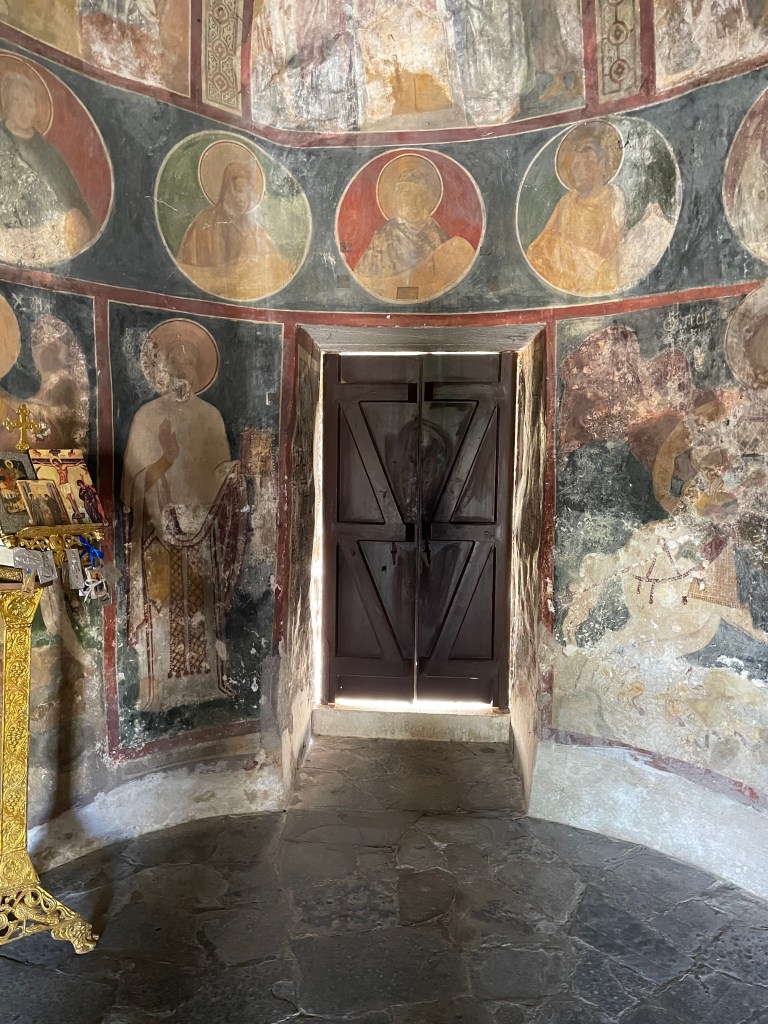
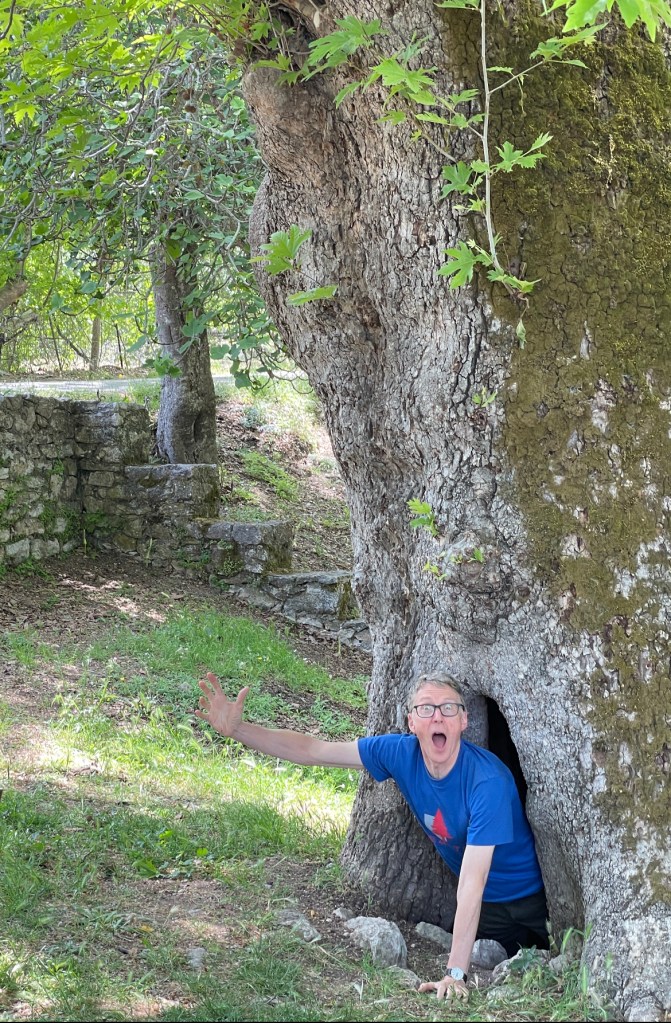
Fun with hollow trees in the church yard. Holy holy holy.
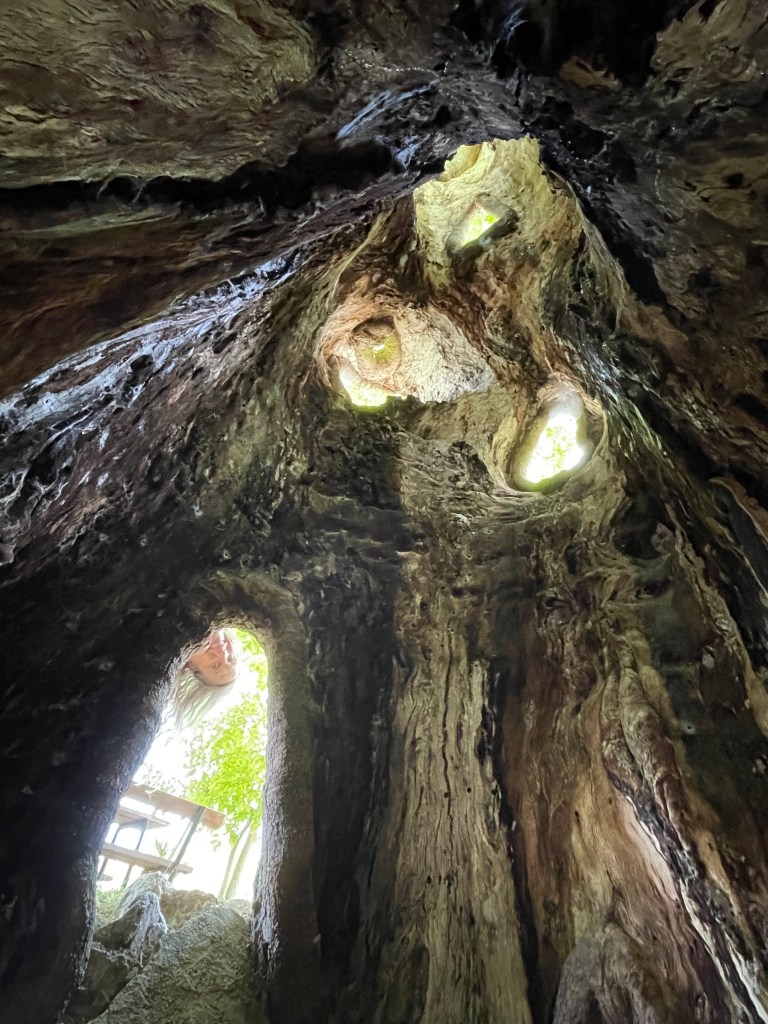

On to Archaghelos Monastery .Just 330 steps this time.
13th May – We got to visit a wee monestry at Monolithos castle.
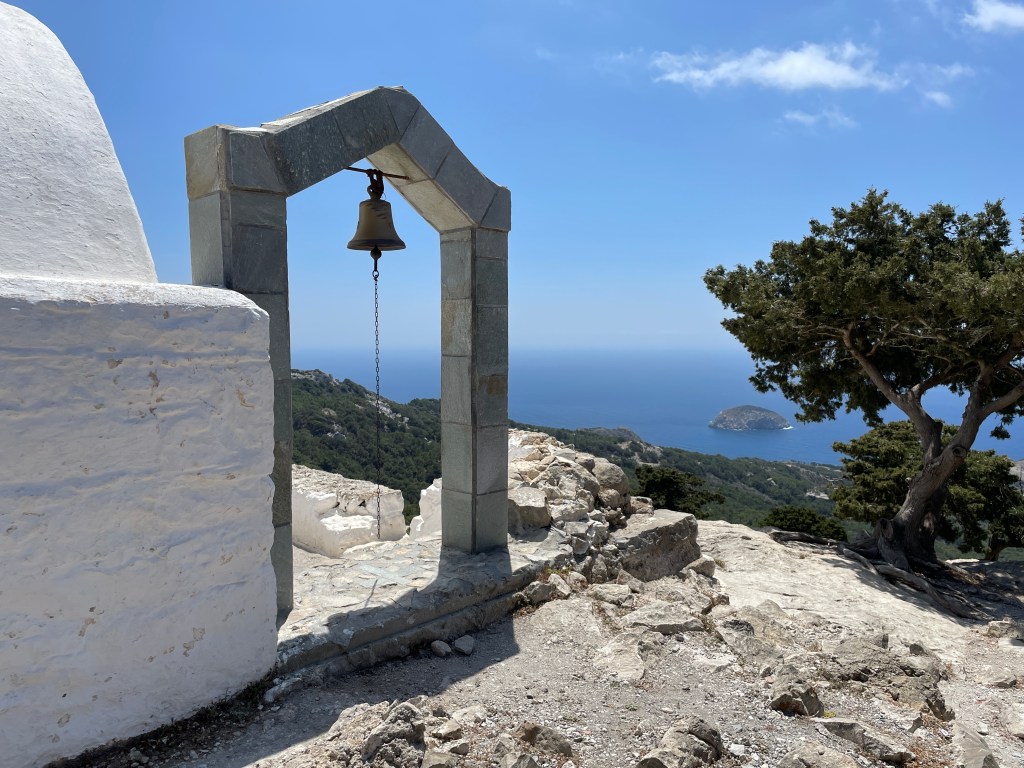
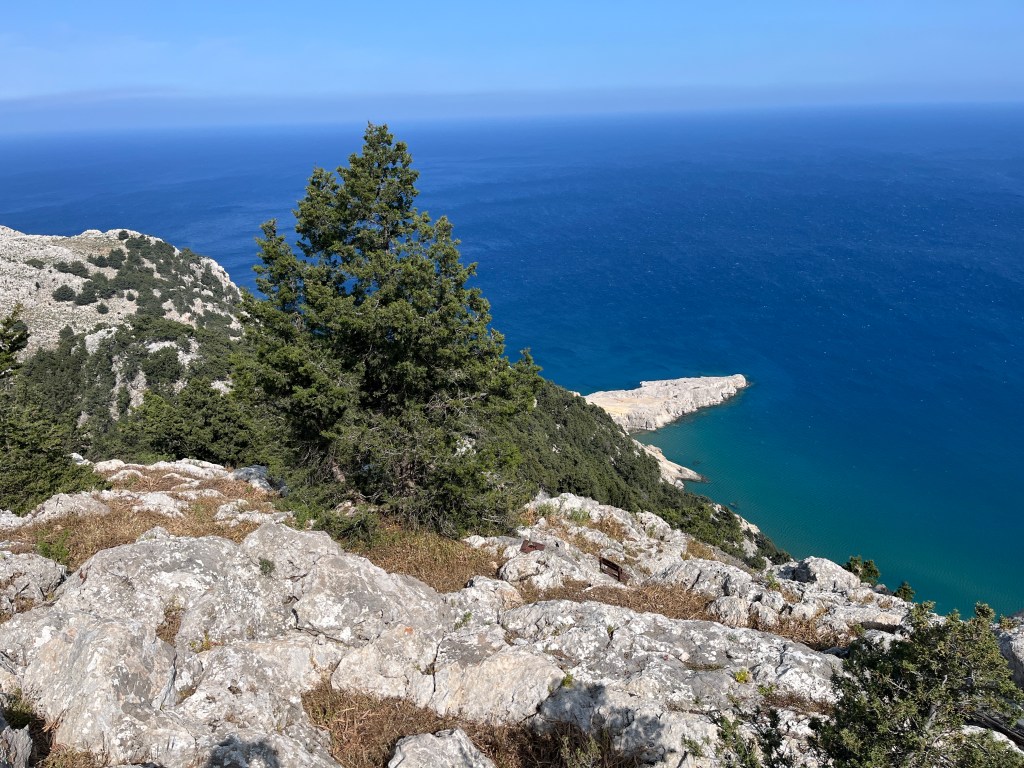
13th May – Down to the South of Rhodes, with it’s spartan dry hills. Saw a snake slithering across the road. Stopped at a roadside stall for oranges and wine, chatting a while with the stall-holder whose family have been producing these but also oil, vinegar and honey for generations. Climbed up to monolithos castle in 30 degree heat.
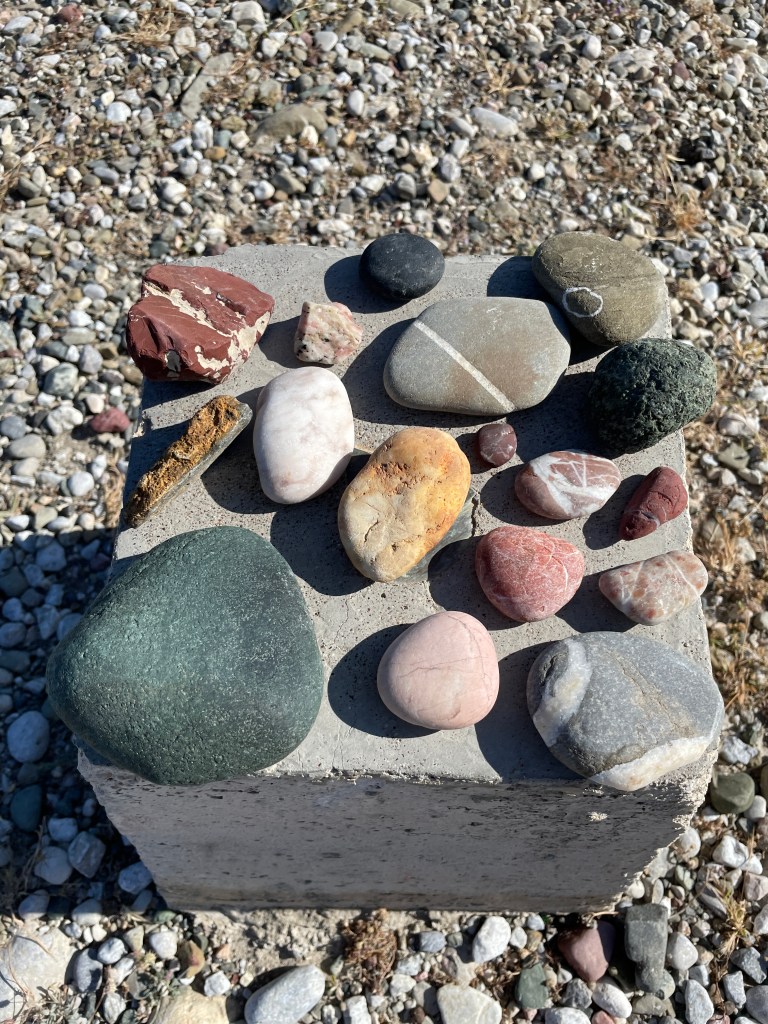
Found a spot beside the road where we could climb down to the water for a snorkel. Barren and silty are the words to describe the sea bottom, except for a lone lion-fish and a few parrot-fish. The rock colours here are amazing
14th May – From Faliraki we took a local boat trip to 3 beautiful spots, where other boats were also congregated. Swimming was fun, but again very few fish. I don’t think others on the boat were too interested in the fish, but more on the ‘unlimited free drinks’ on offer, and the loud commercial music. Regardless, it was all a bit of fun.
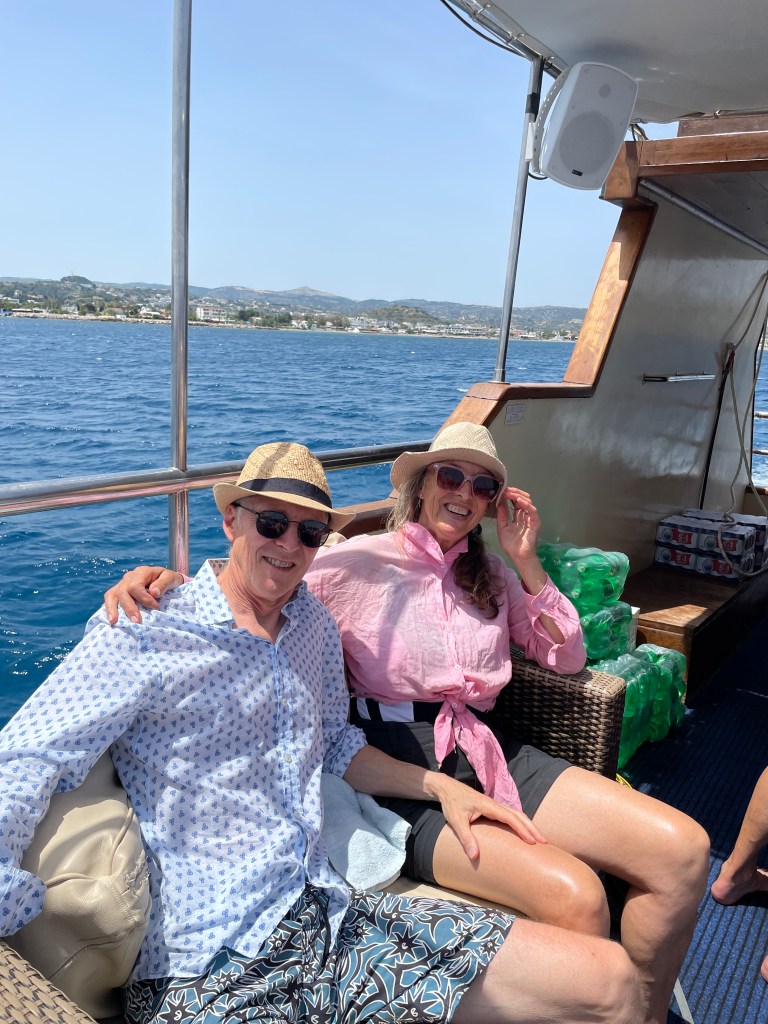
15th May – Last look at Rhodes (below) on Ferry to Marmaris, Turkey. Getting to the car rental office was easy but negotiating the rental took us more than 2 hours, as the story kept changing. Neither of us knew what to expect of the Turkish countryside, but found the raw mountains, forests and farms inspiring.

Enroute to Fethiye we stopped at the Itzuzu beach (home of the loggerhead turtles). The day’s challenges continued however upon arriving at Fethiye, as we couldn’t find the guesthouse despite the locals being eager to help. About the fifth local we spoke to hit the jackpot, and we found ourselves at the bottom of the 50 steps to our ‘digs’. We got something ‘right first time’ , choosing the best restaurant for our 9.30pm fish meal. Just as we finished up the Fethiye night-club scene rolled into action … one of the biggest bass beats we’ve come across, the sound carrying straight up to our guesthouse. When tired, one sleeps through anything, inc the loud-speaker call to prayer

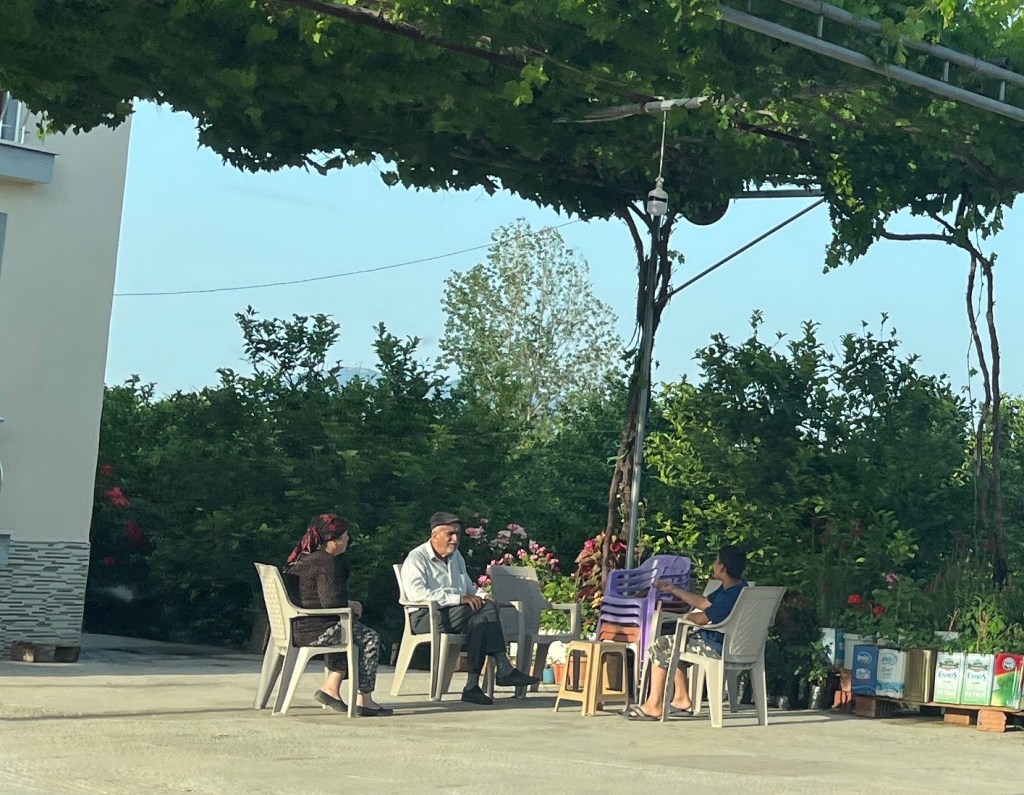
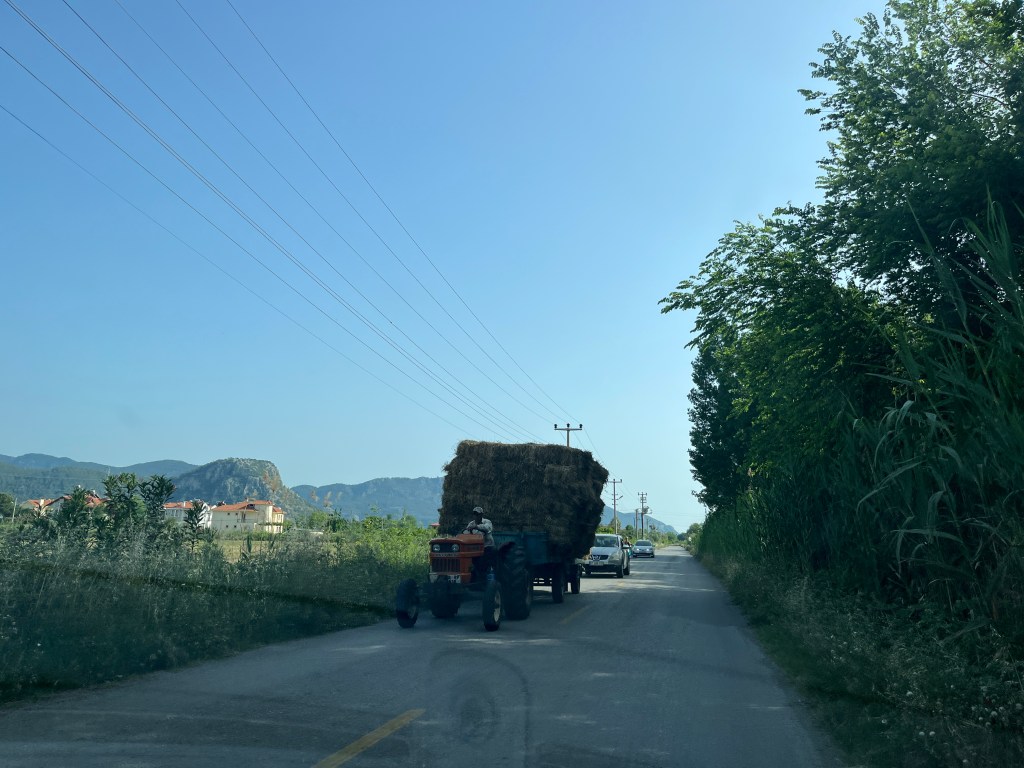
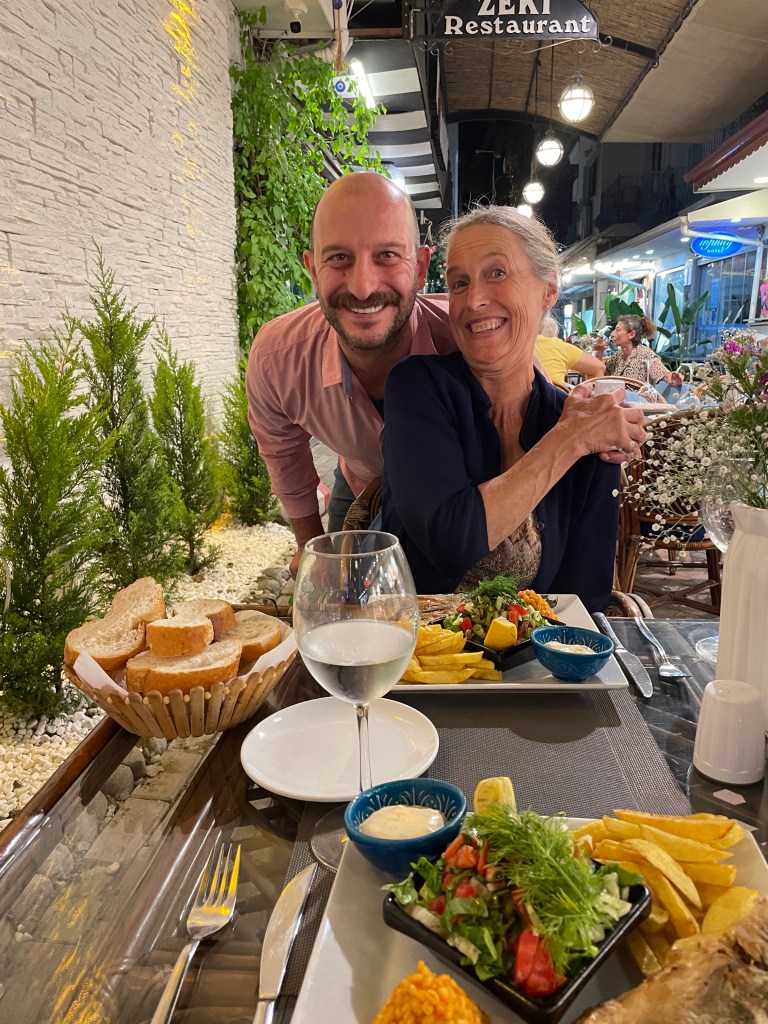
16th May – Having spent some time planning our day we, we went to the car and discovered how parking happens in Turkey. There were 6 cars blocking our exit. Ged chatted to locals (or perhaps gesticulated) and they rounded up the car owners. After quite a bit of manoeuvring we were on our way.
We got to see our second turtle on the road, so gave it a wee lift to the grass edge. (Ged and Gemiler Strata) Hole in rock. Magical beach and countryside roads.
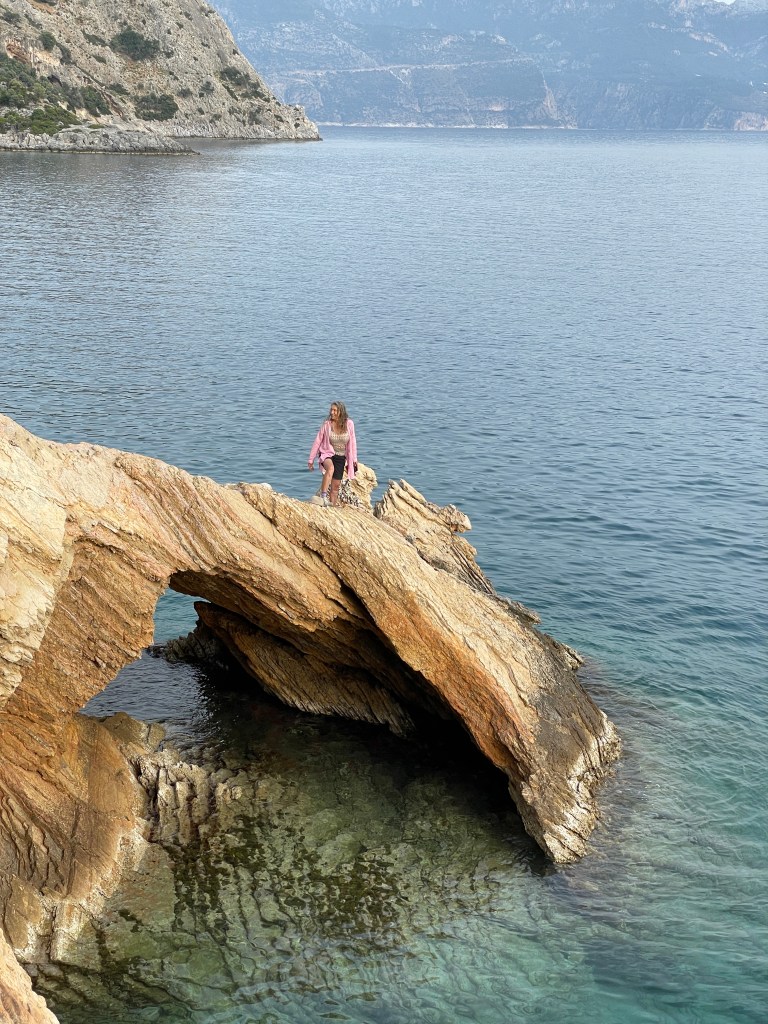
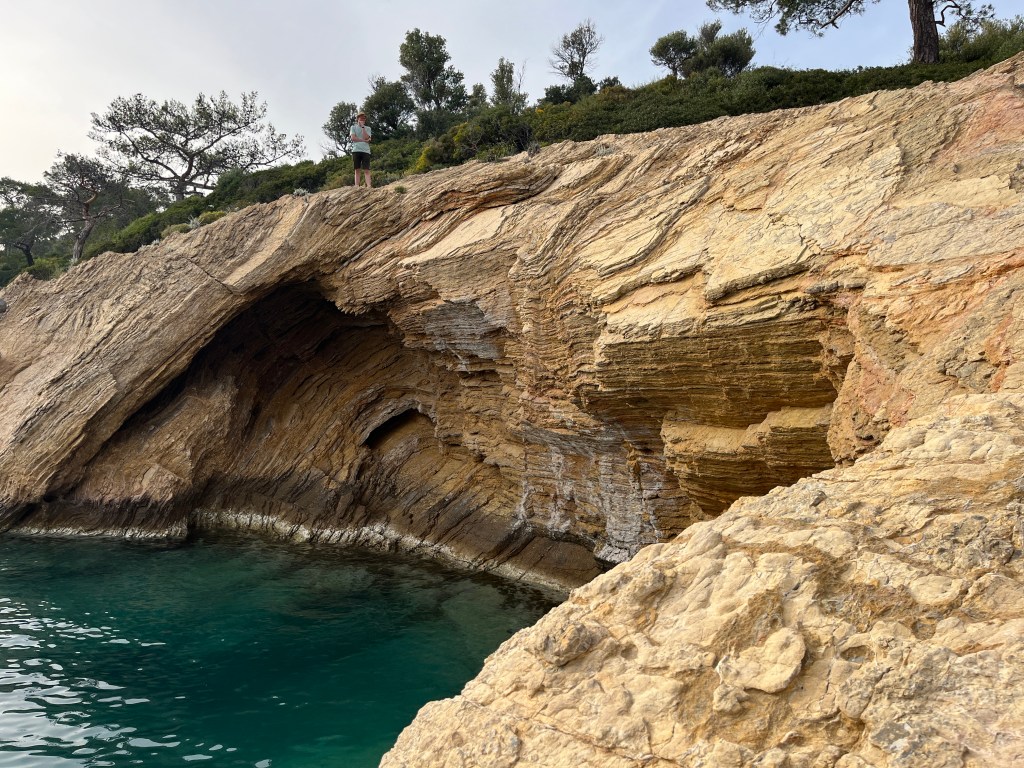
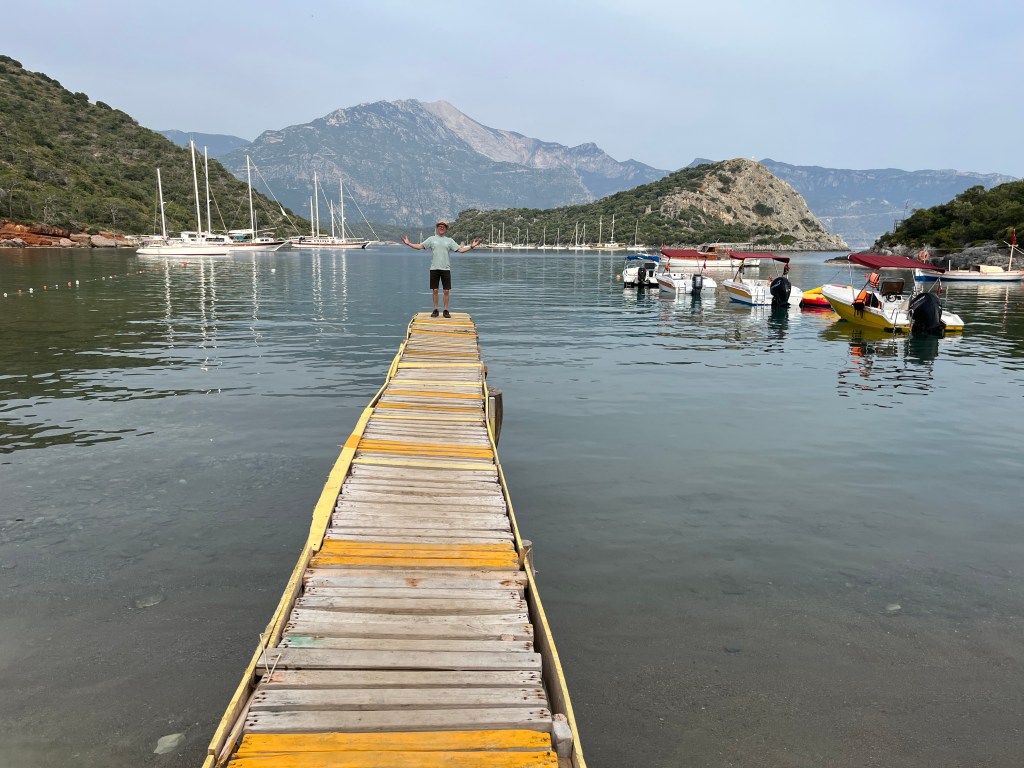
17th May – Enjoyed a slow-pace day, just walking up to the tombs behind the town and catching a local bus. Now this is weird …. I’d taken lettuce leaves with me, hoping that in our travels I may see a tortoise to feed. Having been unsuccessful despite looking across open lots and grass edges for about 20 minutes of our walk, I said I guess I won’t be seeing a tortoise…. As I said the word, there 1 meter away was a tortoise, on concrete, sitting against a building (not a likely location). I spent quite some time with the cute wee fellow, with him taking the lettuce from my hand.
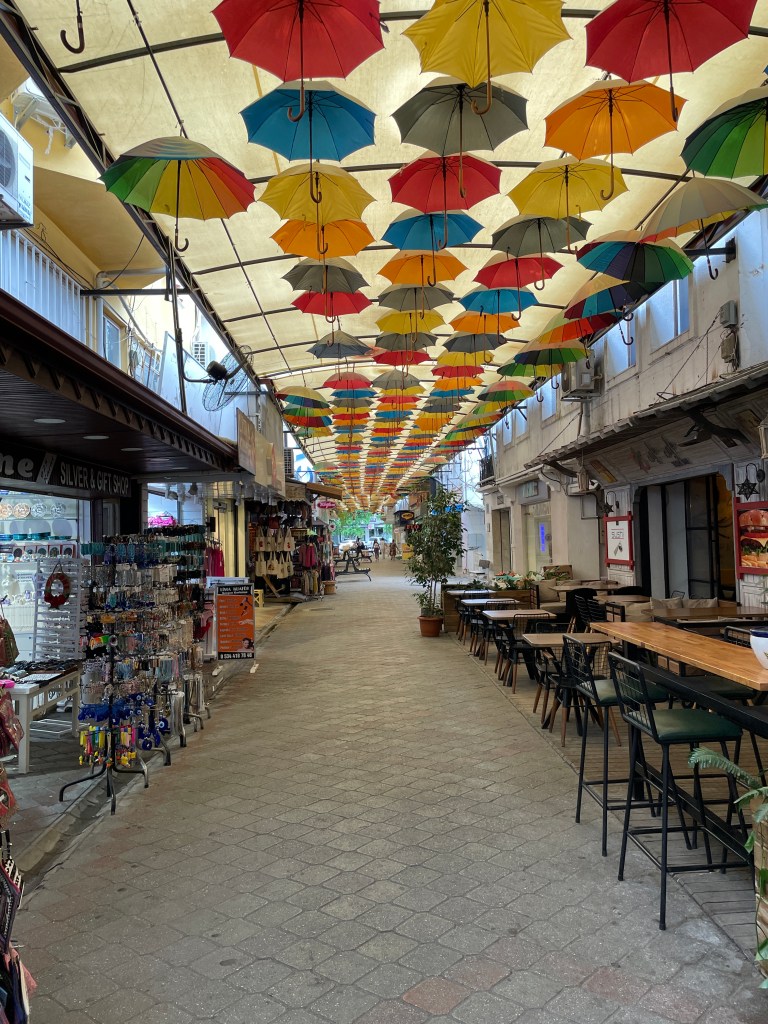

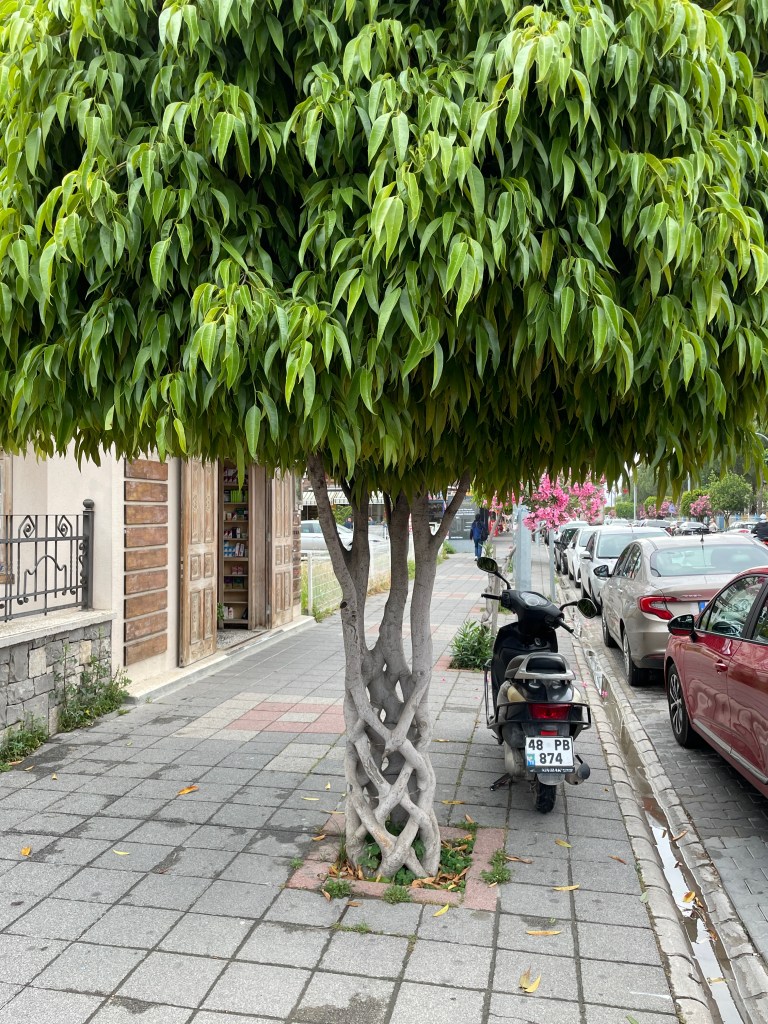
A whole street of these amazing plaited trees
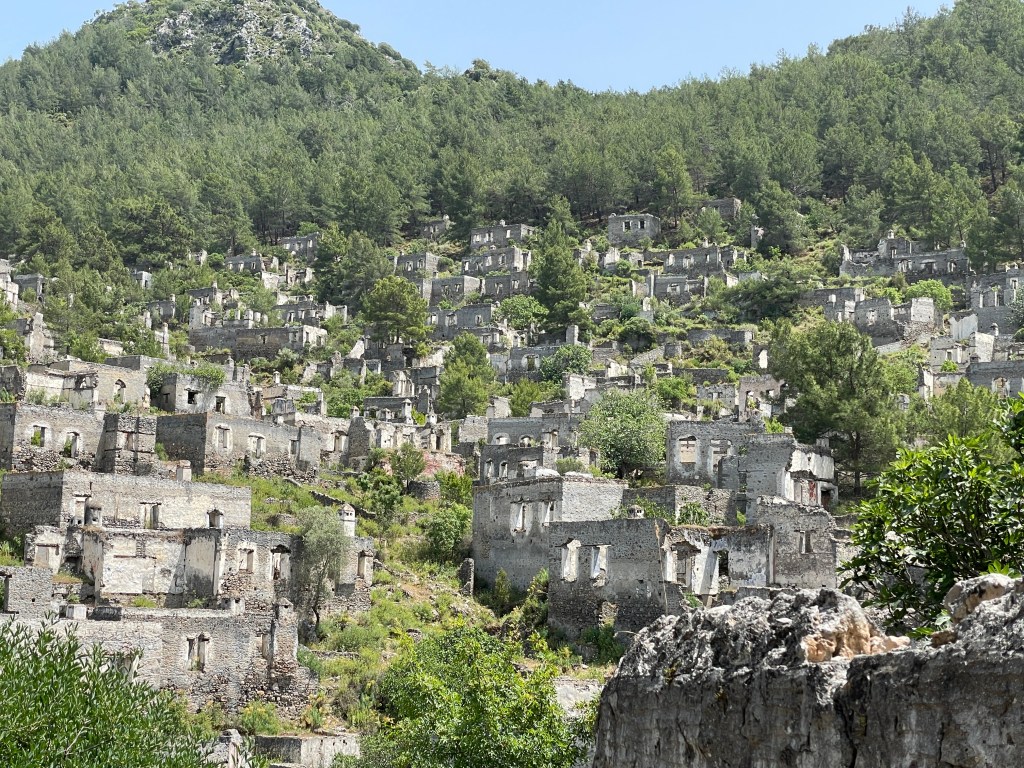
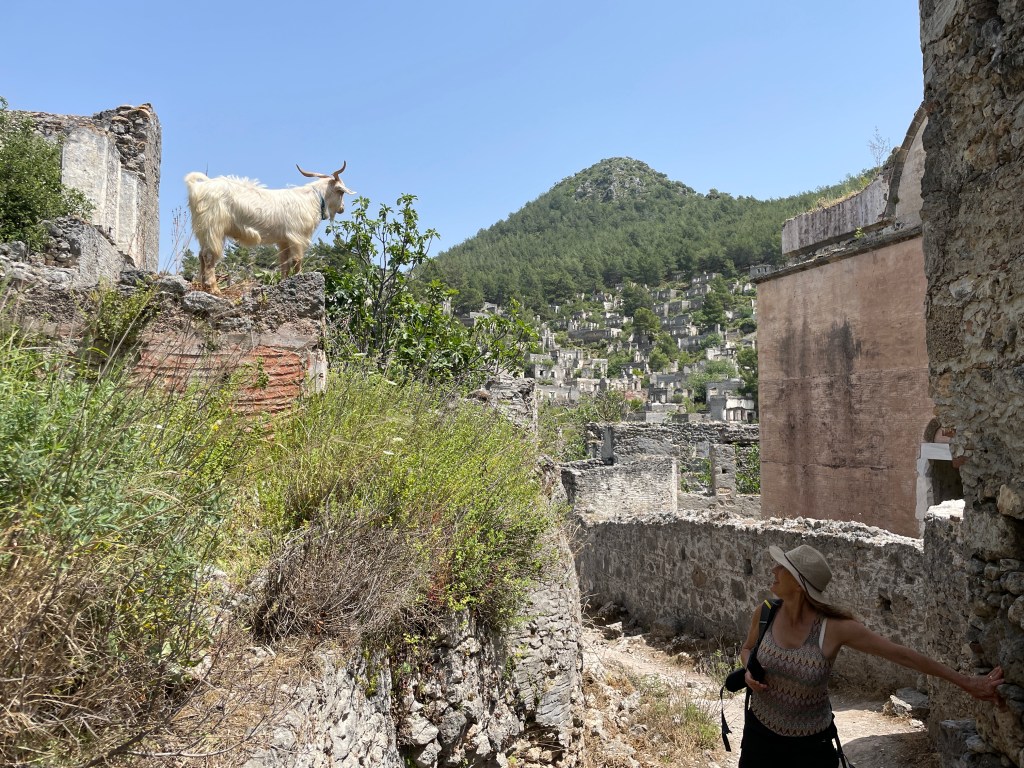
18th May – Off to our next stop. A very windy day, but found a nice wee sheltered beach to stop at (what seemed an abandoned resort, but apparently the bar opens in summer). Ged snorkelled whilst I swam, and we lay on the weathered resort deck to dry off.
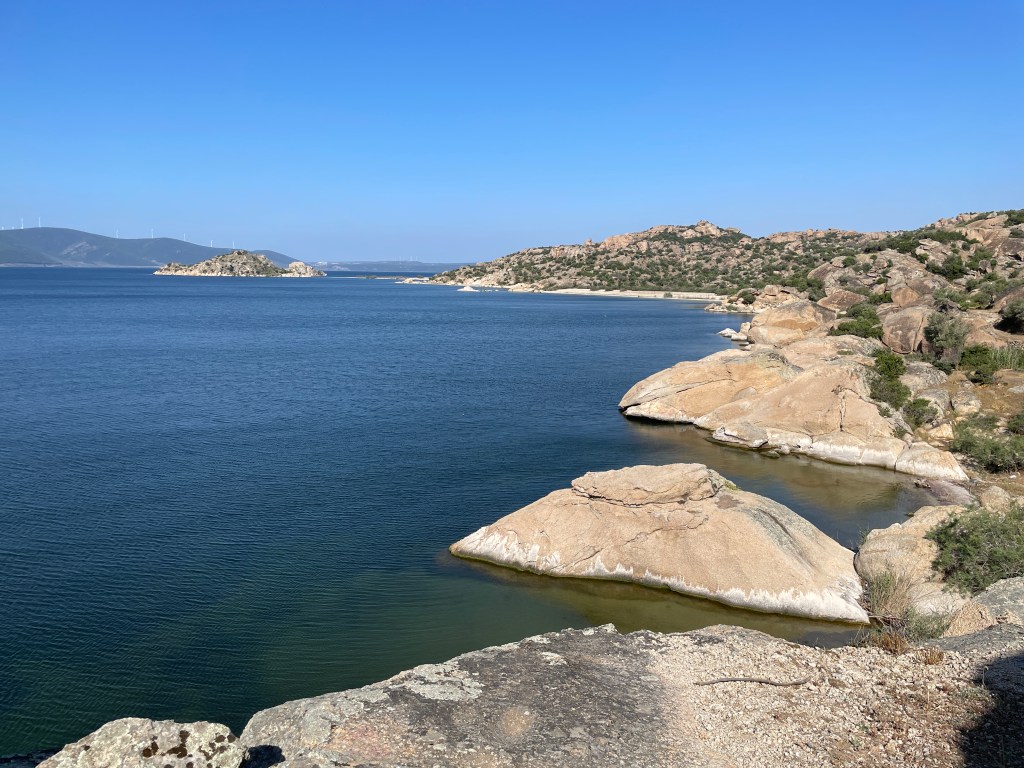
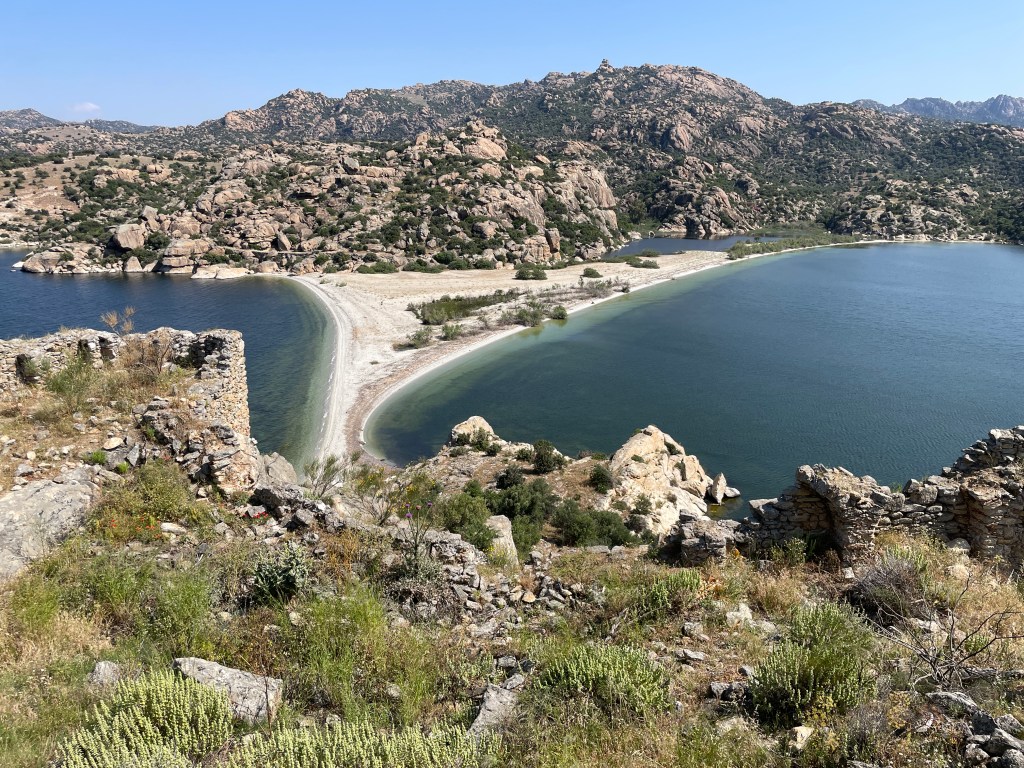
Kapakiri, a village at the far end of the Lake Bafa is our home for two days and a slice of rural Turkey we won’t forget. The guesthouse/ campground was poised on old walls opposite this beach and island 7022
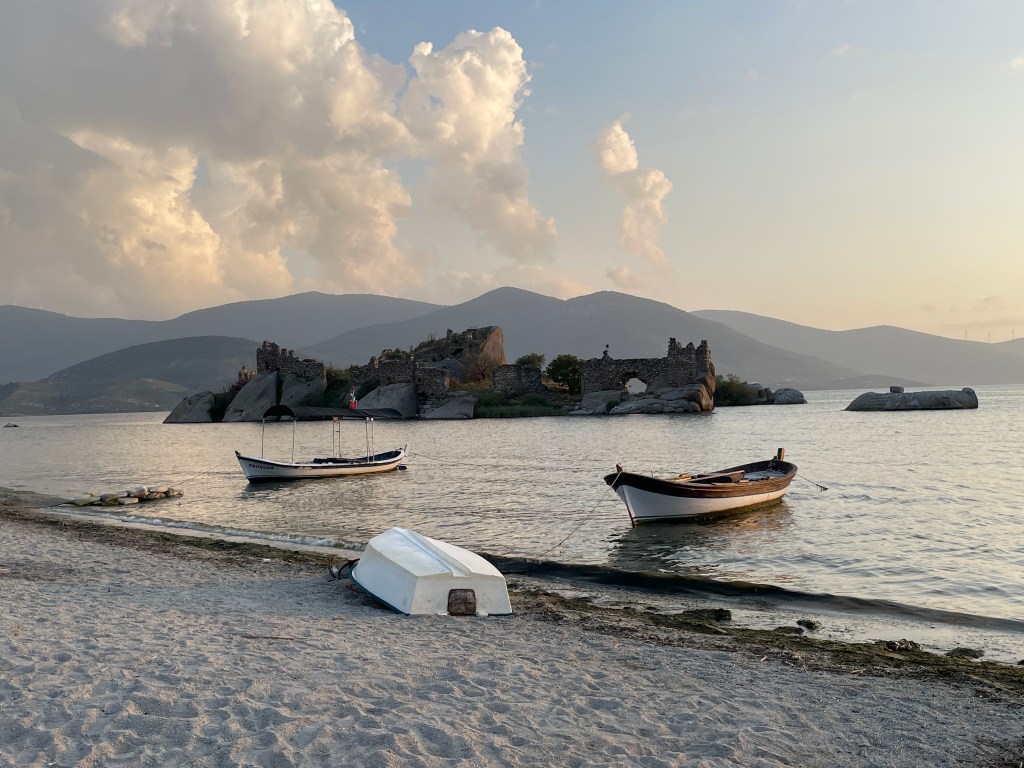
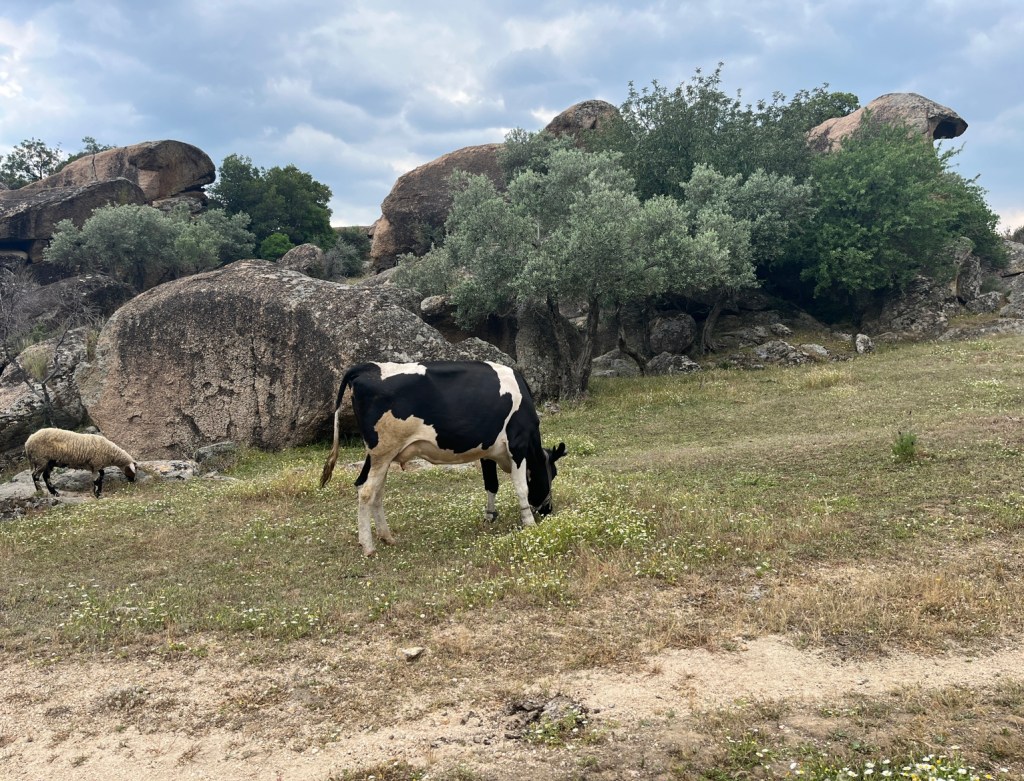
The presence of the surrounding mountains at first seems like other mountain ranges, but once closer is made up of large boulders, each with it’s unique shape and character. They have an artistic presence whilst also holding a reminder that in previous times, the boulders have broken free in the past rumbled down the slope and can do at any time in the future.
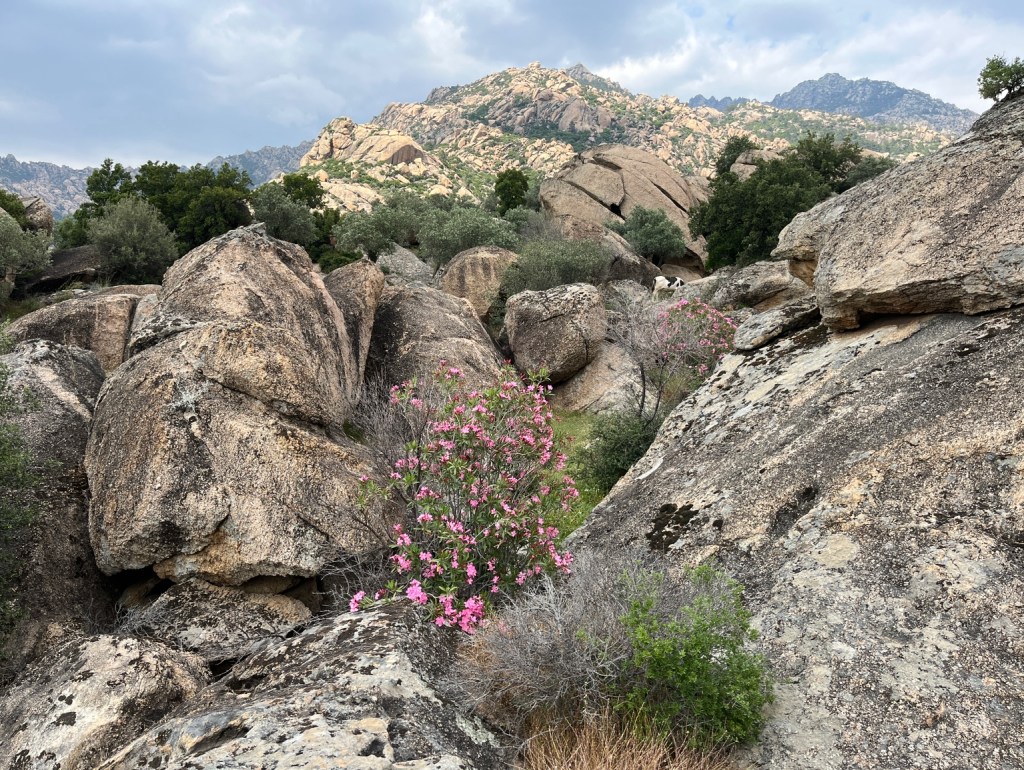
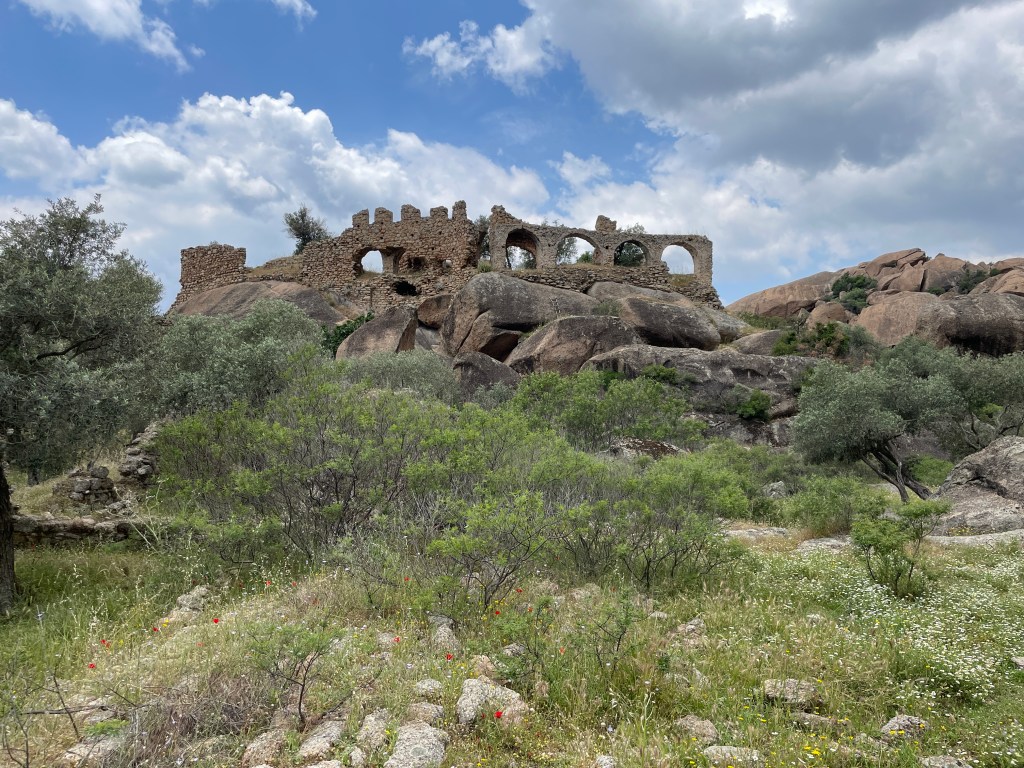
Peoples since many centuries BC have made this their home, initially nomads, making their homes in caves, then building homes with hewn stones into the rock. Later came the castles and fortifications, which can be seen along the roadside and in most directions one looks.

19th May – Yediler Monastery walk – With our ‘all trails’ app, plenty of water and a few snacks we headed through winding village roads to a spot in Golyaka village to park, and commence our walk. 1855 1859 7110 7122 me w cowWe’d been warned to watch for snakes, so I had my walking pole, sometimes waving it through the grass in front, and looking at the edges of rocks and walls. 7094 To Ged’s delight we saw many lizards, some very large, and this color symphony.
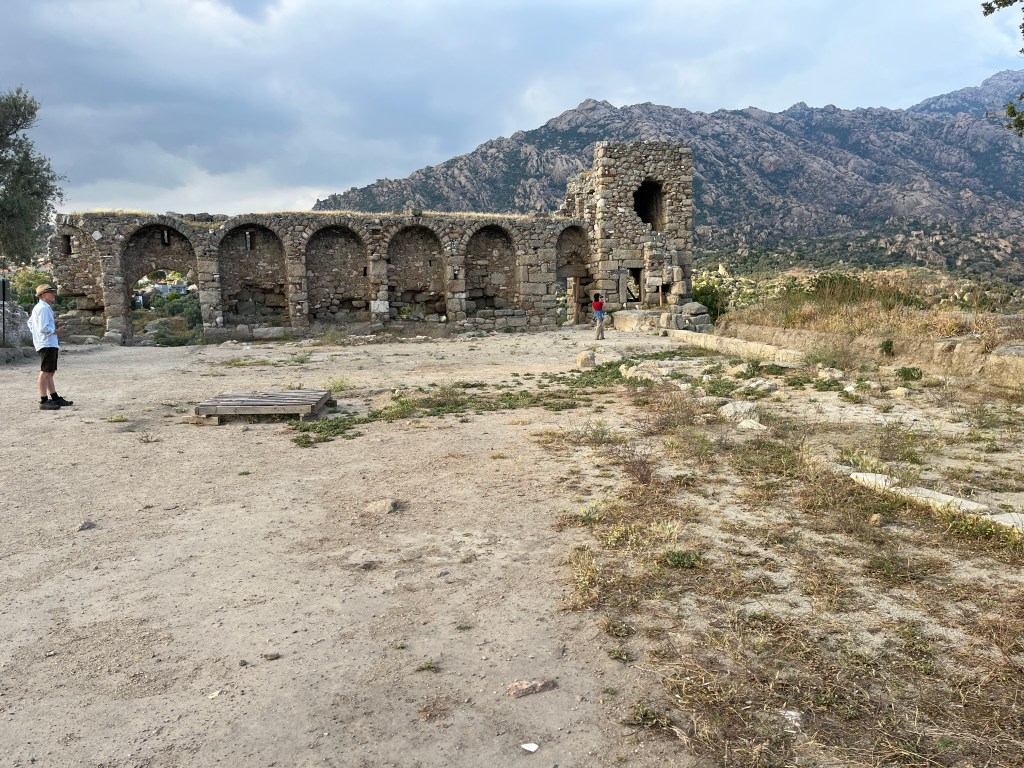
It was mostly the walls of monastery rooms that still existed, covering an area of about 300 square metres.
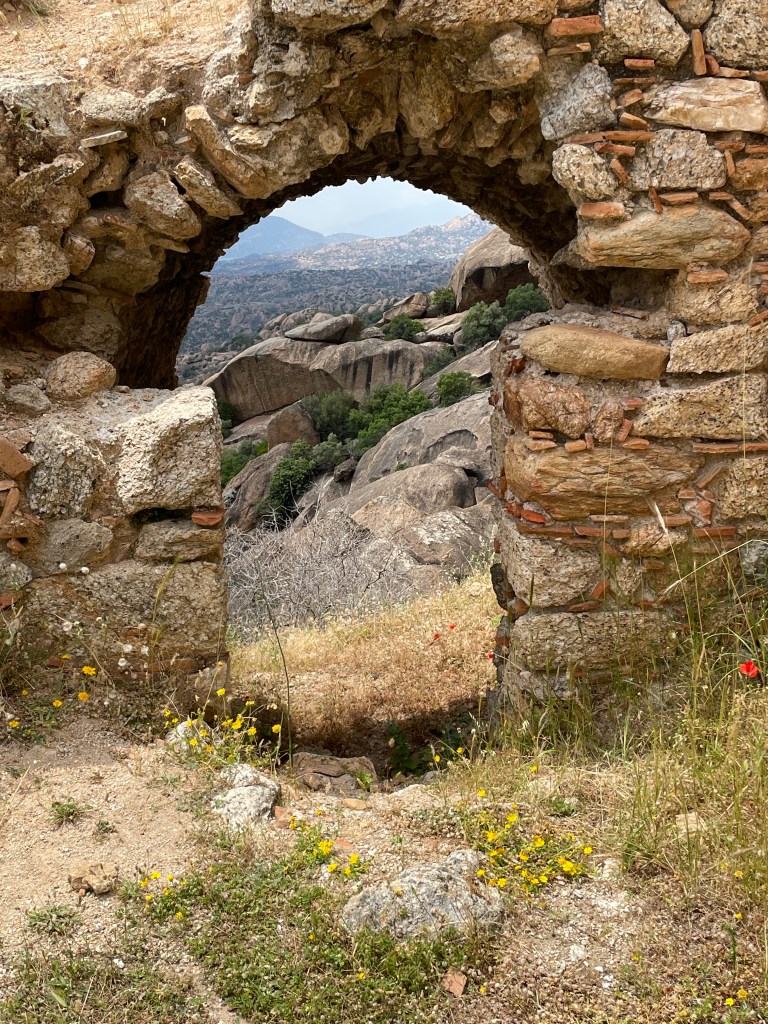
Beyond this we found an overhang, where the frescoes were, dated to the 11th-13th century (during the empire of Nicaea). The delicate colors and body forms still held the artist’s sense of passion. Sadly the faces were scratched out, in a manner consistent with vandalism.
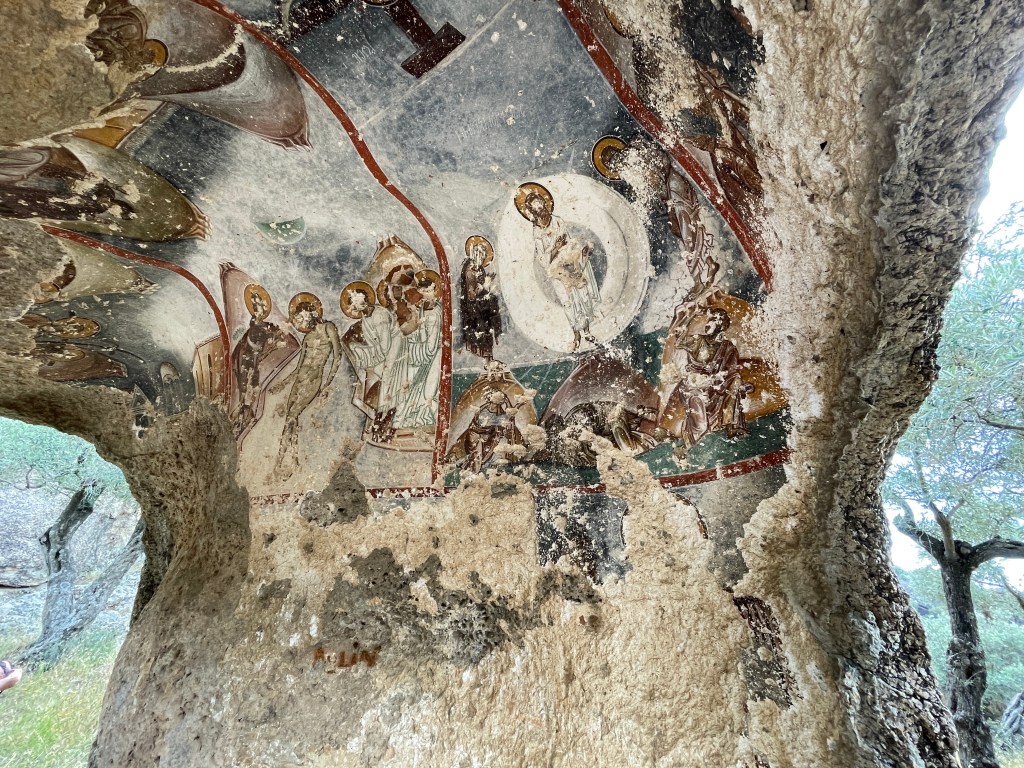
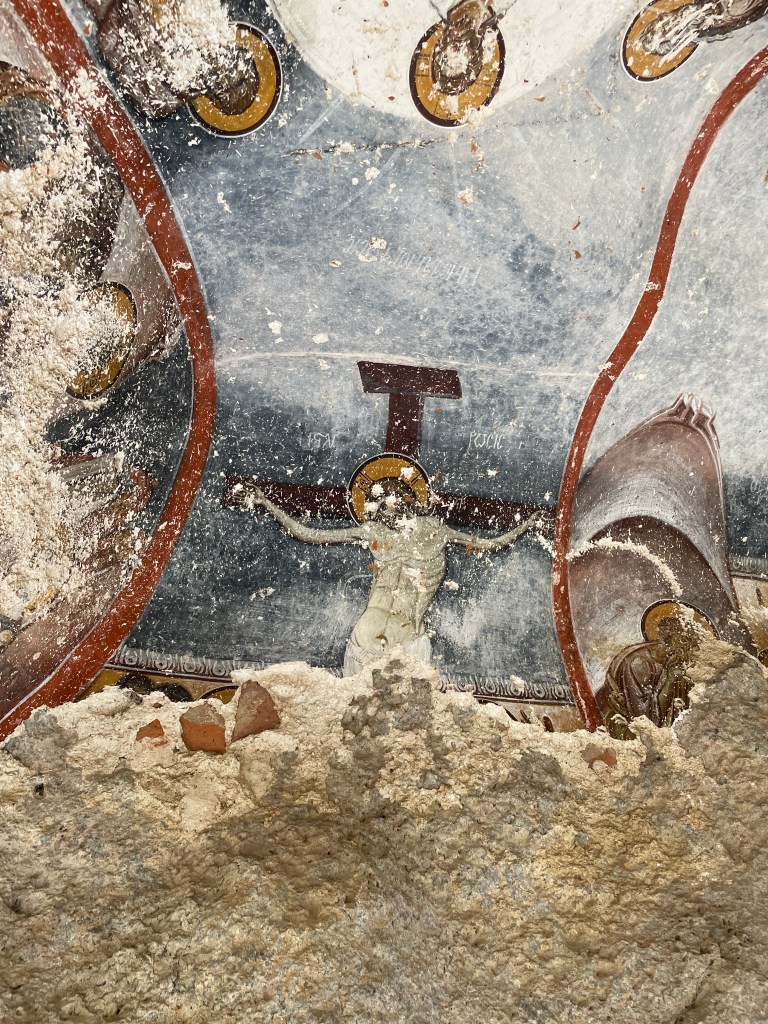
Records suggest it was likely the 7th century (when monks fled the Arab invasion of the Sinai) that Christians chose the caves, islands, and high crags to build a dozen or so monasteries (complete with libraries, and beautiful fresco-adorned ceilings for theircommunities and hermitages. These were typically hidden among the crags and boulders or behind fortified walls. These Seljuk raids drove these communities out of the Latmos, into Greece and beyond. During the middle ages, Turkish forces came from the interior challenging byzantine control. From the 14th Century no there are no records of the monasteries being operational.
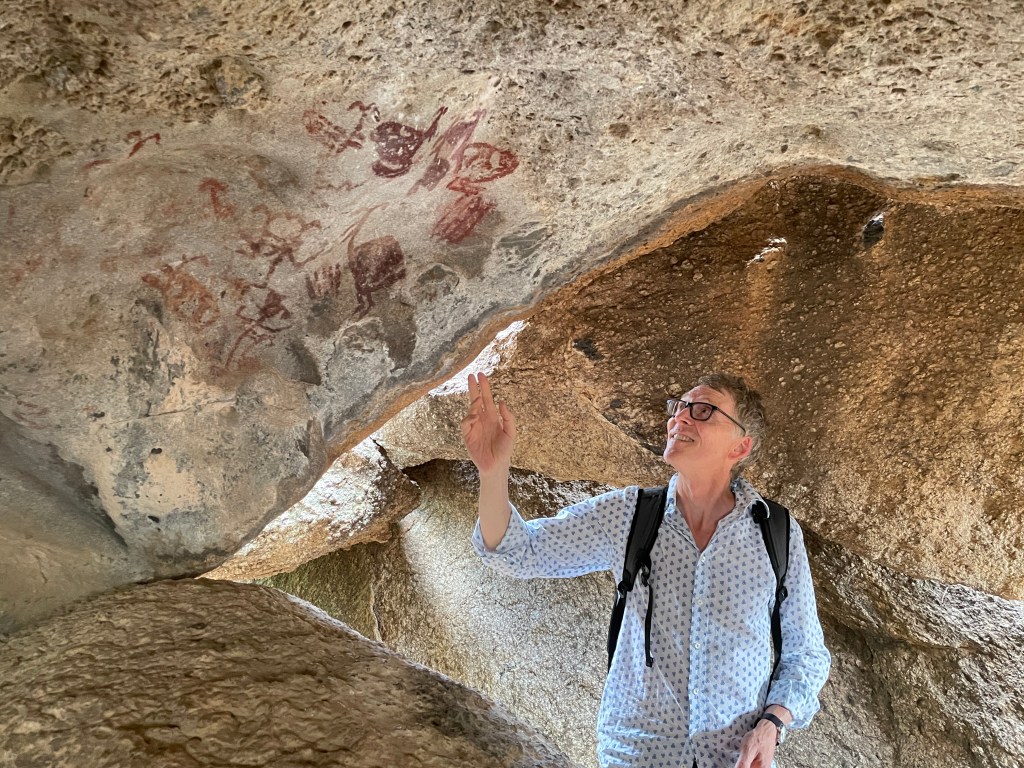
Mustafa (a guide) who was talking with a group of Turks he’d brought to the monastery, was kind enough to chat with us and direct us to where we may find the prehistoric cave. (We’ll get to that soon). We sat near the group for lunch, and were offered snacks by various women. One of the group Newman, spoke English and was keen to chat. He introduced us to Gaia and Suzanna who were also very friendly.We took a photo of the landscape , and noted a point about 800 metres away in the midst of the boulders and scrub, and headed toward it. Once in the general area, we each went off scrambling between boulders up to 30 metres high. This involved slithering down some rocks, squeezing between others, lowering ourselves into cave shelters, looking for the ceiling paintings. After nearly 2 hours of this, about ready to turn homeward, Ged says he’d like a moment to look into one last space. Then I hear the words “I found it”. We were both filled with frenzied excitement. I still had to slither down a slope to join him, but what a buzz to stand in the dwelling of those who’d lived 6 thousand years ago, and told their stories on the cave roof. It certainly deserved a kiss.

Just before dinner, we walked down the road to the castle, coming across Gaia, Newman and Suzanna and exploring it with them. Over 300 tombs lay beyond the castle walls on a promontory, some actually being under water. The lids were no longer on them, but lying beside them, their size making one wonder at how they had been lift in place. Traditionally tombs were located outside the city.
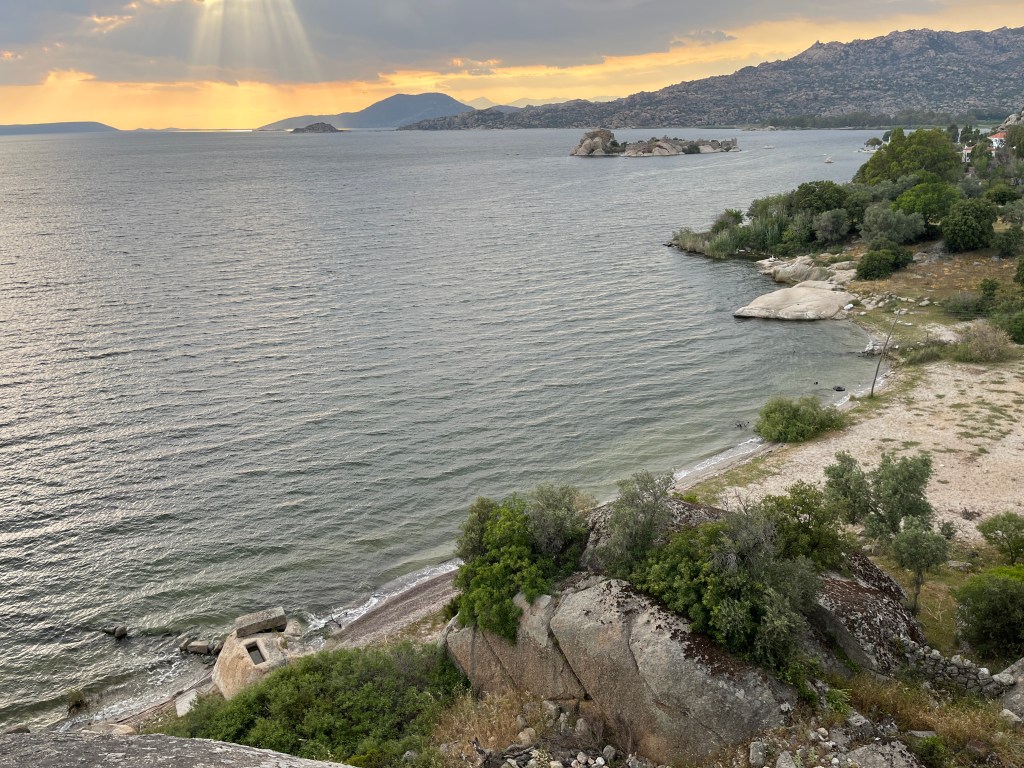
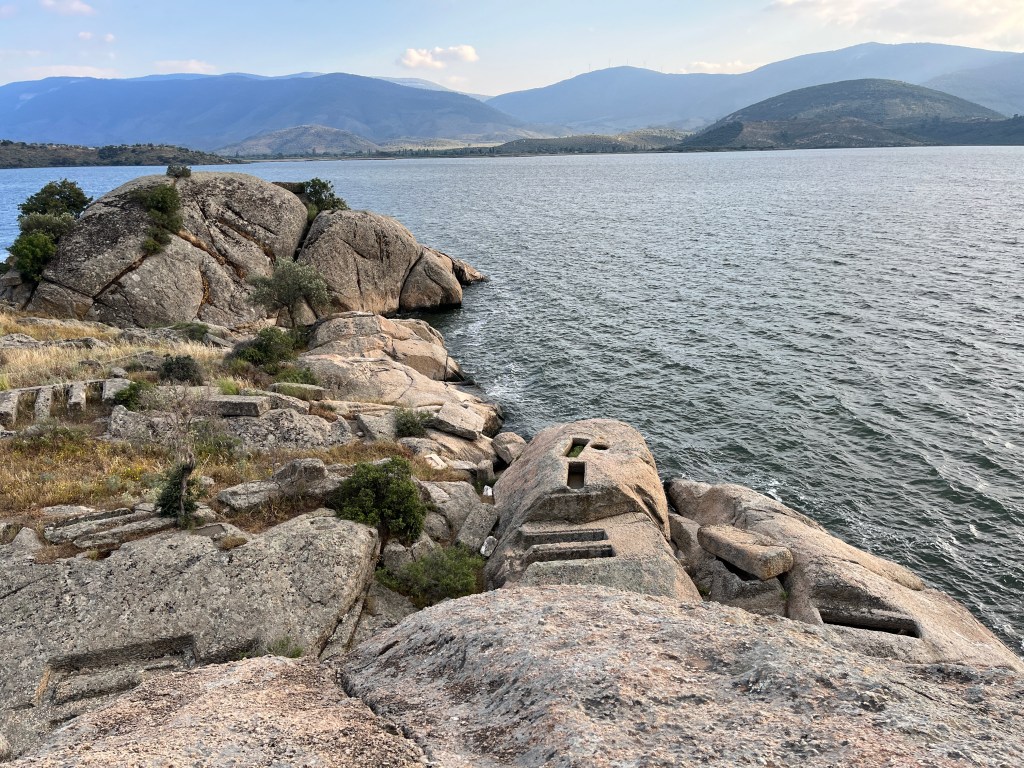
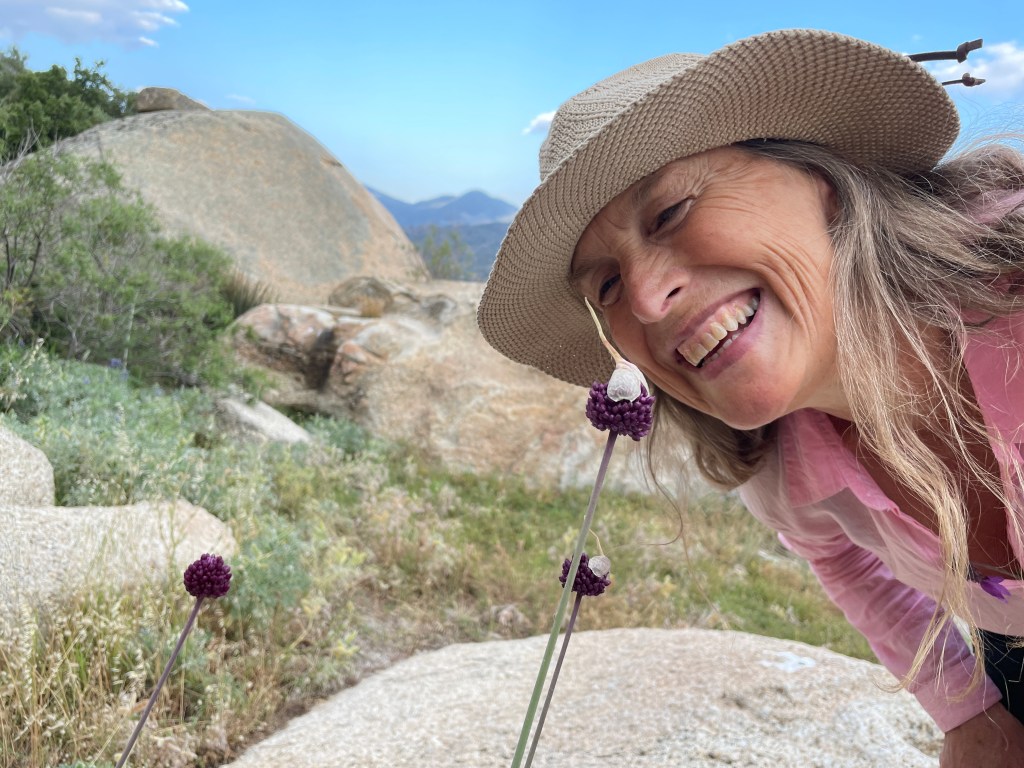
Saturday 20th May – Headlands walk to island. It took some courage to do this one as we were given n encouragement by the Selenes staff. They suggested we’d be in water up to our waists, when in reality we kept our shoes dry all the way. It could partly be due to the fact they offered boat tours out to the various islands, which we’d turned down due to the $450 cost. We found a park alongside the farm of Nadia, a lovely woman who was keen for us to later visit her in the town and see her wares. Again, all eyes out for snakes, and sticks in hand we set off. The only people we met were a French couple who’d biked from France, adorned with the muscle and tan one might expect. We had some rock hopping to do once we got the small wetland, and using navigation skills to get around the coast rock-forms, but then it was smooth sailing. These amazing flowers were shedding the skins
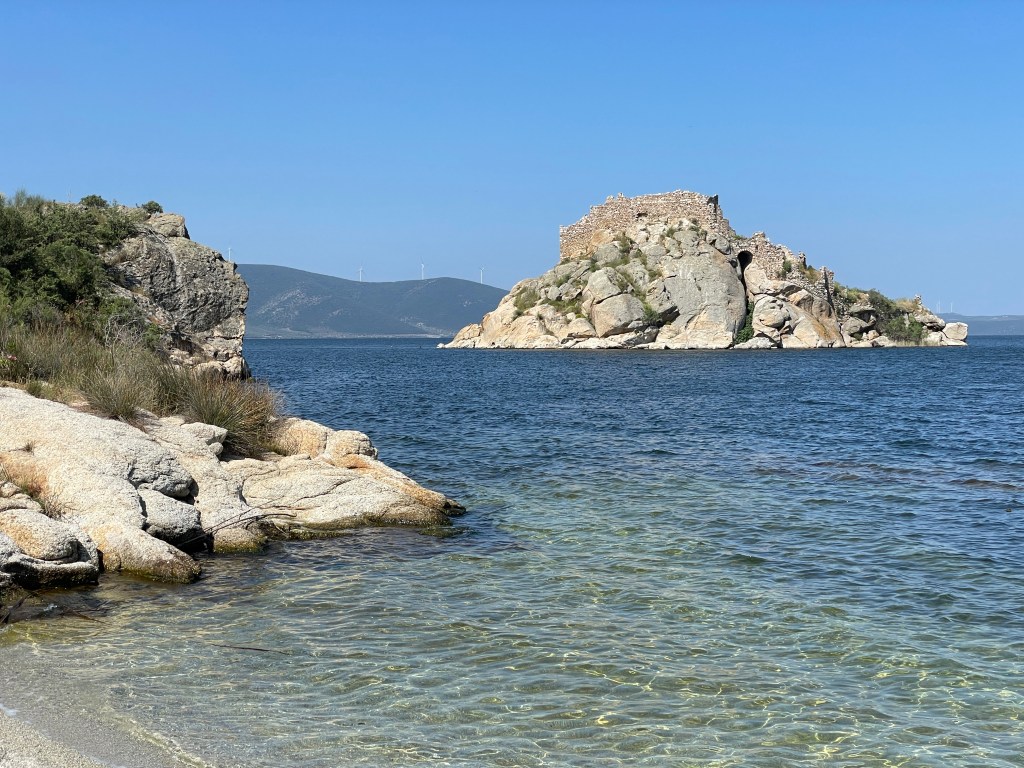
A walk across a sand bridge took us to a beautiful island whose whole top was taken up with a castle, Mostly just the outer walls and large stone entrance steps were still standing. What a magical feeling being so remote. Initially we thought of the nobles and palace staff that would have walked up these steps, looking over the white sand beach, and to the islands beyond. Later we discovered the island was one of the few that was home to a fortified monastery.
Of course we weren’t entirely alone, as there were dozens of black crows circling in the sky above the castle walls, stalks and shags flying around the various rocky outcrops, and three majestic pelican floating off shore. If it weren’t for water supplies, and needing to get to our next destination, we could have spent hours sitting atop this magical island. 7216 Almost as magical was a dip in the sea when sufferinmg heat exhaustion
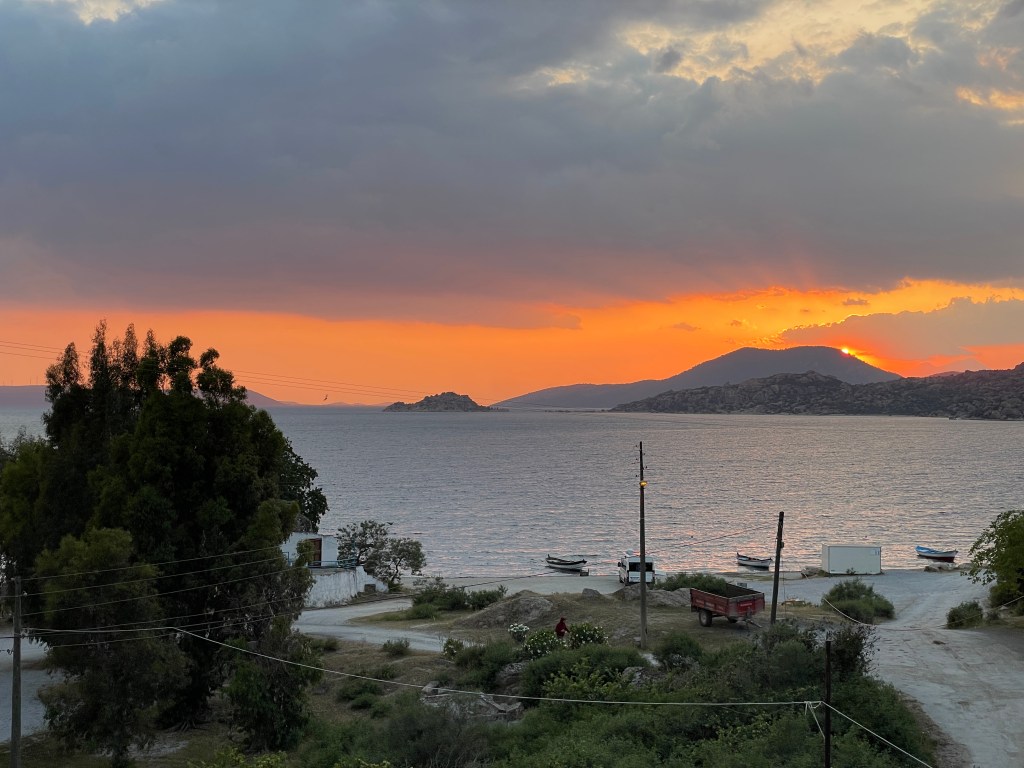
Like anywhere, there is a sadder side to this history. Olive oil factory refuse and agricultural run-off have changed the chemical content of the lake, decreasing oxygen amount, and has led to the death of hundreds of thousands of fish and the ecosystem being irreversibly altered. View over Baja Gala at Dinner on our last night.
Goodbye to Kapakiri, after first stopping where I’d hoped to find Nadia. Instead there were 6 other burka clad women sitting together, each of whom was desperate to sell me their scarves and beads. They were, I think the most fervent sales-woman I’d met, and yes I did buy. So they were good at their job.
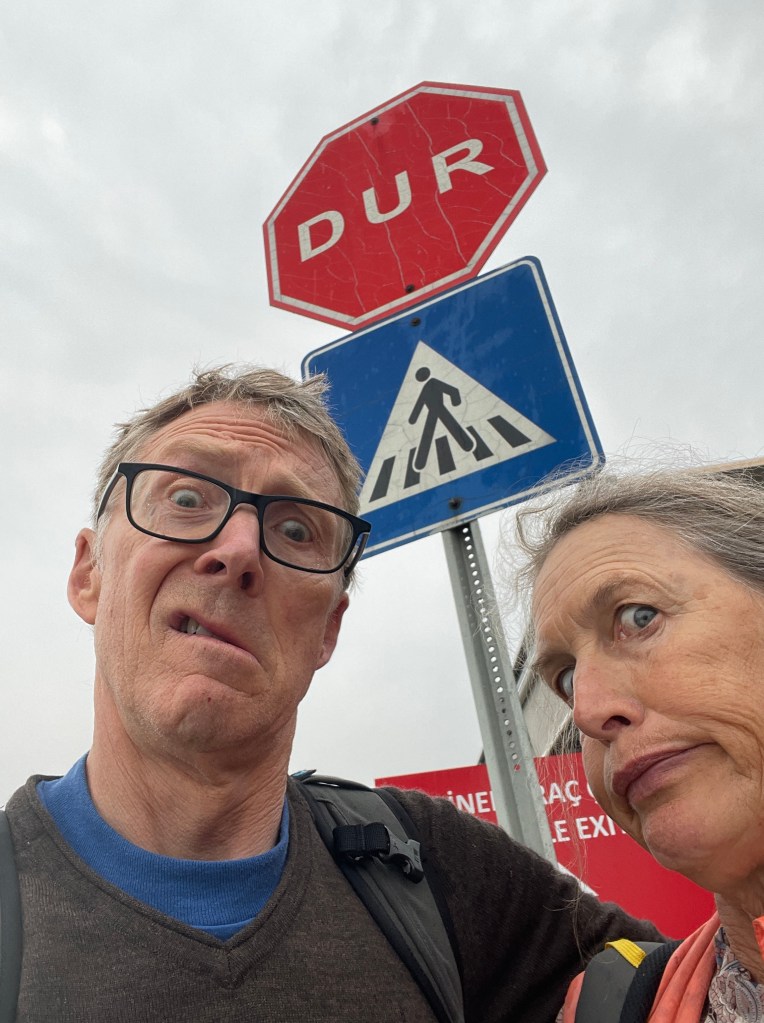
Now that we understand the road rules, Ged made our drive to Ephesus seem easy. No-one uses signals, motorbikes are exempt to traffic light rules, and respect for the centre line is optional, . No wonder we were tooted at and looked at strangely when we obeyed the rules, like this sign for STOP.
Ephesis. We knew this would be a tourist-mecca, but enjoyed the fact that the tourists were all Turkish, and seemed happy and curious. There were a group of school-aged girls and later a group of boys eager to practice their English with us. Also 3 male nursing students keen to chat.
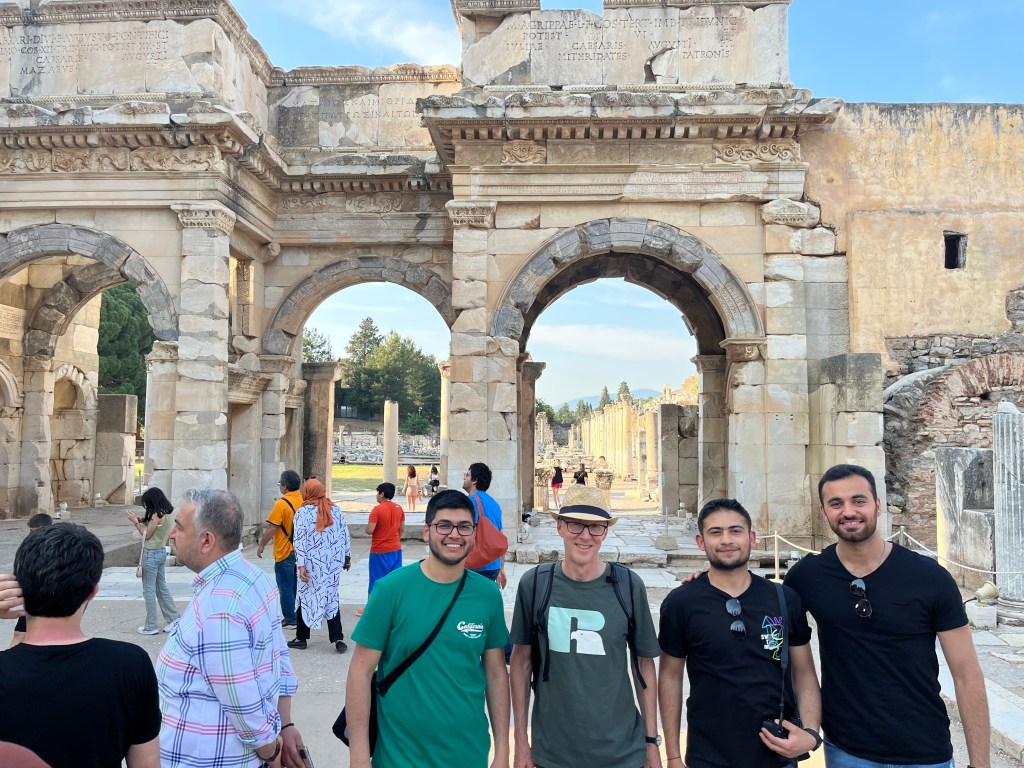
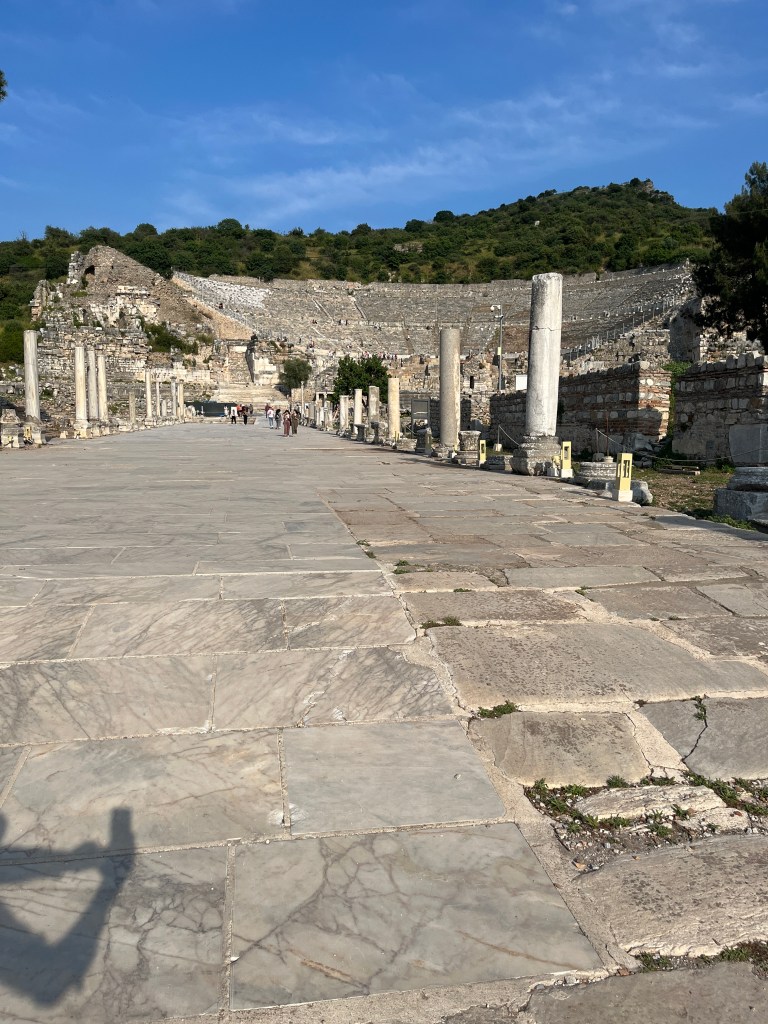
The size of the city blew us away, and it was neat to get a sense of how it all was orchestrated, around 3 large prominades, the largest heading down to what used to be the port. The amphitheatre in the background is where the gladiator and lion fighting sports took place. Today there were a group of meringue dancers enjoying the space.
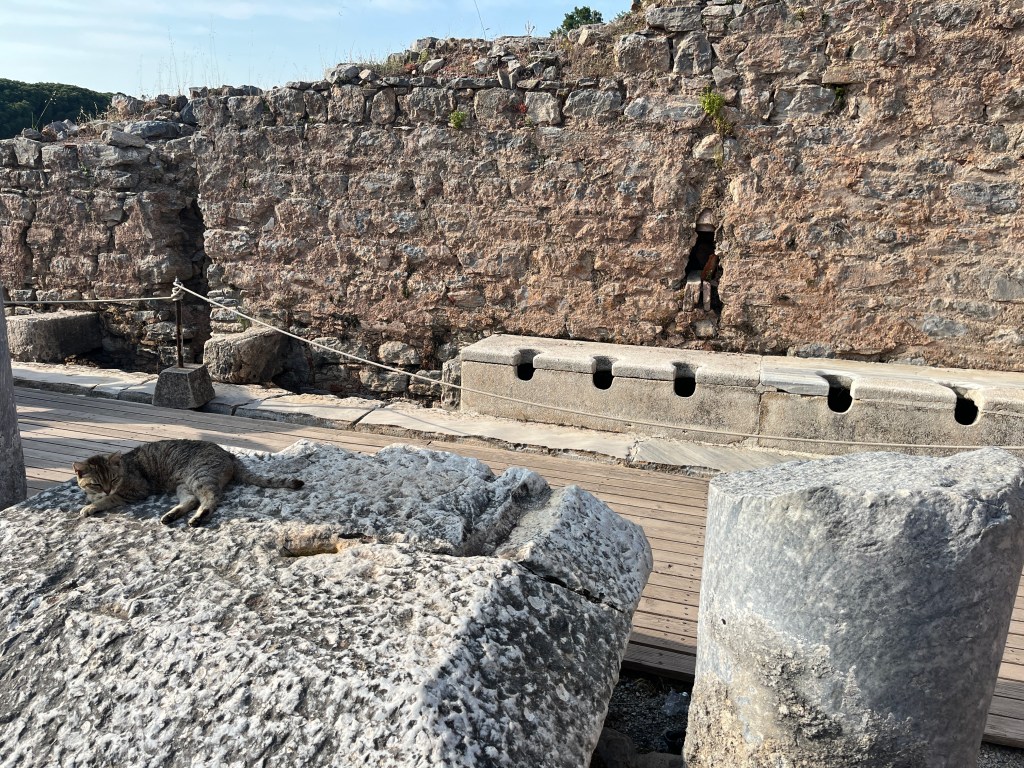
There were the 2 theatres, the government buildings, the public latrines, gymnasiums, bath-houses, terraced housing (the more prestigious having 10 metre high ceilings) and of course the monuments to various Gods. Fountains seemed to play an important role too.
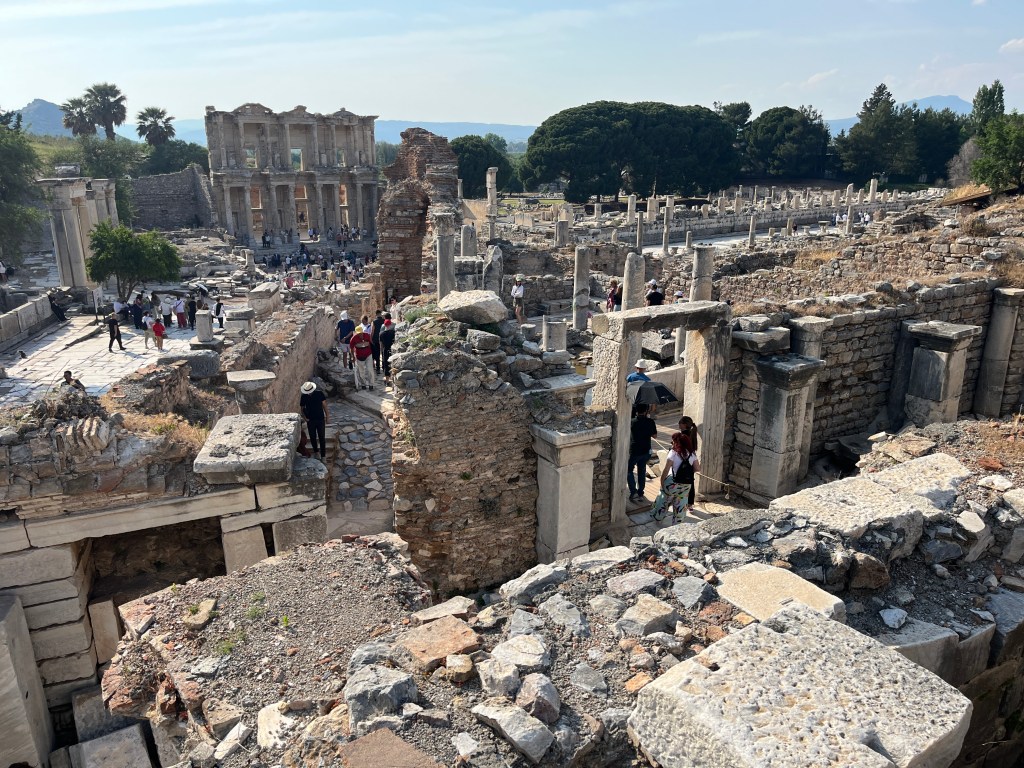
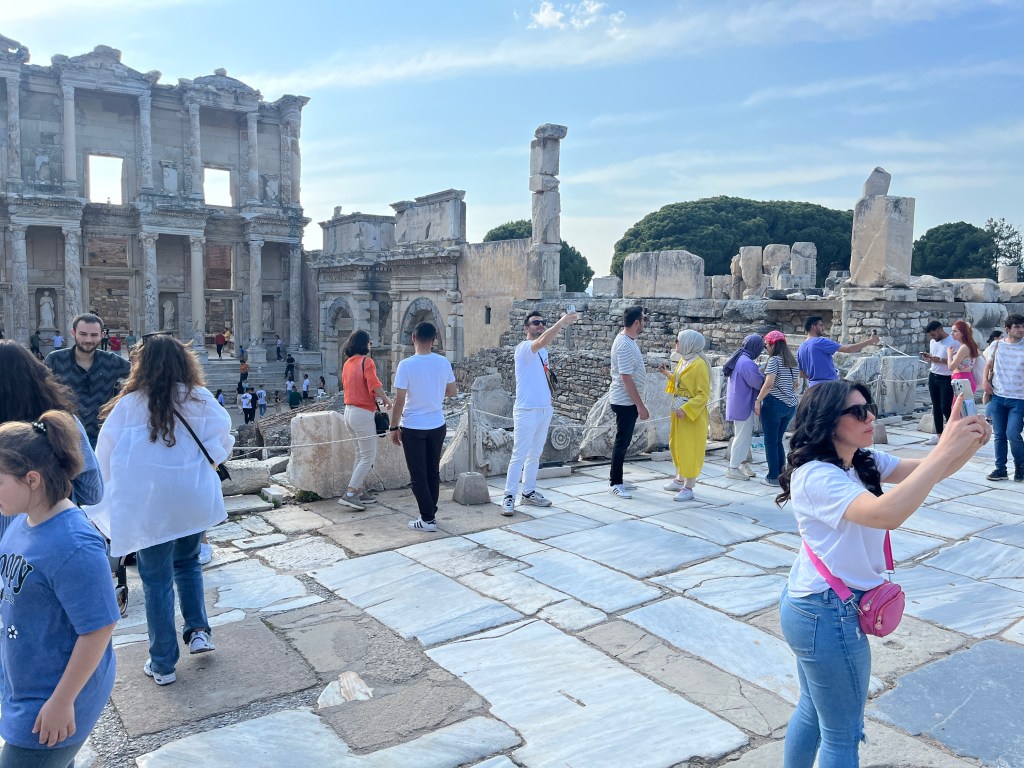
Public loos, which was apparently a place to socialise, and the library.
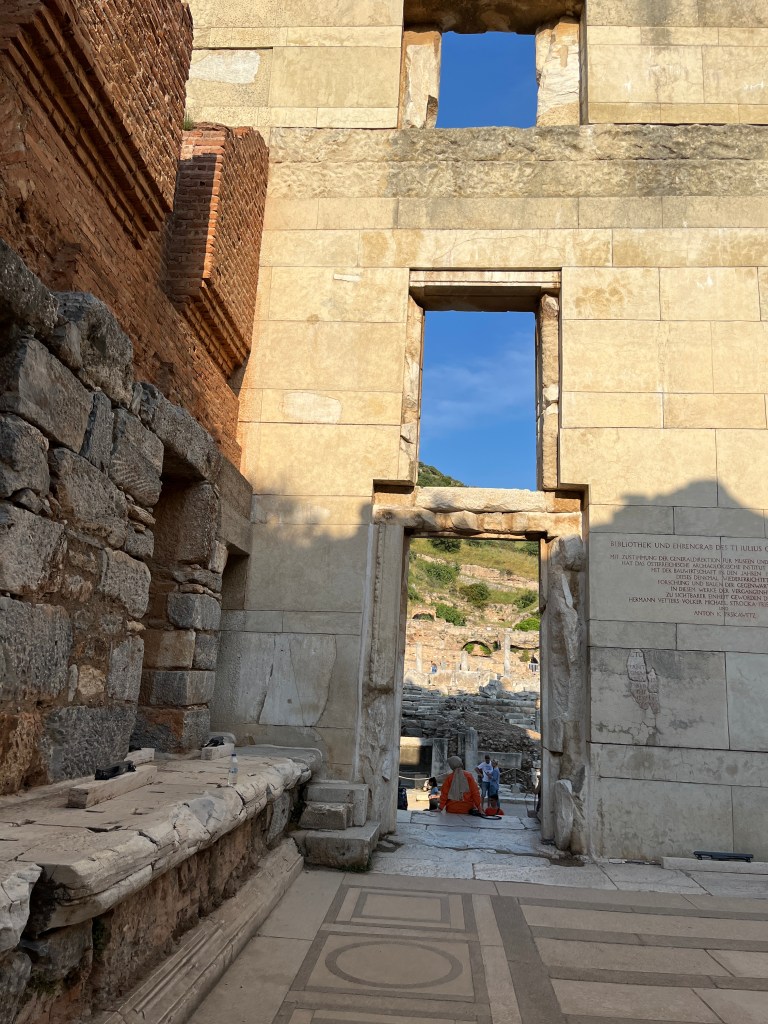
For history buffs – (from ) https://ikamet.com/blog/the-ancient-city-of-ephesus-in-zmir-turkey/
The excavations and research on Ephesus suggest that the area on which its ruins are scattered was inhabited by pre-historic peoples as early as 6000 BC. The first Greek settlers arrived in the area in the 10th century BC, and by 560 BC, the city was centered around the Artemis Temple, bordering Selçuk, near Izmir. However, the Ephesus which, tourists flock to today, was primarily built in the Hellenistic era by Lysimachus, a general of Alexander the Great. In the Hellenistic and Roman eras, the population reached 200,000. In subsequent centuries, it was ruled by the Byzantines and later on by the Ottoman Turks.St. Paul, the Apostle, spent 2 years of his life in Ephesus between 52-54 AD, working as a tent-maker and preaching to Ephesus residents about God, and surrounds. John the Evangelist, who died here after he returned from his exile in Patmos. He is said to have written the Gospel here, wherein Jesus instructed him to look after his mother, Mary (who may have also died here).
Lack of communication from the next guesthouse made locating it a bit of fun. The narrow streets were filled with pedestrians, dogs and street vendors, with no room for turning. I eventually found a public parking area whilst Ged walked the streets searching for the guesthouse, and later appeared with the owner in his large 4 wheel drive. He Musafa – see below) had no problems tooting the pedestrians, shooting the narrow gaps, and bumping over the rutted road.
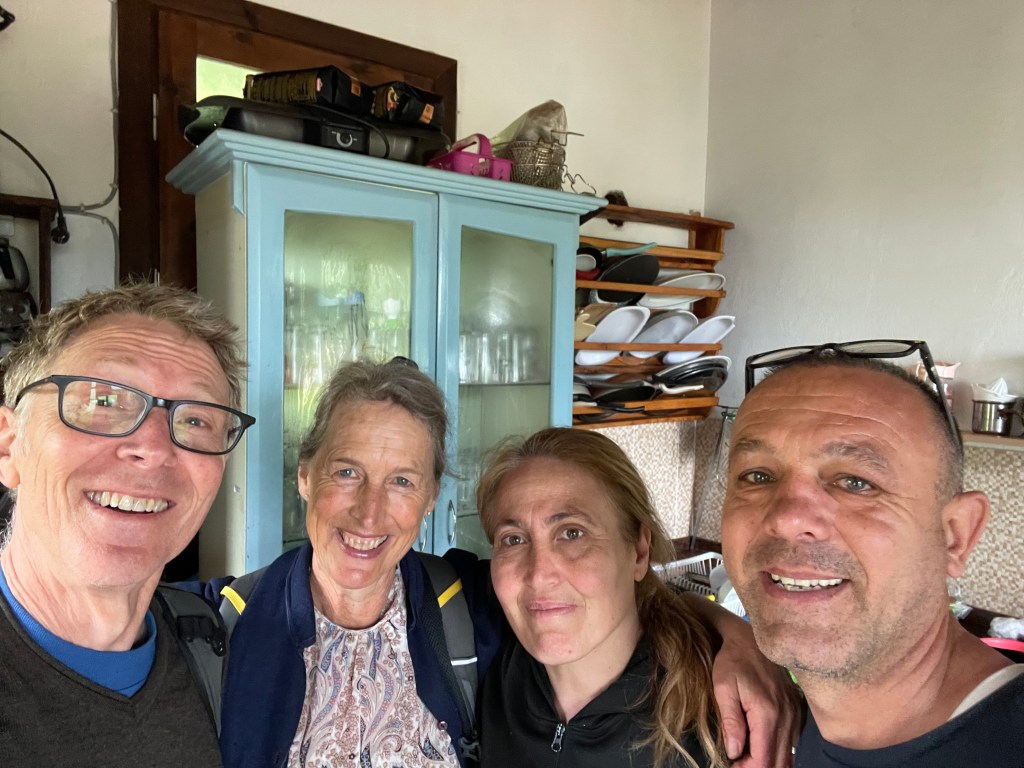
Sunday 21 May – We wake up and have a beautiful turkish breakfast of breads, meats, delicious home made jams, olives and cheeses. Outside in the street and neighbouring properties are chickens, goats sheep and locals going about there activities.
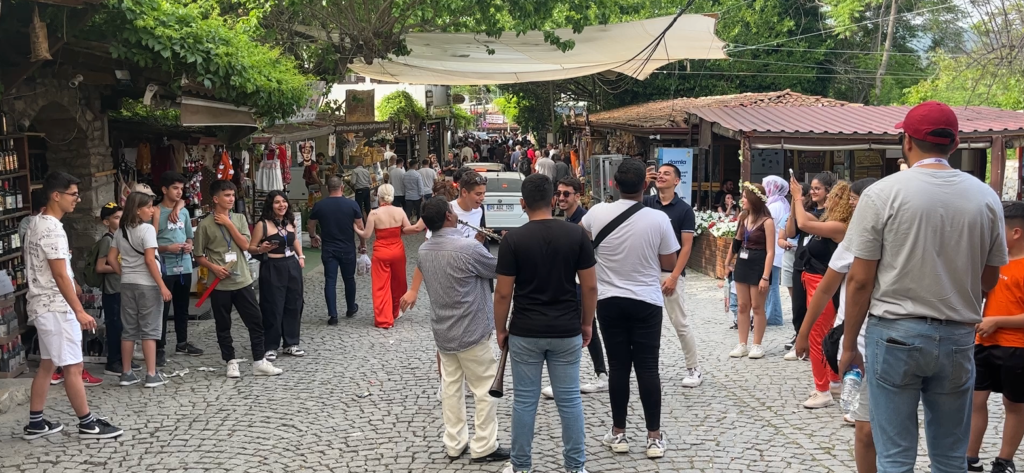
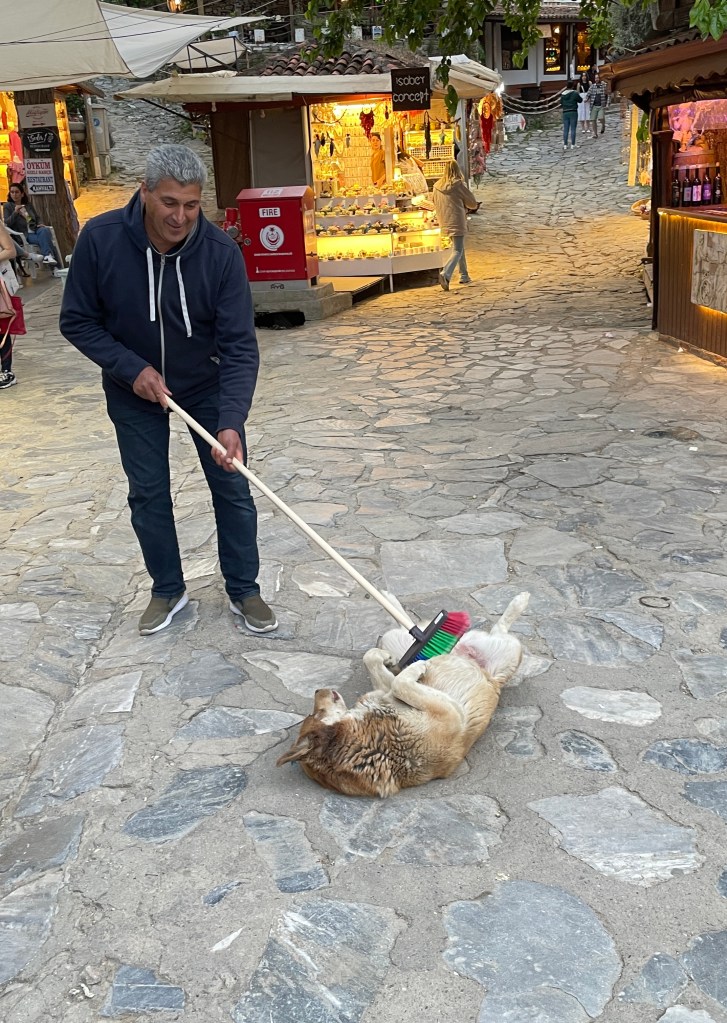
We set off for a walk around the village. Originally Greek occupied, it was deserted, and then reoccupied by the Turks after the controversial and bloody population swaps in the 1920’s. We visit two unused Greek Christian churches, now full of Turkish tourists. Some had not been well maintained.
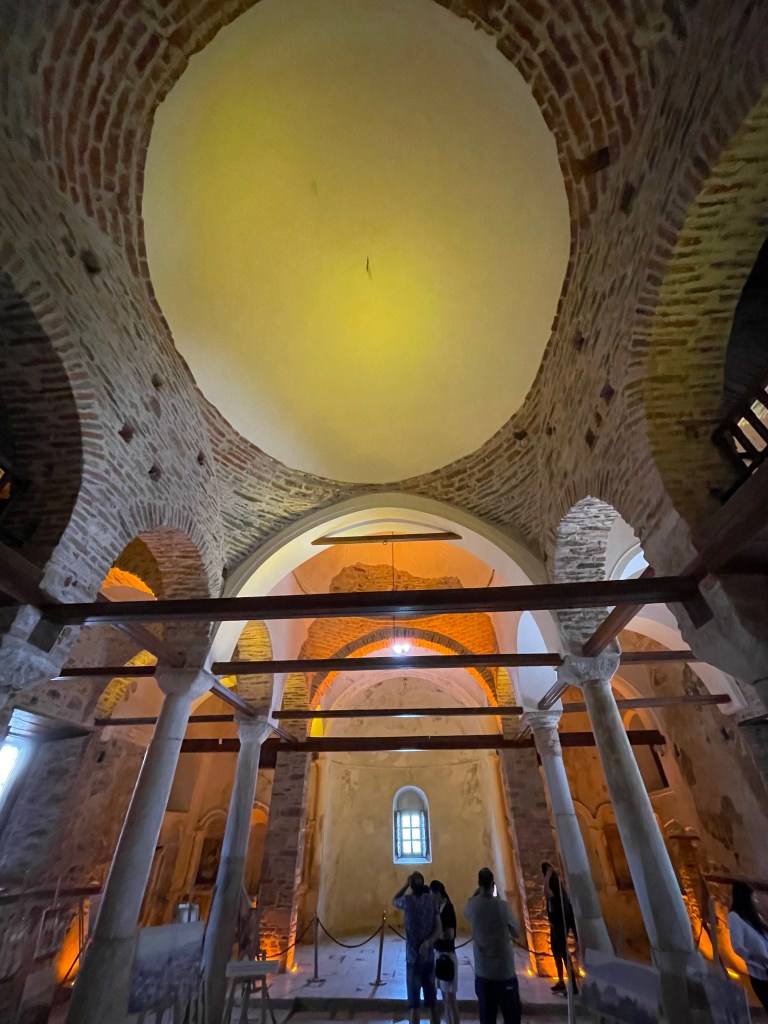
After lunch it’s a hike into the dusty hills, with the olive groves and wildflowers, being enjoyed by butterflies. A treat was dinner on a roof top watching the sun set.
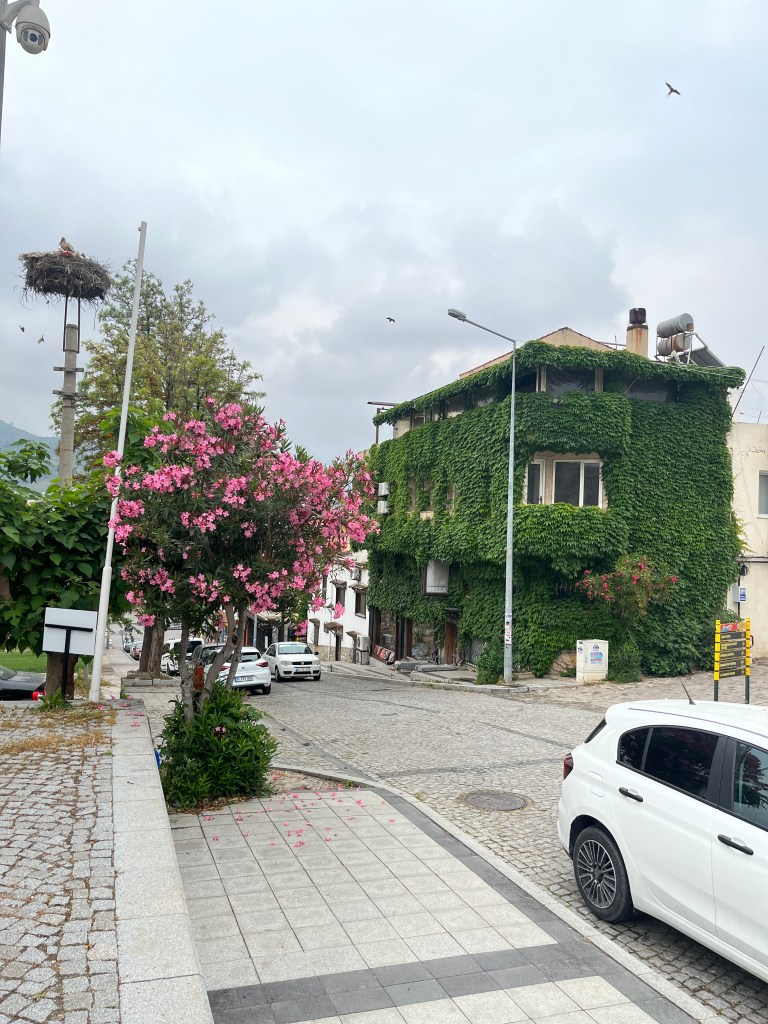
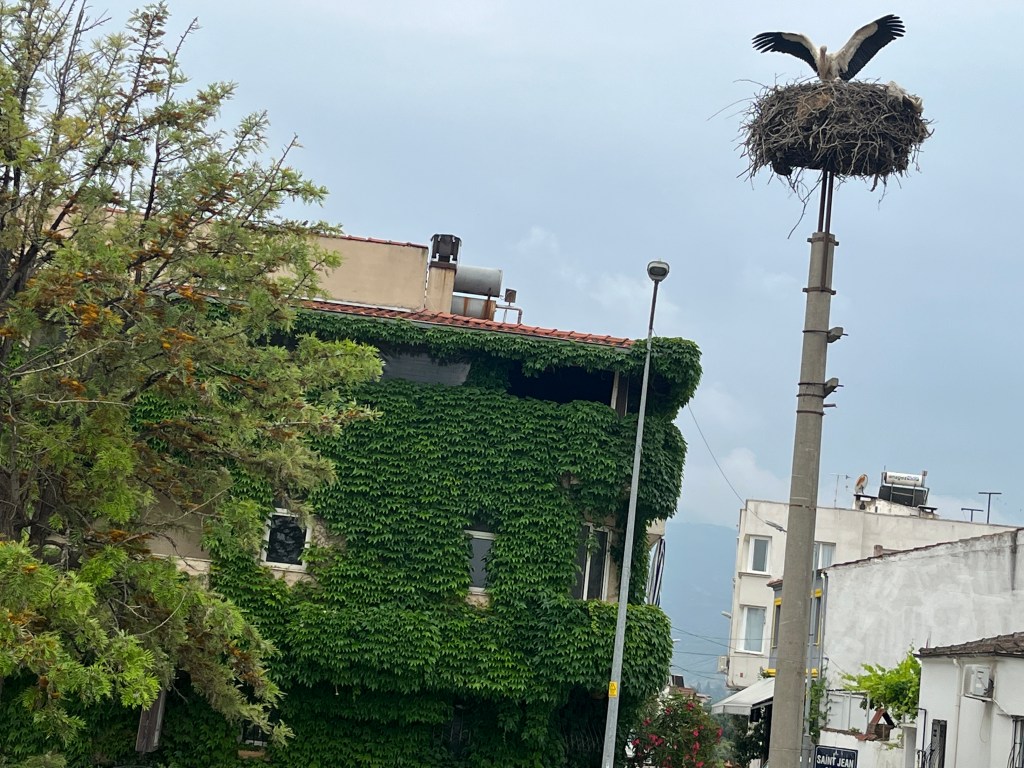
22 May – Leaving Sirince we pass through Selcuk. The street we stop in happens to be beside a fortified castle, with stork nests on the tops of all the power poles down. Small storklets occasionally flapping and peering over the sides under the watchful eyes of mum or dad.
On to Cesme, we catch the San Nikolas ferry through a warm drizzle. Turkey recedes and Chios appears. Our car-hire rep meets us there, a lovely woman named Artemis. Agia Fotini is the beach we stay at, south of Chios town.
Tuesday 23rd – Visit to the Monastery of Nea Moni.
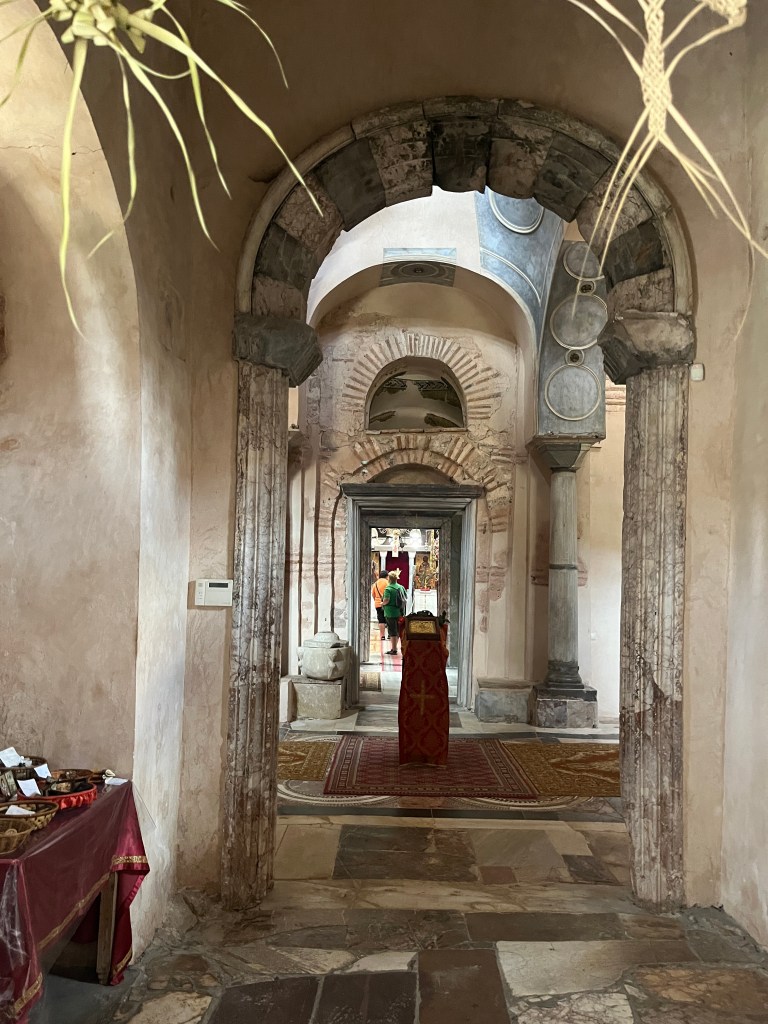
This beautiful UNESCO World Heritage site, is reached after a drive through dry rugged hills, but is surrounded by established planting, and tall cypresses. After wandering around admiring the buildings, church and surroundings we come across a chapel that holds a a cruel history.
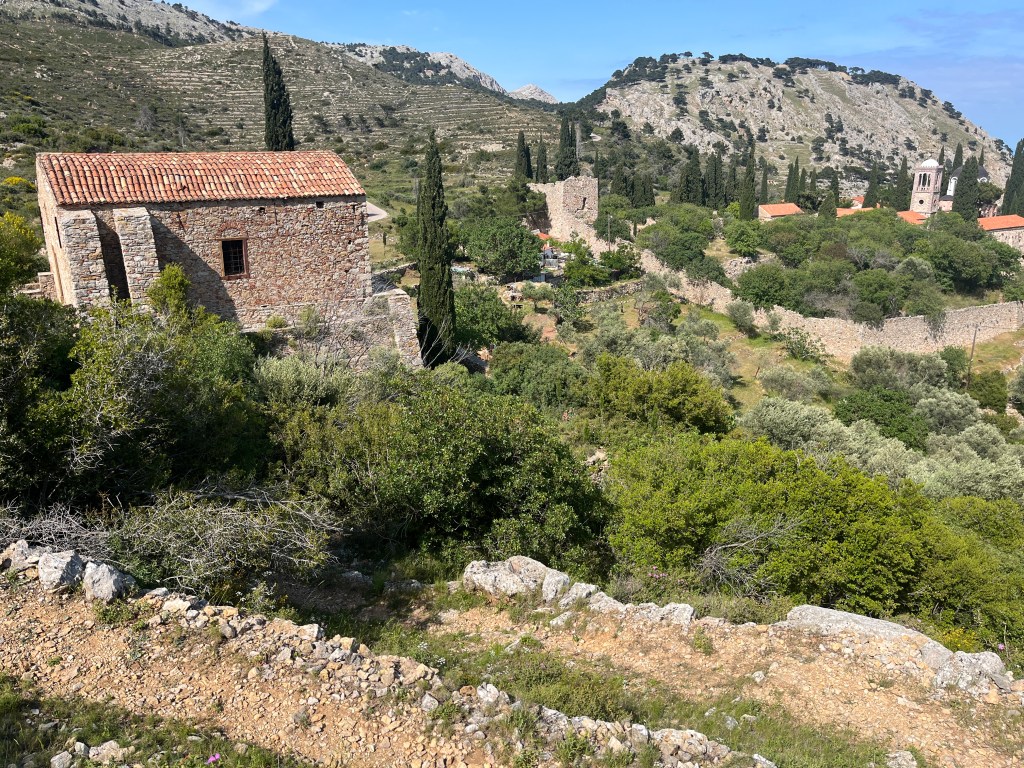
In the early 1800’s Chios was under the rule of the Ottoman Empire. Though very tough times, Chios was afforded more privilege than other occupied islands because of the locals excellent nautical skills and industry and the mastic industry on the south of the island. Later in the 1800’s, with some Genoese persuasion and help, the Chios people took up arms against the Ottomans, who saw this as betrayal, and dealt devastation on the people of Chios. A population of over 100,000 was reduced to around 2,000, with 50,000 slaughtered, 40,000 sentenced to slavery and others escaping. There are 2 small chapels in the monastery filled with carefully stacked skulls and bones of those who perished. A sobering experience of the clash of politics, culture and religion.
Forty minutes further up the ancient path to the Pateres Monastery on the hill is hot work in the sun. With finding the monastery closed, so carry on to the hilltop, we stop for lunch a dilapidated stone enclosure. Energy restored we push on climbing over rugged boulders to the top of the hill, with views to both sides of the island.

On our way back we poke our noses into the underside of some semi deserted buildings, and discover a bat’s hideout, as we look further in, more and more small bats dart out around us. Dinner on the way home at a small family run taverna beside the sea.
Weds 24th. We head off to the more remote northern end of the island via the local archaeological museum to understand more about the islands ancient history. After a long and winding drive, we reach the small sleepy village of Kampia, set amongst trees high above the sea, where we will begin our walk down the Kampia Gorge. The trees grant a welcoming coolness, where we can fully take in the tranquil sound of the stream, waterfalls and pools. Fly-catching flowers aren’t the prettiest to smell, says Ged.
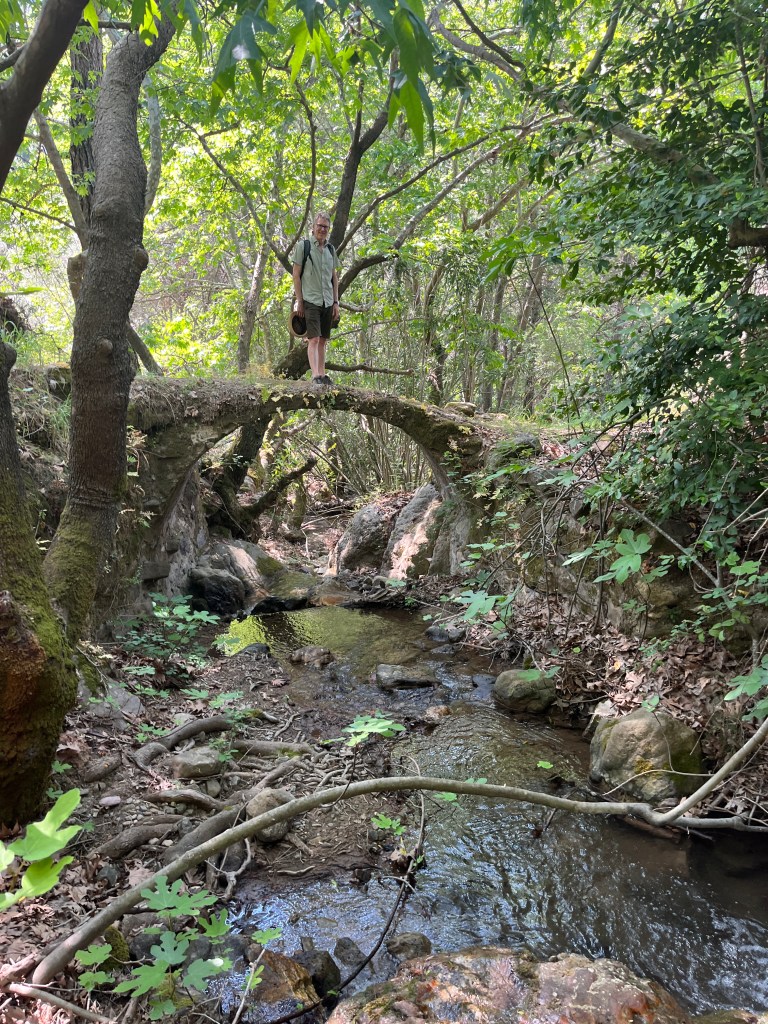
Beside us runs an old broken stone water channel, and once the terrain levels out, there are orange, lemon and olive groves We see no one on the path, reach the beach past 2 beautiful white and blue chapels and have it all to ourselves.

Back at the Kampia village, was another church, probably family-owned.
Such a magical place to cool off. The crystal clear waters surrounded by steep green hills is hard to leave. Dinner on the way home at a beautiful little restaurant right beside the sea, watching fish swim in the water and what a surprise, local stray cats looking up with magnetizing eyes.
25 May. Ged heads off to visit the mastic museum and 2 mastic villages (Mesta and Olimpoi) in the south of the island while Christine does some necessary admin.
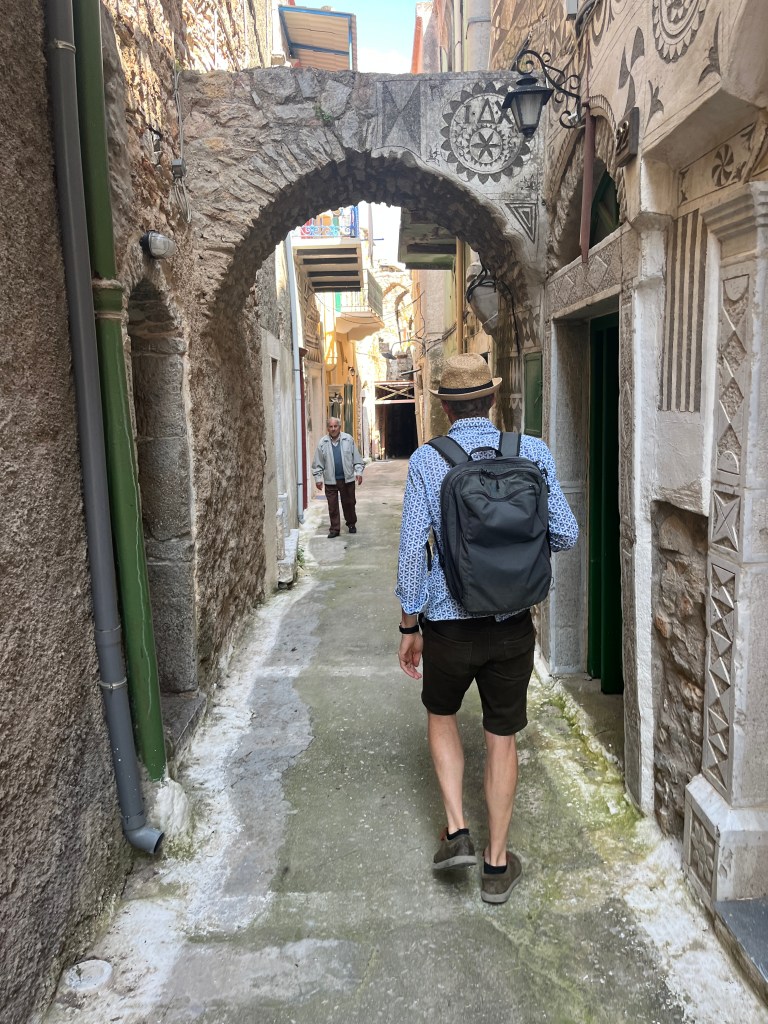
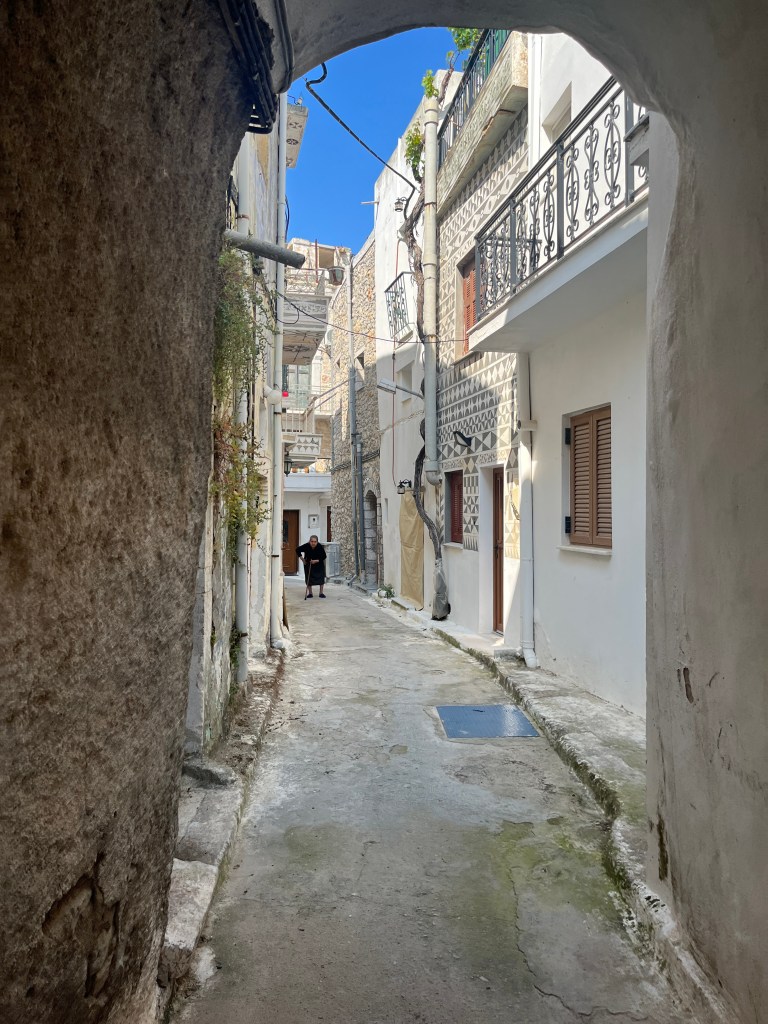
The south of Chios has a unique climate, dry summers with relatively warm winters, which makes it the only place in the world where mastic trees produce a rocky mastic of solidified sap that drops to the ground beneath the trees. This is gathered, cleaned and sent to factories to produce gum for chewing gum. It has a unique flavour and is used in local cooking. The mastic villages in the south were also located away from the coast to create distance from invaders from the sea. They are densely packed with small alleys and a main central square with church, surrounded by walls with towers on 4 corners. We visit the village of Pyrgi together, where building owners express themselves in the use of dark and light shaded plaster patterns.

We have a lovely exchange with an elderly man (below), and later the lady pictured below.
After a mastic flavoured ice-cream in the town square we departed for the black pebble beach nearby, covered in rounded dark pebbles from a volcanic eruption millennia ago. The water was cool and crystal clear and we swam lengths down the beach, warming ourselves up on the dark stones. Getting dressed back at the car and thinking we were alone we stripped off with butt cheeks open to the air, only to realise a young lady was sitting quietly in the car beside us.
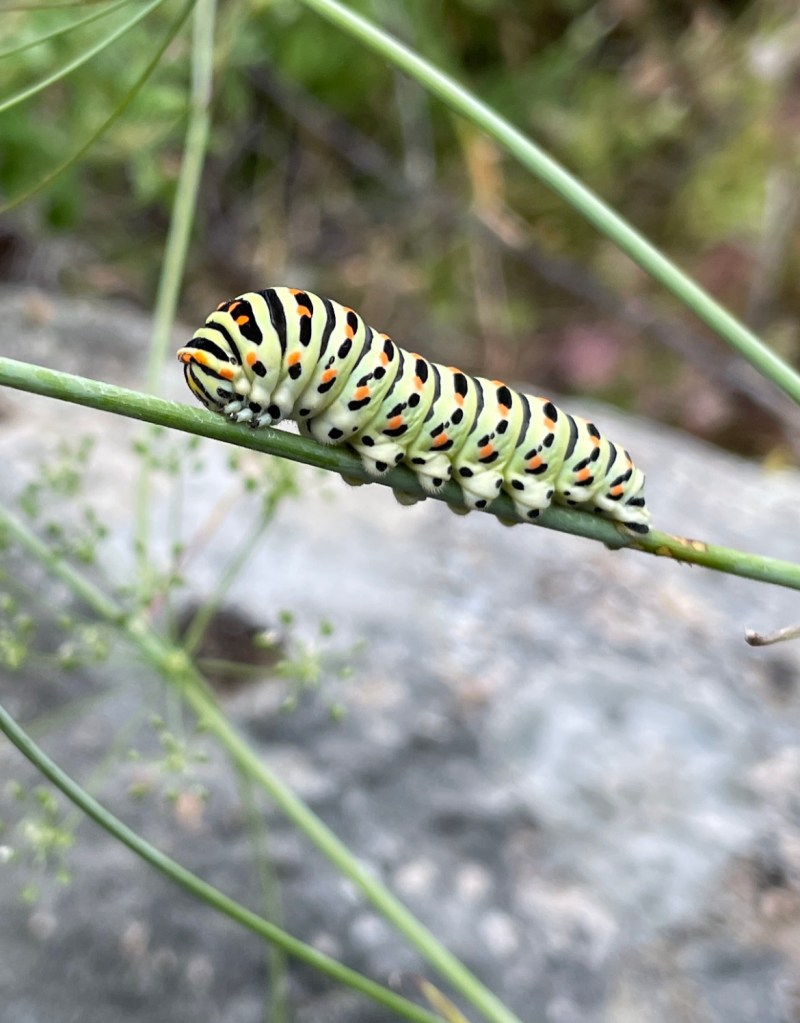
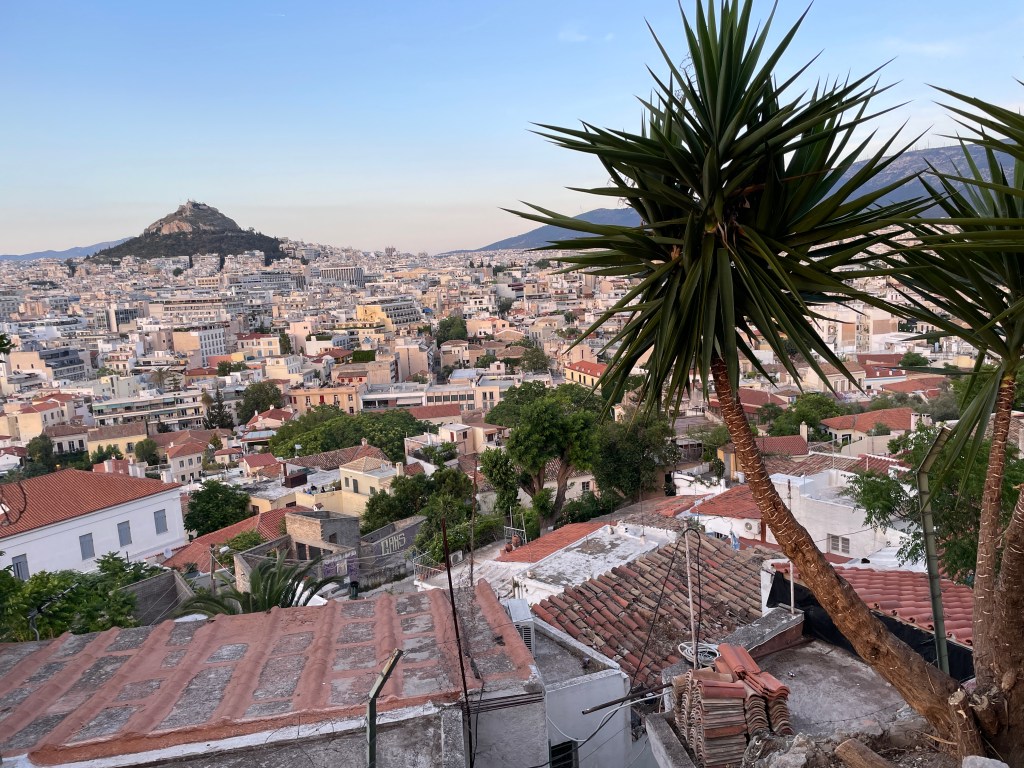
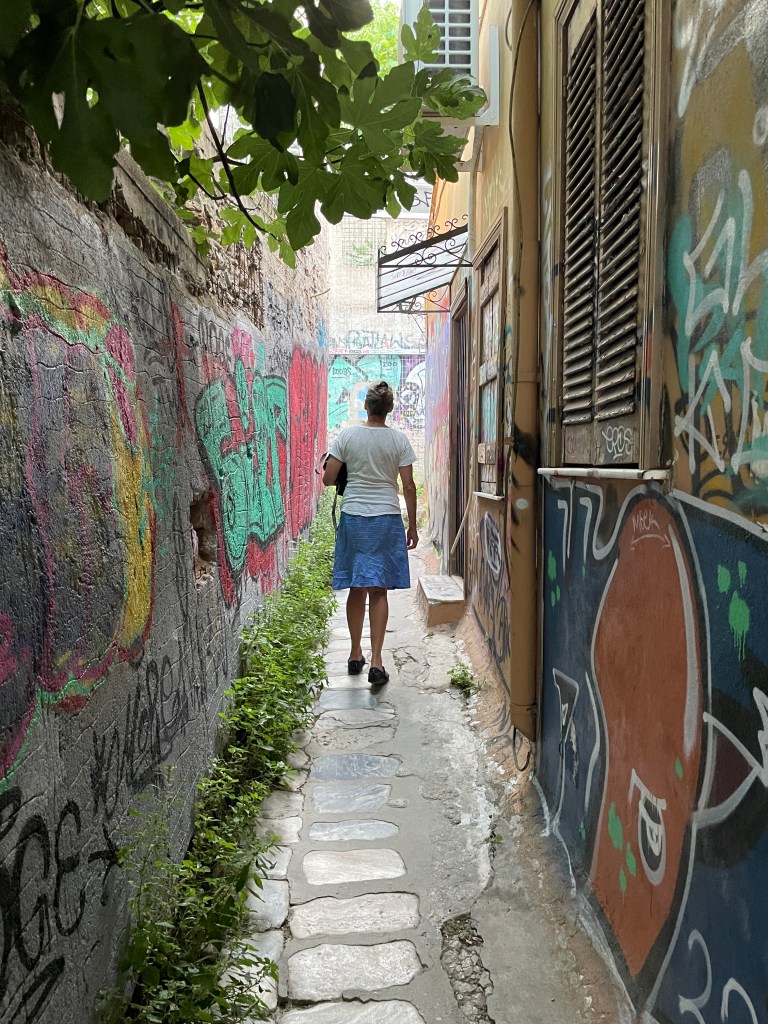
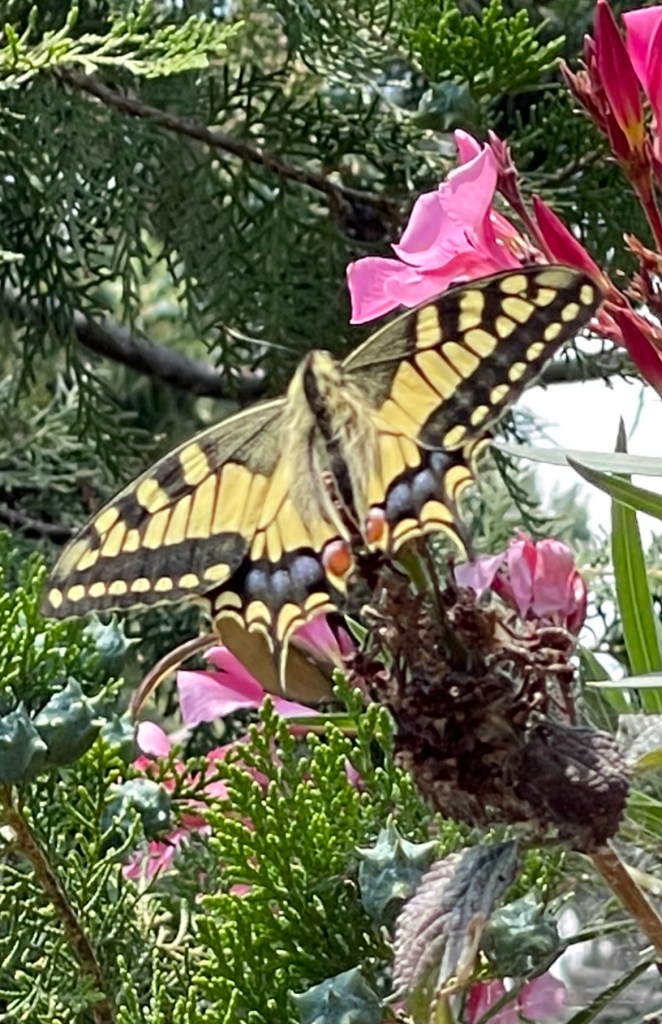
26th May – Back to Athens for one last night. Climbed Lycabettus for views over the city and explored the tiny streets below the Acropolis. And to Ged’s delight, plenty of old-world swallow tail butterflies, progeny of the caterpillar pictured in our Turkey travels.
27th May – On to Dubrovnic. We meet Anu (from Estonia) on the plane. She shares about how her country has become known for it’s ‘Start-up’ companies, including the successful ‘Skype’ (now onsold). Young people face terrible inflation of over 20percent in the last year, and can’t rely on wealthy parents to help them out, so have to be creative, she says. We speak about the current relations with adjacent countries, her eyes wellling up as she speaks about the fine line they walk when it comes to Russia, and the hard battle wrought for independence.
The first thing we notice as we approach Croatia is the green.
We join fifty or so others on a bus to the city. Fortunately it’s just a short walk with bags to our teeny apartment. I never lose appreciation for footpaths when slightly smoother than Portugal. Now we really are in ‘tourist territory’. Unsurprising as the beauty of the old high walled city of Dubrovnic is breath-taking.
The walk around the 1.8km walls is the first allure. Fascinating to be in the towers that once allowed the people to spot Napolean or other invaders from far off. Interesting too, to see the inner buildings from four different vantage points, complete with garden plots and a mosaic of tile rooves. Heat reflected back off these 1meter deep stone walls is energy-sapping so we find a track down to the water and it is bliss to jump into the Croatian waters.

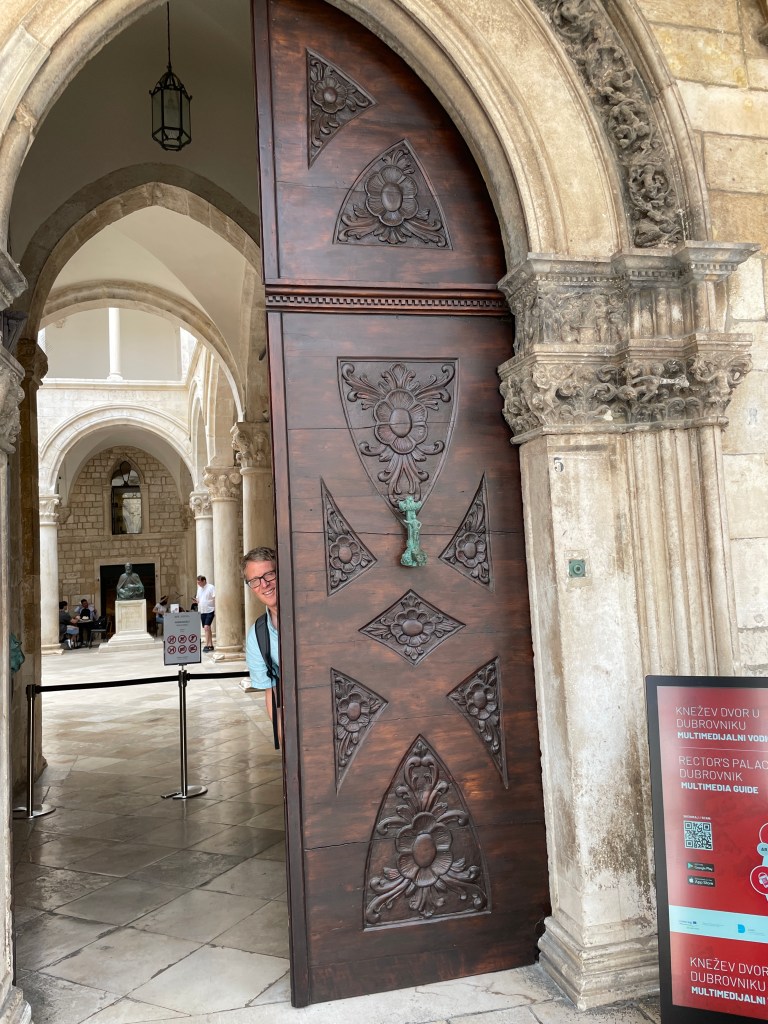
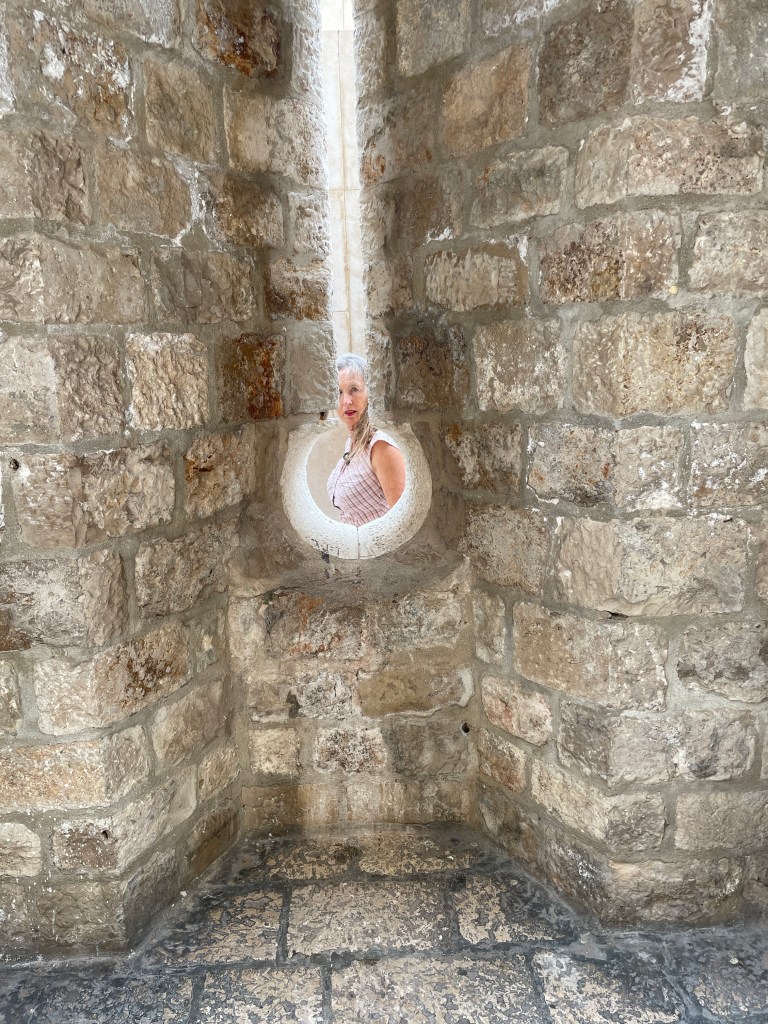
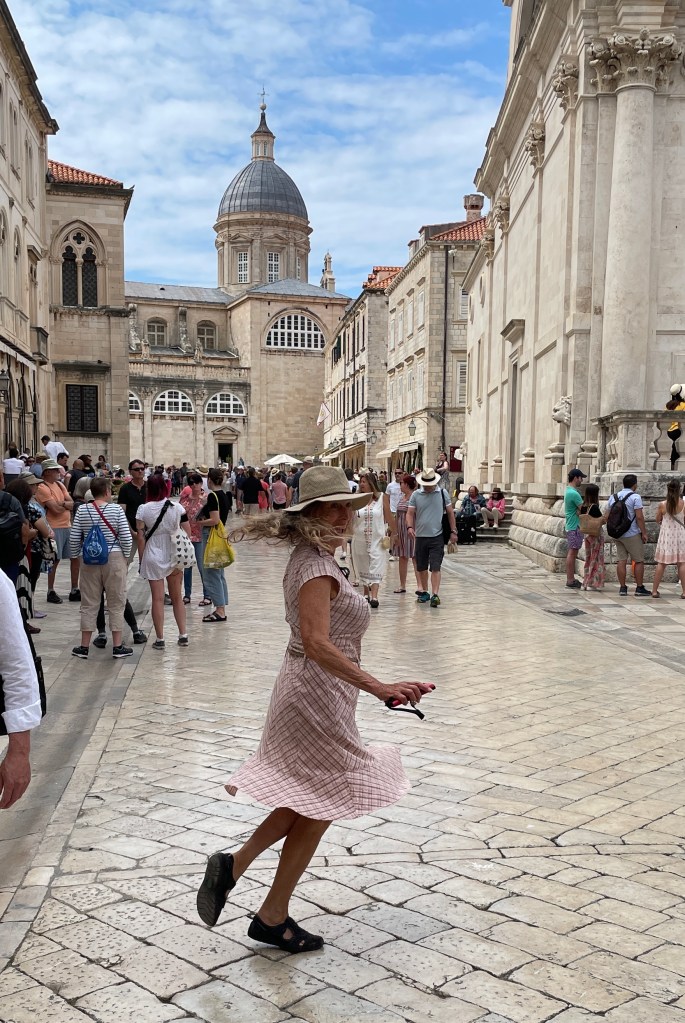
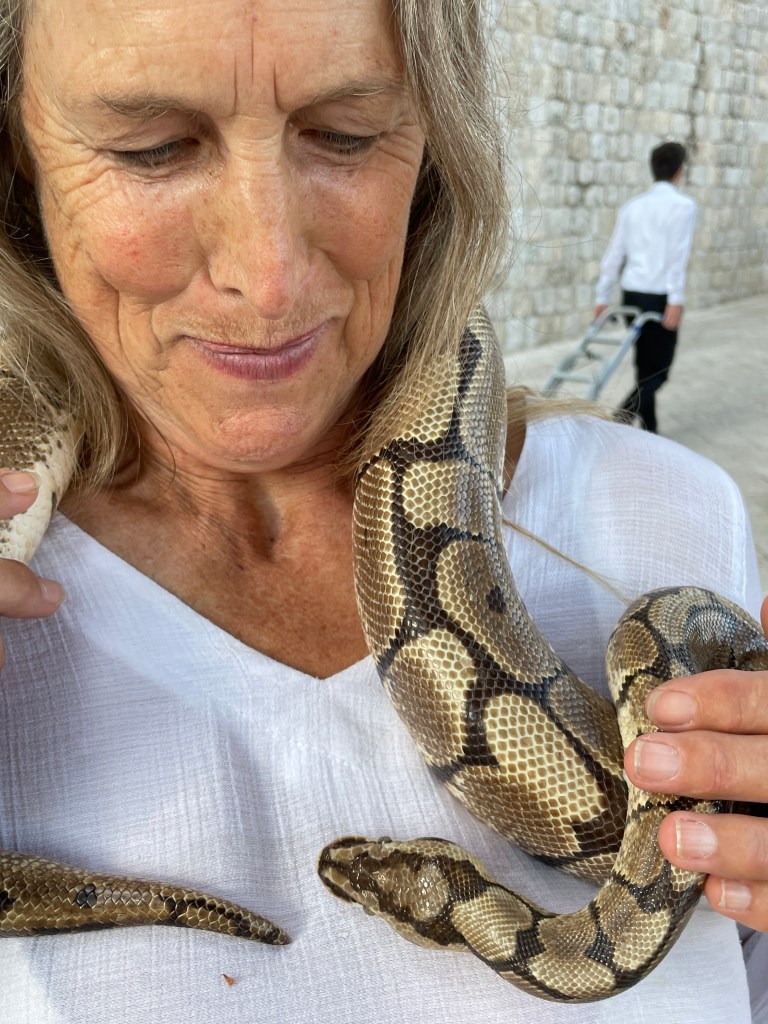
On return, I meet a lovely guy who works at a snake rescue centre…. and his lovely girlfriend (the brown and white one). Being embraced by a reptile is like nothing one can describe. She is deaf, but feels the vibrations, and it was nice to think she’s been given a second chance from being sold by a greedy breeder. All was going well until she started making her way up to my neck :0
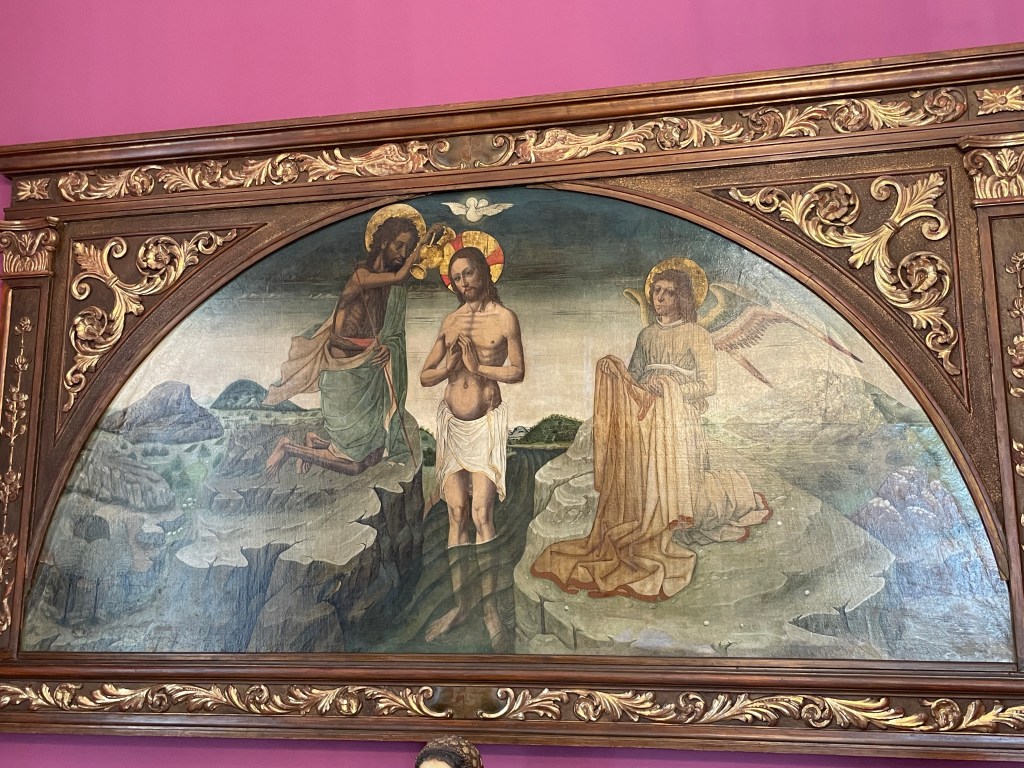
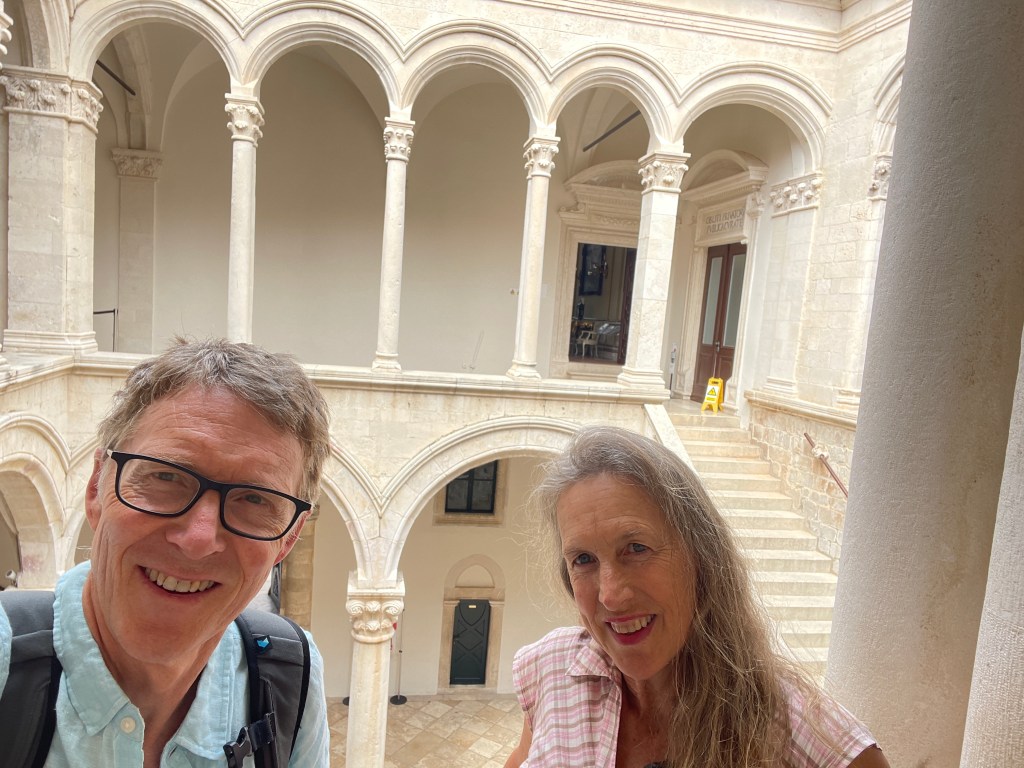
28 May – Through Dobrovnik’s streets again, with densely packed buildings, tight alleys and open squares filled with history and tourists. Dioclesian’s palace has some wonderful art (below) and encircles an elegant light-filled courtyard. The imagination conjures up what life may have been like in the middle ages, particularly for the wealthy that is.
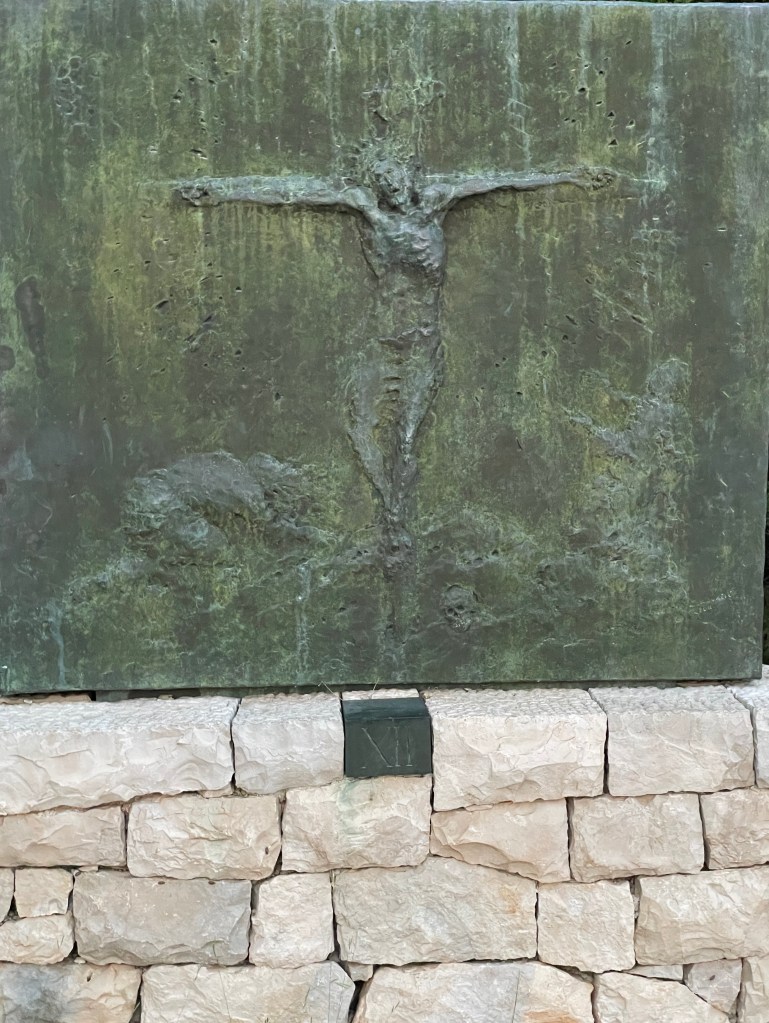
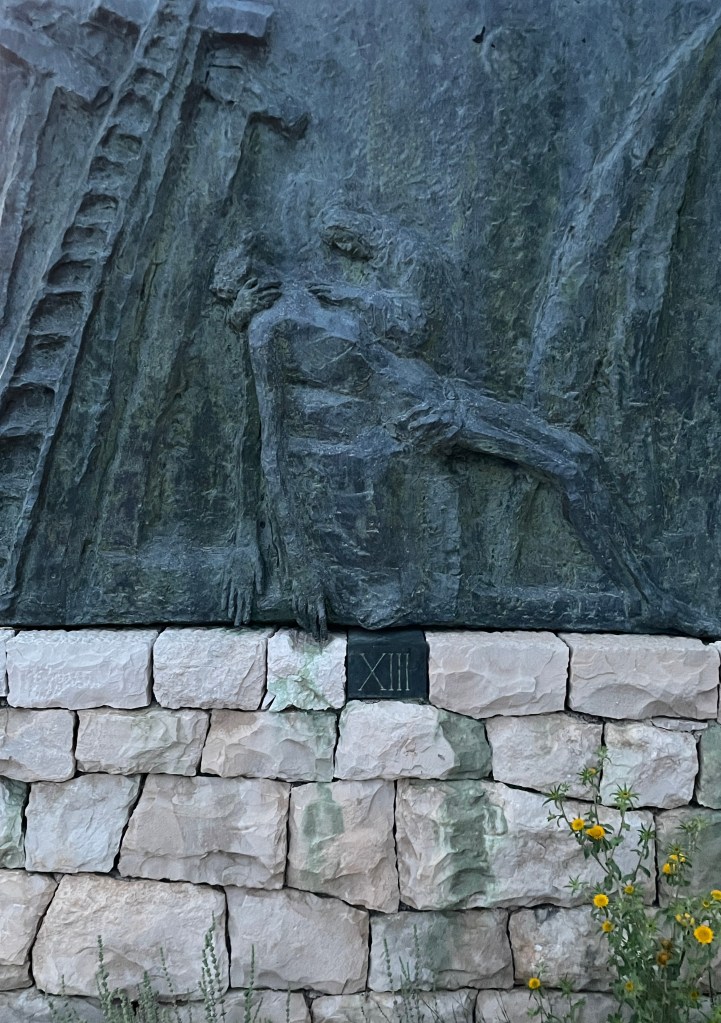
One also imagines the hot toil and danger the stone-masons and servants would have been under. The heat, for us, can be mitigated way too easily with an ice cream and a swim. At dusk we take a strenuous walk to the top of Mount Srd, the imposing hill overlooking Dubrovnik (sometimes envying those on the gondola). We pass the 14 stations of the cross, each on one bend of the path’s switchbacks. These are large textured images cast in bronze, now weathered, and are very moving. At the top, the views are breathtaking, as the evening darkens. Hot and tired we look at options for getting down (without using the gondola) and hitch a ride with 3 young people sharing an Uber. Driver happy with 4 squeezed in the back.
29 May – We collect a hire car and drive north to Orebic, catching a double ended ferry for a short trip out to the island of Korcula. Ivan, the guest house owner greets us just outside the old town of Korcula (described by some as little Dubrovnik). He tells us that we have arrived on the eave of Croatian Independence Day. We join locals to take the most of this opportunity.
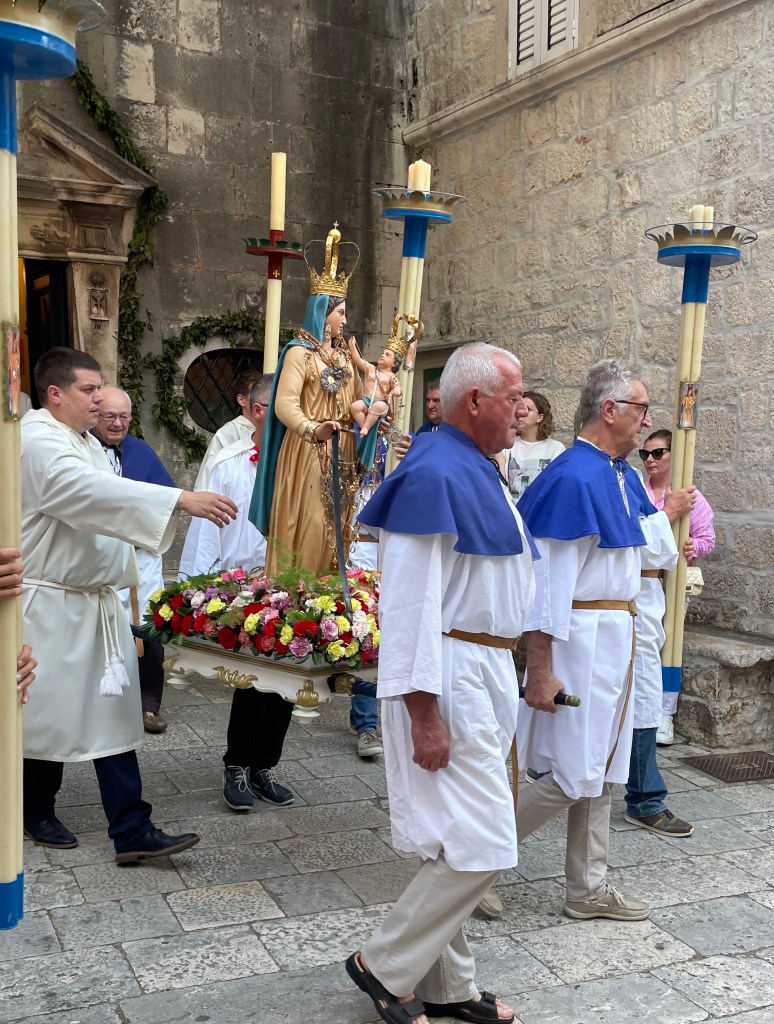
Firstly there is a church service, celebration of the 3 brothers, where nuns and church leaders wearing beautiful robes, carrying long staffs walk around the circumference of the old town followed by a long trail of supporters.
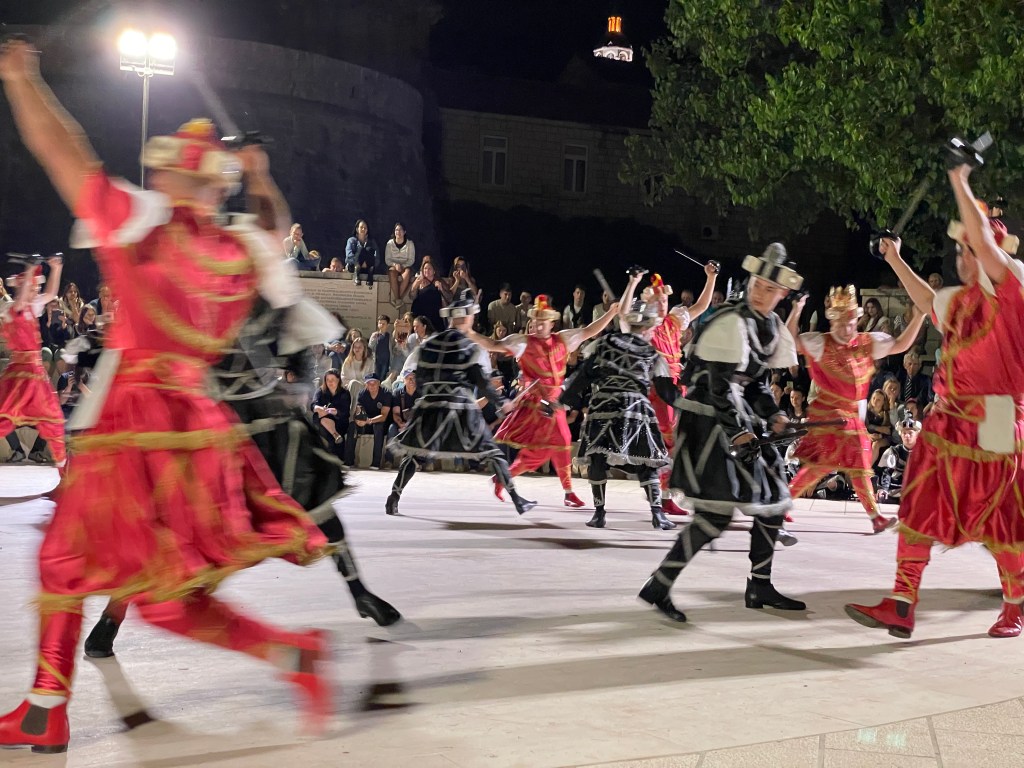
Then as the sun sets, nearby in a small square , local musicians begin to play, firstly female A cappella, then a traditional Croatian group, then a full orchestra, all very harmonious and moving. At a break in the music a black-costumed man and a young robed woman enter stage, clearly in a robust argument. More men in black step onto stage, offering challenge to him. Then an army of red dressed soldiers arrive. The focus turns to a dance between blacks and reds using the metal swords in unison in a vigorous stylized battle. It looks both dangerous and strenuous, but of course the red guys win, and save the princess from marrying the black king. An experience like nothing we’ve had.
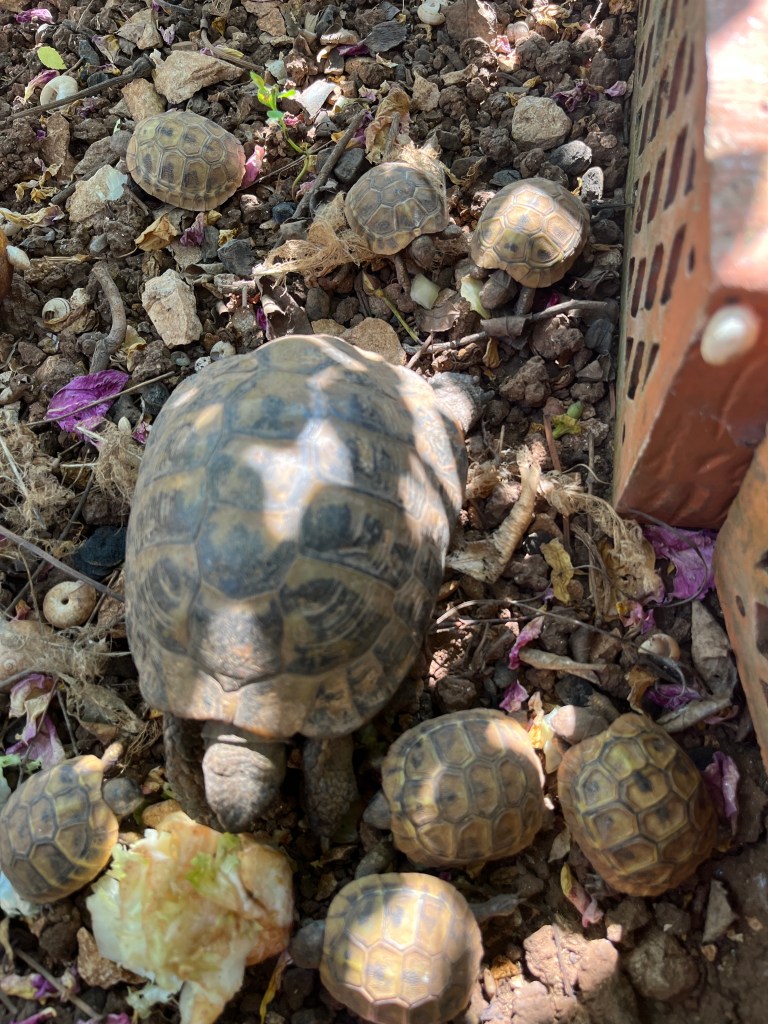
Just down the steps from the guesthouse I found three tortoises, but soon noticed 11 other offspring (each 4-5cm long). Feeding lettuce to these wee darlings was a big highlight for me. Is it because we don’t find these on the path in NZ or is the cute way they pop their heads in and out, and like a scratch on the neck? Whatever it is, they make me smile.
.
30 May – We walk into a nature reserve near the hamlet of Brno, enroute to a beach spot. The heat is wearying so we welcome the shade of the forest. The secluded bay is down a long, winding, one car wide road. Very few cars are on this remote area but sadly a large snake has fallen victim to one.
We get our chance to snorkelling at a long thin bay (Plaza Razo Hatica), mostly beautiful but for the corner where large mounds of plastic have been funneled in from the Adriatic. Beyond this point the bay has turquoise water and small local stone houses stepping down to boat piers.

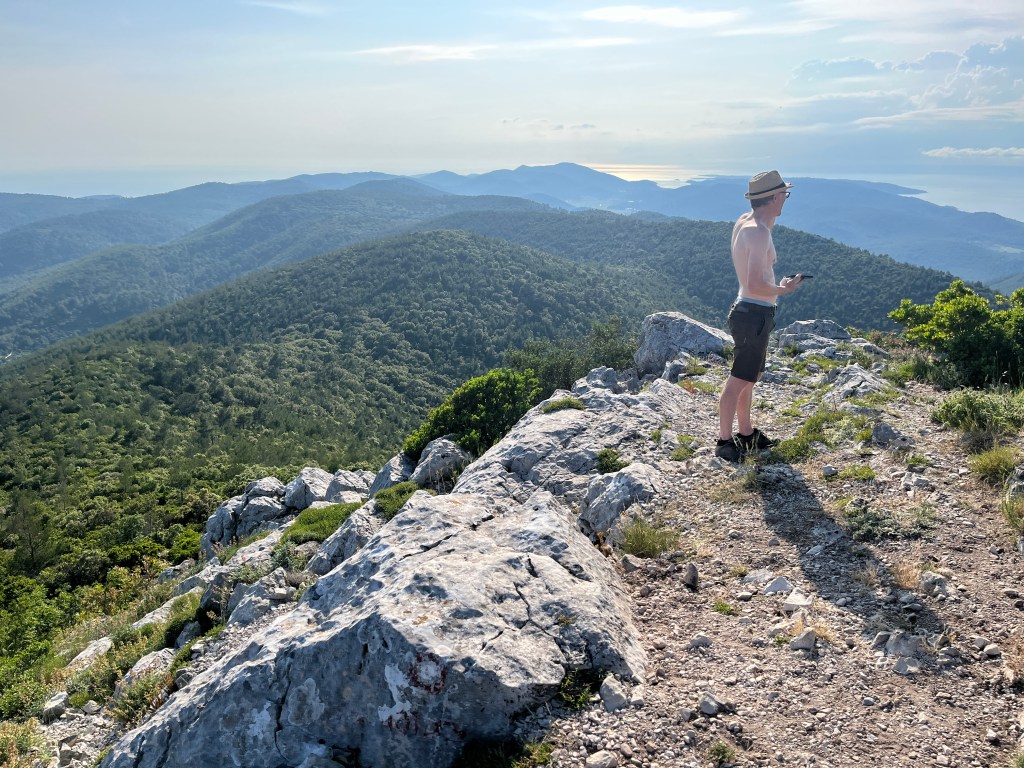
From here we decide to drive halfway down the island and climb mount Kom, the highest point of the island. It’s all up to the top through local forest. Once at the top the view is spectacular. Stunning view of the whole of Korcula. Minimalist clothing is the order the order of the day though, to cope with the heat.

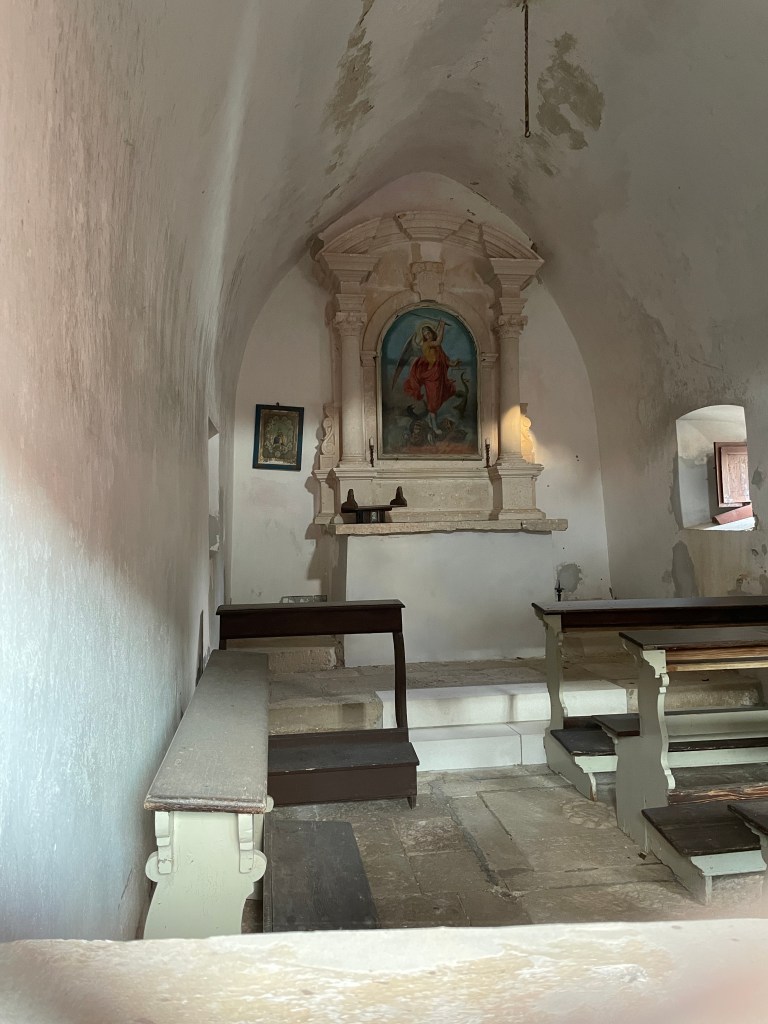
Church near Kom.
31 May – Ferry back to the mainland and we drive to Biokovo nature park way up high in the coastal mountains. We face an 18km drive up single lane switchbacks with steep drops and narrow passing spots. It is hard to describe how amazing this scenery is. The park is huge and is home to packs of wolves, bears, lynx, rare eagles, snakes etc, none of which we saw. On to Split, a beautiful port city packed with tourists and history.
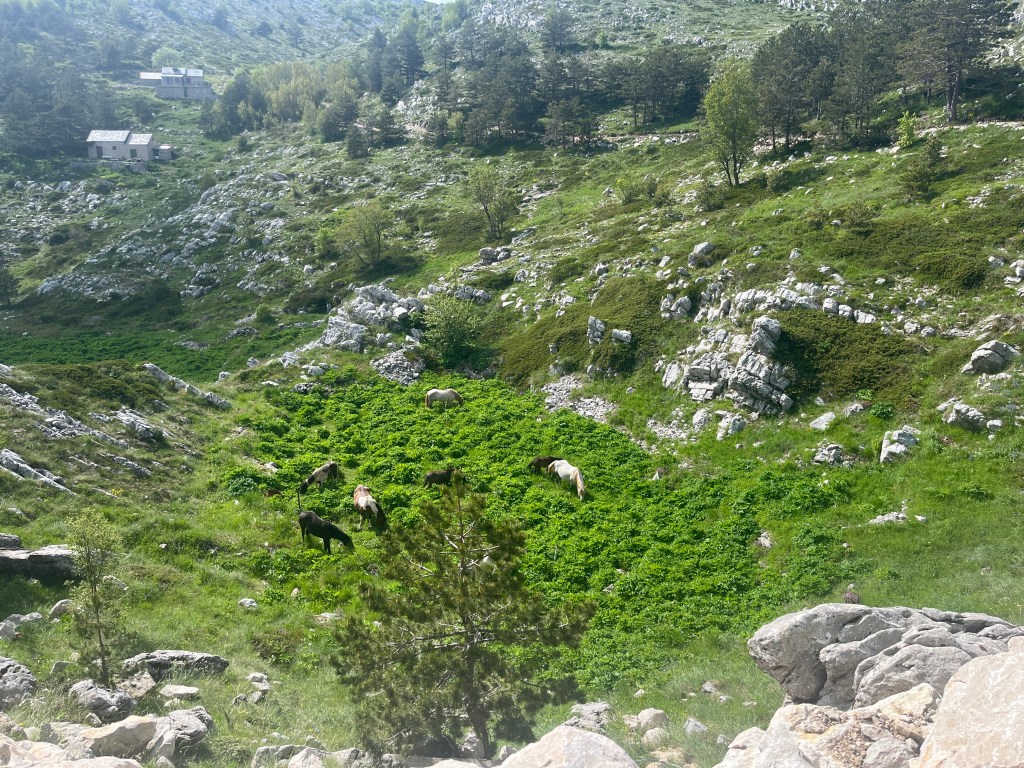
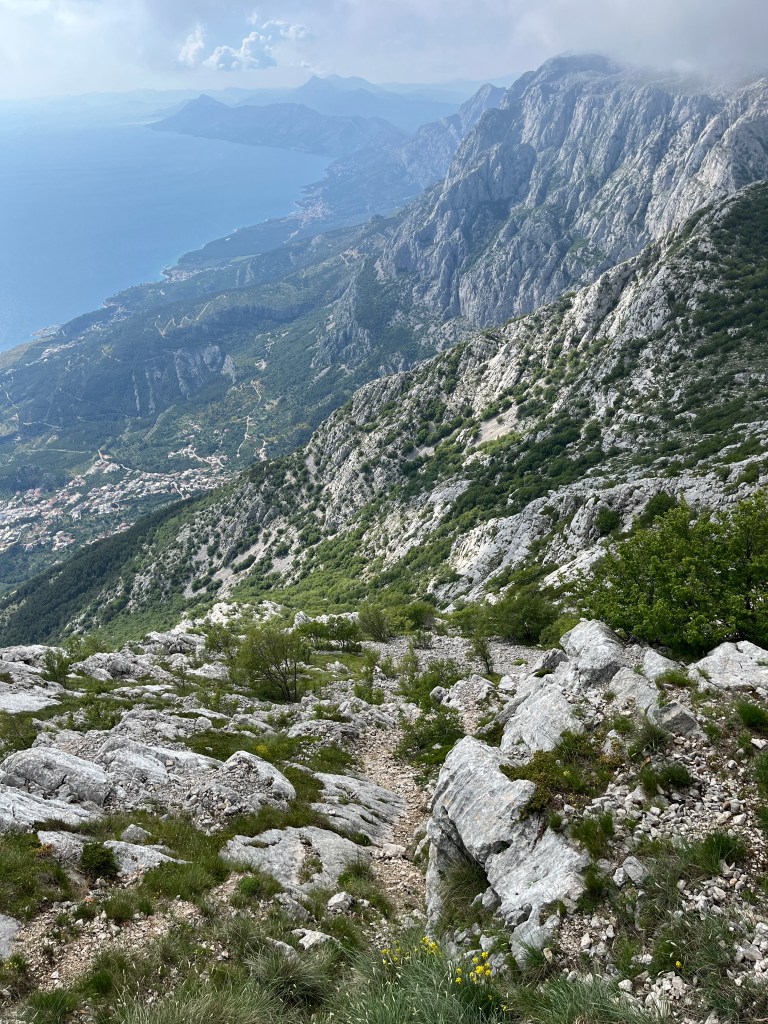
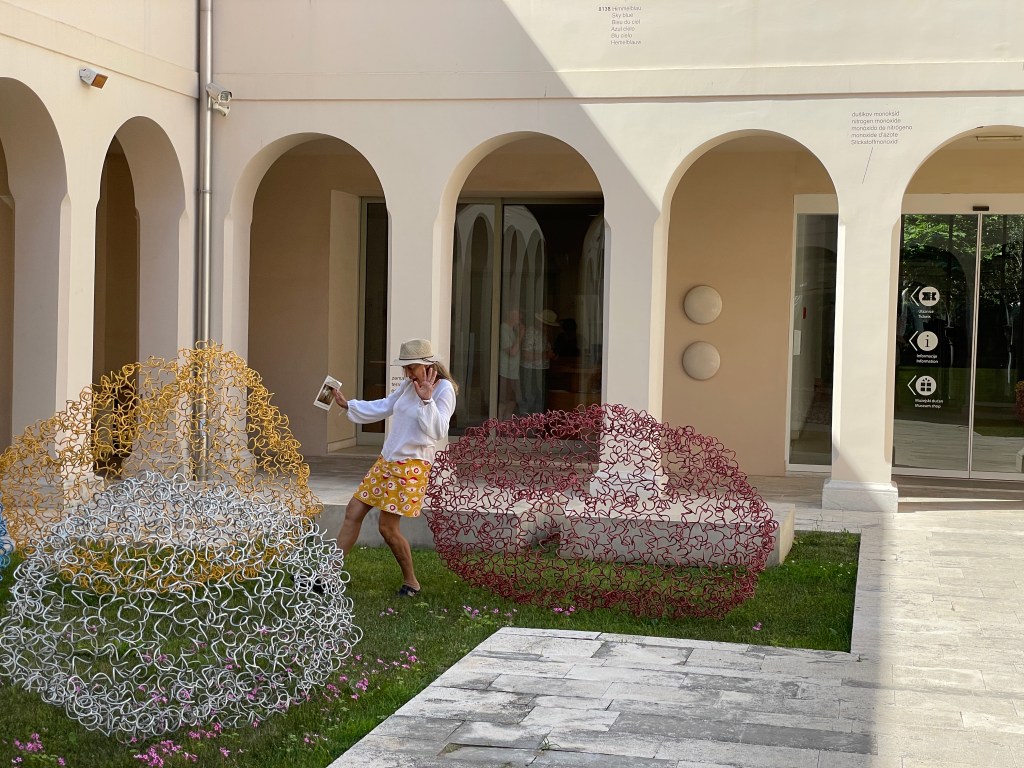
1 June – Split – Ged spends the morning walking up Marjan Hill, on a huge green peninsula beside the city, a small chapel, a zoo, a playground and more remote paths filled with flowers, butterflies and birdsong. Views from the hill out to Hvar and Brac Islands and back to the city. Together in the afternoon we walk through the old areas of Split, summer sun beating down. So many small alleys to explore, packed with shop’s, restaurants and tourists. A bit of a change for us. There is clearly Venetian influence in some buildings. The contemporary art museum has some great pieces.
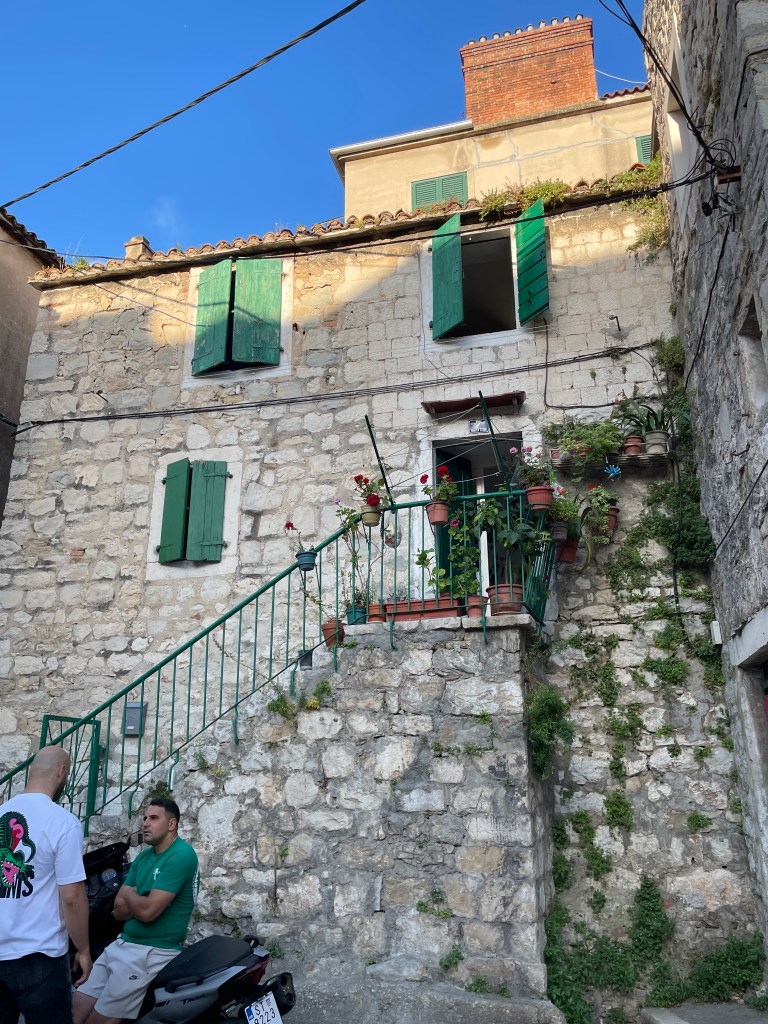
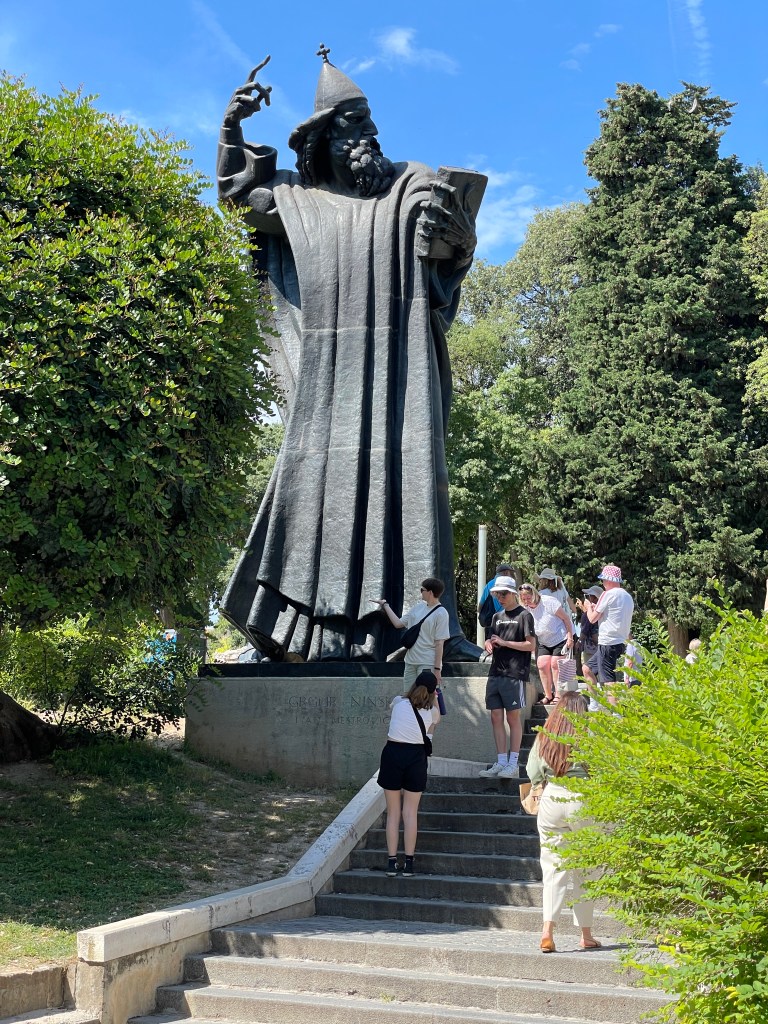
Statue below is of Bishop Gregory of Sin who strongly opposed the pope and official circles and introduced the Croatan language in 926 as until then services were only in Latin which many didn’t understand. Erected in 1929, erected in September 1929 in the palace, in 1941, it was moved outside the city by Italian occupying forces. In 1954, it was re-erected in a different location, to the north.
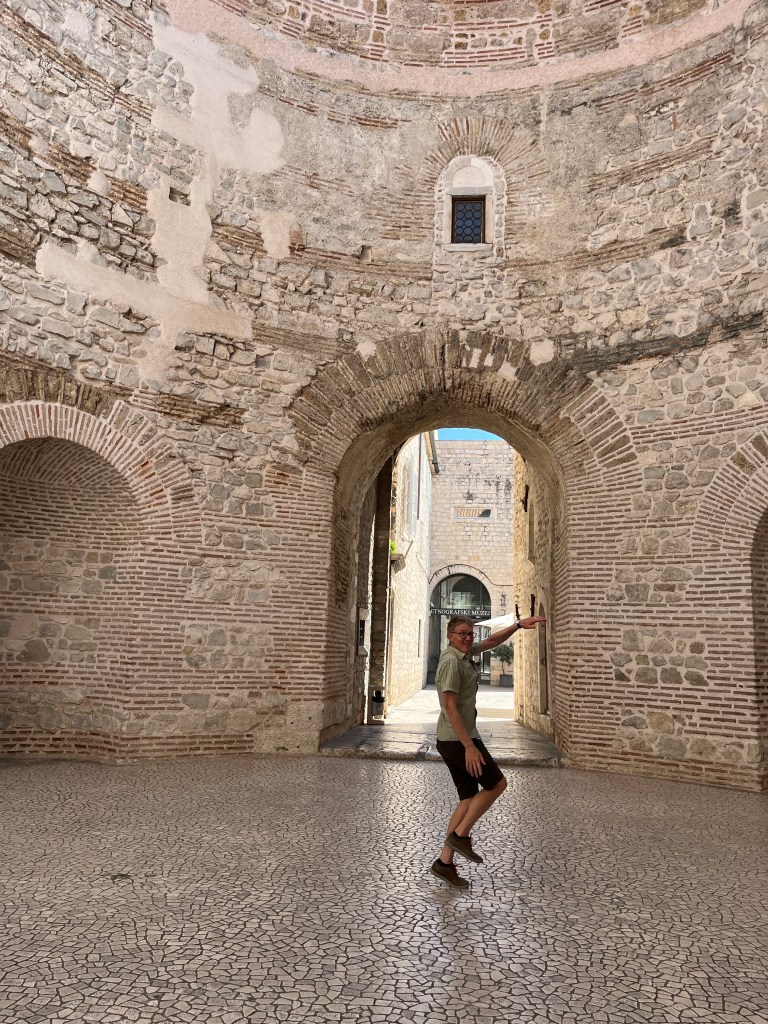
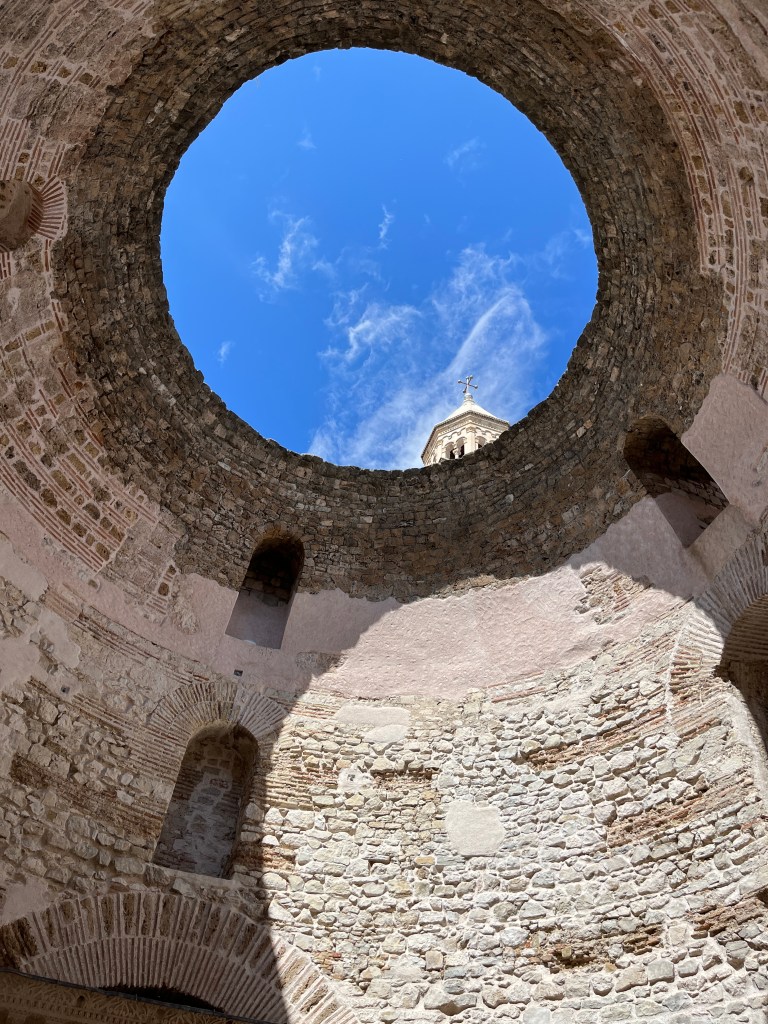
Just inside the old town gate, a stunning Circular courtyard, with views to the sky. It was begging for a performance, and it got one.
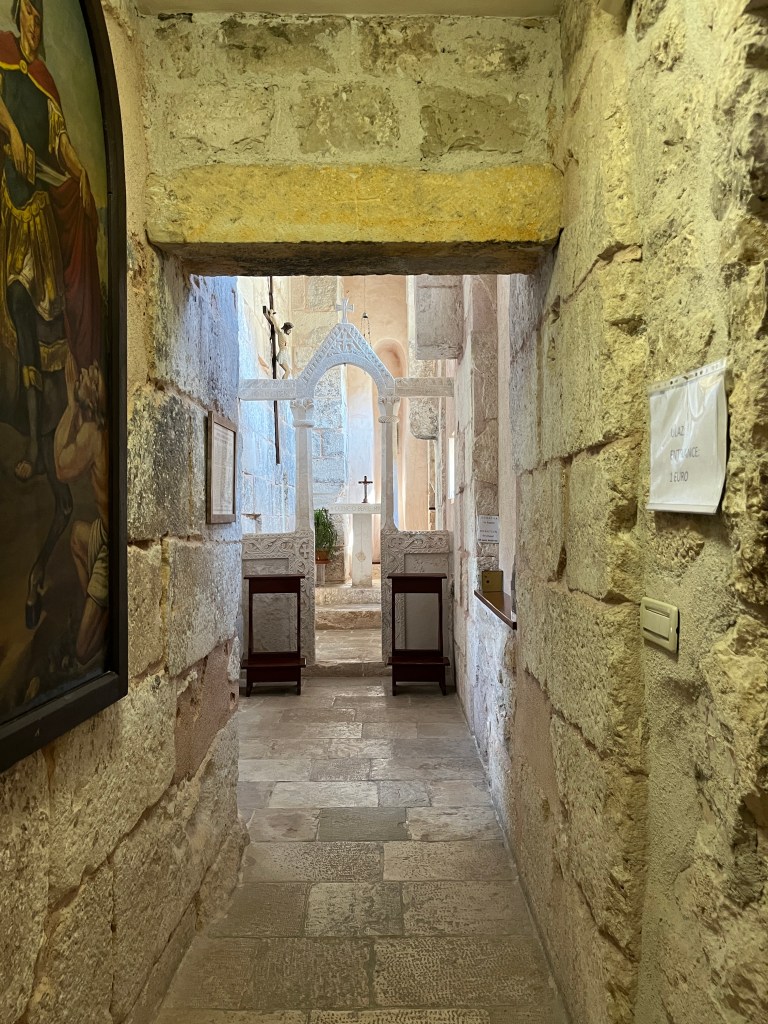
A small special moment finding the oldest and first church in Split. Church of St Martin is it, up some barely-sign posted stairs within the wall over the Golden Gate. The Church today is a replica of an early Christian Church from the 6th century, with a pre-Romanesque altar partition from the 11th century. This smallest church in Split is only 1.64m wide and 10m long, and is considered the most preserved sacral monument of Antiquity. Its location was originally used as a passageway for the guards.
8th June – After some wonderful warm days and swims with Ged on the island of Vis, we had a day in Zagreb before a farewell … tough saying ‘bye’ when we know it’ll be another month again apart. Forgetting it was a public holiday in Zagreb, I found out the hard way how tough it was getting some documents printed and buying a bus fare to the airport. Got there in the end…. and off to Malawi via Addis Ababa.
10th June – Green hills and valleys, then green/ brown patchwork plains greet my eyes as I fly into Llongwe. A change from the Spanish, Greek and Turkish brown.
Long wait at airport Visa office … is that other people’s passports I see being slipped to the attendant ?… that may be part of the long wait . Outside I recieve a very warm welcome from Mercy, of Llongwe Wildlife Centre (LWC), and we chat as we drive to the LWC to drop my suitcase. There I meet some of the staff … Gideon, Edith and Gabrielle (locals) and a couple of volunteers. We take the 10km drive on Malawi’s main road (45 minute on a red dirt) with Construction all the way which has been going on for over 2 years. The workers digging with pick axes in the mid-day sun.
A good time to chat with Mercy who moved her from Esautini a few years back. I hear how the president who they’d hoped may bring greater justice has turned out to be as bad as any, corrupt use of funds etc.
Back in the dictator days of Hastings Kamuzu Banda’s (1964-94) things were tough in a different way (anyone who challenged things risked dissapearing, being jailed without trial, or perhaps becoming crocodile feed). However the education system and to some extent, womens rights, were improved. The roads and buildings were constructed efficiently and well. I got shown to the money-changers, whose rate was pretty poor, so was then taken to meet someone in the parking lot, naive me thinking it was another legitimate money-changer. Arrived at LWC on Saturday, walking 15mins to the dorms past the monkeys, baboons, little antelope ( Daika), and Spotty the spotted eagle owl.
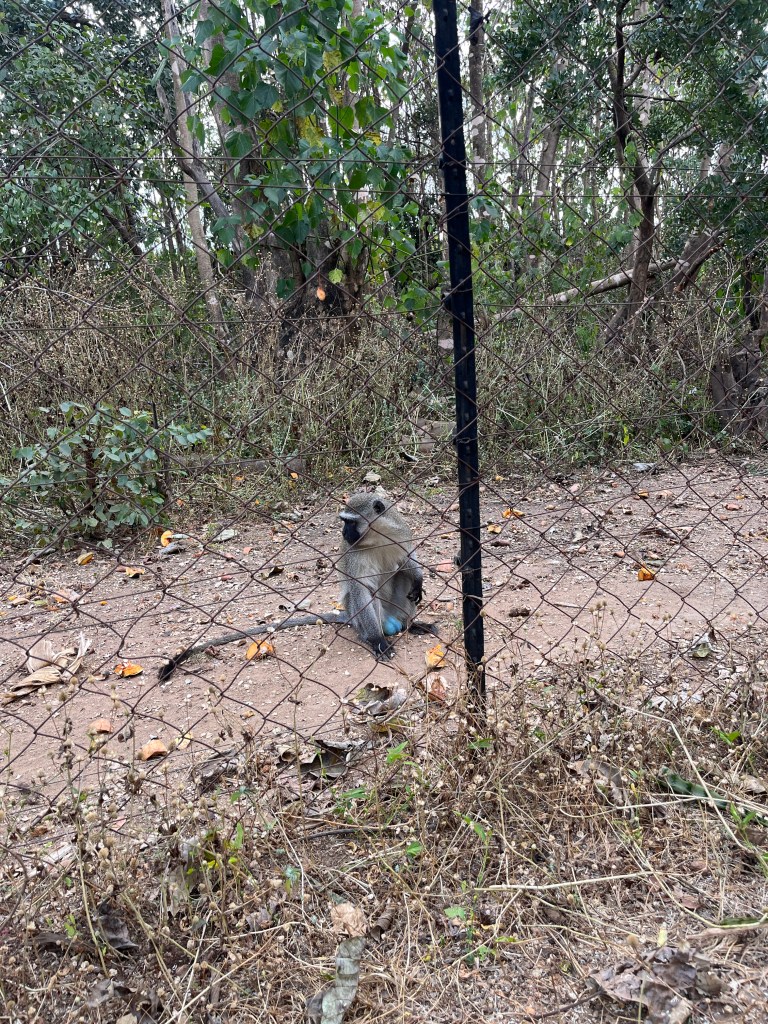
I then met the other volunteers : Jasmine, Emily, Anna and Jenanny (all from the UK), Caroline (California) and Karin (Canada). I was warned about walking after dark because of hyenas or bush pigs. In the evening, it was fun relaxing and wactching ‘What we do in the shadows’ with the other volunteers.
Sunday 11th June – 6.30am the day begins with a bird-watching event open to the public. Walked oner of the tracks beside the river (Look closely at the notice on the tree )
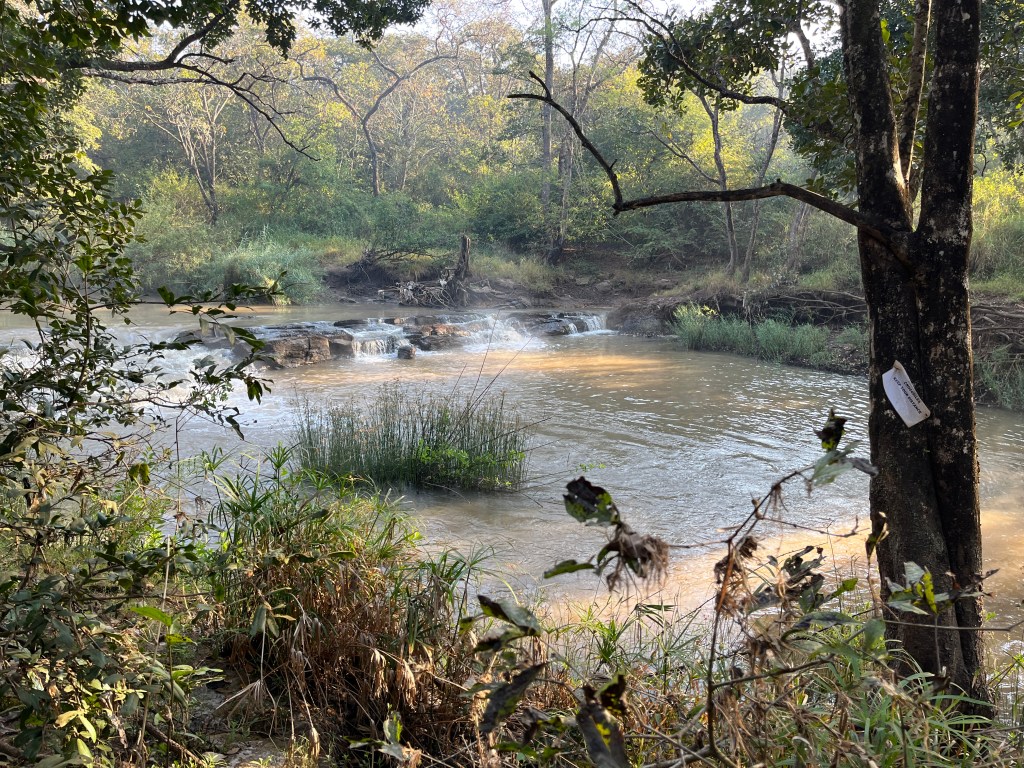
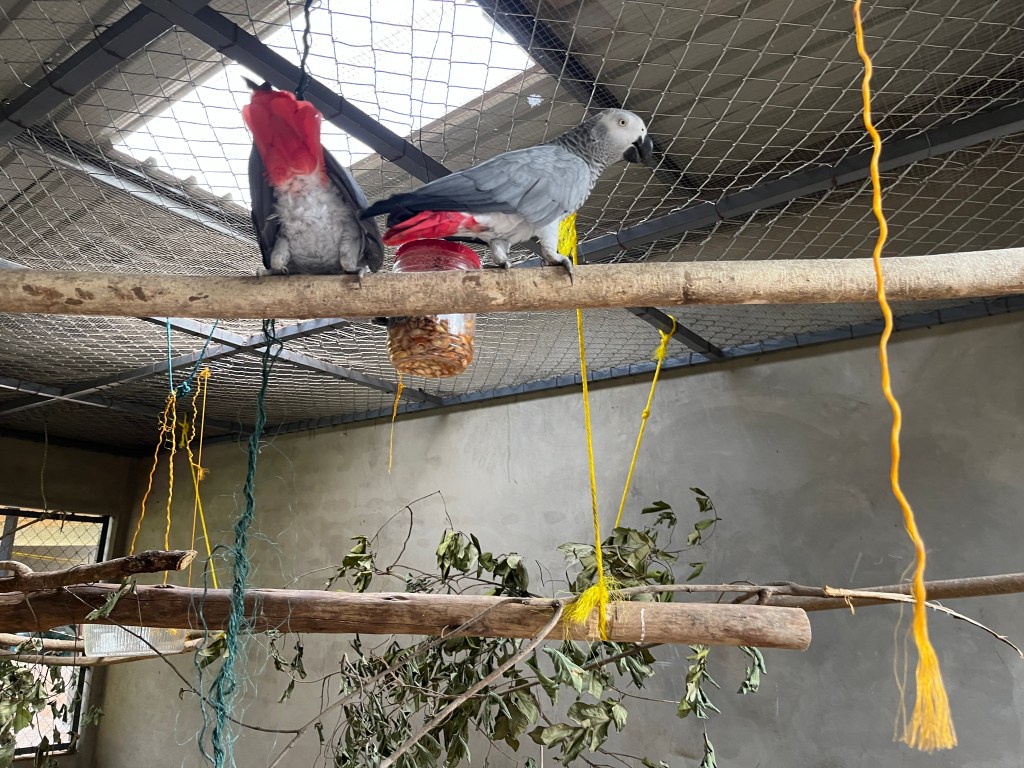
Saw the beautiful yellow Ollie, and the turaco amongst others . A few of us recieved a presentation on ‘enrichment’, sensory stimulation and environments provided to the animals similar to what they may experience in the wild. Today we presented pumpkin seeds to the African grey parrots in a jar which required manipulating in order to access the seeds. It was great seeing the two parrots collaborating to achieve the task. Other enrichment includes creating dens, perches, platforms or green havens for the animals to use in the way that’s natural to their species.
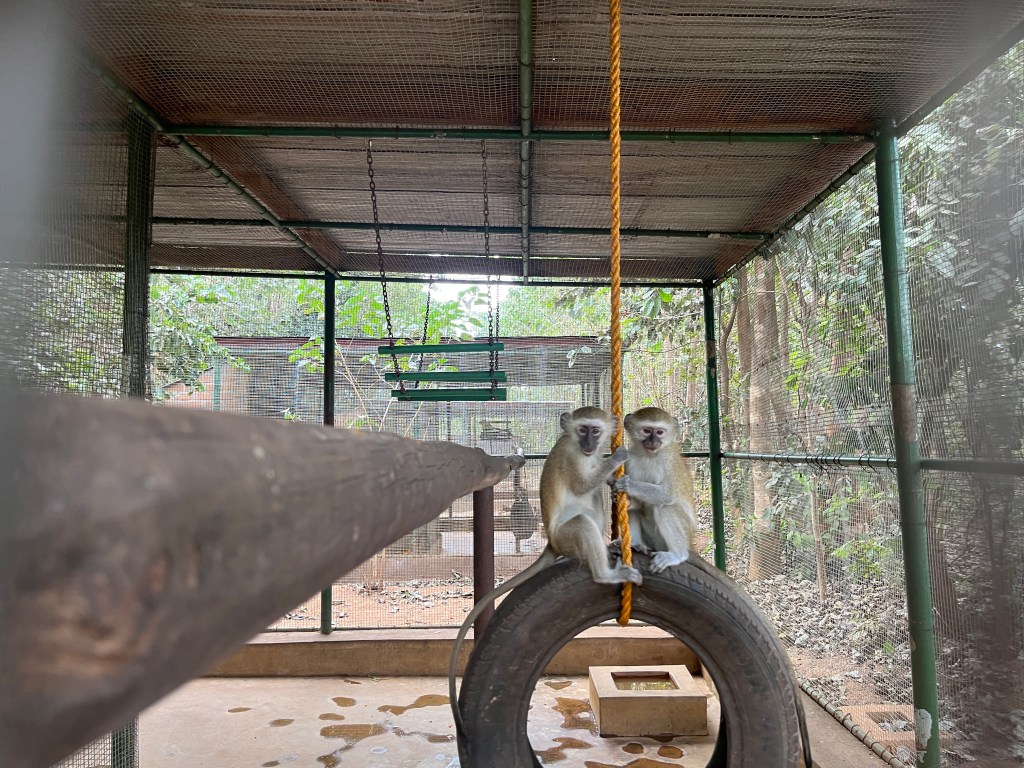
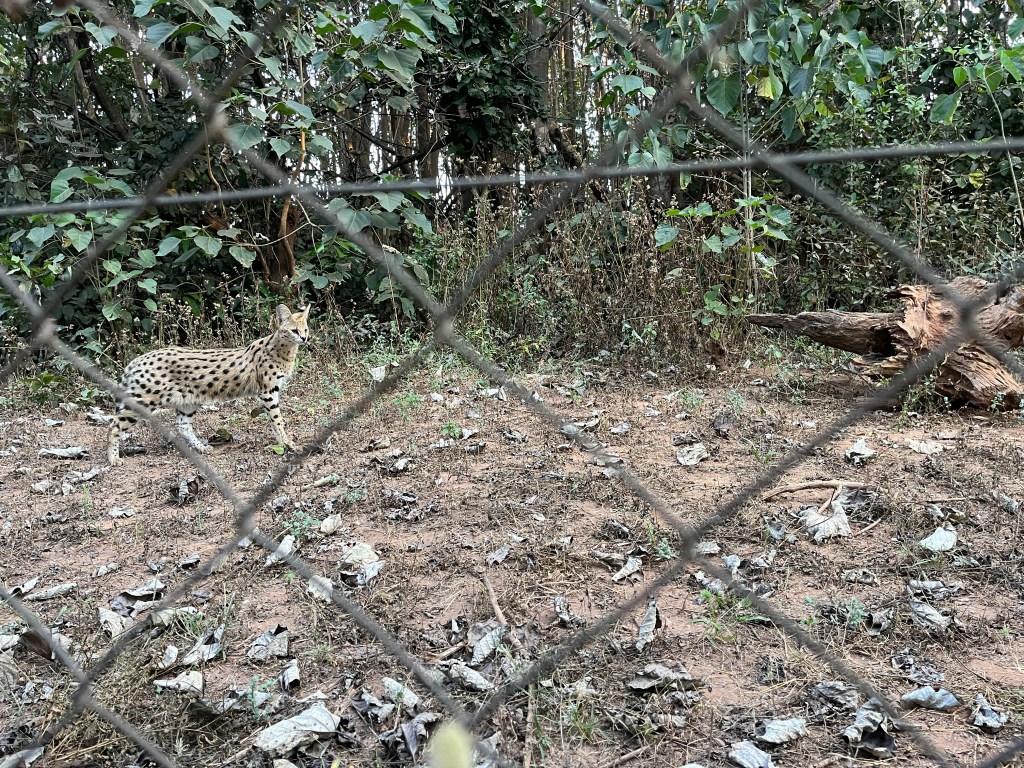
After this, I toured the LWC paths with Gideon, I met those other animals I hadn’t yet seen: hyenas , grey parrots, and the serval cats. When nearly back at the volunteer dorms, a rustling in the leaves caused us both to glance to the side of the path. Gideon pulled me aside, pointing to a large spitting Cobra snake. He’d seen it raise its head readying to spit. It had been 8 months since he’d seen one, and confessed it had raised the hairs on the back of his neck, as they’re one of the most venemous of Malawi’s snakes. I then got to help with the feeding program for most of the animals, including the orphan serval kitten and vervet monkeys. The monkeys are usually are accepted by a foster mum, but are still bottle-fed through the fence until they’re on solids. The importance of not ‘humananising’ the animals was stressed, given that they hope to release them back into the wild. Those who can’t be released because of broken wings or other serious injuries stay on as ‘residents’ .

Monday 12th June – A day off today, so no tasks, but had an inspirational cafe and chat with Dominic (co-ordinator of National Youth Network On Climate Change). He has initiated and supported many petitions, helped motivate youth, and organise events in addressing Climate change in Malawi. Last year a cycling caravan across Malawi helped raise awareness on how climate change impacts children (ahead of COP27 in Egypt). Hope to see more of you Dominic. Kia kaha
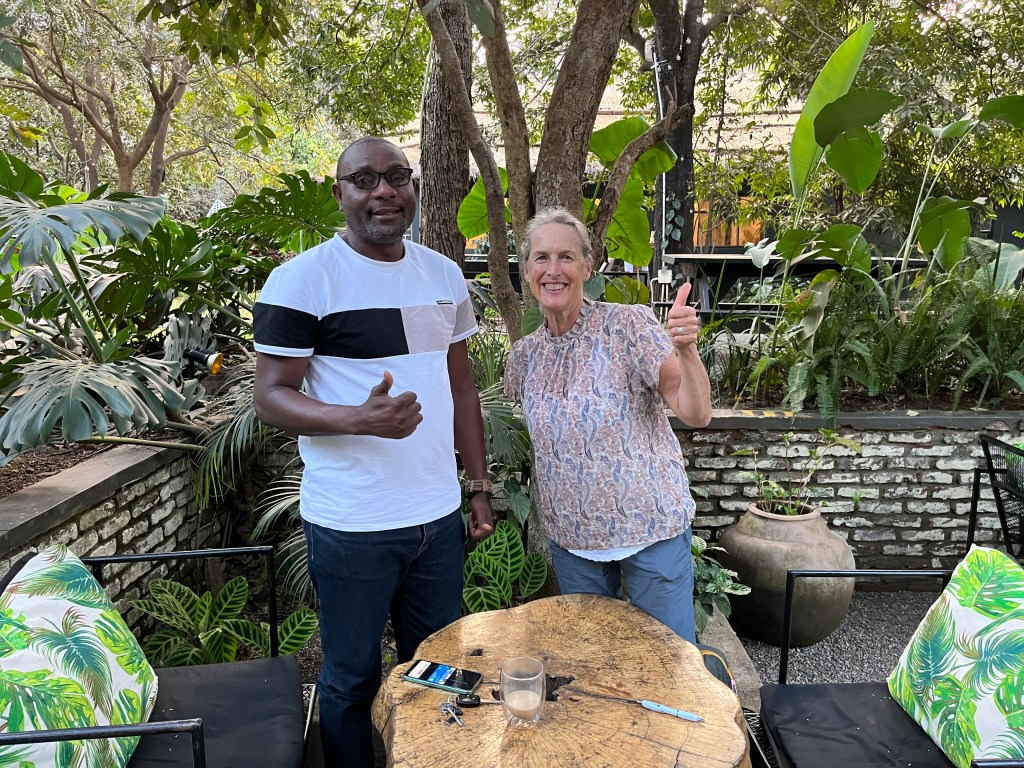
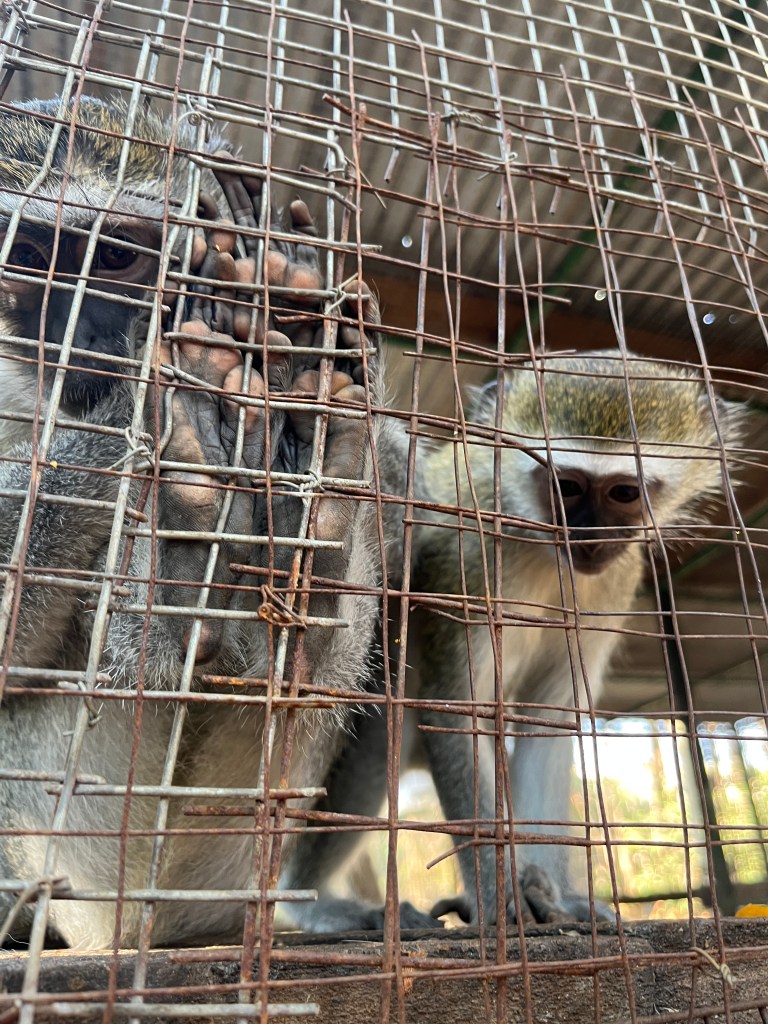
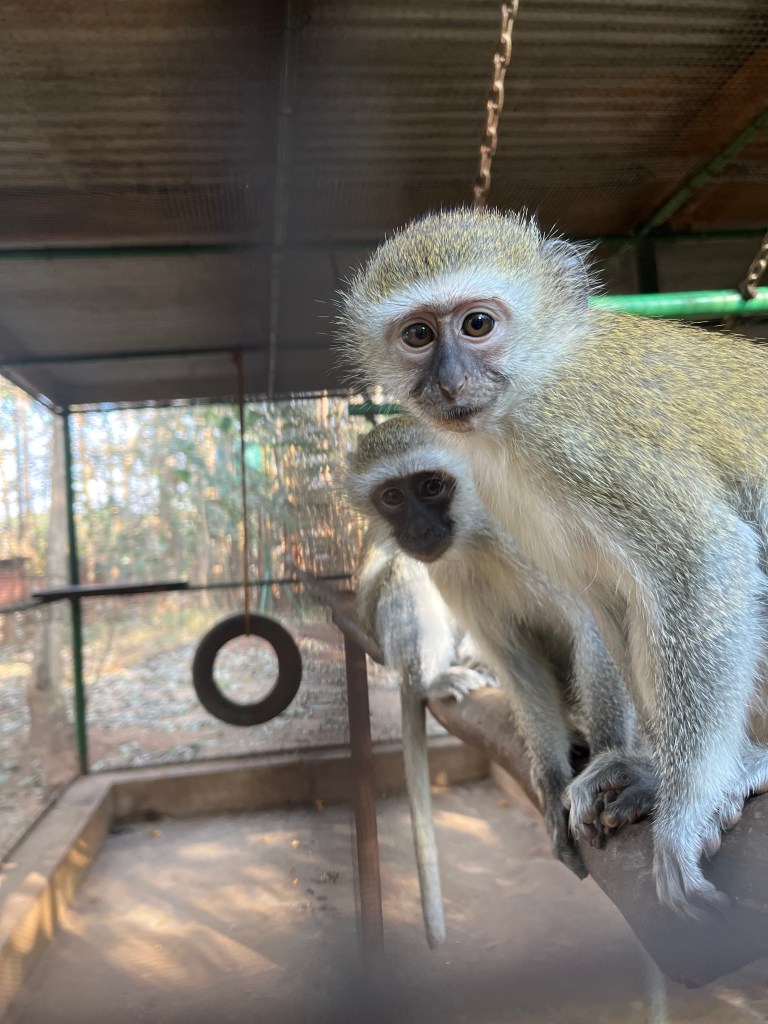
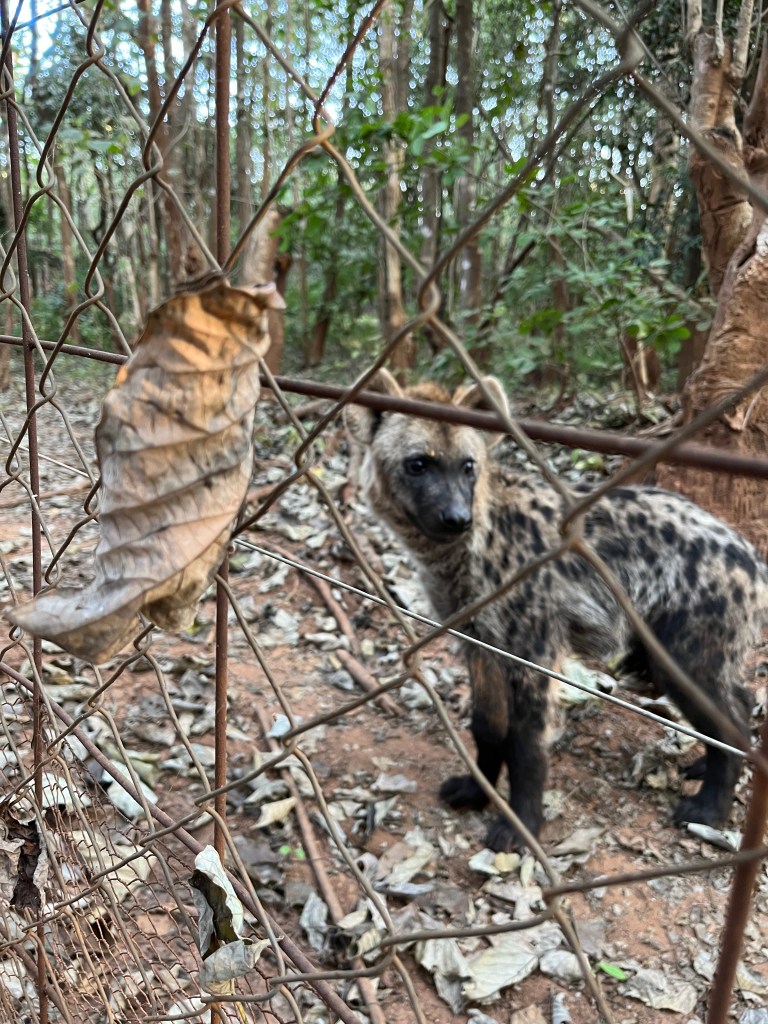
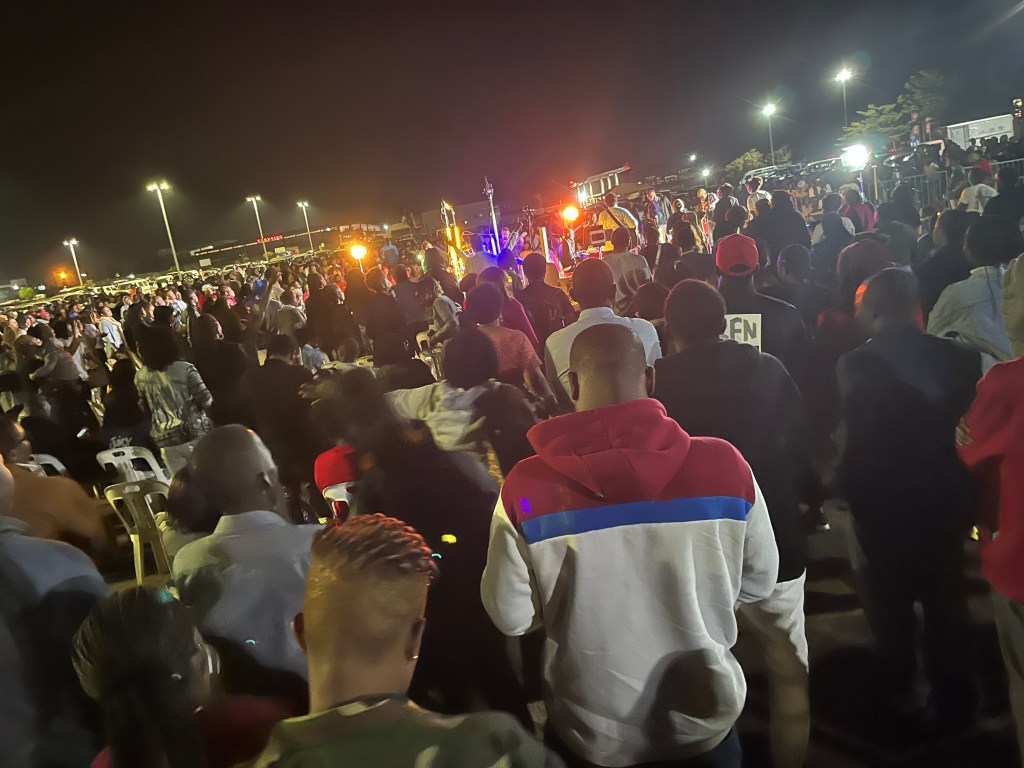
Above Hyena pup with adult wating for a feed (pigs head). Below : Outdoor worship in a car-park … various churches join in. Also education session with 3 school groups at the wildlife centre, on topics such as water and waste management, and climate change.
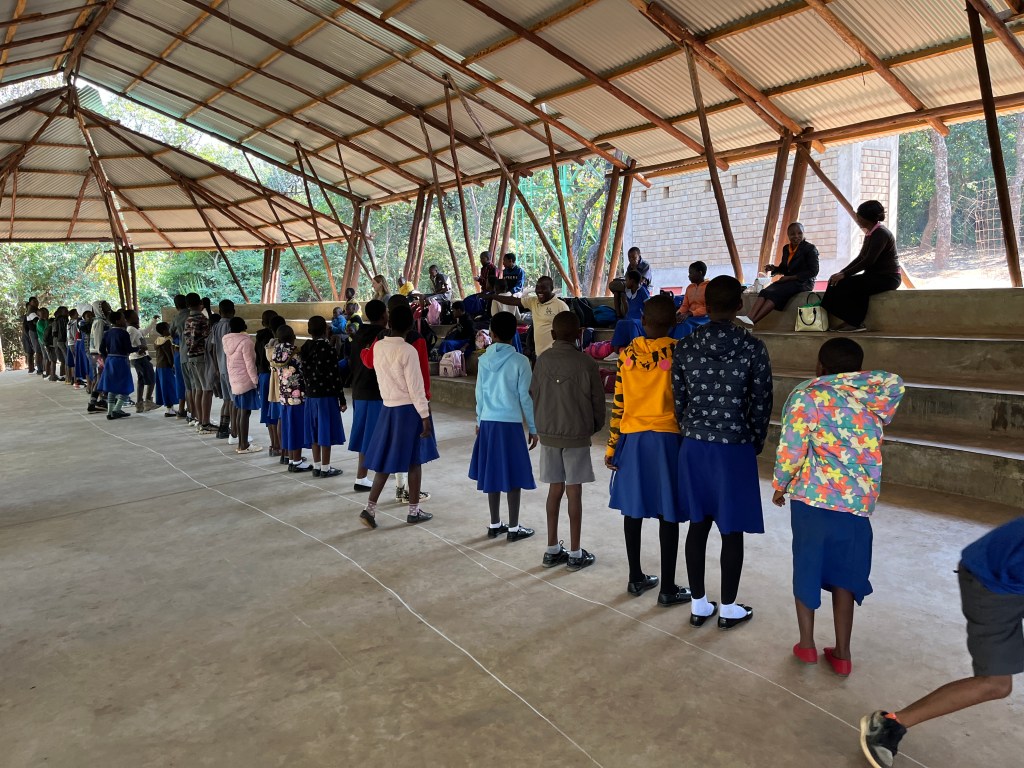
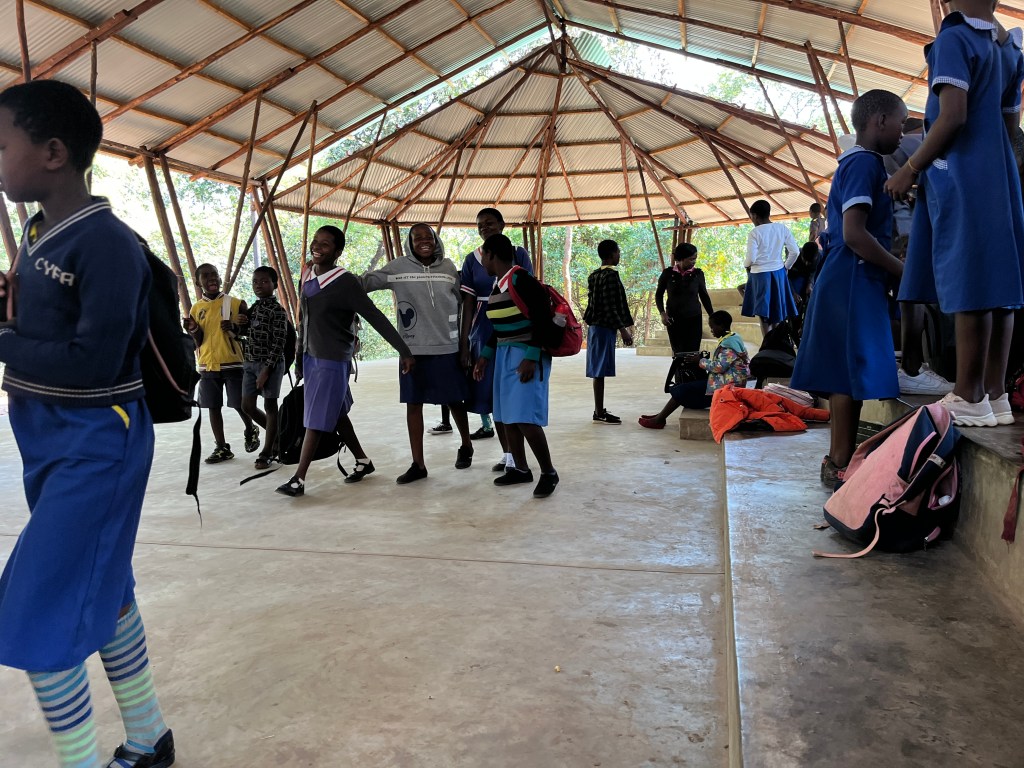
17th June – Gideon brought along his Acapella group to sing by the firelight As well as making us laugh they spoke about their relationships, their break-ups and how they felt God’s supportive hand throughout. Our tummy also enjoyed Luca’s yummy baking. He works a full day as a chef here but often drives a taxi at night to support his 5 children. It isn’t surprising given that the minimum wage here is about $2.50 per day, but food rices are a bit higher than NZ.
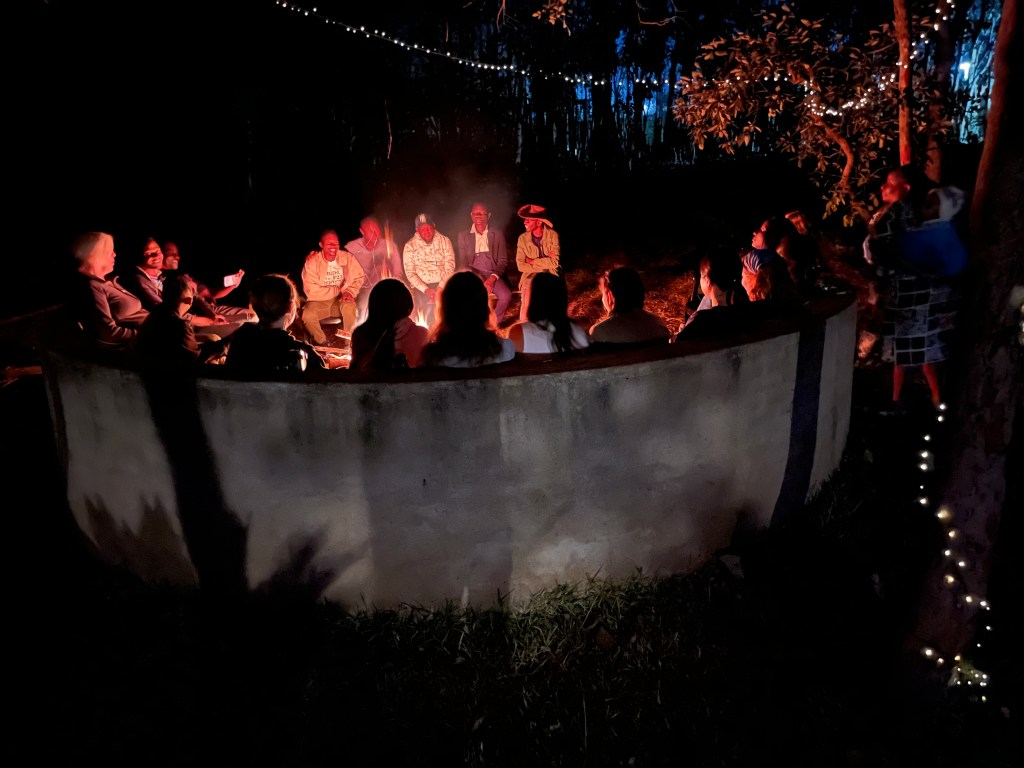
18th June – A full day of animal feeds for me. I’m loving it when I do all the baby servals feeds so we get some continuity. Off to ‘The four seasons’ bar this evening. Only Malawians with money can go out like this. Met a lovely friend of Gideon’s who studied agriculture in Israel. He decided against pursuing is as a job due to the risks posed by the changing clime (floods, cyclones and droughts). Simba (below) I’m going to miss you. I think I may have trouble getting you through customs. Your loud purr may precipitate a bag-search.
19 June – A really productive meeting with Dominic and Gideon about how to collaborate around climate action and education. It was just fortuitous that we started late and Dominic also got to meet our centre manager who seemed in support. Dominic has co-ordinated many youth climate events including the ‘Caravan of Hope’ bringing relief after cyclone Freddie to communities through dance and music and visiting the families. Structural changes too https://www.youtube.com/watch?v=ySKuwZ1hsec

20 June – Had my first ride in the local mini-buses. I’ve never felt more like a sardine. I haven’t seen one yet without a cracked windscreen. Fun though.
Road Trip to Salima opened my eyes to some of rural Malawi.
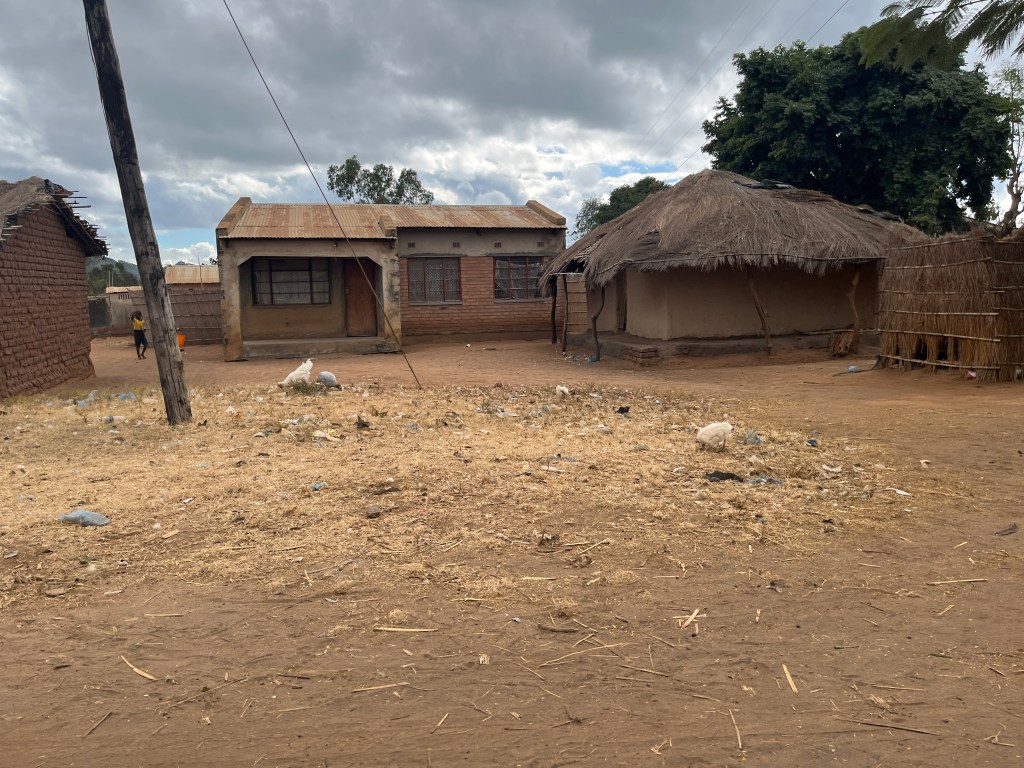
Areas of nicely grown crops amidst large dust bowls. Cars driving super fast passing trucks and dodging bikes and goats. Burnt patches along the roadside for mouse evacuation and boys selling rows of mice on sticks … a real delicacy in told. Once the mice are driven out by fire they duck into holes and can then be extracted easily. Passed some guys in traditional dress running alongside the road also complete with a white dust over thier bodies and spears.
We swapped into a larger vehicle with 2 social workers and a women’s centre worker and headed to a school. Another dust owl bare of any grass . The classroom we were in had a battered concrete floor and the corner was storage space for broken things .

The goal of the session with the 10 adults was to see what knowledge they currently have about climate change and what ca. be done, so some education can be planned. They’ve certainly seen the effects of it but little understanding of the causes apart from deforestation and although some of them realise burning coal should be stopped they don’t know of alternative sources of energy (and of course how to fund and access them is a huge problem) . They are however keen to learn more, especially sustainable farming techniques. Huge challenges when your village ground is this dry
Eye opening hearing from the men about how catching fish is now so much harder than previous decades. Speaking of fish, this is how we carried the market fish back to Lilongwe.
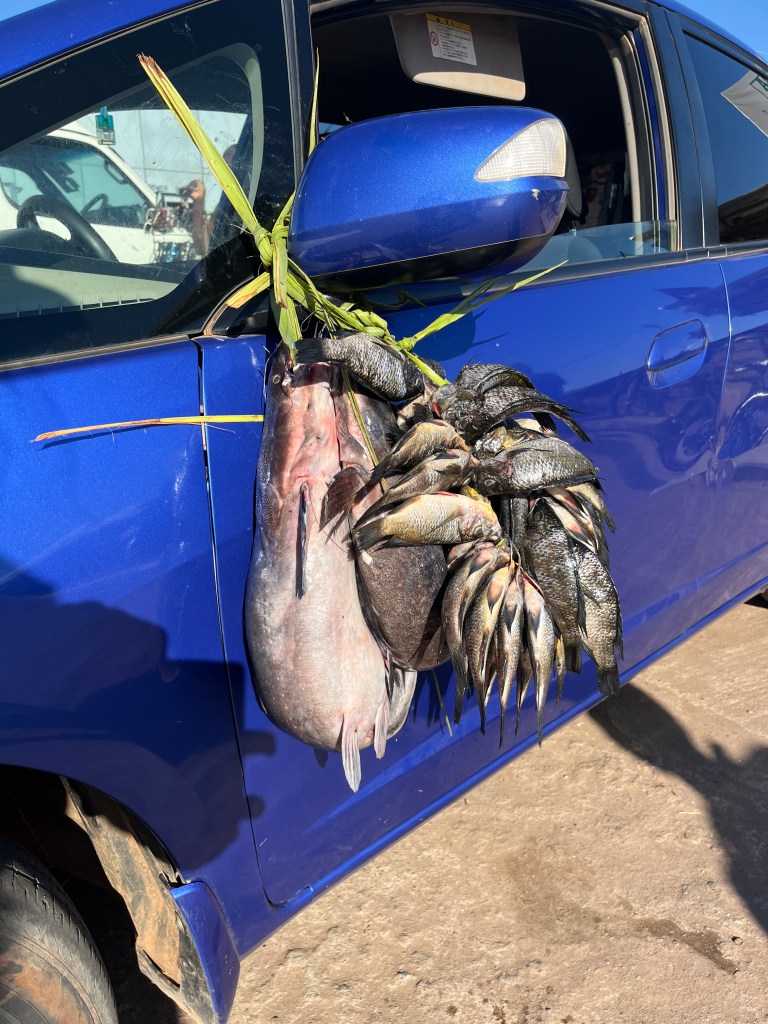
The four of us then went for a meal, boiled chicken, and nsimo. Had a lovely chat with Emma. She told me how Ged and her Muslim husband met and how they planned to get degrees before they marry. Emma’s a journalist but struggling to get a job with just a diploma. She writes for the youth climate network, but as it’s not enough to live in she also has a small pie of land which she’s preparing to grow ginger. This pic is a stop-off at a resort (the opposite end of the spectrum … not that we dined there, just had a drink, snack and walk. Lake Malawi is a favourite spot with locals. Still a fair bit of trash here and there, sadly.
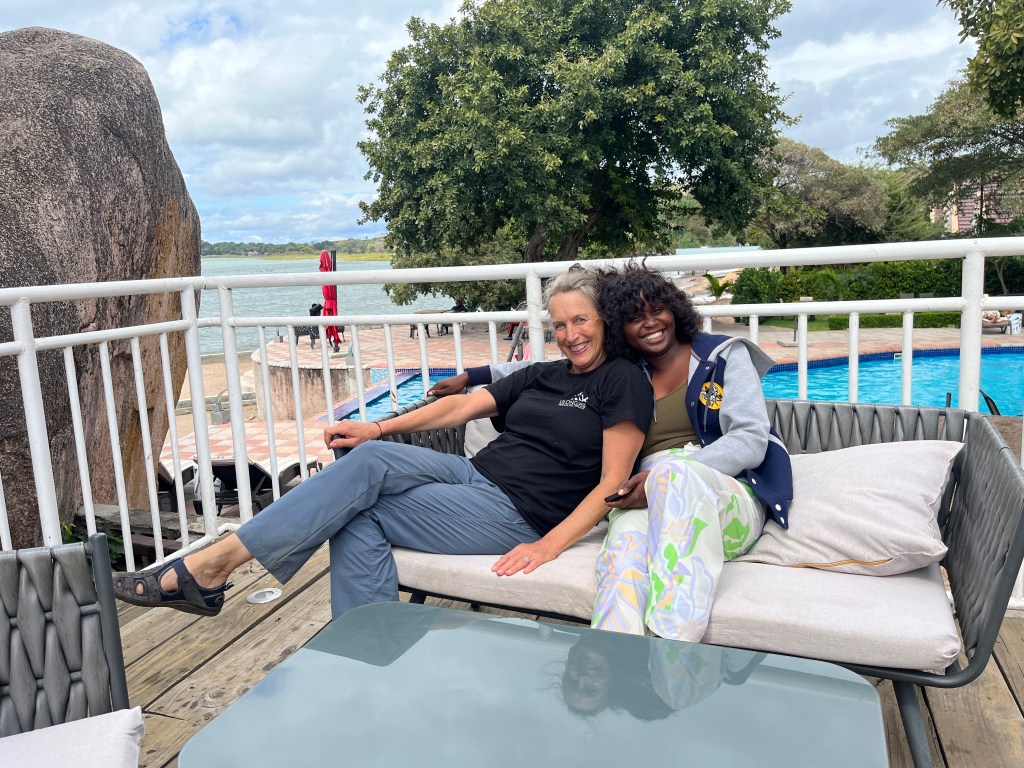
Wildlife centre Staff work so hard cutting up monkey feed, but carrying like this is something else !! I can not even carry this with my arm… have to split it into 2 buckets.
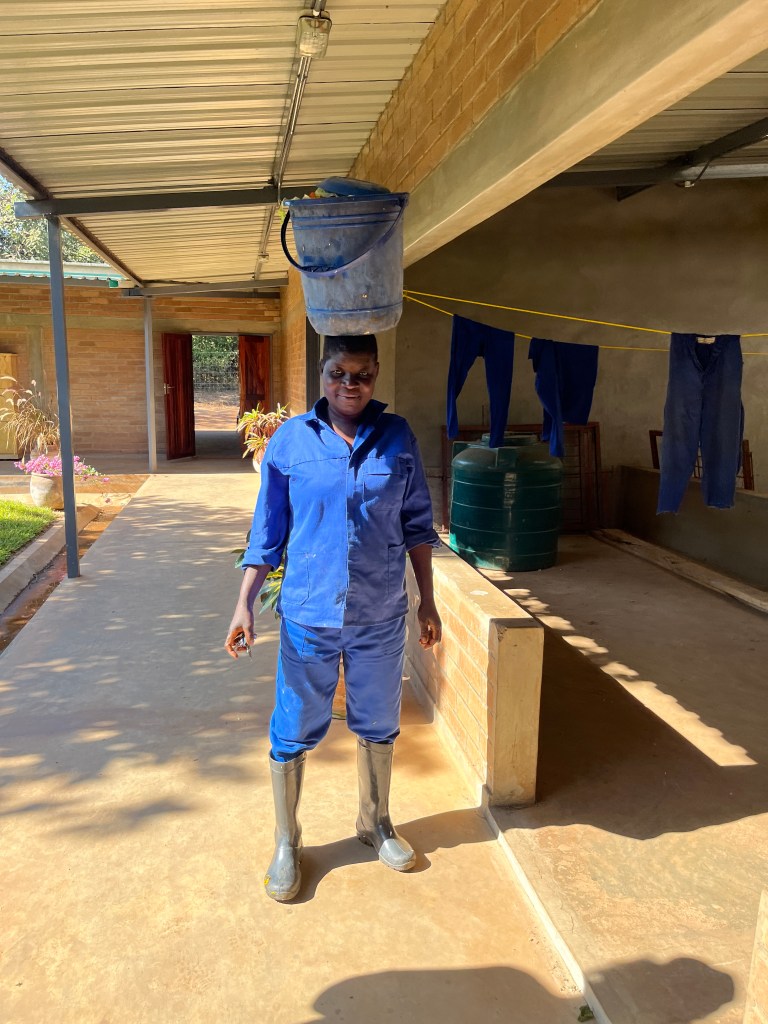
2nd July – Headed down to Liwonde with Edith, Abby and LWC driver. .
Safari 1 afternoon (Mvuu camp, Liwonde park) – Just Nika (a US aid worker) and I on the truck with Duncan and Alan, two lovely guides. A mother elephant crossed the road with her calves which were thought to be about 2 and 6. They We were told the calves are often 4 years apart with a 22 month gestation period. We enjoyed also watching some baboons frolick, one with a baby on it’s back. A stalk of at least 1.2 metres high was seen from a long way off. Later a camelion of just 6 cm long was spotted by Alan who was at the fron of the truck flashlight in hand.
A jenet cat hung from a tree-top: it’s spotted body fur set against a long bushy striped tail. The head unfortunately invisable amongst the foliage.
3rd July – Safari 2 morning – On the prowl again for a ‘big cat’ but unsuccessful once more. A large elephant herd was obvious from the fresh dung piles on the road. We then came upon a group of at least a dozen. Six females, a couple of teenagers, then 3 babies, the youngest perhaps just 4 months according to Duncan, mostly encircled protectively by the adults.

Waterbuck were the other beauty of note. The darker males and brown females with their gorgeous white stripes and white target circle on the behind. Watched the sunset over the dried mud, with hippos in the distance. Reminders of past action.
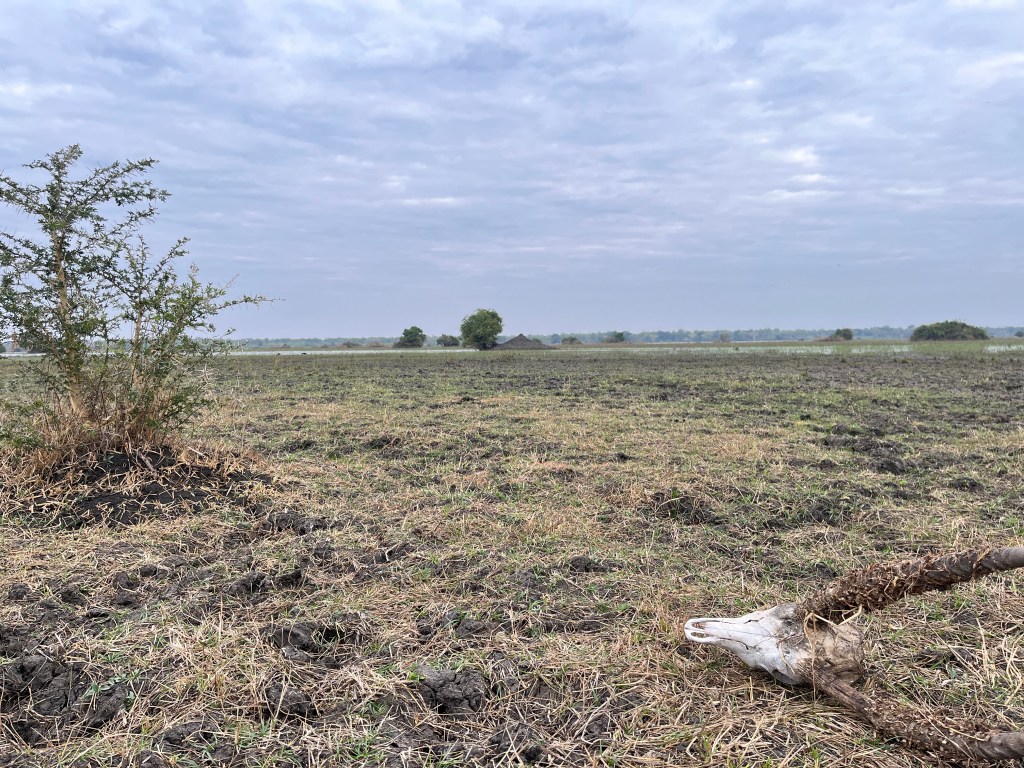
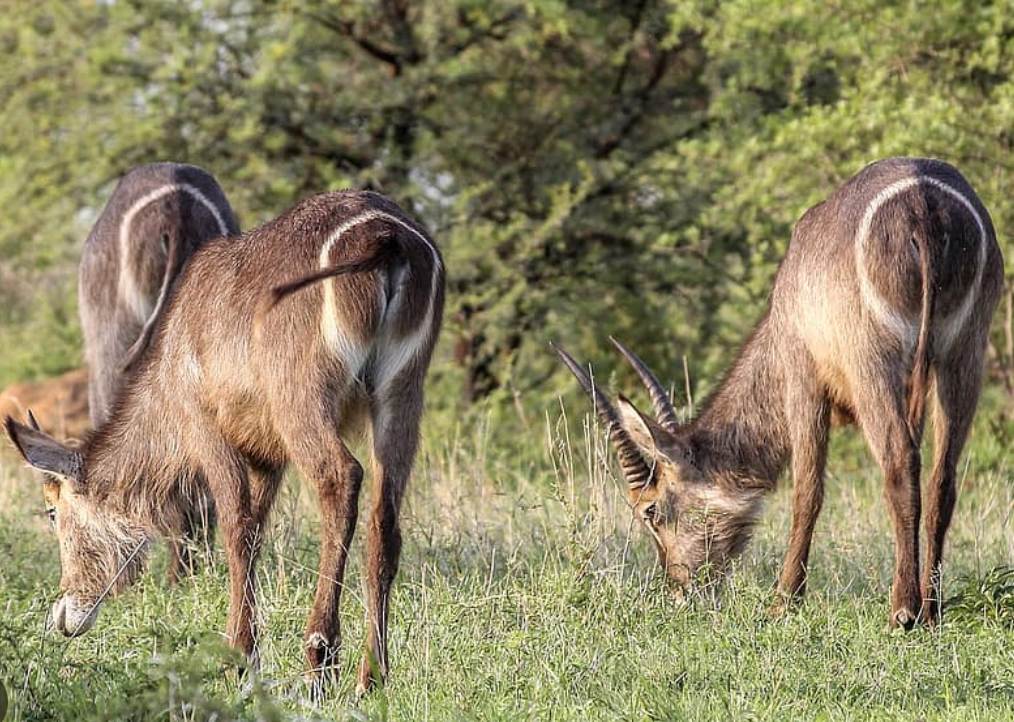
Afternoon boat ride . Stunning time with elephant herd up close from the water. They seemed completely unbothered by us, with the big bulls tearing down trees. After 20 minutes they trundled off slowly into the bush, stepping over logs as they went.
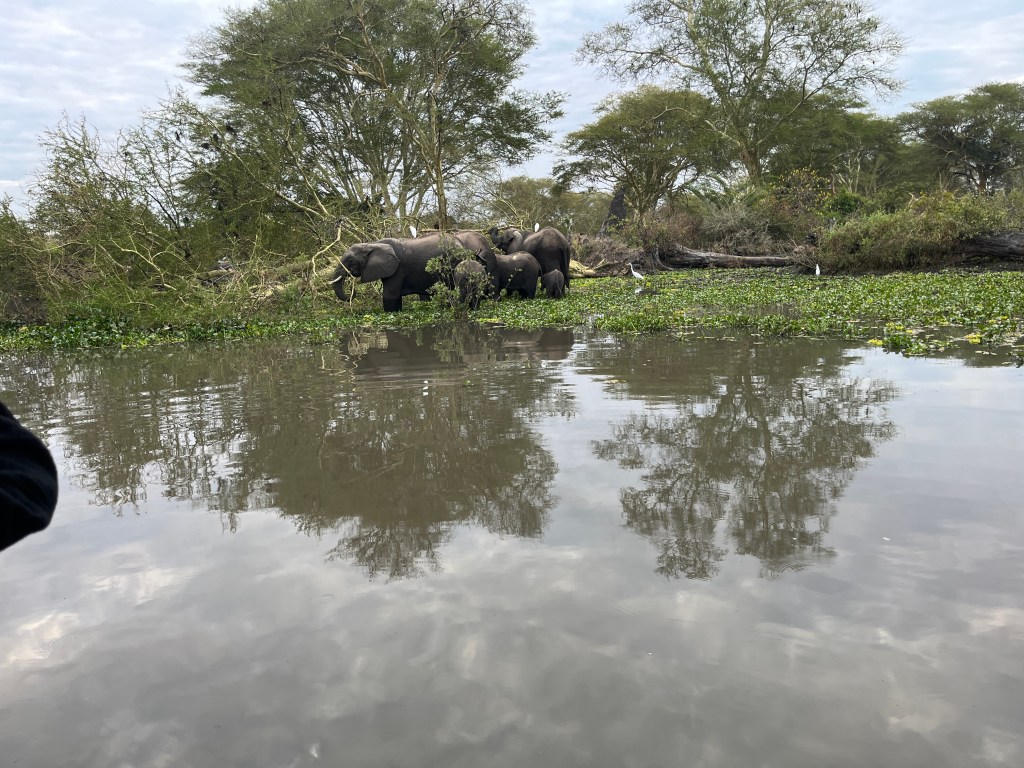
Hippos were frequent sightings, munching their way through weed in the shallower waters, and making loud throaty laughing sounds. On land or in the bush, they look like gigantic shiny rocks, but are to be given great respect as they can move like the wind. Sadly one baby became breakfast for a croc who we saw pushing the baby across the water with his nose.
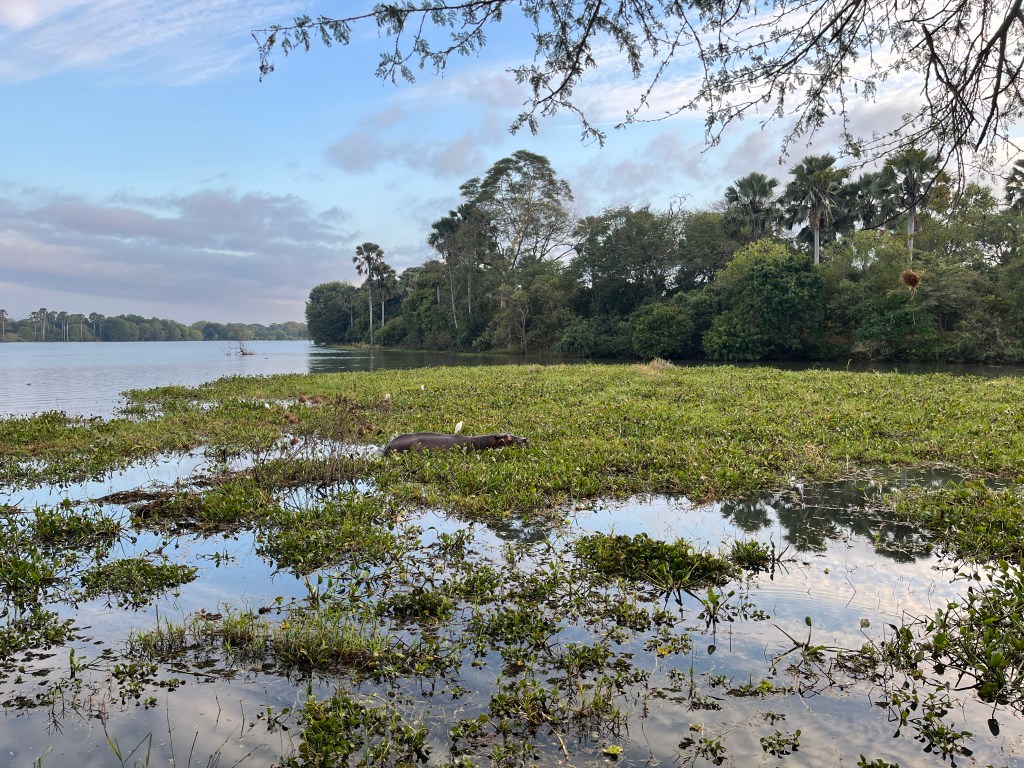
4th July – 6am. On the prowl again for a ‘big cat’ but unsuccessful once more. Nothing else that we hadn’t yet seen, but some lovely close-ups of the Waterbuck and baboon families. We learnt about the Fever trees, named because the bark is used for treating fevers and eye infections, and the roots are powdered up for the treatment of malaria. Of note quinine is also used in Tonic water and Malawian tonic is reputedly the best. A large elephant herd was obvious from the fresh dung piles on the road. We then came upon a group of at least a dozen. Six females, a couple of teenagers, then 3 babies, the youngest perhaps just 4 months according to Duncan.
10am – Reached the carpark ready for trip to Majete, but what do you know the driver I’d lined up failed to arrive. Many calls later, I got hold of Shamisoh, the taxi driver from 2 days prior. Huge relief when he agreed to take me. After waiting a while on the roadside for him, we had a great trip together. Motorbikes are used to their maximum as can be seen below.
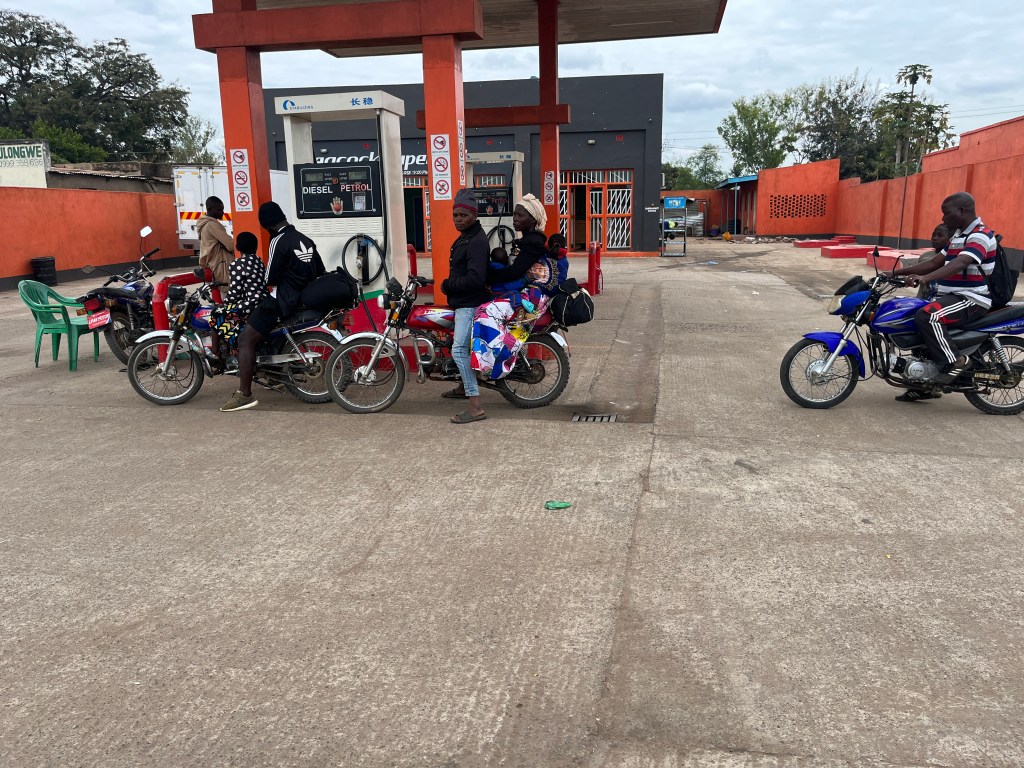
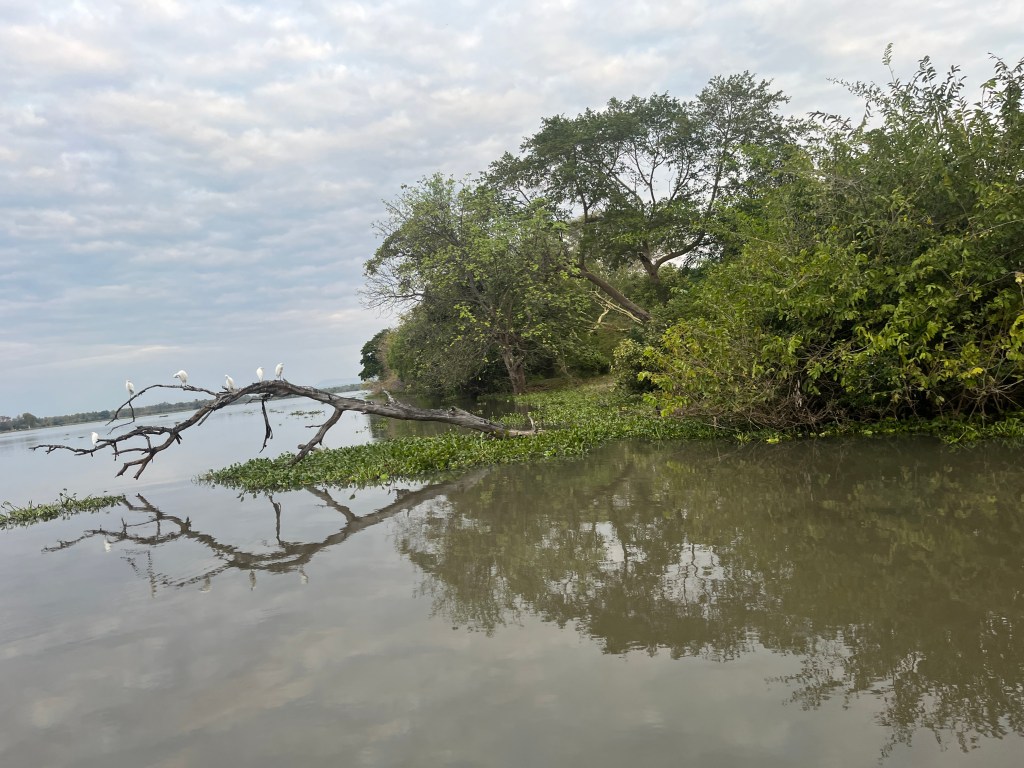
Safari 4 at 6am. Our first action of note was a couple of jackal making their way across the plain near the lodge in the early light, bushy tails in tow, and plenty of handsome waterbuck, plus a Sabel (below) who have distinct faces, and are one of the few antelopes where females also have horns.
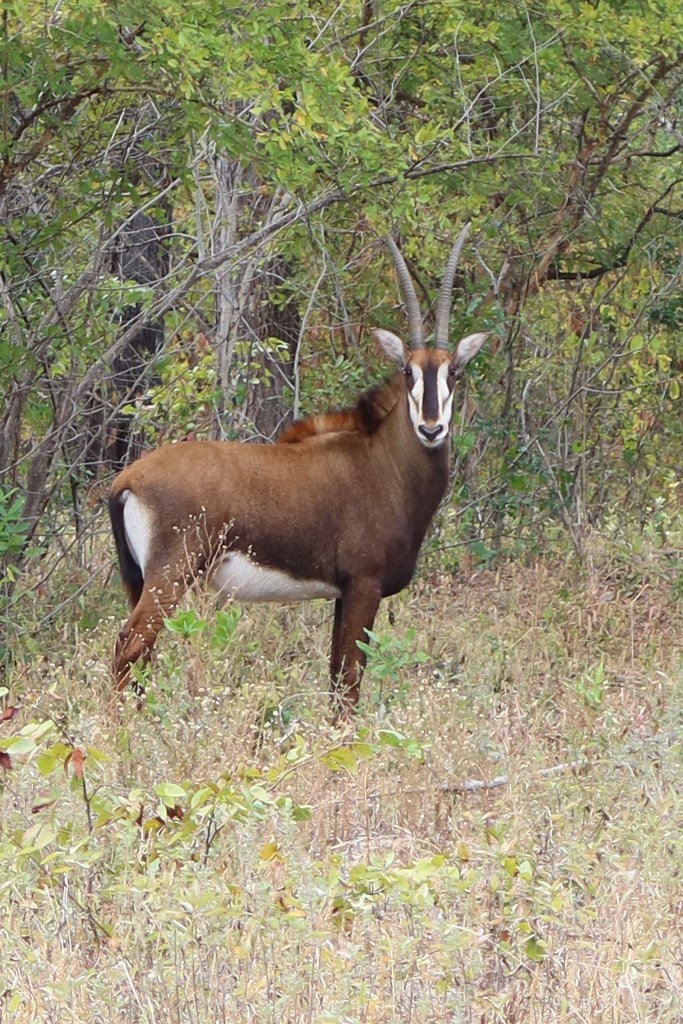
5pm dusk. Safari 1 (Majete) . Just Henry and I. He was interested in NZ and we discussed the colonisation history, the treaty and Te Reo Maori. He explained how most Malawians are given European names.
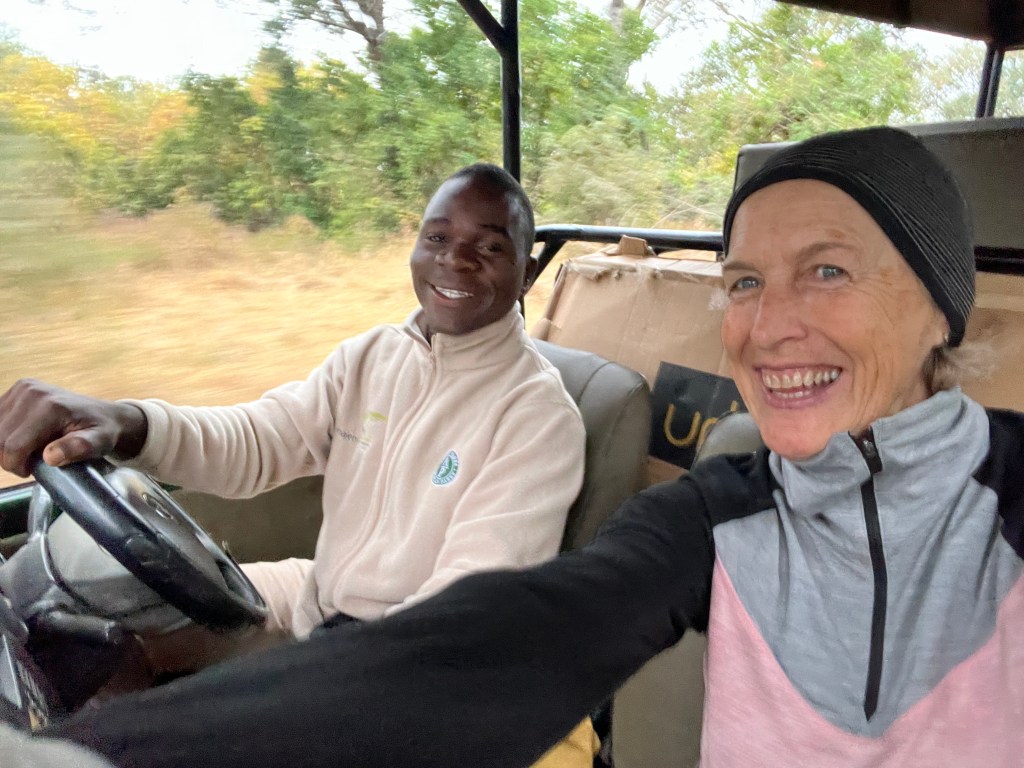
Saw a few Nyala, which are a beautiful antelope with a dark body (striped with white) with ginger legs from the knee down. (below is one walking right by my cabin).
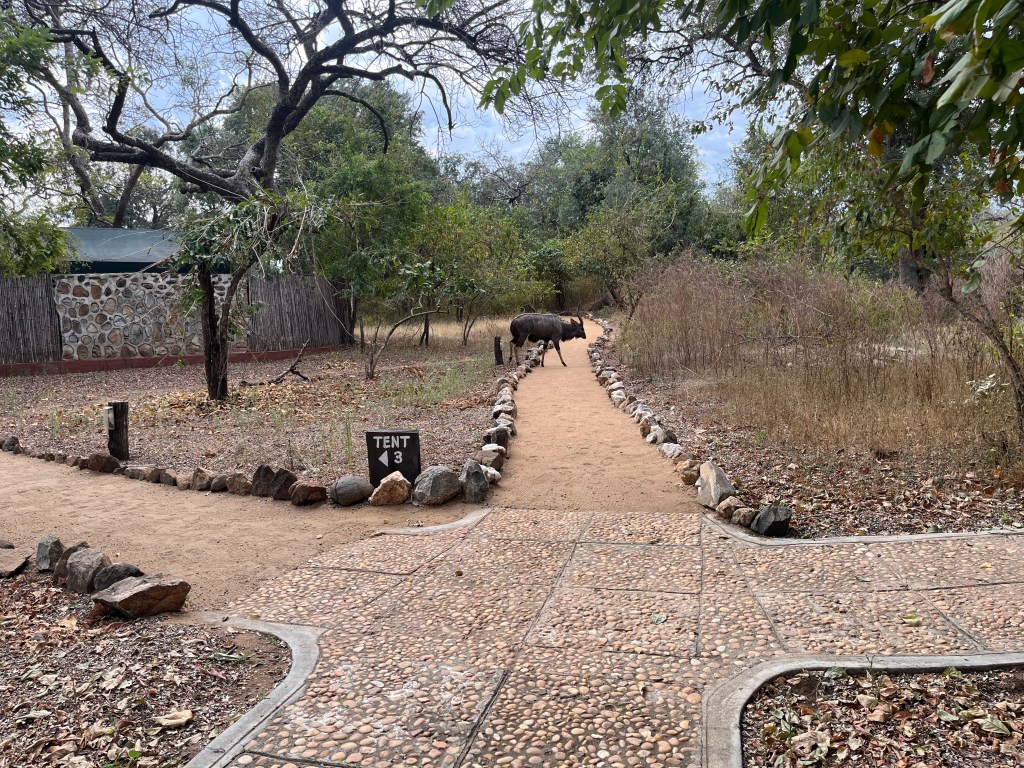
We also saw 3 porcupines crossing a river and a couple of Eagle owls, but little else. He saw a civet cat (but not me) . Then a very serene evening , starting with a dinner overlooking a plain and waterhole. No lion roars. Just myself and just the tourism manager at the restaurant/ complex. Each Baobab tree is a sculpture. This one, over 4 metres in width, is named the Livingstone tree. Explorer, David Livingstone is still honored in Malawi (and Zambia) for his determination in stopping the slave trade in Sub-Saharan Africa.This tree, marks the location where the exploration party lodged during his travels along the Shire River.
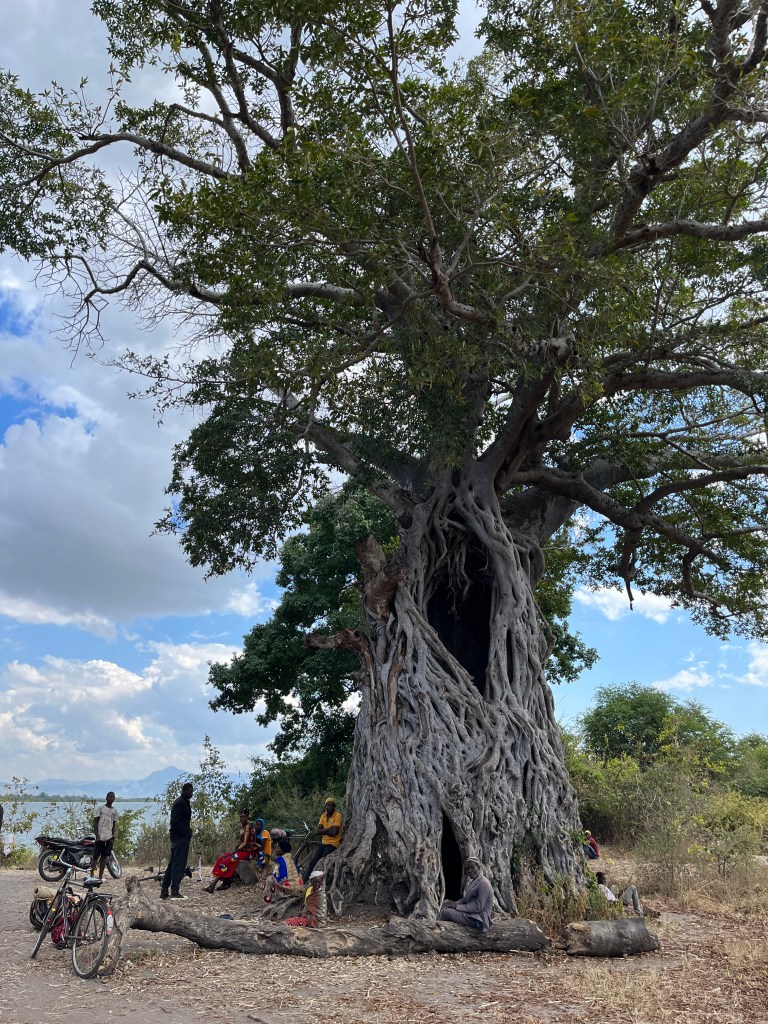
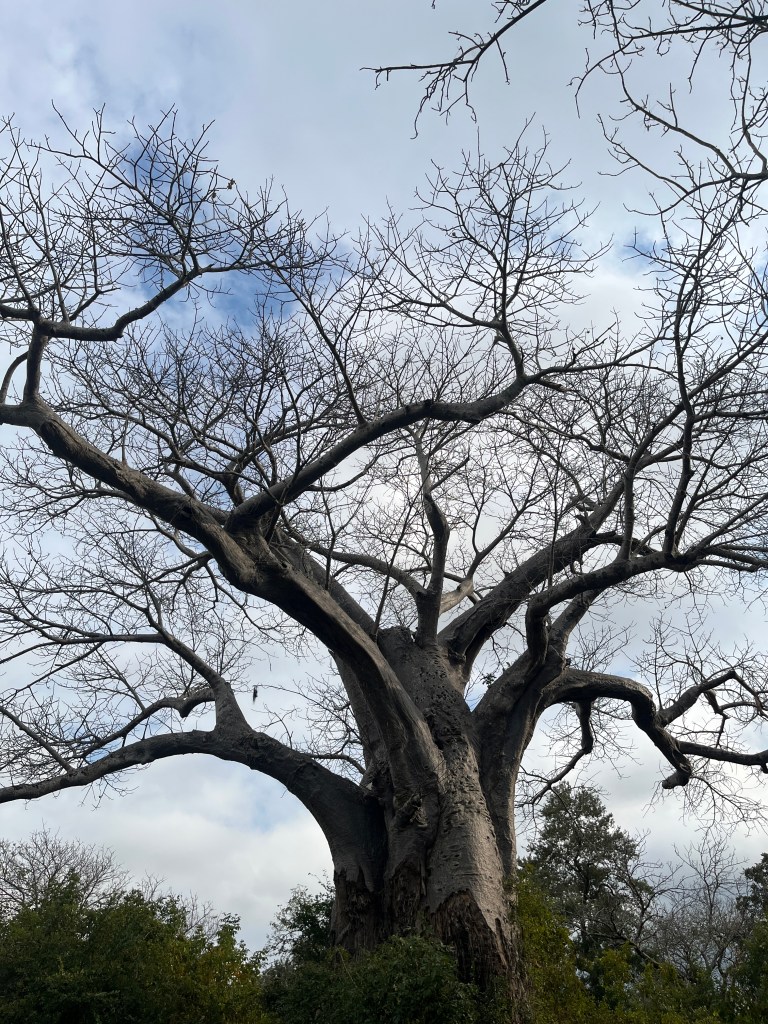

5th July – Up at 5.30 again for another drive with Henry and some folk from the campground. Our first action of note was a couple of jackal making their way across the plain near the lodge in the early light, bushy tails in tow. Zebra were out on the edge of the airfield again, displaying their artwork, superior to any tattoo. It was a brief viewing before they shyly retreated to the bush. After driving for an hour we spotted a giraffe, but mostly it was just its delicious eyes and shoulders on view. Again a shy animal. A large herd
Other new species for me were a Sabel antelope and a buffalo, it’s perfectly sculptured horns, reminding me of the hairdo of a Chinese Sage. Dark it didn’t need to pronoune it’s regal strength, as it was apparent from it’s broad shoulders, it’s huge head and tusks. Many Lion and cheater prints, but sadly the cats remained a mystery. A Scottish family living in Zambia, the mother who works with offsetting deforestation emissions. A retired accountant who’s lived much of his life in Blantyre.
An amazing day at the waterhole too with a very relaxed elephant diligently coating himself with mud before showing off his ‘trunk of tricks’.
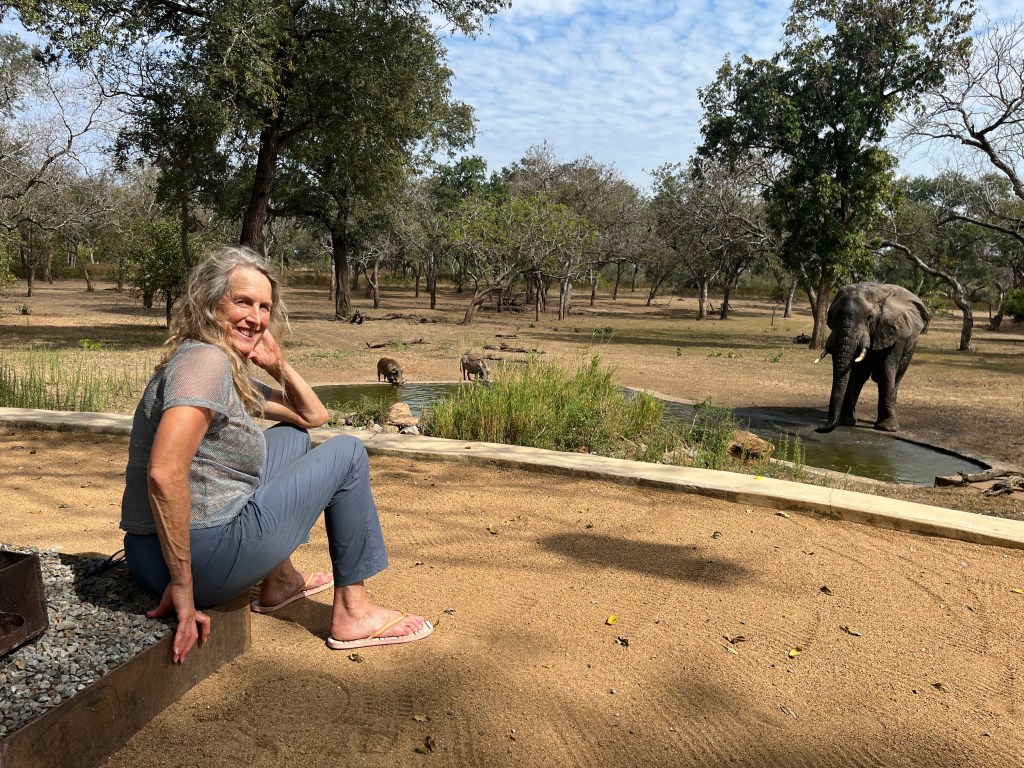
6th July – My day before travel home. Thanks to guide, Henry, for a great time in the Majete park, we saw a dazzle of 15 Zebra today and 2 gorgeous Giraffe … not quite a ‘tower’ …. but they sure were tall when close-up.
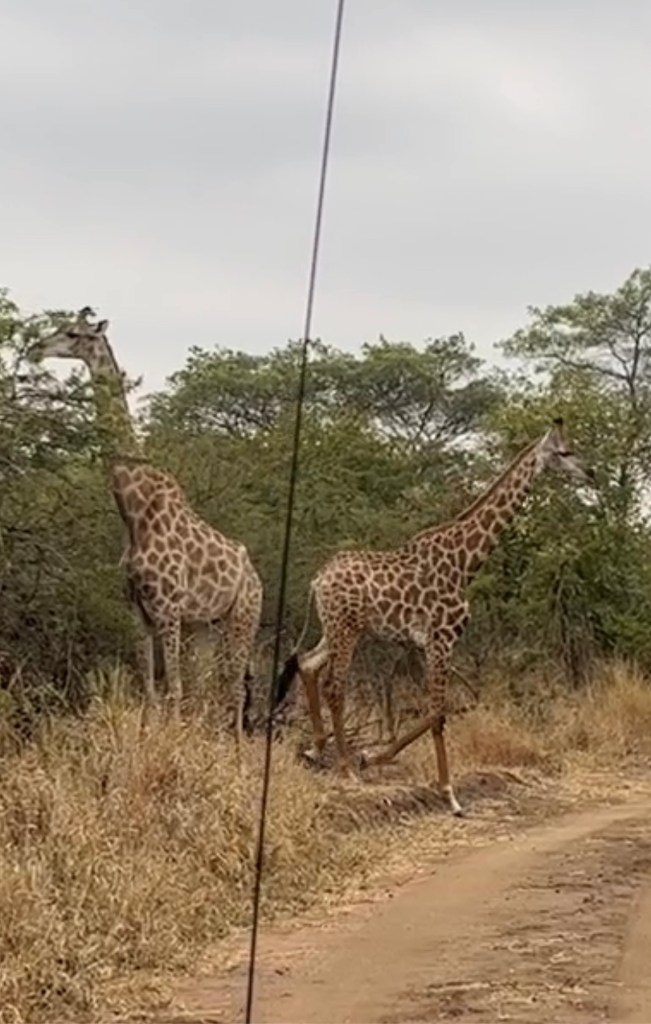
Lots of Malawi independence day festivities on today. These glam Malawi girls grabbed me for a photo. I felt decidedly under-dressed.
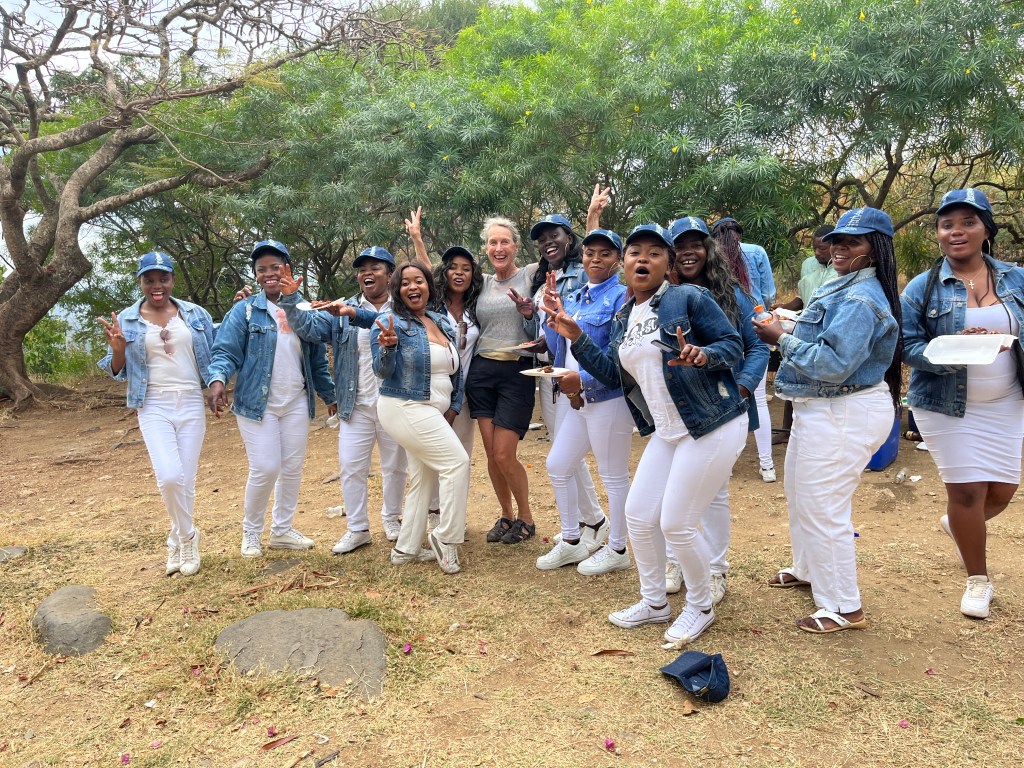

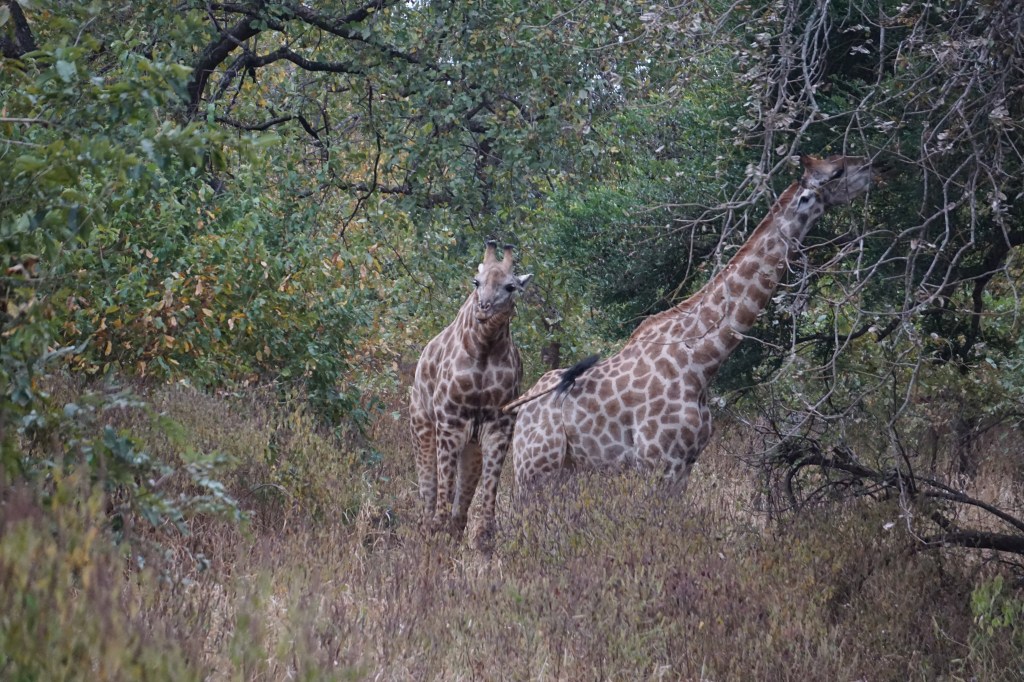
Goodbye to this country full of beauty ,extremes and wonderful people (such as this lovely young man, aptly named Bright, who drove me to the airport). Like many, he qualification but drives a taxi. He loves romance novels such as Romeo and Juliette, and is still looking for his Juliette 🙂
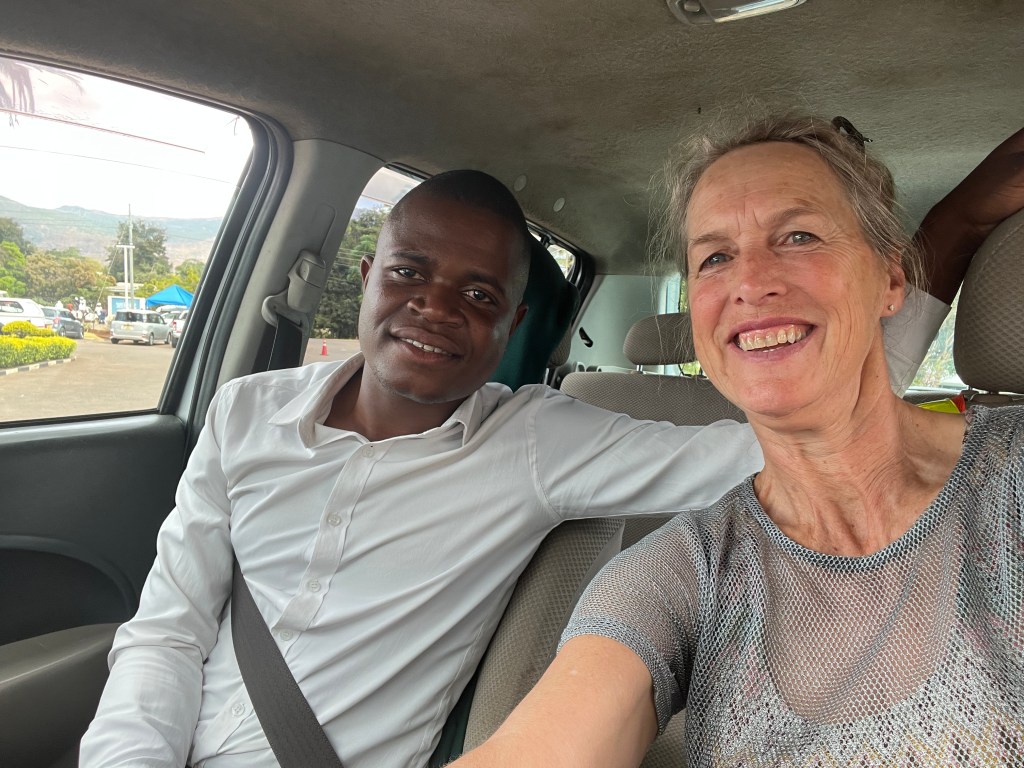

 ChristineOffshore.blog